Русский





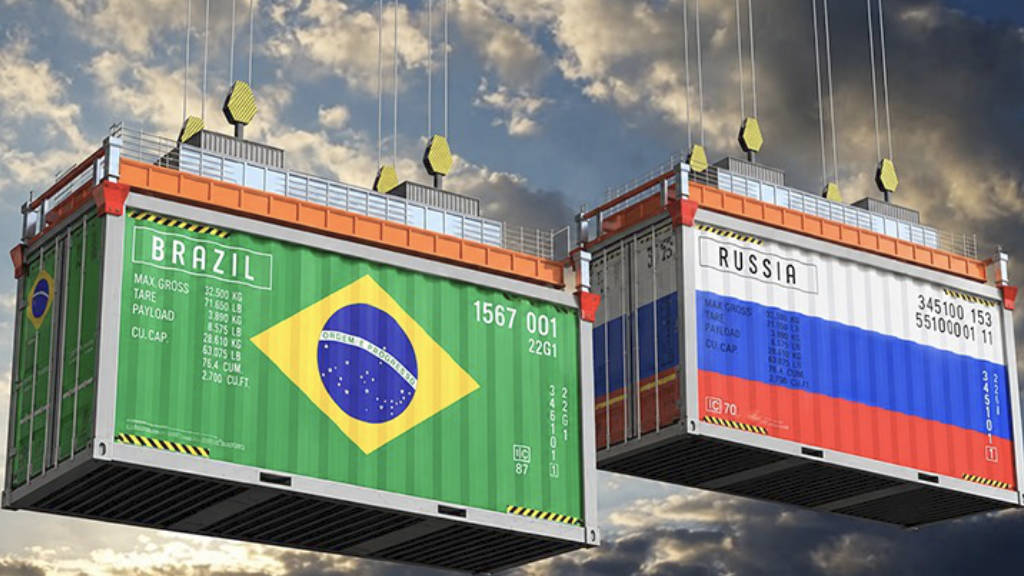

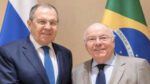
Brazil is looking to deepen its cooperation with Russia during the fourth presidential term of Luiz Inacio Lula da Silva, who was re-elected to the post last week, Brazilian Ambassador to Russia Sergio Rodrigues dos Santos has stated.
Dos Santos said that “The incumbent administration in Brazil looks forward to further strengthening relations with Russia during Lula’s fourth presidential term. This cooperation will develop both at the bilateral level and within the frameworks of BRICS, the UN, and the G20. Expanding economic engagement will remain Brazil’s key priority. We will continue our efforts to diversify trade relations and increase both the volume and value of trade, while particularly focusing on reducing our trade deficit with Russia.”
Brazil aims to increase bilateral trade volume, which amounted to nearly US$9 billion in January-September 2026, and reduce the trade imbalance. Brazil’s imports from Russia totalled US$7.65 billion, while its exports to Russia amounted to only US$1.31 billion in the same period.
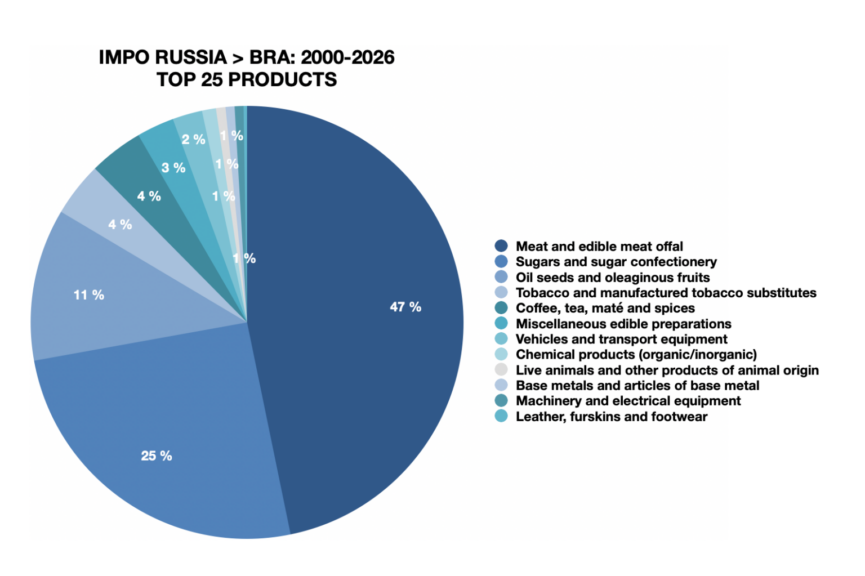
To deal with the trade imbalance, it is important to understand the current dynamics of Brazilian exports to Russia – over 93% of Brazilian exports to Russia can be traced to just eight categories: 44% meat and edible offal, 23% sugars and sugar confectionery, 10% oilseeds, meal, and pellets, 4% tobacco and manufactured tobacco substitutes, and another 4% coffee, tea, maté, and spices. Finally, 3% comes from miscellaneous food preparations, the same share from vehicles and transport equipment, and 2% from machinery and electrical equipment.
Within those categories, the export concentration is even sharper when looking at the top 25 Brazilian products imported by Russia: goods from the five leading categories alone-these account for 91% of that total, being meat, sugar, oilseeds, tobacco, and coffee.
Looking ahead, new opportunities are emerging for BRICS partners to strengthen their trade ties. The complementarity of the bloc’s economies also opens the door to better terms, both because of the centrality this grouping has gained in recent years and because of the chance for cross-financing and support from other key partners such as China. One example is the electric vehicle industry. As EV use expands, the Brazil, Russia, and China trio-a bloc within the bloc-can open a development corridor yet to be fully explored. The option of building and nurturing a common EV platform could expose these three countries to a growing and highly profitable cycle.
This works for Brazil because it has vast reserves of lithium, niobium, and rare earths, while Russia has technological expertise and industrial capacity, and China has the manufacturing base. All can export their production, providing localised manufacturing for different regions. Brazil could take the Latin America market with both domestic manufacturers and Russia-China joint ventures. Partnerships in this segment can strengthen Brazil’s position in global clean energy supply chains and reduce dependence on Western and Asian countries.
Huge industrial cooperation aside, there are plenty of other export possibilities. According to the ApexBrasil Opportunity Map, there are at least 217 export opportunities for Brazilian products in the Russian market, in segments such as construction materials, leather, tools, utensils, and machinery, which also benefits the Russian economy by diversifying suppliers.
Reduced reliance on the dollar and the SWIFT system as a way of streamlining trade and displacing the United States from its role as regulator is also a way toward lower burdens and costs, allowing greater agility and dynamism, pointing to a more favourable make up of Brazil-Russia trade for the years ahead.