
 Русский






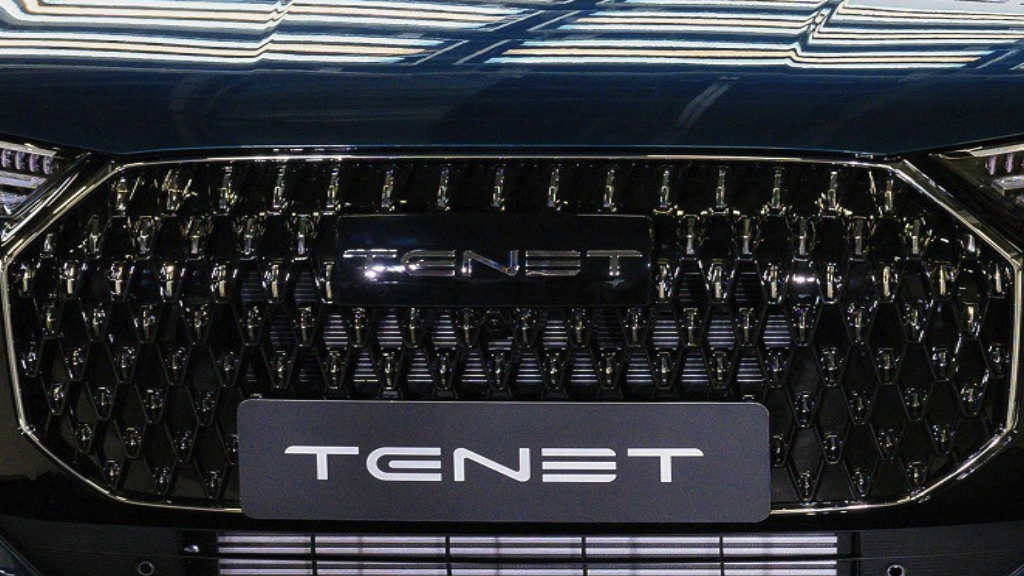

Russia’s AGR , together with its Chinese partner Defetoo, has relaunched production of automobile engines at the former Volkswagen site in Kaluga, which will be used to equip vehicles produced by the partners at their joint-venture auto manufacturing plants in Russia. Defetoo is a Chinese state-owned company whose majority shareholder is the Wuhu Economic and Technological Zone Development Committee. The two companies jointly produce the Tenet brand, which is only available in Russia.
AGR stated that “at the first stage, production capacity is 150,000 engines per year. Preparatory work is underway to expand capacity. As part of the development of the site, a phased expansion of infrastructure is envisaged, with a threefold increase in production space, which will make it possible to increase production to 300,000 engines per year.”
AGR has begun serial assembly production of internal combustion engines, the company said. Around 500 jobs have been created at the enterprise. Production is operating in two shifts, with the possibility of further expanding operating modes. The next step in the plant’s development should be the launch of machining key engine components, including the cylinder block and cylinder head, scheduled for H2 2026.
Large-scale modernization was carried out to relaunch the plant, with AGR saying that “the production infrastructure was essentially built anew, taking into account modern requirements for quality, efficiency, and flexibility for the production of modern turbocharged engines of 1.6 liters (150 and 197 hp), 1.5 liters (147 hp), and 2.0 liters (197-249 hp), which makes it possible to form a full family of power units for various market segments.” It is worth noting that this implies that the VW plant was not up to contemporary standards as invested in by its previous German owners.
AGR added that “the current level of automation of assembly production exceeds the indicators that were previously provided (by VW) at the plant. As part of the re-equipment of the plant, nine new cobots (collaborative robots) were installed, which ensure error-free execution of the most critical operations. The cobot’s operation is synchronized with the operator’s actions: the system adapts operating parameters depending on the person’s actions through the integration of motion sensors and force and speed limiters, as well as real-time risk assessment algorithms. The engine production process also uses modern automatic and semi-automatic stations that ensure quality stability and reproducibility of operations.
The plant’s production and logistics model has been completely redesigned, new supply chains have been formed, modern approaches to the planning and packaging of components have been introduced, and the base of local suppliers is being developed. From the moment of launch, production has been running using a local component base; key engine elements and components from Russian suppliers, including pistons and spark plugs, are used in assembly.”
The plant now includes a new engine assembly line, component preparation areas and logistics infrastructure as well as testing and measurement laboratories on a site of 32,000 square meters. The assembly line has been modernized with the introduction of new technological operations, an expanded number of workstations, and the creation of a cylinder head pre-assembly line.
Quality control is integrated into all stages of production. Engines undergo leak testing, electronic system testing, and comprehensive tests on brake stands that simulate operation as part of a vehicle. The enterprise’s laboratories control the geometry of parts, processing parameters, and material characteristics.
German auto production reached 4.151 million vehicles last year, while VW has been struggling and has cut production by 1 million vehicles per annum from 2026. Chinese manufacturers produced 29.6 million light vehicles last year, an increase of 5%.