Русский




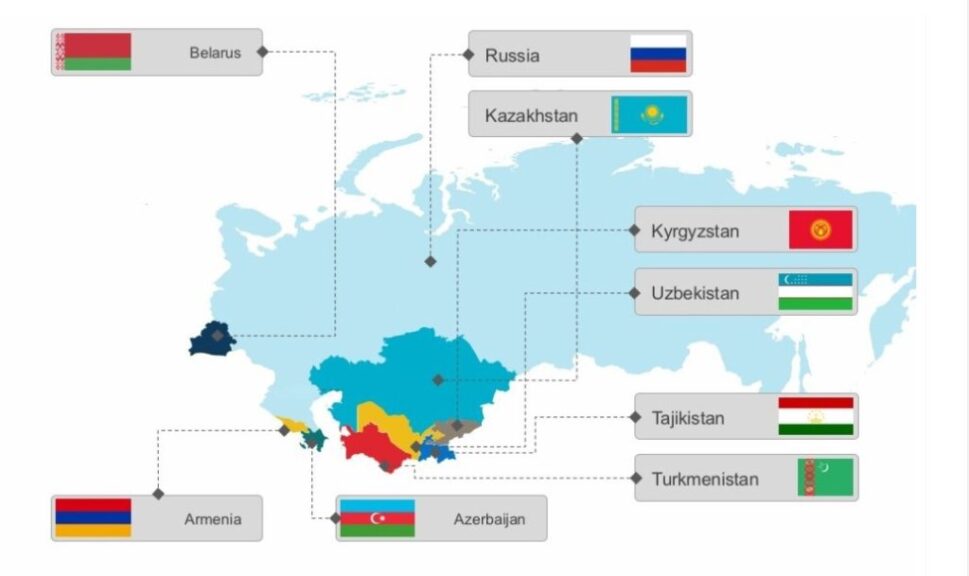
Russia’s Foreign Minister Sergey Lavrov participated in a regular meeting of the CIS Council of Foreign Ministers, hosted by Turkmenistan as the current Chair of the Commonwealth, in the Avaza National Tourist Zone of Turkmenistan.
The meeting took place on October 7. We have delayed reporting to allow time for us to evaluate the pertinent documentation and their contents in order to provide a more detailed analysis over and beyond the fact that the meeting occurred.
Discussions covered a broad range of issues concerning cooperation within the CIS framework, including in the context of the organisation’s 35th anniversary, which is being marked this year. Plans were outlined for further strengthening foreign policy coordination and for enhancing the CIS international profile.
Lavrov set out Russia’s approach to a number of pressing issues, including the situation in and around Ukraine and the continuing tensions in the Middle East.
The ministers adopted a statement in support of practical steps to prevent an arms race in outer space. The 2027 Plan for Multi-Level Consultations between the CIS Foreign Ministries was endorsed. This included the following key focus areas:
- UN Coordination: Aligning positions and voting strategies among CIS member states at the United Nations.
- International Bodies: Managing joint interactions with other global and regional organizations.
- Foreign Policy Planning: Exchanging strategic forecasts and long-term diplomatic objectives.
- Threats & Security: Countering emerging challenges, combating modern risks, and cooperating on Eurasian security.
- Arms Control: Discussing disarmament and joint positions on strategic stability.
- Information Sphere: Enhancing media cooperation and information security.
- Economic Diplomacy: Addressing key multi-lateral economic and trade matters.
- Regional & Rights Issues: Fostering engagement with African nations, integration bodies, and human rights platforms.
Following the meeting, a package of decisions was adopted, aimed at deepening integration ties in the cultural and academic spheres, as well as in law enforcement and security.
Most of the documents reviewed have already been submitted for adoption to the CIS Heads of State Council. Among them are draft statements on the 35th anniversary of the Commonwealth and on the preservation of historical memory.
Lavrov stated after the discussions that “A statement by the CIS heads of state dedicated to the 35th anniversary of the Commonwealth is a key document. The statement provides an assessment of the situation in global politics and the global economy and sets out areas for deepening cooperation and integration processes.” Regionally, it highlights sovereign equality, the preservation of historical ties, and future cooperation in the economy, security, human rights, transport, trade, and information technology.
Lavrov added that “Additional documents have been prepared for the Council of Heads of State, including a statement on preserving historical memory. To reiterate, this issue has always been high on our countries’ list of priorities.”
A CIS Common Educational Space
A programme for implementing the Concept for a Common Educational Space for 2027-2035 has been approved. This is designed to improve mechanisms to create unified legal regulation models for educational cooperation among CIS member states, including the coordination of the training, assessment, and certification of scientific and pedagogical staff. It is designed to integrate the scientific, technical, and educational strengths of national school and university systems, while monitoring, assessing, and controlling the quality of professional and higher education.
It also expands joint e-learning projects, digital educational technologies, and data analytics. The programme was shaped following an inventory of existing CIS educational legal frameworks and finalized by an expert group representing Armenia, Belarus, Kazakhstan, Kyrgyzstan, Russia, and Tajikistan, and replaces a previous framework for educational cooperation.
Decisions were adopted to hold a CIS film festival, at Kazakhstan’s initiative, and to promote an objective image of the CIS and its member states in the global media space at the initiative of Tajikistan. The focus and attention was on youth cooperation, tourism, physical fitness, and sports. Draft action plans were adopted.
Public Legal Education
There are also initiatives that were included in the draft documents submitted for consideration by the summit participants, such as Russia’s initiative to designate 2027 as the Year of Legal Education.
This initiative aims to improve public legal awareness, strengthen respect for the law, and build a more sustainable society. Throughout 2027, member states will host legal conferences, round tables, seminars, and educational programs.
Citizens across the Commonwealth will have opportunities to receive free consultations from lawyers and notaries. Priorities include developing a unified electronic system for information exchange between the ministries of justice of CIS countries regarding legal services. Experts from CIS member states finalized and agreed upon the draft Action Plan for the preparation and holding of the Year of Legal Education in mid-2026.
Year of Social Development and Quality of Life
This initiative proposes regulatory reforms in improving social and labor legislation across member states. This includes sharing best practices in social support, public welfare, and active labor market policies, and hosting events and online platforms to discuss socio-economic, demographic, and legal policies.
Year Of Transport Connectivity
Turkmenistan provided an initiative to designate 2029 as the Year of Transport Connectivity. This programme expands digital integration and creates a single transport information system across the CIS< aimed at improving transport safety and coordinating different modes of transport. It is aligned with the UN Decade of Sustainable Transport (2026–2035), also initiated by Turkmenistan.
Lavrov commented on the Transport Connectivity initiative saying “This is a very important process which directly correlates with an initiative put forward by President Vladimir Putin several years ago to establish a Greater Eurasian Partnership. Transport and logistics connectivity across Eurasia is one of the key objectives of this initiative.”
Improving Cross Border Migration & Customs Controls
The somewhat clumsily titled ‘Guidelines for Information Policy in the Border Sphere’ was also adopted and is designed to refine and coordinate national information policies in border security using international legal tools. The aim is to make legitimate border crossings as convenient and seamless as possible for citizens of CIS member states. It is to support broader regional integration under related initiatives, such as the Programme for Cooperation in Strengthening Border Security on External Borders for 2026–2030, coordinated by the Council of the Border Troops Commanders.
Lavrov noted during pre-summit foreign ministers’ meetings that the guidelines aim to balance strict security with user-friendly passage for citizens crossing borders for legitimate purposes.
Lavrov then made the following additional comments:
“The participants discussed international issues at length, including the developments in the Middle East, the Gulf region, and the Arabian Peninsula at large. We discussed the impact of deep-seated crises on the global economy. In this context, we emphasised the need to promote cooperation within the CIS and, more broadly, across Eurasia, which enjoys all the necessary conditions for expanding interaction without relying on undependable forms of payments and transport.
We provided assessments of the current developments surrounding the Ukraine crisis and thanked our partners for their understanding of the need to remove the underlying causes. We spoke about building architecture of equal and indivisible security, including by involving our colleagues in work on the Eurasian Charter of Diversity and Multipolarity.”
Negotiations for the charter were officially launched during a ministerial meeting on the sidelines of the 81st session of the United Nations General Assembly in New York, co-chaired by Russian Foreign Minister Sergey Lavrov and Belarusian Foreign Minister Maxim Ryzhenkov. This charter rejects Western-centric or unipolar international strategies in favor of a multipolar world order based on the UN Charter. It aims to construct a new pan-continental security architecture where no state strengthens its security at the expense of others. To achieve this, it emphasizes equal participation, consensus-based decision-making, and respect for the diverse political and social models of Eurasian states. It seeks to coordinate existing regional frameworks such as the EAEU, CSTO, SCO, and ASEAN.
A New CIS Plus Format: Iran Is Now Involved
Lavrov then touched upon the defacto enlargement of the CIS bloc, saying that “We reaffirmed our view that the decision adopted in 2025 to establish cooperation in the CIS+ format holds a lot of promise. It implies the participation of the stakeholders, primarily our neighbours, in the CIS activities. In this context, we cited as the first example the participation of Iranian President Masoud Pezeshkian in the CIS summit.”
International Organisation for the Russian Language
Lavrov also commented on the International Organisation for the Russian Language, saying “This is another example of work within the CIS+ format. It builds on the CIS and was put forward by President of Kazakhstan Kassym-Jomart Tokayev. It is now open to any stakeholder country.”
This is a Ministerial-level body, with the first Ministerial Conference held in Moscow in March this year, marking the start of its active operations. It is headquartered on the Sirius Federal Territory in Sochi.
Member States include Russia, Belarus, Kazakhstan, Kyrgyzstan, Tajikistan and Uzbekistan, with, as Lavrov mentioned, the organization is open to other interested states globally, with reported interest shown from countries in Latin America, Africa, Asia, and the BRICS + group.
There appears to have been some early results. Russian is to be taught as a primary foreign language in Cuba, while the Seychelles tourism authority is expanding Russian lessons amongst its tour guides.
Lavrov then stated that “We proposed, and welcomed with gratitude, the agreement of all our colleagues to adopt a Foreign Ministers’ Statement on preventing an arms race in outer space. We also signed a Plan of Consultations among CIS countries on a broad range of issues. We supported Turkmenistan’s proposal to promote, during the current session of the UN General Assembly, a resolution on cooperation between the CIS and the United Nations.”
Lavrov then took some questions:
Q: “Does the CIS format continue to stand as other associations are taking center stage in Eurasia, and differences persist among individual CIS member states?”
Lavrov: “I wouldn’t describe them as differences. There are positions that never overlap 100% in any organisation or between any two countries in any region of the world. There are specific national interests, and there is diplomatic culture of balancing those interests out. That is exactly what we were busy doing today at the meeting of the Council of Foreign Ministers. There were differing opinions, but we reached agreement on all items listed on today’s agenda.
With regard to the CIS as an organisation located in Eurasia, a continent that is also home to other organisations, this is precisely what we are talking about when we advance President Putin’s initiative to establish a Greater Eurasian Partnership in Eurasia which is the largest and richest one-of-a-kind continent, home to several thousand-year-old civilisations. Nothing compares to that in Africa or Latin America. They have their own centuries-old histories but the civilisational mix that includes China, India, Persia, the Ottoman Empire, and Russia is truly unparalleled. With all these historical and contemporary factors in mind, we will look for ways to bring our positions closer together.
The CIS, the EAEU, the GCC, the OPEC, ASEAN, and the cooperation entity in the Indian subcontinent all seek to promote cooperation in areas such as the economy, transport, and connectivity. The idea of creating a Greater Eurasian Partnership is based on the premise that relations should be established among all these entities in order to create a rational division of labour and make their programmes and projects complementary.
There are agreements at the secretariat level among the CIS, the EAEU, and the SCO. This is the first step towards harmonising programmes. ASEAN is also about to join this effort.
Importantly, all sub-regional entities in Eurasia are invited to cooperate in this area, which is already gaining momentum and is open to individual countries that are not members of any association.
This is not an easy task, given the multitude of views, assessments, ideas, and initiatives. But that is precisely what diplomacy and foreign policy are for – to bring together different initiatives that, in many respects, are moving in the same direction and to find common ground among them.”
Q: “Is deeper integration among Eurasian formats such as the CIS, the SCO, ASEAN, and the EAEU being discussed? If so, what format or form it may take?”
Lavrov: “I mentioned earlier that there are memoranda of cooperation between the CIS and the EAEU secretariats, the CIS and the SCO, the SCO and ASEAN, and the EAEU and ASEAN, and regular contacts take place. The heads of these secretariats visit one another. The countries chairing the respective organisations exchange visits. During these contacts, they exchange general assessments of the situation in order to compare them and coordinate possible joint actions taking into account the medium- and long-term programmes of each of these organisations.
Again, this is not a straightforward process, given not only the scale and size of the Eurasian continent, but also its history and the multitude of civilisational foundations in this geopolitical space.
The work is underway. Moscow was not built in one day. I have no doubt that neither Eurasian security nor the Eurasian economic space will be built overnight, but they will be built steadily and with determination.”
The next meeting of the CIS Council of Foreign Ministers will be held in Bishkek in April 2027.
Summary: Iran’s Involvement & The Wider Eurasian Region
The CIS meetings have been somewhat overlooked in media as they did not produce on face value any immediate attention-grabbing headlines. Yet the details suggest otherwise. A critical issue has been the de facto admission of Iran into the CIS bloc – unofficially, yet noticeable as this was at Presidential level. Lavrov himself referred to the CIS now as ‘CIS Plus’.
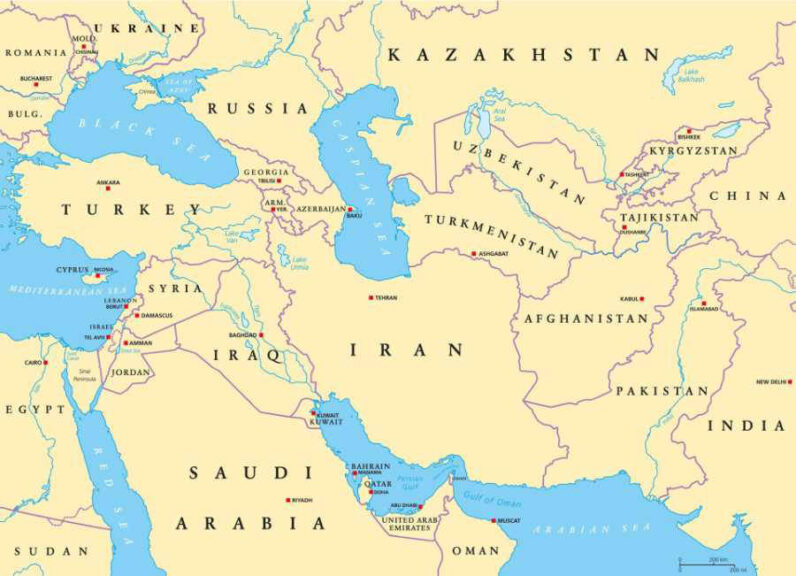
Geo-strategically, Iran’s involvement in the CIS makes complete sense. It borders CIS members Azerbaijan and Turkmenistan, while is connected to Kazakhstan and Russia via the Caspian Sea. It is also a key transport node. While much has been made of the INSTC routes heading south from Russia, via Azerbaijan and northern Iran to its southern ports and onto Pakistan, India, and Africa, the Iranian component in the CIS is not exclusively directly by this transport corridor but by a new development – the Strait of Hormuz has become security compromised. It is now recognised by all players that it can no longer be relied upon as a primary energy corridor.
Instead, infrastructure is now being built in northern Iran that will feed the countries massive energy reserves in Central Asia – via the Caspian, or overland via Turkmenistan to reach markets in Kazakhstan, Uzbekistan, Tajikistan and Kyrgyzstan. Another prize would be Afghanistan, which is also gradually being connected to the Central Asia landscape.
Russia is also negotiating with Iran for the development of up to eight nuclear power plants, which if feasible would provide the country with much needed electricity and provide a real boom to its manufacturing productivity. This could also have spin off benefits for western Pakistan, a currently unstable region is desperate need of its own energy resources.
The apparent, quiet, and unofficial admission of Iran into CIS participation is therefore a significant move.
Otherwise, the meetings concentrated on developing development architecture including issues from education to legal rights and transport.
Of these, the latter component is the most important. It was also noticeable that when discussing the wider CIS – the ‘Greater Eurasian Partnership’ – he also included as development partners the Eurasian Economic Union, the Shanghai Cooperation Council, and ASEAN. The message here is that connectivity decisions made by the CIS have far wider implications than remaining within the bloc itself. That is a very good reason as to why Eurasian geopolitical analysts should be taking note.