Русский





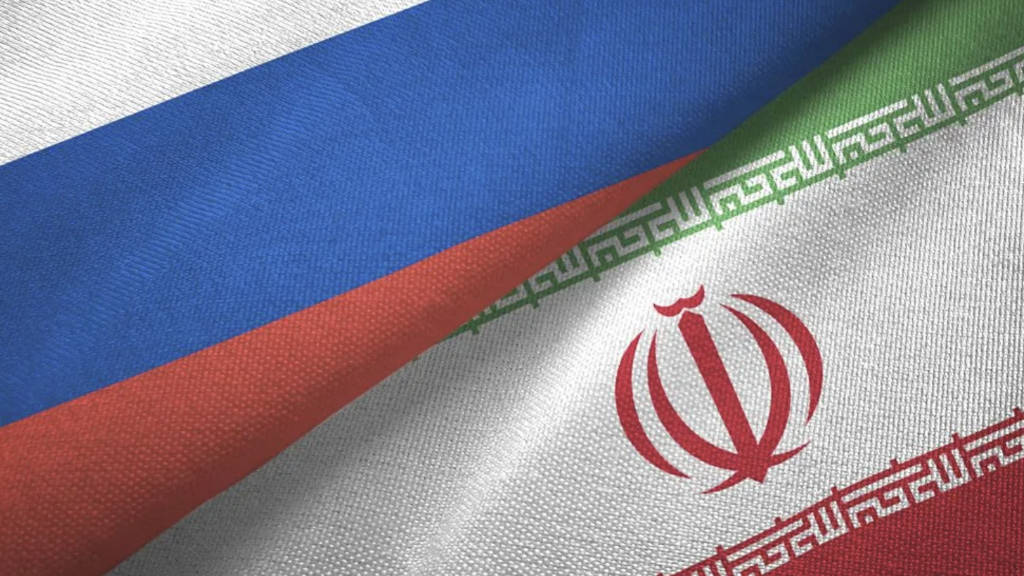

From holding meetings with the Gulf Cooperation Council members and bilateral meetings with the Foreign Ministers of Bahrain, Kuwait and Saudi Arabia, the Russian Foreign Minister, Sergey Lavrov arrived in Tehran to hold discussions with Masoud Pezeshkian, the Iranian President, Foreign Minister Abbas Araghchi, and Iran’s security chief, Mohsen Rezaei.
At the same time, Russian Prime Minister Mikhail Mishustin, held talks with Iranian First Vice President Mohammad Reza Aref in Dushanbe, Tajikistan. Lavrov’s mission appears to have been diplomacy based, looking at ways to prevent further conflict in the Middle East and broker some agreements between Iran and especially Saudi Arabia, where Iran has attacked US air force bases. Mishustin’s meetings appear to have been more trade and investment related. We will deal with these separately as follows:
Lavrov’s Meetings With Pezeshkian
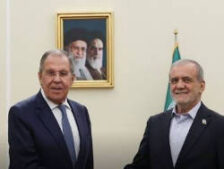
The discussions conveyed the views of GCC members – who Lavrov had met the day before and addressed the situation in the Gulf region and ways to resolve the international crisis. They also discussed further steps to strengthen coordination within the United Nations and expand cooperation through BRICS, the SCO, and the EAEU.
President Pezeshkian urged faster implementation of existing joint agreements, highlighting energy, transportation, trade, and power plant infrastructure. Lavrov stressed Russia and Iran’s alignment on global issues and the need for ongoing diplomatic talks. and noted that Moscow expects President Pezeshkian to attend the Gas Exporting Countries Forum (GECF) summit scheduled in Moscow next week.
Discussions focused heavily on resolving the “acute international crisis” in the Middle East. Lavrov emphasized that Russia’s diplomatic efforts at the United Nations are aimed at preventing a larger-scale war, offering Moscow’s continued assistance to facilitate a peaceful resolution.
Much of these discussions would have been security related and not open for public disbursement.
Lavrov’s Meetings With Araghchi
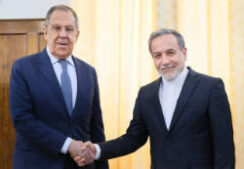
This was the fourth meeting between the two countries’ foreign ministers this year, in addition to 14 telephone conversations. The ministers reviewed the implementation of agreements reached during talks between President of Russia Vladimir Putin and President Pezeshkian on September 1, with particular attention paid to current issues in trade, economic and investment cooperation, as well as the implementation of major joint projects in the transport, logistics and energy sectors.
The ministers addressed ongoing insecurity in the Persian Gulf and the Strait of Hormuz. Araghchi blamed U.S. and Israeli military aggression for the tensions, while Lavrov called for a return to conditions that secure freedom of navigation. Despite international pressure, Lavrov made it clear that Russia will not abandon its joint economic, energy, transport, and investment agreements with Tehran, and detailed that Russia is continuing to provide direct humanitarian aid to Iran, including shipments of essential medicines and food supplies.
Lavrov said that “Despite the challenging situation, which has repeatedly been mentioned, Russia has no intention to abandon the implementation of economic and investment agreements with Iran. Great prospects are opening up in hydrocarbon extraction and transportation. Russia’s contractor is continuing engineering surveys along the route of the future Rasht-Astara railway line project and will begin construction as soon as the Iranian side completes the processing of necessary documents.”
The meeting underscored a strengthening comprehensive strategic partnership rooted in a mutual defense and threat-countering pact signed in 2025. Araghchi remarked that “never in our history have Iran and Russia worked as closely as now”.
Lavrov’s Meetings With Rezaei
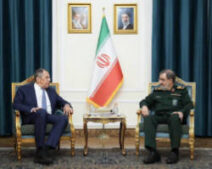
Lavrov also held talks with Major-General Mohsen Rezaei, the Secretary of Iran’s Supreme National Security Council. Rezaei emphasized that Tehran is fully resolved to solidify and expand its long-term strategic and bilateral relations with Moscow, and noted that under the shifting regional circumstances, ongoing stability and security in the Middle East depend heavily on multilateral cooperation among regional countries, free from foreign coercion.
They reviewed joint economic initiatives, specifically highlighting the completion of strategic transport corridors as key drivers for regional stability and economic development, while Lavrov reaffirmed Russia’s robust support for Iran’s positions and initiatives across international forums, including the United Nations Security Council (UNSC) and the International Atomic Energy Agency (IAEA). Russia is heavily involved in developing Iran’s nuclear energy sector. Lavrov mentioned that Russian specialists are gradually returning to the Bushehr Nuclear Power Plant, which was bombed by US aircraft earlier this year. Moscow and Tehran are looking to build eight new NPP in Iran in the coming years as the country seeks to modernise its energy supplies. The NPP technology being considered cannot be repurposed to manufacture nuclear weapons.
Mishustin’s Meetings With Aref
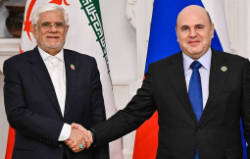
Russian Prime Minister Mikhail Mishustin, who has arrived in Tajikistan to attend a meeting of prime ministers from Shanghai Cooperation Organization (SCO) member countries, held talks with Iranian First Vice President Mohammad Reza Aref also on October 19. The Russian delegation also included Deputy Prime Minister Alexey Overchuk, Minister of Economic Development Maxim Reshetnikov, Deputy Foreign Minister Andrey Rudenko, Deputy Energy Minister Yevgeny Grabchak, and Deputy Finance Minister Alexey Sazanov.
They also discussed the construction of new reactors at the Bushehr NPP, as well as outstanding issues relating to the Racht-Astara railway, a key link in the western corridor of the INSTC. While Lavrov stated that Russia was still waiting for Iranian documentation procedures to be completed, Deputy Prime Minister Overchuk revealed that Iran has notified the Russian side about the completion of the buyout of land for the construction of the Rasht-Astara railway section. Overchuk said that “The negotiation participants exchanged opinions. In the first place, the status of implementation of our North-South project, the construction of the section of the future Rasht-Astara railway was discussed. The Iranian side assured us that the land plots have been bought. We expect documentary confirmation of the buyout. The creation of this railway line is already being carried out by the Russian contractor.”
Overchuk added that “Issues concerning construction in the Caspian Sea and transportation in the Caspian Sea, primarily food transportation, were also discussed.”
For his part, Mishustin said that “At the government level, we are prioritizing the expansion of trade and economic cooperation, our trade grew last year and continues increasing despite geopolitical challenges and sanctions” and added that the implementation of the free trade agreement between the Eurasian Economic Union and Iran is yielding positive results.
He said “We are also implementing major joint projects in the energy sector, including the peaceful use of nuclear energy, as well as in industry, transport infrastructure, and agriculture. The North-South Transport Corridor, which connects Eurasia to the Persian Gulf and the Indian Ocean, is being actively developed. This project of regional significance will provide direct access to the growing markets of the Asia-Pacific region and Africa and will facilitate the creation of new production and logistics chains across Eurasia.”
Bilateral trade between Russia and Iran reached about US$5.8 billion in 2025, marking an increase of more than 21% compared to the previous year. Lavrov mentioned that 2026 trade grew by over 10% during the first eight months of 2026.
New Iran-India Rail Route Completed
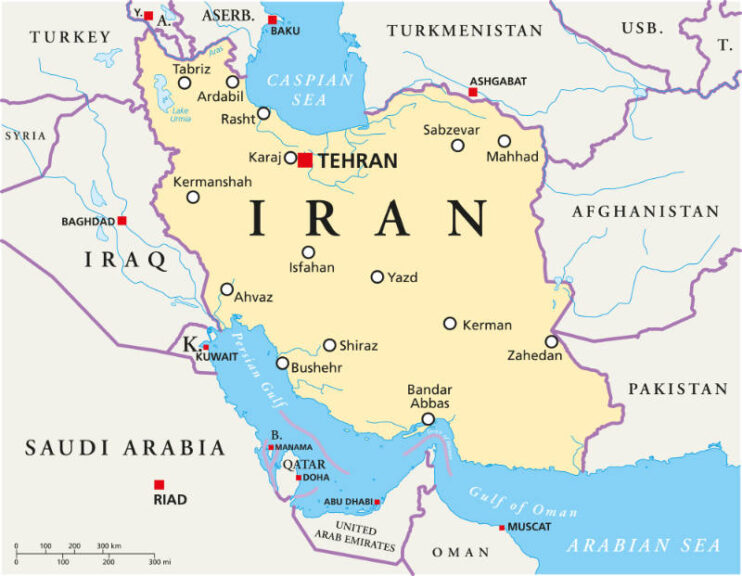
In related news, Iran has completed a key railway line connecting its southern port of Chabahar with Zahedan near its border with Afghanistan, amid a US blockade of its ports and mounting economic pressure from the West. The 730-km rail link gives Tehran more flexibility to move cargo to neighboring countries from the port, which is being developed by India.
The railway is a key link in the INSTC, with Iran’s broader ambition is to connect its southern ports to transport networks connecting the Caspian Sea and beyond, operationalizing a vast land corridor for market access across Afghanistan, Central Asia, and Russia. It offers an overland trade route bypassing Pakistan to connect the Indian Ocean with Afghanistan, Central Asia, and Russia, and is funded by Iran’s National Development Fund after initial foreign participation stalled due to US sanctions.
The Chabahar route is 40% shorter and 30% less costly than the existing Suez Canal route for moving cargo. The line, which has 39 tunnels, 201 bridges, and 33 stations, is currently undergoing testing and expected to become operational early next year. It can also move about 7 million tons of cargo and 1 million passengers annually.
The route also allows India to bypass Pakistan to access Iranian markets, although sanctions and blockades remain a challenge. However, New Delhi and Tehran are actively engaged in smoothing out customs, logistics, and operational issues to maximize the line’s commercial potential. Former Indian Ambassador to Iran D.P. Srivastava has said ”Central Asia and Russia are closer to India if we take the land routes.”
It also links through to Afghanistan’s rail network to Kabul, which is poised to become a Central Asia transit hub. The transport ministries of Kazakhstan, Uzbekistan and the Ministry of Energy and Infrastructure of the United Arab Emirates (UAE) signed an MoU to cooperate on the proposed Kazakhstan-Uzbekistan-Afghanistan-Pakistan railway project, also known as the Central Asia-South Asia (CASA) last month.
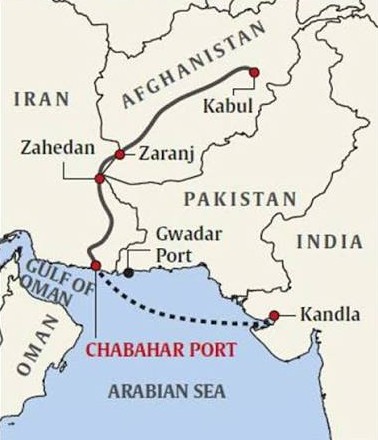
Transit volumes through Chabahar are already up tenfold in the last few months compared to the same period a year ago, the CEO of the Chabahar Free Trade-Industrial Zone, Mohammad Saeed Arbabi, has stated. The new railway line will further increase transit volumes, creating new opportunities in investment, manufacturing, exports, and re-exports, and thus reinforcing the port’s role as a key transit hub, he said. He noted that although military tensions with the United States have reduced shipping activity, India has not withdrawn from the port project. “India remains actively involved. We welcome investment from all countries except hostile nations in the port project.”
Summary
While much of the talks revolved around regional security and preventing an escalation of hostilities, the underlying theme of these meetings was very much trade, investment and infrastructure related. Despite what Lavrov called ‘difficult conditions’, Russia-Iran bilateral trade has grown by 10% this year to date – partially via the still not fully operational INSTC network connecting Russia with northern Iran via the Caspian Sea. That INSTC link – which requires the Rasht-Astara line to be completed – should eventually be fulfilled by 2030.
It was also telling that Russian Prime Minister Mishustin mentioned Africa when referencing the development of the INSTC in Iran. That implies the additional outreach of the INSTC from Iran’s southern coastal ports to markets in East Africa, potentially turning facilities such as Bandar Abbas into Eurasian-African supply chains.
In addition to this, recent events in northern Iran and Afghanistan provide further logistics and infrastructure intelligence. The new Chabahar-Zahedan rail link and the proposed Trans-Afghan railway are poised, when operational, to fundamentally alter Central Asian, South Asian, Iranian and Russian supply chains. The impact on Eurasia as a whole will be substantial.
Iran’s nuclear energy programme is also being discussed with Russia a willing participant in providing the technology. It should be noted that the types of reactors proposed cannot be repurposed for the development of nuclear weapons, despite Israeli protests. However, if Iran can generate electricity from the eight new reactors proposed, it would have a significant impact on Iran’s own development as well as those in neighbouring countries such as Pakistan. It could allow Iran to become a net electricity exporter and would help turn the country into an economic powerhouse. It is the economic significance of this that alarms Tel Aviv.
To get to where Iran should realistically be in terms of achieving its commercial and wealth potential, much needs to do done to rectify problems created by the United States, while maintaining regional diplomacy and understanding. For that, the main mission of Russia’s multiple discussions with Iran illustrate that the process is still being actively worked on.