 Русский




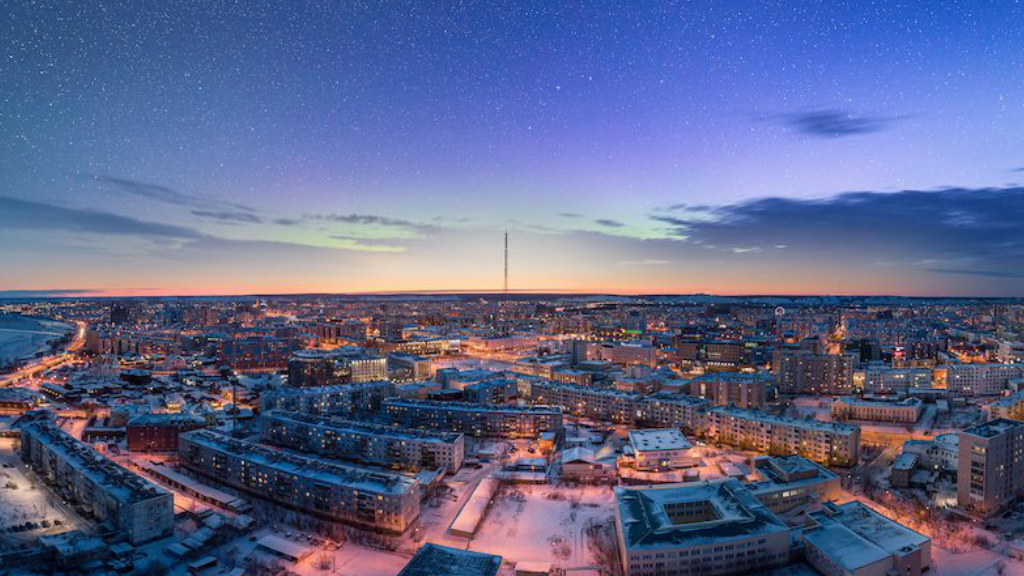

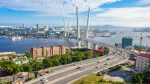
The Russian Far East is emerging as Asia’s next investment frontier. For much of the past decade, discussions of Russia’s “Pivot to Asia” have focused primarily on energy exports, geopolitical realignment and the rapid expansion of trade with China. While these developments remain important, they no longer capture the full picture. The next phase of Russia’s Asian strategy is increasingly being shaped by investment rather than trade alone, with the Russian Far East at its center.
Stretching across more than 40% of Russia’s territory yet home to barely eight million people, the Far Eastern Federal District possesses some of the world’s richest reserves of natural resources, extensive agricultural land, critical minerals, fisheries, forests, Arctic access and direct maritime connectivity with the Asia-Pacific. For decades, these advantages remained underutilized due to inadequate infrastructure, limited domestic capital, demographic constraints and Russia’s long-standing economic orientation toward Europe. That equation has fundamentally changed. Western sanctions imposed since 2022 accelerated a shift that had already begun, pushing Russia’s economic center of gravity eastward and making Asian investors increasingly important to the region’s development. Today, the Russian Far East is no longer simply Russia’s eastern frontier but is steadily becoming its principal economic gateway to the Asia-Pacific.
The scale of investment demonstrates the speed of this transformation. According to the Corporation for the Development of the Far East and the Arctic (KRDV), investment commitments across the Far East and Arctic under Russia’s preferential development regimes have reached approximately ₽15 trillion ($195 billion, of which ₽6.8 trillion ($88.5 billion) has already been invested. More than 4,000 projects are currently under implementation, while nearly 1,400 have entered operation. Investment momentum reached a record in 2025, when investors committed ₽1 trillion ($13 billion) to Far Eastern projects, the highest annual investment since the preferential development framework was introduced and almost one-fifth of all capital invested in the region over the past decade. During that year alone, 674 new projects were launched, generating ₽137 billion ($1.8 billion) in tax revenues and bringing cumulative tax contributions over the previous decade to more than ₽550 billion ($7.1 billion).
Tourism has also emerged as one of the region’s fastest-growing investment sectors. Nearly 300 investment agreements have been signed for ski resorts, hotels, spa complexes and recreational infrastructure, helping tourist arrivals reach a record 7.2 million visits in 2025, up 10% from the previous year and 42% above pre-pandemic levels. Even remote destinations such as the Kuril Islands are witnessing rising investor interest, with accommodation capacity struggling to keep pace with growing demand.
Speaking at a meeting with Prime Minister Mikhail Mishustin on June 24, KRDV Chief Executive Nikolai Zapryagayev emphasized that attracting new investors remains essential to sustaining the region’s growth trajectory, while Mishustin stressed that the Far East and Arctic have become strategic priorities where favorable investment conditions, tax incentives and state support are intended not only to attract capital but also to encourage people to study, work, build businesses and settle permanently. Echoing this strategic vision, Vladimir Yakushev, Secretary of the General Council of United Russia, described the Far East as “the territory where the future of Russia is largely being formed,” reaffirming President Vladimir Putin’s long-standing designation of the development of the Far East as a national priority for the twenty-first century.
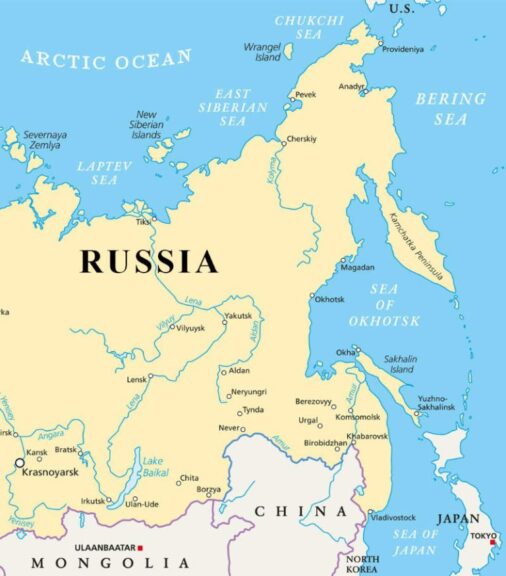
These figures reveal more than successful regional development. They indicate that the Russian Far East is evolving into one of Russia’s most significant long-term investment platforms. Geography gives the region an advantage few others possess. Within a few hours’ flight lie China, Japan, South Korea, India and the ASEAN economies, together accounting for well over half of global GDP and some of the world’s fastest-growing industrial and consumer markets. Rather than transporting raw materials thousands of kilometers west before exporting them, companies can increasingly process, manufacture and distribute products directly from the Far East, reducing logistics costs while integrating more closely with Asian value chains.
The region’s attractiveness extends well beyond hydrocarbons. The Far East contains globally significant reserves of gold, copper, tin, tungsten, rare earth elements, coal, iron ore, diamonds, graphite, nickel and lithium-bearing minerals. Sakhalin remains Russia’s leading liquefied natural gas-producing region, while Yakutia hosts one of the world’s largest diamond industries. Chukotka, Magadan, Khabarovsk and Kamchatka continue attracting investment into precious metals and mining.
Agriculture has likewise become increasingly attractive. The Amur Region and Primorsky Krai have become major soybean producers serving Asian markets, while seafood exports from Sakhalin, Kamchatka and Primorye continue expanding in response to growing demand across Northeast Asia. Consequently, investment is becoming more diversified, drawing not only energy companies but also logistics operators, food processors, infrastructure developers, mining corporations and advanced manufacturers.
China & The Russian Far East
China naturally occupies the leading position in this transformation. Bilateral trade has surpassed US$200 billion, but trade figures tell only part of the story. Chinese companies are steadily increasing their physical presence inside Russia, particularly across the Far East. According to Sberbank, the number of Chinese small and medium-sized enterprises opening accounts increased by 50% within a single year, prompting the bank to establish dedicated business services in Vladivostok to support expanding investment activity.
Primorsky Krai illustrates this trend particularly well. More than 60 projects involving Chinese investors are currently under implementation, with Chinese companies accounting for nearly half of all realized foreign investment in the region. During the first months of 2026 alone, they invested approximately ₽6.5 billion (S84.5 million in Primorye. At the same time, the region’s trade turnover with China reached roughly $8 billion in 2025, up around 15% year on year, while cargo throughput across border crossings surged 29% to more than 3.3 million tonnes. Tourist arrivals from China climbed to around 400,000, and the ongoing modernization of major border crossings is expected to further accelerate cross-border trade, logistics and investment.
Chinese investment is also becoming increasingly diversified. Interest is no longer limited to purchasing Russian commodities. Construction-material producers, industrial equipment suppliers, logistics operators and infrastructure developers are actively exploring opportunities under Russia’s Advanced Special Economic Zones and the Free Port of Vladivostok. In mid-2026 alone, a delegation representing approximately 60 Chinese construction companies visited Primorye to evaluate projects under the Advanced Special Economic Zones and the Free Port of Vladivostok framework.
Logistics has become one of the fastest-growing sectors. Large warehouse complexes are under construction throughout Primorye to support expanding trade with China and the broader Asia-Pacific. Among the largest is Logopark Primorye, which will eventually provide more than 89,000 square meters of warehousing space designed for international retailers, cross-border e-commerce and regional distribution networks. Such projects illustrate that modern logistics infrastructure including warehousing, customs processing, multimodal transport and digital supply-chain management is becoming one of the Far East’s strongest competitive advantages by reducing delivery times and strengthening integration with international markets.
Border infrastructure is expanding in parallel. The Blagoveshchensk-Heihe bridge across the Amur River has become a powerful symbol of deepening Russia-China connectivity. Around this corridor, new logistics hubs continue attracting investment, including a recently announced two-billion-ruble logistics complex adjacent to the bridge. Additional petrochemical, agro-logistics and export-terminal projects worth approximately ₽24 billion are also planned within the Amur-Khinganskaya Advanced Special Economic Zone. Together, these developments underscore a broader transformation: the Russian Far East should no longer be viewed merely as a supplier of raw materials but as an integrated production, logistics and investment ecosystem where ports, railways, industrial parks, mineral processing, agriculture, seafood exports and advanced manufacturing increasingly reinforce one another. The so-called ‘China threat narrative’ regarding the Russian Far East is largely illogical and unpersuasive, given Russia’s significant military and defensive capabilities in the region, particularly the presence of the Russian Pacific Fleet. Our previous comments on the ‘China Threat’ issue can be found here.
This transformation also explains why interest in the Russian Far East is expanding well beyond China. Investors from India, the Gulf, Southeast Asia and other parts of the Global South increasingly recognize that the region offers a rare combination of abundant natural resources, generous investment incentives, proximity to major Asian markets and a Russian government committed to long-term industrial development. If China has become the Far East’s principal trading partner, the region’s next stage of development will depend on something broader: diversifying sources of foreign investment. Rather than relying overwhelmingly on one partner, Moscow is positioning the Far East as a multi-partner investment platform capable of attracting capital from across Asia and the wider Global South.
India & The Russian Far East

Among the Far East’s emerging investment partners, India occupies a particularly important position. Political relations between Moscow and New Delhi remain exceptionally stable, but economic cooperation still falls short of its potential. Although bilateral trade has expanded rapidly in recent years, largely driven by Russian energy exports, Indian investment in the Russian Far East remains comparatively modest. This gap makes the region one of India’s most promising untapped overseas investment destinations.
New Delhi has identified the Russian Far East as a strategic destination for investment in coking coal, liquefied natural gas (LNG), diamonds, timber, agriculture, pharmaceuticals, shipbuilding and port infrastructure, supported by the $1 billion Line of Credit announced for Far Eastern development. Yet despite strong political commitment, implementation has lagged behind ambition. Key intergovernmental initiatives, including the 2024-2029 Programme of Russian-Indian Cooperation in Trade, Economic and Investment Spheres in the Far East and the Arctic cooperation agreement, have produced relatively few tangible investment outcomes. A major obstacle remains the region’s chronic labor shortage, with demand for tens of thousands of workers across agriculture, construction, tourism and hospitality. While the number of Indian work permits in Russia has risen from 8,000 to more than 36,000, most workers remain concentrated in low-skilled occupations. At the same time, around 95% of Indian students in Russia study medicine and typically return home after graduation, limiting long-term human capital integration. Addressing these challenges will require stronger cooperation in engineering, information technology, biotechnology and advanced manufacturing, supported by closer university-industry partnerships led by institutions such as Far Eastern Federal University. Such efforts would better align education, research and industrial investment with the region’s long-term development strategy.
The economic complementarity between the two countries is striking. India is one of the world’s fastest-growing steel producers, pharmaceutical manufacturers and food importers, while the Russian Far East possesses abundant reserves of coking coal, iron ore, copper, timber, rare earth elements and fertile agricultural land. Russia’s Pacific ports also offer considerably shorter maritime routes to India’s eastern seaboard than shipments originating in European Russia.
Coal illustrates the opportunity particularly well. India remains one of the world’s largest importers of metallurgical coal for steel production, while Yakutia and other Far Eastern regions possess vast reserves capable of supporting long-term export contracts. Rather than remaining commodity buyers, Indian companies could become equity investors in mining operations, railway infrastructure, port development and downstream processing. Similar opportunities exist in fertilizers, where processing facilities located closer to Pacific export terminals could significantly improve supply-chain efficiency for Asian markets. Agriculture offers another underappreciated avenue, with the Amur Region and Primorsky Krai expanding soybean production while creating opportunities for Indian agribusinesses, grain traders and food-processing companies to establish export-oriented joint ventures serving South and Southeast Asia. With Russia and India stepping up efforts to operationalize the Chennai-Vladivostok Maritime Corridor amid escalating geopolitical tensions in the Middle East and following the successful conclusion of the 2026 Russia-ASEAN Summit, the time has come for governments, businesses, and investors across Asia to deepen their engagement with the Russian Far East and unlock its vast investment potential.
The Middle East & The Russian Far East

Beyond India, the Gulf states are emerging as increasingly important long-term investors. Whereas Gulf investment in Russia once focused largely on financial assets, sovereign wealth funds from the United Arab Emirates, Saudi Arabia and Qatar are now showing growing interest in logistics, infrastructure, food security and industrial projects. Their national economic diversification strategies align closely with the Far East’s development priorities. Russia requires patient capital for ports, logistics corridors, industrial zones and processing industries, while Gulf investors seek stable, long-term infrastructure assets. Co-investment partnerships involving the Russian Direct Investment Fund have already demonstrated that large-scale international capital can still be mobilized despite geopolitical tensions, with infrastructure, cold-chain logistics, food production and petrochemicals offering significant room for expansion over the coming decade.
ASEAN & The Russian Far East

Southeast Asia represents another major opportunity. Collectively, ASEAN economies comprise nearly 700 million people and one of the world’s fastest-growing manufacturing regions. Their expanding industrial base requires secure supplies of energy, seafood, timber, agricultural products and critical minerals, all areas in which the Russian Far East enjoys considerable comparative advantages.
Singapore’s importance lies not in the size of its domestic market but in its globally recognized expertise in finance, port management, logistics, industrial parks and digital infrastructure. Singaporean participation is therefore likely to focus on financing, logistics optimization, maritime services and technology-driven industrial development. Indonesia offers complementary strengths in mineral processing, particularly nickel and stainless steel, creating opportunities for technological cooperation in copper, graphite and rare earth processing. Vietnam’s long-standing political ties with Russia continue to underpin cooperation in seafood processing, agriculture and logistics, while expanded maritime links between Vladivostok and Southeast Asian ports could substantially improve supply-chain resilience. Malaysia and Thailand also possess capabilities in halal food industries, food processing, rubber manufacturing and consumer goods that complement Far Eastern agricultural production.
Japan, Mongolia, North Korea and South Korea present a more complicated picture. Geopolitical tensions have reduced new investment since 2022, but both countries retain considerable long-term relevance. Japanese firms possess decades of expertise in energy efficiency, shipbuilding, fisheries and advanced manufacturing, while South Korean companies remain global leaders in shipbuilding, electronics, logistics and automotive components. When geopolitical conditions eventually improve, both are well positioned to re-emerge as significant participants in the Far East’s industrial development. Geography continues to work in the region’s favor: Vladivostok is closer to Seoul, Tokyo, Beijing and Harbin than it is to Moscow, providing a natural advantage for integrated regional supply chains.
Sectoral opportunities continue to expand beyond resource extraction. Mining remains central because the region holds globally significant deposits of gold, silver, copper, tin, tungsten, lithium, graphite and rare earth elements. As demand for critical minerals accelerates alongside the global energy transition, the strategic importance of these resources will continue to grow. Rare earth elements deserve particular attention. With many countries seeking to diversify supply chains beyond China’s dominant processing capacity, Russia’s untapped reserves create opportunities for downstream industries capable of generating substantially greater value than exporting raw concentrates alone.
Logistics and infrastructure are becoming equally important engines of growth. The modernization of ports in Primorye, Sakhalin and Khabarovsk Krai, together with railway upgrades linking Siberia to the Pacific coast, is steadily transforming the Far East into one of Eurasia’s principal logistics corridors. Government initiatives, including Advanced Special Economic Zones, the Free Port of Vladivostok, preferential tax regimes, subsidized infrastructure and streamlined administrative procedures, have already delivered new electricity generation, expanded gas supplies, road construction and engineering infrastructure supporting thousands of private investment projects. Such investments reduce long-term business risks more effectively than tax incentives alone, laying the foundation for a self-reinforcing industrial ecosystem. It is investment that determines whether the Far East remains merely a supplier of raw materials or evolves into one of Eurasia’s principal industrial and logistics platforms. This transformation is already becoming visible.
Over the past decade, the Russian government has introduced one of the world’s most comprehensive regional investment frameworks through Advanced Special Economic Zones (TOPs), the Free Port of Vladivostok, preferential tax regimes, subsidized infrastructure and streamlined administrative procedures. According to the KRDV, public investment has already delivered hundreds of megawatts of new electricity capacity, nearly 80 kilometers of roads, expanded gas supply and additional engineering infrastructure supporting thousands of private investment projects. The region’s industrial future increasingly depends on adding value rather than simply exporting raw materials. Copper concentrates can support domestic smelters, rare earth deposits can feed battery-material production, graphite can supply electric vehicle industries, timber can be processed into higher-value construction materials, and agricultural and seafood products can increasingly be processed and packaged before export. Every additional stage of processing generates employment, attracts suppliers and encourages technological upgrading. This industrial logic explains why logistics has become as strategically important as mining itself. Combined with expanding border crossings, new bridges across the Amur River and upgraded container terminals, the Far East is steadily evolving into Russia’s eastern gateway to Eurasia.
The Northern Sea Route represents another pillar of this long-term transformation. While often portrayed simply as an alternative to the Suez Canal, for Russia it serves as the backbone of an emerging Arctic economy linking LNG production, mining, offshore development, shipbuilding, ports and new industrial settlements. Cargo volumes have increased dramatically from roughly 4 million tonnes in 2014 to around 38 million tonnes in recent years while additional infrastructure continues to stimulate demand for icebreakers, specialized shipbuilding, marine engineering, satellite navigation, port terminals and logistics services. Freight traffic along the Northern Sea Route (NSR) in 2026 already exceeds 2025 figures by 15%, and the number of requests for transit permits has increased. Chinese participation in Arctic logistics projects demonstrates this broader trend, while investors from India, Southeast Asia and the Gulf are increasingly exploring opportunities based on their respective strengths in energy, infrastructure, logistics, food security and industrial development. This diversification reduces Russia’s dependence on any single source of foreign capital and strengthens the Far East’s position at the intersection of Northeast Asia, Southeast Asia, South Asia and the Arctic.
Challenges
Challenges nevertheless remain significant. Population decline continues to constrain labor availability, harsh climatic conditions increase construction costs, transport infrastructure still requires modernization, sanctions complicate access to advanced technologies, and financing large-scale industrial projects demands substantial domestic and foreign capital. These obstacles should not be underestimated. Yet history shows that frontier regions from Alaska and northern Canada to western Australia and the Gulf states often experience rapid development once infrastructure investment reaches a critical threshold. The Russian Far East may now be approaching a similar inflection point. If transport corridors continue expanding, processing industries receive greater investment and Asian partners increasingly localize production, the region could emerge as one of the Asia-Pacific’s most dynamic investment frontiers over the next decade.
The broader geopolitical implications are equally important. For years, discussions surrounding Russia’s Pivot to Asia centered primarily on diplomacy and geopolitics. Yet durable geopolitical influence ultimately rests on economic integration. Ports handling millions of tonnes of cargo, industrial parks employing thousands of workers, logistics centers connecting continental trade routes and multinational investment projects create relationships that are far more enduring than diplomatic declarations alone.
That is why the Russian Far East matters. It is no longer merely Russia’s eastern frontier but is steadily becoming its principal economic interface with the Indo-Pacific. The success of Russia’s Pivot to Asia will therefore be measured not only by record trade with China but increasingly by the diversity, quality and technological sophistication of investment flowing into its eastern territories. If current trends continue, Vladivostok, Primorye, Sakhalin, Yakutia, Amur, Kamchatka and Chukotka could emerge as internationally competitive investment destinations where Asian capital supports advanced manufacturing, value-added industries, logistics, digital infrastructure and technological innovation. In that sense, the Russian Far East is no longer simply the geographical endpoint of Russia. It is increasingly becoming the starting point of Russia’s economic future in Asia.
This article was written by M. Jahan, an expert on Russia-Asian affairs. She may be contacted at info@russiaspivottoasia.com