Русский








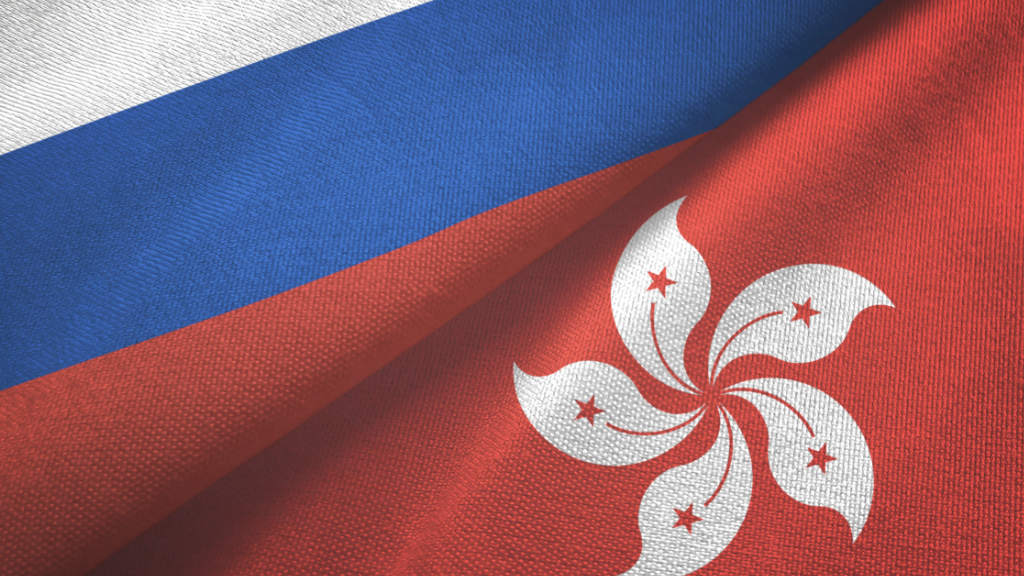

A Russian consumer goods business mission organized by the Russian Export Center visited Hong Kong on September 15-16, 2026, seeking partnerships and access to Asian markets. Russia-Hong Kong bilateral trade reached around US$2 billion in the first half of 2026, with Russian exports exceeding US$1.1 billion. Twelve Russian companies from food, confectionery, jewelry, veterinary, and agricultural sectors participated, exploring opportunities in Hong Kong, the Greater Bay Area, and wider international markets.
The mission highlights Hong Kong’s role as an international business hub and a potential gateway for expanding Russian consumer goods exports across Asia. Russia-Hong Kong economic relations during 2026 are developing as a specialized component of the wider China-Russia economic partnership. While Hong Kong is not comparable with mainland China in the scale of Russian trade or investment, its role is different: it combines an international financial center, free-port logistics, common-law commercial infrastructure, commodity trading, professional services, and direct proximity to Shenzhen and the Guangdong-Hong Kong-Macao Greater Bay Area. The latest figures show that this function is becoming more important even as the formal Russian corporate footprint remains small.
The relationship has acquired particular significance since 2022 because Russian commodities have increasingly moved toward Asian trading centers. Hong Kong emerged as one of the principal destinations for Russian gold, while Hong Kong-linked shipping companies have become more visible in Russian crude logistics. At the same time, Moscow is attempting to broaden the relationship beyond commodities through food, consumer goods, tourism, restaurants, retail, technology, and prospective investment in the Northern Metropolis. The political framework is also important. Hong Kong remains a Special Administrative Region of China under the Basic Law and operates under the “One Country, Two Systems” framework. Its most recent 2026-2030 Five-Year Plan explicitly combines Hong Kong’s international financial and commercial functions with deeper integration into China’s national development strategy and the Greater Bay Area.
John Lee Opens The Northern Metropolis To Russian Investors
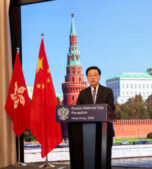
The most direct 2026 political-business engagement came at the Russia National Day reception in Hong Kong on June 10. Hong Kong Chief Executive John Lee Ka-Chiu used the event, hosted by the Russian Consulate General, to invite Russian entrepreneurs, companies, and investors into the Northern Metropolis. The project covers about 30,000 hectares along Hong Kong’s border with Shenzhen and is designed as a major new housing, industrial, technology, and innovation development zone. Lee specifically identified high technology, artificial intelligence, and environmental industries as areas attracting international companies.
He described Hong Kong as a two-way springboard: Russian companies can use the city to reach mainland China and wider international markets, while mainland enterprises can use Hong Kong to expand internationally, including into Russia. Russian Consul General Anatoly Kargapolov responded by saying Russian entrepreneurs were prepared to examine joint investment projects in the GBA and Northern Metropolis. He cited more than US$200 billion in Russia-mainland China trade in 2025 and US$4.3 billion in Russia-Hong Kong trade, while describing Hong Kong as an attractive and predictable jurisdiction for Russian business. The significance is greater than the reception itself. Hong Kong was effectively offering Russian companies an entry point into the GBA’s industrial and consumer economy rather than simply inviting them into the Hong Kong domestic market.
Russia-Hong Kong Trade: Another US$2 Billion in H1 2026
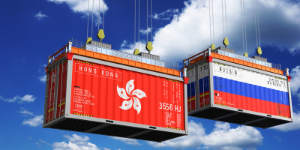
Russia-Hong Kong merchandise trade reached approximately US$4.3 billion in 2025, according to figures cited by the Russian side. Hong Kong’s statistics placed Russia 23rd among its global trading partners, accounting for about 0.3 percent of total trade; Russia was the city’s 19th-largest import source and 27th-largest export market. Within Central and Eastern Europe, however, Russia was Hong Kong’s largest trading partner and import market. The first half of 2026 maintained the momentum. Deputy Consul General Vadim Savin said bilateral trade reached approximately US$2 billion during January-June, with Russian exports to Hong Kong exceeding US$1.1 billion. That means the first-half flow was already close to half of the previous full-year level. Hong Kong’s wider economy provides an important explanation for its attractiveness.
HKTDC data put Hong Kong’s GDP at US$427.2 billion in 2025, up 3.5% in real terms, with total exports reaching US$671.8 billion, up 15.4%. Merchandise exports accelerated by 32% year-on-year in January–March 2026. The trade structure is highly asymmetric. Hong Kong exports to Russia include telephones, computers, integrated circuits, electronics, and machinery, reflecting the city’s re-export and distribution function. Russian exports to Hong Kong are much more commodity-intensive, especially precious metals, alongside fertilizers, meat, and food products.
Gold Has Become the Defining Commodity Channel

The most dramatic change is gold. In the first seven months of 2026, almost 100 tonnes of Russian gold bullion reached Hong Kong, roughly three times the volume in the same period of 2025. By early August, shipments had already exceeded the 85 tonnes imported during the whole of 2025; July alone accounted for 23.1 tonnes. Since 2022, the cumulative value of Russian gold routed through Hong Kong has been estimated at about HK$276 billion (US$35 billion). Much of the metal subsequently moves into mainland China. This is the latest stage of a much larger restructuring of Russian gold geography. In 2019, the United Kingdom absorbed more than 92% of Russian unprocessed non-monetary gold exports by value; in 2020, 289.5 tonnes out of almost 319 tonnes of gold that Russia exported went to the UK. After the disruption of Western markets in 2022, Russia’s gold exports to the UAE, Hong Kong, China, and other Asian destinations expanded, with the commodity both seen as an investment and because Russian banks had been disconnected from SWIFT.
Hong Kong received 82.2 tonnes worth US$5.21 billion in 2023 and about 92 tonnes worth US$10.5 billion in 2025, becoming the leading destination in that year’s new export geography. Those decisions proved to be very sound. Gold traded at between US$52 million and US$60 million a tonne in 2022; by 2025 it had risen to over US$129 million per tonne.
These reserves are substantial: Russia ranks sixth in terms of official gold reserves with 2,277 tonnes, and second after Australia (with a gap of only 1,000 tons) in terms of geological reserves, estimated at 12,000 tons (according to the USGS Mineral Commodity Summaries 2026).
Hong Kong’s significance therefore is not limited to domestic consumption. It is a hub for clearing, trading, and redistribution. On July 7, 2026, Hong Kong launched a new centralized gold clearing and settlement system in test mode—this is a key part of a large‑scale plan to transform the city into a global precious metals trading center capable of challenging the London market. The full official launch of the system is scheduled for the first quarter of 2027, while its five‑year plan also places greater emphasis on Hong Kong’s international financial and commodity infrastructure.
Shipping Adds A Second Strategic Commodity Channel
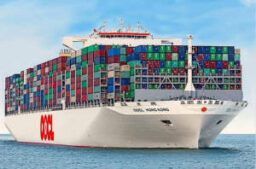
The latest development concerns crude oil. In August 2026, non-G7 tankers carried 70.7% of Russia’s crude exports of approximately 3.8 million barrels per day. Hong Kong operators lifted 32 million barrels, compared with 18 million barrels in July, their highest monthly volume since November 2022. The increase coincided with a reduction in Greek tanker activity in the Black Sea. Greek operators’ monthly liftings fell to 13.6 million barrels from 26.4 million, while their Black Sea loadings dropped from 11.6 million to 3 million barrels. Open sources also note that Hong Kong-linked vessels were predominantly older ships and that ownership structures were sometimes opaque. For legitimate Russian-Hong Kong commerce, this creates both opportunity and risk. Hong Kong has ports, shipping, insurance, commodity finance and maritime services but Russian-related shipping faces substantial sanctions-compliance requirements. The commercial future is therefore more likely to be built around transparent commodity trading, logistics and financial services than opaque structures designed to circumvent restrictions.
Food Is The Clearest Diversification Beyond Commodities

Agricultural trade is smaller but is moving in the opposite direction: toward diversification. Russia-Hong Kong agricultural and food trade reached US$37 million in January-August 2026, up 7.6% year-on-year. Russian food exports rose 8.4% to US$36.5 million. Russia supplied meat products, poultry and vegetable oils, while shipments of canned crustacean products also began. Hong Kong supplied plants and plant parts used in perfume and pharmaceutical production, confectionery and hop tea; canned fruit and nuts entered the trade structure in 2026.
The September 15-16 Russian Export Center mission was therefore strategically important. According to a China Daily report, the first “Made in Russia” consumer-goods mission to Hong Kong brought 12 Russian companies from food, jewelry, veterinary, and plant-protection sectors. Among the participants were Makfa and FrutoNyanya, as well as Belyovskaya Pastila, SlaSti, and the Volgograd‑based ROZHKOVA LAB, all seeking Hong Kong distributors and buyers.
The mission involved the Russian Export Center, Russia’s Ministry of Agriculture, the Russian Consulate General, the Federation of Hong Kong Industries, the Chinese Manufacturers’ Association of Hong Kong, and the Hong Kong Trade Development Council. Discussions extended beyond Hong Kong to the Greater Bay Area and other Asian markets, reinforcing the city’s “super-connector” function.
Evgeny Bazhov, head of the REC’s Representative Office in Shanghai, said that “Hong Kong is a unique hub for international business. It brings together businesses from around the world, and provides an opportunity for Russian companies to find the right partners, enter new markets, and build long-term business relationships.”
The business-to-business event was held with the support of the Consulate General of Russia in the Hong Kong Special Administrative Region and Russia’s Ministry of Agriculture. Vadim Savin, deputy consul general of Russia in Hong Kong, expressed his hope for companies to explore new market opportunities through face-to-face communication. The opening ceremony was also addressed by Gary Lau, deputy chairman of the Federation of Hong Kong Industries; Ellis Wong Wai-hung, vice-president of the Chinese Manufacturers Association of Hong Kong; Samuel Cheng, associate director of the Hong Kong Trade Development Council; and Natalia Kruglova, representative of the Ministry of Agriculture of Russia in China and vice-consul of the Consulate General of Russia in Guangzhou.
Delegates said they hope the event will not only connect Russian companies with Hong Kong partners but also allow them to explore opportunities in the Guangdong-Hong Kong-Macao Greater Bay Area and even other global markets through the international platform the city offers as a “super-connector”.
“We have high expectations for the event,” said Vera Nikitina, a representative of Belevskaya Pastila, a leading food manufacturer specialising in traditional Russian desserts and natural sweets with no artificial additives. Noting that the company’s products are based on an ancient Russian recipe dating back to 1881 and have already been exported to various Asian markets, Nikitina said she sees a gap in the Hong Kong market and significant sales potential, particularly for its premium product lines, given the city’s sizable middle-class population.
Visiting Hong Kong for the first time, Aleksey Moskvites, export manager of confectionery manufacturing company SlaSti, said he hopes to find business partners through the event to bring the company’s products to the local market. “We are promoting protein bars in particular because we have noticed that many people like sports in the city, and it is a popular product,” said Moskvites.
Volgograd Entrepreneurs in Hong Kong

Volgograd entrepreneurs participated in the first Russian Export Center (REC) “Made in Russia” consumer-goods business mission in Hong Kong on September 15-16, 2026, organised under the national project International Cooperation and Export. The Volgograd brand ROZHKOVA LAB held meetings with potential Asian partners and distributors to expand its international market presence. The mission highlighted Hong Kong’s role as a major Asian trade and logistics hub, providing Russian businesses with access to mainland China, Vietnam, Indonesia and wider ASEAN markets. The Volgograd Region Export Support Center continues to assist regional companies with international market entry, foreign-trade procedures and obtaining “Made in Russia” certification.
Russian Retail And Cuisine Are Creating A Hong Kong Consumer Ecosystem
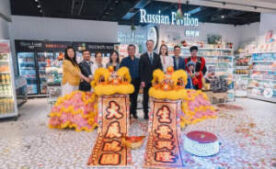
The commercial relationship is also becoming visible at street level. On April 15, 2026, Russia’s Consul General Anatoly Kargapolov attended the opening of Borsch Spot in Fo Tan and the Russian Pavilion supermarket in Kai Tak. Borsch Spot, owned by Alexander Shponko, uses a central kitchen with two Russian chefs and offers delivery through a mobile application. The Russian Pavilion is jointly operated by Slavic Feast, Borsch Spot and Siberia Taiga and is the second Russian supermarket in Hong Kong after the Mong Kok outlet. Its products include frozen fish and meat, chocolate, jam, snacks, health supplements and skincare. Evgeniia Shcherbinina heads Slavic Feast, while Huang Nannan of Hof International, which operates the Siberia Taiga brand, said the company was discussing distribution through a major Chinese e-commerce platform. This is a modest market in absolute terms but strategically significant: Russian exporters can use Hong Kong not merely to sell to 7.5 million residents but as a distribution platform into the GBA and potentially Southeast Asia.
Tourism Is Becoming A Practical Economic Bridge

Russian visitor arrivals increased from about 60,000 in 2023 to 131,598 in 2024 and 164,592 in 2025. In January–May 2026, approximately 110,000 Russian tourists visited Hong Kong, an increase of 57.6% year-on-year, placing Russia second among European source markets behind the UK. The growth was linked to additional direct flights, connections by Chinese carriers and China’s visa-free policy for Russian tourists. The Hong Kong Tourism Board also launched an “Only in Hong Kong” promotion in 22 foreign markets, including Russia. From January to June 2026, Hong Kong received more than 26 million visitors, up 13% year-on-year. Russian visitors can stay visa-free for up to 14 days under the applicable arrangements.
Hong Kong-Russia Petroleum Cooperation
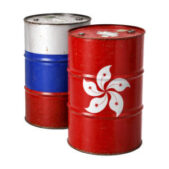
Hong Kong is exploring closer cooperation with Russia’s petroleum sector amid changing global energy markets and geopolitical uncertainty, with the focus potentially extending to crude oil, refined petroleum products, fuel storage, logistics and energy trading. As an import-dependent economy serving major transportation, aviation, shipping and industrial demand, Hong Kong sees supply diversification and stable energy access as important to long-term economic resilience, while Russia remains one of the world’s largest oil and natural-gas producers and exporters.
Hong Kong’s financial system, port infrastructure, shipping, insurance, commodity trading and investment services could support lawful energy transactions and strengthen its role as an Asia-Pacific petroleum-trading hub, although companies would need to comply with applicable sanctions, financial regulations and international legal requirements. The evolving cooperation would therefore be more commercially focused than on direct production, with financing, trade facilitation, shipping and commodity services potentially playing the central role.
At the same time, energy-security planning is increasingly being linked with solar, wind, hydrogen, electric transport, energy efficiency, smart infrastructure and other low-carbon technologies, making diversification of both conventional and cleaner energy sources part of Hong Kong’s longer-term strategy. The scale of Russia-Hong Kong petroleum cooperation will ultimately depend on market conditions, geopolitical developments, regulatory compliance, supply-chain requirements and commercial feasibility, while energy security and sustainable development remain central to Hong Kong’s economic planning.
The Corporate Footprint Remains Surprisingly Thin

The major weakness is investment depth. Hong Kong Census and Statistics Department data show only 10 Russian regional headquarters, regional offices and local offices as of June 2, 2025. This is tiny compared with the presence of US, Japanese, mainland Chinese and British companies. One of the major Russian corporate entities is United Company RUSAL, which became the first Russian company to list on the Hong Kong Stock Exchange in January 2010.
However, Hong Kong’s C&SD does not publicly identify those establishments individually in its published statistical table. A reconstruction from corporate filings and company records points to a small group of Russian-linked operations, including United Company RUSAL, Aeroflot, ALROSA, Nornickel, FESCO, Galileosky, Kaspersky, X5, VTB Capital and other Russia-linked corporate entities. The precise classification requires care because some entities have Hong Kong or offshore incorporation structures despite having Russian parents or principal Russian operations.
RUSAL is the most prominent example: it became the first Russian company to list on the Hong Kong Stock Exchange in January 2010 and continues to have HKEX-listed securities and a Hong Kong corporate presence. RUSAL continues to have HKEX-listed securities. The situation on Hong Kong investment in Russia is similarly difficult to measure because “Hong Kong company” and “Chinese company listed in Hong Kong” are not interchangeable categories. Chery and Great Wall Motor, for example, has Hong Kong-listed or Hong Kong-market links, but they are mainland Chinese companies rather than Hong Kong-owned companies
Hong Kong’s Five-Year Plan Creates A Larger Opening
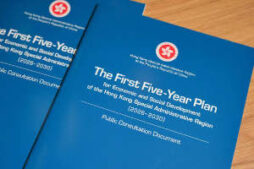
On September 16, 2026, John Lee announced Hong Kong’s first Five-Year Plan for 2026-2030. It prioritises international finance, maritime and trade services, innovation and technology, high-end talent, Northern Metropolis development, GBA integration, Belt and Road participation and “new quality productive forces.” The plan includes 196,000 public housing units and accelerates the 30,000-hectare Northern Metropolis, which is expected to create approximately 650,000 jobs. For Russian companies, the most relevant elements are finance, commodity trading, logistics, legal services, technology, environmental industries and GBA market access. The plan’s proposed gold clearing infrastructure and digital-currency settlement initiative add another financial dimension. The city is simultaneously strengthening international legal and dispute-resolution services. Hong Kong’s wider investment ecosystem is expanding. InvestHK said more than 400 companies established or expanded operations in Hong Kong during the first half of 2026, bringing more than HK$53 billion of foreign direct investment and over 8,600 jobs.
Tax Advantages Exist, But Banking Is The Real Constraint
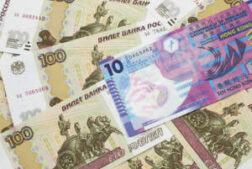
Hong Kong’s tax architecture is attractive for international business. The two-tier profits-tax system applies 8.25% to the first HK$2 million of assessable profits and 16.5% thereafter. There is generally no VAT/GST, no capital-gains tax and no withholding tax on dividends. The Russia-Hong Kong Comprehensive Double Taxation Agreement was signed on January 18, 2016, and entered into force on July 29, 2016. It provides, among other provisions, reduced withholding-tax rates on dividends and royalties and special treatment for international shipping income.
A Russia-Hong Kong Investment Promotion and Protection Agreement is still under consultation/negotiation rather than being in force. Hong Kong’s Trade and Industry Department lists Russia among the jurisdictions with which IPPA negotiations remain ongoing. The principal obstacle is therefore not Hong Kong’s tax code. It is banking compliance. Banks can apply group-level risk policies that are stricter than Hong Kong’s own legal requirements, making Russia-related account opening, correspondent banking, and payments difficult. Secondary-sanctions exposure also affects international banks and service providers.
Summary
The Russia-Hong Kong data points to a specific, rather than general, opportunity. Hong Kong is too small to become a substitute for mainland China in Russian trade. But it can function as a specialised bridge between Russia, the GBA, and international capital and services. The strongest existing channels are gold, commodity trading, maritime logistics, and tourism. The fastest diversification opportunities are food, consumer goods, pharmaceutical-related products, environmental technologies, professional services, digital commerce, and selected technology sectors.
Northern Metropolis and GBA integration create the potential for Russian investment in technology and environmental projects, while Hong Kong’s financial architecture can support lawful commodity finance and international settlement. The relationship’s development can already be measured through successive steps: US$4.3 billion bilateral trade in 2025; US$2 billion in the first half of 2026; nearly 100 tonnes of Russian gold in seven months; US$37 million in agricultural and food trade in eight months; 110,000 Russian visitors in five months; a 12-company Russian consumer-goods mission in September; a second Russian supermarket; a Russian restaurant; and an explicit invitation from the Hong Kong chief executive for Russian capital to participate in the Northern Metropolis.
The central economic fact is therefore not that Russia-Hong Kong trade is large. It is that the function of Hong Kong in Russia’s Asian economic network is becoming larger than the bilateral trade number suggests. Its value lies in the combination of finance, logistics, gold, shipping, professional services and proximity to the GBA. The principal constraint is equally clear: banking and sanctions compliance. For Russian business, the viable long-term model is therefore not Hong Kong as a sanctions workaround, but Hong Kong as a transparent commercial, financial and distribution platform connecting Russian producers with China and wider Asian markets.
This article was written by Ms Khatun, an expert in Russia-Asian affairs. She may be reached at info@russiaspivottoasia.com