 Русский





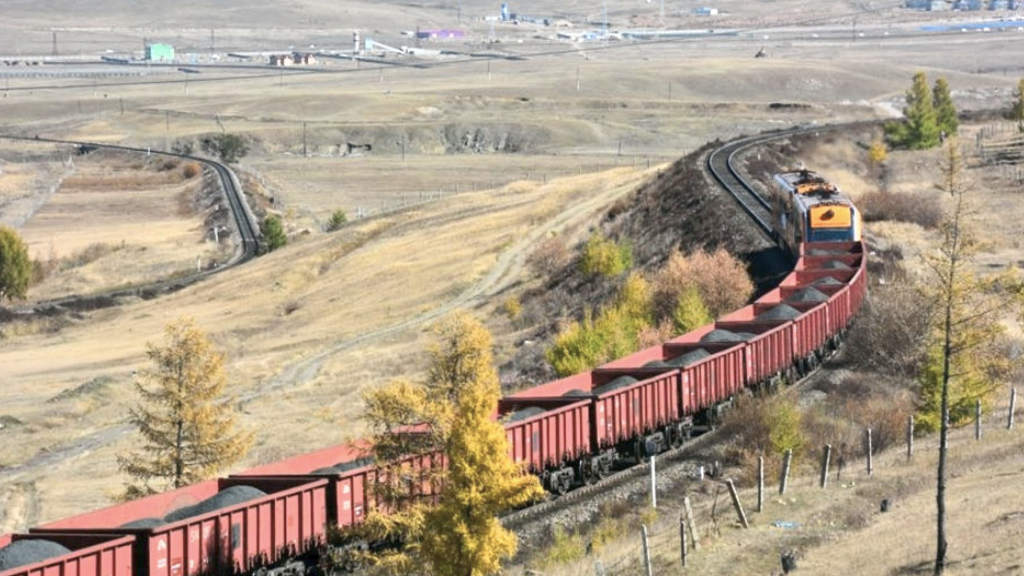

Mongolia and Russia have agreed to establish a working group, including representatives from China, tasked with finalizing the design details and financing terms for the Russia-Mongolia-China western railway corridor. The decision came after a meeting between Mongolian Deputy Prime Minister Nyamtaishiryn Nomtoibayar and Russian Deputy Prime Minister Alexei Overchuk.
The Mongolian government stated that “Minister Nomtoibayar expressed interest in advancing the western railway corridor project, a matter previously discussed by the two countries’ leaders during the Shanghai Cooperation Organization (SCO) summit. The railway project should be a key hub for regional trade, investment, and transport logistics.”
Overchuk emphasized the great importance of the trade and economic sphere for expanding and developing cooperation between the two countries.
Mongolia proposed constructing a railway from the northwestern border with Russia to the northwestern border with China as part of efforts to develop cooperation with the Eurasian Economic Union and China in June this year. The planned corridor is intended to link Russia with Mongolia’s Uvs Province via the Arts Suuri checkpoint on the border with Tuva, the Bulgan checkpoint in Khovd Province, and the Takshiken checkpoint on the border with China’s Xinjiang Province.
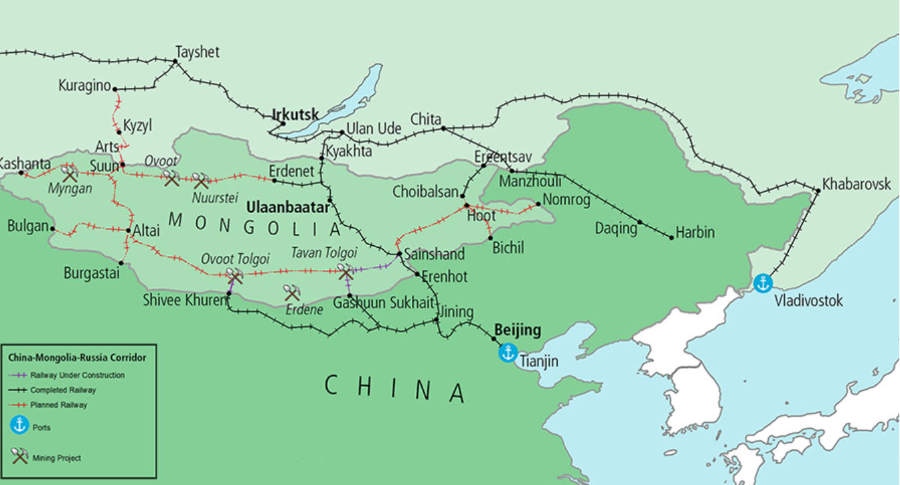
China has responded positively to the initiative, as the intensification of railway construction is part of the country’s development plan for the upcoming five-year period. Mongolian President Ukhnaagiin Khurelsukh discussed the project with President Vladimir Putin during the SCO summit in early September.
Russia, China, and Mongolia are currently implementing a project for another railway corridor linking the three nations from Altanbulag, the largest border crossing in Mongolia, on the border with Buryatia, to Zamyn-Uud on the southeastern border with China. Constructing the railway is part of the program to establish an economic corridor running from Russia through Mongolia to China. The line should be completed in 2031.