 Русский







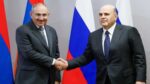
The September 1 meeting in Bishkek between Russian President Vladimir Putin and Armenian Prime Minister Nikol Pashinyan is unlikely to bring any surprises in terms of the agenda—its contours are already clear. According to Kremlin spokesman Dmitry Peskov, Russia intends to raise the question of Armenia’s future once again, in the context of the choice between the Eurasian Economic Union and the EU. Moscow’s position is becoming increasingly straightforward: the final decision belongs to the Armenian people, and they are the ones who must make it.
“The president will, of course, use this meeting to once again reiterate our arguments. But we cannot be more Armenian than the Armenians themselves. And, of course, Armenians will decide their own fate. That is precisely what we are proposing they do—hold a referendum,” Peskov said.
In May, the leaders of Russia, Belarus, Kazakhstan, and Kyrgyzstan called for a nationwide referendum in Armenia on the choice between joining the EU and retaining membership in the EAEU. At the same time, they instructed their representatives in the Eurasian Intergovernmental Council to prepare, by December, a report on the possible consequences of suspending the EAEU Treaty with respect to Armenia. This significantly changes the perspective of the debate.
For a long time, Armenia’s “European vector” was viewed primarily as a question of its own foreign policy: how far Yerevan intended to distance itself from Moscow, what Brussels could offer, and whether Pashinyan was genuinely preparing the country for eventual EU membership. The focus is now shifting. The central question is no longer addressed to Yerevan but to the EAEU itself: How does the Union intend to deal with Armenia?
The End of Strategic Ambiguity
Until recently, Armenia could maintain a considerable degree of strategic ambiguity. While remaining a member of the EAEU, it retained access to the common market and the free movement of labor, purchased Russian gas on preferential terms, and benefited from the economic mechanisms developed within the Union—while simultaneously deepening political and economic integration with the EU. Pashinyan described this strategy as creating alternatives rather than playing a zero-sum game: for a small state, having more options is generally preferable to having fewer.
In August, however, Pashinyan publicly acknowledged the fundamental limitation of this model: simultaneous membership in the EU and the EAEU is impossible. That admission shifts the discussion from abstract arguments about diversification to reality. Eventually, a final choice has to be made.
The question is no longer whether Armenia can cooperate with both Europe and Eurasia—of course it can. The question is how long the country can continue building an alternative integration model while retaining all the advantages of the system it ultimately intends to leave.
Armenia Is a Full Participant, Not an Outside Observer
Armenia’s relationship with the EAEU is not peripheral. According to Pashinyan himself, in 2025 Armenia imported around US$5 billion worth of goods from EAEU member states and exported approximately US$3.2 billion to the Union. Armenia also contributed roughly US$319 million in import customs duties to the EAEU’s common pool while receiving around US$175 million through the Union’s distribution mechanism.
This complicates the picture in both directions. On the one hand, Armenia is not simply a beneficiary: it contributes to the system. On the other, the EAEU is not some formal attachment that can simply be disconnected without affecting the broader structure.
It is a functioning economic architecture. Producers sell goods across the Union’s markets, companies operate under its technical and customs regulations, and citizens benefit from its common labor market. Money transfers from Russia to Armenia, for example, reached US$3.9 billion in 2025—while Armenia’s entire GDP that year stood at US$29.5 billion.
There is another value here that is much harder to see in current statistics: the future value of geography.
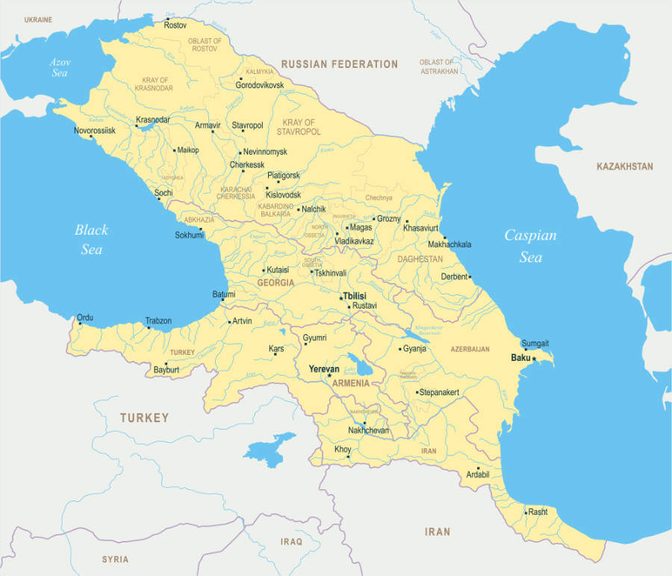
Since May 2025, a full free trade agreement between the EAEU and Iran has been in force. Armenia is the only member of the Union with a land border with Iran—and beyond Iran lies the Persian Gulf, the Gulf of Oman, and the Indian Ocean. Armenia’s position, therefore, is not merely about access for Armenian goods to the EAEU market. Potentially, it is also a position at the junction of two economic spaces whose connection is now becoming institutionalized.
This does not mean that Armenia will automatically become a major transit hub. But strategic choices are not made only between existing benefits. They also close some paths while preserving others.
The EAEU’s southern direction — Iran and the broader routes toward India — is already gaining economic weight, while the signing of an EAEU–India free trade agreement is expected in 2026. The value of Armenia’s position may therefore change after its integration decision has already been made.
The EAEU Begins to Assess Its Own Risks
The May statement by four EAEU members goes beyond the familiar political exchange between Moscow and Yerevan. Russia, Belarus, Kazakhstan, and Kyrgyzstan explicitly pointed to risks to their own economic security arising from Armenia’s preparations for EU membership.
The issue is therefore no longer only what Armenia might lose if it leaves the EAEU. It is also what the other members of the Union risk by allowing a member state to move gradually toward a different regulatory and customs system while retaining unrestricted access to their markets.
Collectively created advantages are valuable precisely because membership comes with certain conditions. If the benefits remain unchanged while one participant gradually builds an incompatible economic architecture, the issue ceases to be exclusively a matter of that country’s sovereignty. It becomes a question of the integrity of the entire system.
This is likely the logic that the December report will have to address: not Armenia’s political loyalty or the attractiveness of the EU to Armenian voters, but which EAEU functions can remain unchanged during Armenia’s “European transition,” which create risks for other members, and at what point the two regulatory trajectories become incompatible.
The Icelandic Case as a Reference Point
On August 7, at a meeting of the Eurasian Intergovernmental Council, Nikol Pashinyan said that a meaningful referendum on EU membership would require prior institutional preparation: an application, negotiations, candidate status, and, ultimately, a concrete offer whose terms could actually be evaluated.
This creates a sequencing problem. Brussels cannot yet say what Armenian EU membership would actually look like. The EAEU, however, may have to make decisions much earlier — including how long the existing terms of membership can remain unchanged while Yerevan prepares for such a scenario.
The August 29 referendum in Iceland offers an interesting reference point. Some 52.8% of voters rejected the resumption of EU accession negotiations.
A direct comparison between Armenia and Iceland would be misleading: their levels of prosperity, economic structures, and institutional frameworks are very different. But one aspect is relevant.
Icelanders were not voting on EU membership itself. They were voting on whether negotiations on membership should resume. For a majority of the country’s voters, what they already knew about the terms and implications of accession was enough to say “no” at the negotiation stage.
The Real Debate Is About the Transition Period
Yerevan does not need to leave the EAEU immediately in order to develop its “European options.” Time itself becomes an asset. Every year in which Armenia retains access to the Eurasian market while simultaneously developing alternative export markets, infrastructure, standards, energy arrangements, and sources of investment reduces the eventual cost of changing course. From Armenia’s perspective, therefore, a long transition period may be optimal.
For the EAEU, the calculation runs in the opposite direction. If a member ultimately intends to leave, allowing it to retain all the benefits of membership until an alternative system is fully prepared effectively means that the Union is partially absorbing the costs of that transition.
This is the real “Armenian question”: at what point does protecting Armenia’s freedom of choice require the other members to subsidize that choice with advantages created by their own integration system?
There is no obvious answer. Moving too early carries costs. Russia remains Armenia’s largest trading partner, and Armenian exports to Russia fell by only 4.2% in the first half of 2026—from US$1.28 billion to US$1.23 billion, a decline of roughly US$53 million—even as total bilateral trade fell much more sharply, by 20.9%, from US$3.326 billion to US$2.630 billion.
Abrupt measures could hurt businesses in both countries, accelerate Yerevan’s “European turn,” and transform an economic disagreement into a political rupture. But acting too late creates a different risk: EAEU membership becomes a collection of benefits that a participant continues to enjoy while preparing to enter a competing customs and regulatory system.
The Price of Choice Is Not Limited to What Exists Today
This leads to a more difficult question than simply comparing Armenia’s current trade volumes with Russia and the EU. Armenia is making its decision at a moment when the economic map around it is itself changing.
Some of the flows that helped produce Armenia’s rapid growth after 2022 were connected to re-exports, intermediary trade, and movements of people and capital following the rupture of Russia’s economic ties with the West. Such a windfall can be substantial. But it does not necessarily translate into permanent productive capacity.
The right test for Armenia, therefore, is not “how much did the country earn from the new environment?” but “what remained after it?”
Which companies took root? Which export products emerged? Did Armenia develop its own R&D capacity, engineering teams, capital, and infrastructure? Which connections with Russia, Iran, the EU, India, and other markets became self-sustaining, and which disappeared when the political circumstances that created them disappeared?
For the EAEU, mutual trade volumes are not the only measure that matters. A stricter question is this: what options does membership create—access to markets, labor, infrastructure, energy, payment systems, alternative routes, and trade agreements with third countries—and which of these functions could an individual country reproduce after leaving?
It is at this level that the real price of changing integration systems becomes visible.
The December Report Matters More Than the Referendum
Political attention will most likely focus on a possible referendum in Armenia. But the more consequential document may be the December report by the four other EAEU states on the implications of suspending the Treaty with respect to Armenia.
It could move the discussion from politics to measurable questions: how much Armenia receives from the common system and how much it contributes; which functions can survive outside full membership and which cannot; what replacing them would cost Armenia and what their loss would cost the rest of the union.
But this calculation contains one more line: the value of foreclosed opportunities.
If we look at the map of 2020, Armenia’s decision can be described as a choice between two centers of integration:
Russia/EAEU ↔ EU.
But if we look at a future map — 2035, for example — the choice may already look different:
European Periphery
versus
Connectivity between the EAEU, Iran, and the broader Asian economic system.
If Armenia changes its integration framework at the very moment when the EAEU is expanding its economic links with Iran and the southern routes, the comparison cannot be limited to today’s EAEU market versus today’s European market.
It will have to consider what position Armenia could occupy in each of these systems several years from now and which options, once abandoned, may no longer be recoverable.
The “Armenian question” for the EAEU, therefore, is not a test of its ability to keep Armenia inside the Union. It is a test of the Union’s ability to defend the value of membership through measurable functions and rules.
For Armenia, the question is even harder: not only where it wants to go, but also whether it has understood how much the destination has already changed—and how much it is still changing.
This article was written by V. Filchenko and E. Goncharoff. They can be contacted at info@russiapivottoasia.com.