 Русский




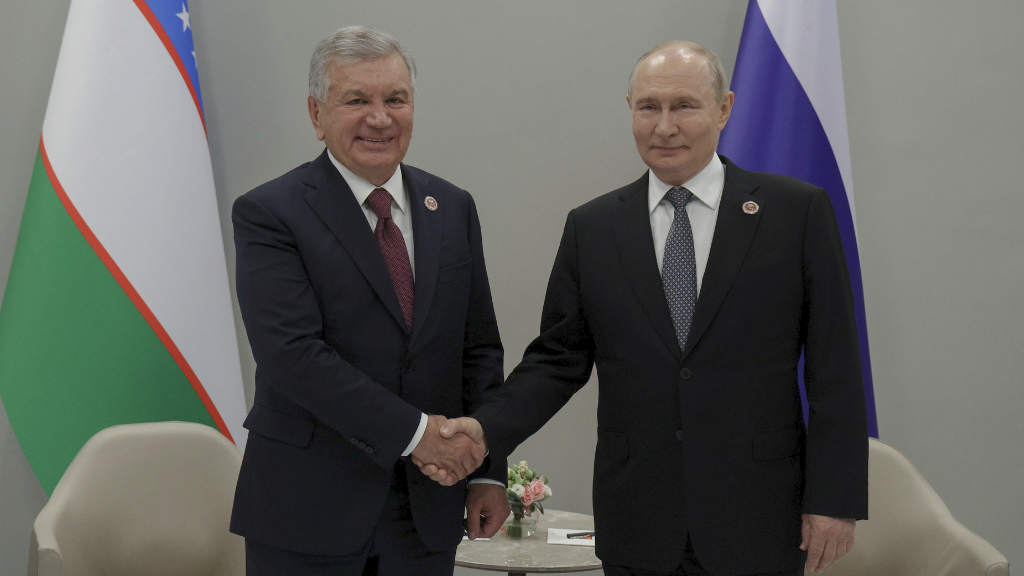

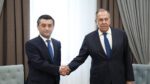
The Russian President, Vladimir Putin, has met with Shavkat Mirziyoyev, the President of Uzbekistan, in Bishkek on the sidelines of the SCO summit.
Putin said that “Uzbekistan is confidently moving along the path of economic and social development and is rightfully enjoying high authority on the global stage. Russia-Uzbekistan relations represent a strategic partnership and alliance. Moscow and Tashkent have established productive cooperation across all key areas, effectively coordinating their action in international affairs. Together, we will certainly ensure further deepening of the entire scope of partner ties for the benefit of the friendly nations of Russia and Uzbekistan, in the interests of strengthening regional security and stability.”
The two sides discussed the prospects for deepening and strengthening the comprehensive strategic partnership between the two countries.
Particular attention was paid to trade and economic cooperation, with Mirziyoyev and Putin emphasizing the importance of maintaining positive dynamics in mutual trade, accelerating the implementation of projects in industrial cooperation, and continuing active interregional ties. They also discussed the development of cultural and humanitarian relations and planned bilateral and multilateral events.
BRICS
Uzbekistan officially became a shareholder of the New Development Bank (NDB)—the financial institution established by BRICS—on June 5, 2026, marking its entry as the bank’s 10th member and its first Central Asian representative. Uzbekistan received BRICS partner state status in July 2025. Tashkent maintains a balanced, non-aligned foreign policy, focusing its BRICS engagement on economic development, trade, and regional connectivity with members.
Bilateral Trade
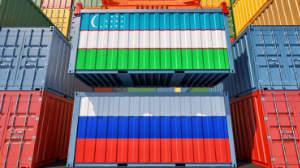
Russia and Uzbekistan maintain a comprehensive strategic partnership and alliance focused on expanding trade, industrial production, and energy cooperation.
Bilateral trade turnover between Russia and Uzbekistan reached US$13 billion in 2025, representing an 8.4% increase compared to the previous year. Trade was driven by closer industrial, energy, and regional cooperation, continuing a strong upward trend where bilateral trade has doubled over the past five years.
That trend is continuing with US$$8.13 billion recorded in 7M 2026, which if maintained should realise a total trade figure of close to US$14 billion for this year. Russia remains the single largest destination for Uzbek exports, capturing 14.2% of total exports through July 2026. Mutual agricultural trade surged 31.7% year-on-year to hit US$1.55 billion by July 2026, driven by increased shipments of fruits, vegetables, and nuts. Both countries are working toward an ambitious goal of expanding annual trade turnover to US$30 billion by 2030.
To achieve this, the two countries have been very active in promoting joint trade events at the highest levels. For example, in August, the Uzbekistan-Bashkortostan Business Forum was held in Ufa, where more than 100 Uzbek companies participated, representing light industry, food processing, chemicals, automotive manufacturing, furniture, construction, healthcare and information and communications technology. Agreements worth nearly US$100 million were signed.
Russia primarily exports mineral products, metals (including iron and steel), chemicals, and pharmaceuticals to Uzbekistan, while importing textiles, food, and copper.
Their joint investment portfolio exceeds US$50 billion, covering joint ventures in energy, metallurgy, transport, and industrial cooperation.