
 Русский






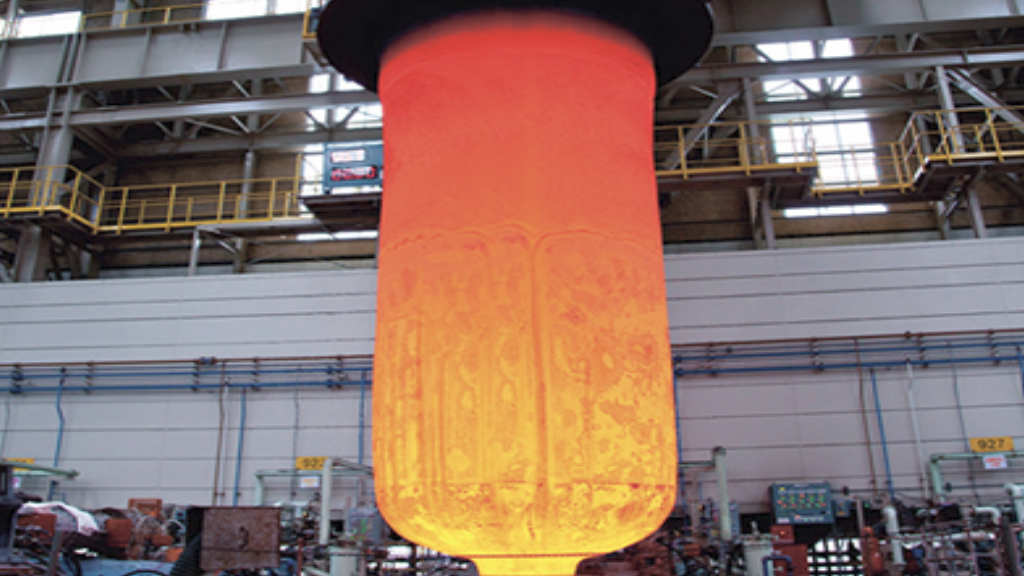

Russia’s Giredmet Institute, a subsidiary of Rosatom, and India’s ALT Metals have signed a contract to build a trial titanium sponge production facility in India. The deal was announced at Innoprom.
Andrei Golinei, CEO of the chemical technology cluster of JSC Rosatom Science, the managing company of JSC Giredmet said that “The agreement involves supplying laboratory equipment for producing the metal, which can be used for aviation and space technology, shipbuilding, the chemicals and oil and gas industries, as well as medicine. It will develop input data for designing an industrial titanium sponge production facility with an annual production capacity of 1,000 tonnes. As part of this stage, we will conduct a survey of the contractor’s feedstock, carry out laboratory testing, prepare and supply a set of laboratory equipment and carry out the supervised installation, commissioning work and staff training. We are interested in scaling up the technology to an industrial level and then integrating it into Indian industry.”
Russia and India have significant plans in place to build Russian-designed aircraft and ships in India.
ALT Metals specializes in the development and implementation of projects in the field of metallurgy and mineral feedstock processing and is based in Telangana.
Rosatom MetalTech has also held discussions with several Indian companies on cooperation in critical minerals and materials, including rare-earth magnets, while its metallurgy division has identified titanium, zirconium, hafnium and calcium as four areas of cooperation with Indian companies.
Another Rosatom subsidiary—JET Engineering and Technical Centre, part of JSC Rosatom Service, has signed a distributorship agreement at Innoprom with the Indian company Syngient Technologies regarding the Repeat Vision software platform (a next-generation platform for end-to-end design and modeling of complex industrial systems), as well as a memorandum of understanding with the Indian company EM Services. The document provides for cooperation in the energy sector, including digitalization of power plants, as well as maintenance, reconstruction, and modernization of energy infrastructure facilities.