 Русский




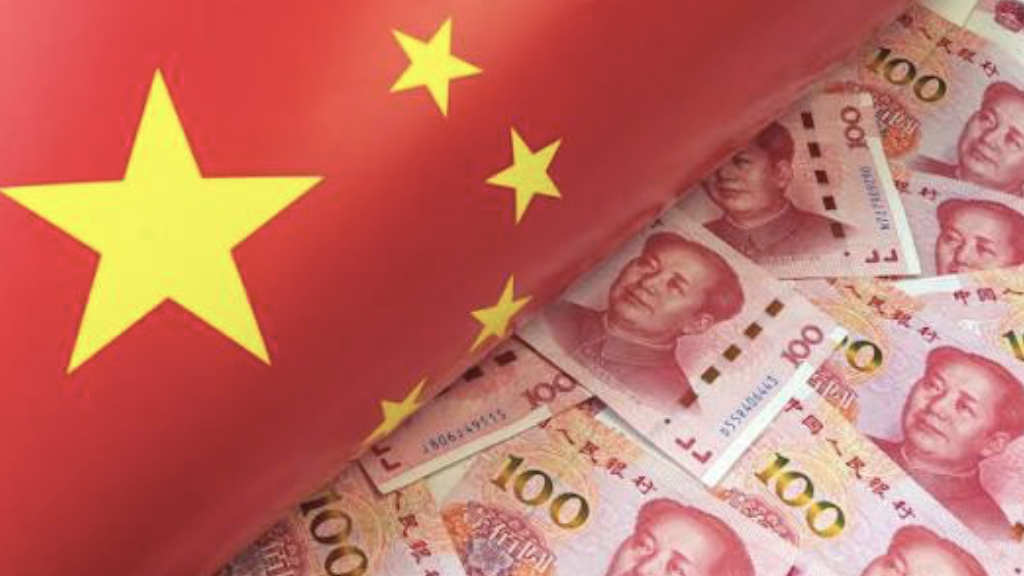

Beijing has announced a huge, US$54 billion stimulus plan for its financial sector to motivate its somewhat sluggish economy. China’s GDP growth in H1 2026 was 4.7%. However, consumption remains slow while growth has largely been achieved through industrial expansion. To counter this, Beijing wants Chinese banks and insurers to bolster investment in the stock markets while at the same time helping to replenish cash reserves.
The idea is to release more Chinese privately held capital into the economy. Numerous Chinese financial institutions have said they are now due to receive billions of RMB Yuan in capital from state institutions including the Ministry of Finance. The country’s largest life insurer, China Life Insurance, has said it will receive ¥35 billion, (US$5.2 billion) while the China Taiping Insurance Group said it would receive ¥7 billion (US$1 billion).
The People’s Insurance Company of China said it planned to raise up to ¥15 billion (US$2.2 billion) through a private placement of A-shares – stock that specifically allows investors to trade in China-based companies – to the ministry of finance, with the proceeds used to replenish its capital. The initiative could help bolster state insurers that have been directed by Beijing to support the stock market with medium- and long-term funds.
“The injection is an important step by the country to enhance the financial sector’s ability to serve the real economy and promote the high-quality development of the financial and insurance industries,” China Life said, adding that it would strengthen the group’s ability to withstand risk.
Separately, three Chinese state lenders have also announced they will receive a combined ¥290 billion (US$43 billion) in capital injections. The Agricultural Bank of China and the Industrial and Commercial Bank of China, two of the country’s largest state banks, said they planned to raise up to ¥160 billion (US$23.8 billion) and ¥100 billion (US$14.9 billion) respectively through private A-share placements to the finance ministry, China National Tobacco Corp and its subsidiaries. The two lenders said the proceeds would be used entirely to replenish cash reserves, helping them sustain credit expansion, as Beijing leans on state banks to support growth despite weak demand for loans.
This can be expected to be beneficial to Russia. Chinese investors – like all investors – are looking for growth markets, and China-Russia trade is growing at rates in excess of 25% this year alone. This manifests in two main ways – the basic trade growth in goods and services, and investment into infrastructure and supply chains. Chinese investors will want returns from Chinese companies investing into and with Russia. The economics and the politics both align and make sense.
China-Russia Trade Growth
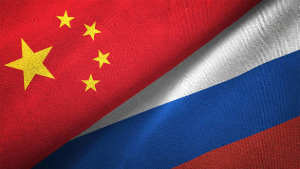
Bilateral trade has grown at 25.6% in H1 this year, a multiple of 138% more against China’s national growth rate in 2026 over the same period. That is a hugely attractive multiplier over China’s actual growth.
China-Russia Investment
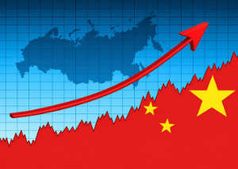
According to the Russian-Asian Business Council, the cumulative volume of Chinese direct investment in Russia was US$55 billion as at 2025. There has been substantial growth in key sectors. For example, investment in Russia’s mining and extractive industries has grown from US$796 million in 2020 to US$6.2 billion by 2025. In agriculture, investment has risen from US$2 billion to US$3.25 billion, respectively, China’s automotive sector has increased its Russian market share from 5% in 2021 to 50% in 2026. That is an annual growth rate of 45% -ten times higher than China’s own growth rate.
During last week’s 13th Russia-China Investment Cooperation Commission meeting, figures provided indicate that Russia and China have a pipeline of some US$240 billion worth of projects. That is a huge amount of potential capital and will need to be found. Government investment will provide some, but most will be sought from the private sector. An estimated 5% of that has already been invested in by Chinese and Russian joint stakeholders.
A three-tier investment structure has emerged, dominated by the natural resources sector (over 40%). There are also new markets being created – China has been responsible for a 54-fold increase in high-tech investment. We previously commented on China’s position in the Russian gaming industry here.
With growth rates like that, Chinese investors will want access to Chinese companies who have invested in Russia and who are listed in China. The Chinese governments decision to place US$54 billion into its financial sector to persuade Chinese capital to invest in the stock market will mean that these types of companies will become more valuable, and as their stock rises, so will the investment capital they will have to continue to invest into the Russian market.
Key Indicators That Chinese Investment To Russia Is Booming
Chief amongst this has been an endorsement from Beijing. Chinese Vice Premier Ding Xuexiang told Russian President Vladimir Putin at the Eastern Economic Forum on September 4 that China was “Ready to deepen the integration of our interests through concrete measures and strengthen cooperation in investment.” He specifically called for closer alignment between China’s Northeast revitalisation strategy and Russia’s Far East development strategy, a regional issue we explored in detail here.
With Western media focused on the impact of sanctions and the ‘collapse’ of the Russian economy, and many media bureau having exited Russia, there has been very little, if any coverage of FDI into Russia. However, China’s corporate footprint in Russia has expanded sharply since 2022, marking one of the most significant structural shifts in the country’s foreign investment landscape. As of May 2026, more than 15,500 companies in Russia have Chinese founders or co-founders, accounting for 23.6% of all foreign-registered enterprises operating in the country.
The China-Russia Investment Rationale
Several factors are driving this transition. The withdrawal of many Western companies created significant gaps across numerous industries, particularly in the mid- and premium-market segments. Numerous Chinese companies have moved in to fill the gap, most notably Chery, whose market share in Russia’s auto sector has shot up from 5.8% in 2022 to become the single largest investor in Russia today. Amongst the exit of Western auto manufacturers, Chery have acquired the use of ex-Volkswagen, Nissan and Mercedes-Benz production facilities.
At the same time, Russia continues to offer an attractive consumer base, (new auto sales are up 12% in Russia 2026 in the year to date), a rapidly expanding e-commerce sector, and access to the wider Eurasian Economic Union (EAEU) market, providing companies with a platform for regional expansion beyond Russia itself.
This means the onus has changed from a mass Western exit to an increasing Asian market entry. Chinese companies have already placed an estimated ₽1 trillion (US$11.7 billion), into Russian Far East projects over the past three years, while Chinese investors account for more than 80% of foreign investment in Russia’s regional preferential-regime projects.
What matters in terms of the planned Chinese stimulus to excite the domestic stock markets and persuade both companies and private investors to both increase their available share options and to make them attractive to buy are the numbers of Chinese companies listed on the Chinese stock markets that have significant operations in Russia.
The largest, and most stable of these include:
Chery
Chery is now the largest foreign-owned company in Russia, with revenues surging past ₽590 billion (US$6.63 billion) on massive auto sales, following the exit of Western auto manufacturers from the Russian market in 2022. Chery’s 2025 global sales were slightly under US$60 billion, meaning that Russia accounts for about 11% of its total revenues. It sold over 20 million vehicles worldwide last year.
Chery does not own or build its own factories in Russia but instead uses semi-knocked-down (SKD) contract assembly at three former Western-owned vehicle plants. These include the St. Petersburg Plant, which was previously owned by Nissan. This assembles the Chery Tiggo 7, which is locally rebranded and sold as the Xcite X-Cross 7. Chery’s Kaluga Plant was formerly owned by Volkswagen and as is managed by Russia’s AGR Automotive, and assembles the Chery Tiggo crossovers. The Esipovo Plant near Moscow Region was formerly owned by Mercedes-Benz and is operated by Avtodom. This assembles Chery’s luxury Exeed VX crossover.
Total new passenger car sales in Russia reached 1.326 million units in 2025 and have shown a 12% year-on-year in the first half of 2026 to about 679,800 units, according to data from the Russian Ministry of Industry and Trade.
Chery Automobile is listed on the Hong Kong Stock Exchange.
Great Wall Motor

Great Wall Motor own the Geely and Haval marques and are a major Chinese automaker with US$32 billion in revenues for 2025. Total global sales reached a record 1,323,672 units, driven by growth in overseas markets and new energy vehicles (NEVs).
In Russia, Haval expanded its annual production capacity at its Tula plant by 25% to 200,000 vehicles, while the Geely vehicles for the Russian market are primarily manufactured through BelGee, a joint venture plant in Belarus, which concluded 2025 with a record production volume of over 90,000 cars. This suggests that the Russia market equates to about 23% of Great Walls production output, and potentially a similar figure in revenues. If correct, (Great Wall did not specify its Russian revenues in their latest annual report) this implies Russian revenues of about US$6 – 7 billion.
While the Geely brand heavily relies on the Minsk regional hub, Great Wall has actively explored direct localization plans for the marque inside Russia (specifically in Nizhny Novgorod) to assemble models like the Monjaro and Emgrand locally and offset rising recycling fees.
Haval operates its main manufacturing hub in the Uzlovaya Industrial Park located in Russia’s Tula Region, about 200 kilometers south of Moscow.
Opened in June 2019, this was Great Wall’s first overseas full-process manufacturing plant. It handles stamping, welding, painting, and general assembly for Haval SUVs (such as the Jolion, Dargo, and F7 series). It opened an engine plant in March 2024, building localized 1.5L and 2.0L internal combustion engines. An additional components and transmissions facility is under development in the same industrial park to further localize production.
Great Wall Motor are listed in Hong Kong and Shanghai.
Sinopec
Sinopec is a Chinese petrochemical corporation with revenues of US$384 billion in 2025. Sinopec has been operating on the Russian market for a long time and has a 49% share in Udmurtneft with Rosneft being the Russian partner. It also has a significant stake in Rosneft, and a 40% stake in the Amur Gas Chemical Complex (AGCC), with production slated for late 2026.
This strategic partnership allows the company to work effectively in Russia. The company’s assets include a 25.1% stake in the Sakhalin-3 project together with Rosneft, another 25% stake in the Krasnoyarsk synthetic rubber plant, and owns 8.5% of Sibur JSC, in partnership with which the company participates in the Amurskiy gas-chemical project.
Sinopec is listed on the Shanghai Stock Exchange (A shares) and the Hong Kong Stock Exchange (H shares).
China National Petroleum Corporation
The China National Petroleum Corporation (CNPC) has also long been a serious player in the Russian market. CNPC is a major crude oil trader and is actively investing in Russian projects. The first major project was implemented in 2009 in partnership with Rosneft, when CNPC gave a loan to Russian partners in the amount of US$25 billion secured by future oil supplies. The deal allowed the construction of the first oil pipeline to China and served as a substantial growth in Russian-Chinese trade.
Together with Rosneft, CNPC operates (51%/49% JV) the Tianjin Oil Refinery project in China, producing 16 million tons of refined crude oil per annum. However, the key CNPC project is with Novatek – the Yamal LNG and the ongoing Arctic LNG-2. These transactions allowed the company to receive exclusive sales and distribution of LNG in China from these fields, with Novatek receiving investments of about US$20 billion.
CNPC owns a 20% equity stake in the Yamal LNG plant through its CNODC subsidiary, helping fund the massive Siberian facility. It also holds a 10% stake in the Gydan Peninsula project alongside other Chinese state energy firms. CNPC and Gazprom operate the Eastern Route of the Power of Siberia gas pipeline, with ongoing agreements to scale annual capacities further, while both companies signed a legally binding construction memorandum for the Power of Baikal transit route. The company also signed CNPC signed a 10-year, US$80 billion agreement with Rosneft to import 100 million tons of Russian crude via Kazakhstan in 2022, with six years still left to run.
CNPC is a state-owned enterprise and is not publicly listed, however its primary publicly listed subsidiary and business arm is PetroChina, which trades on major international and domestic stock exchanges including Hong Kong and Shanghai.
China State Construction Engineering
China State Construction Engineering has also been present on the Russian market for a long time. Operating via its Russian subsidiary Kitaystroy LLC, CSCE collaborates closely with Russia’s Ministry of Construction to expand its footprint and help replace Western building equipment with Chinese alternatives. It has maintained an active market presence in Russia for nearly two decades, aligning its business objectives with China’s Belt and Road Initiative and Eurasian Economic Union cooperation.
CSCE is involved as a contractor in landmark developments, including Moscow’s Federation Tower, the second tallest building in Europe, and the City of Capitals complex, and has participated in projects like the Greenwood and Huamin Business Parks, the Nevsky Center in St. Petersburg, the Baltiyskaya Zhemchuzhina residential district, in addition to projects such as the Amur gas-chemical complex and the Vladivostok cultural complex. CSCEC is one of the contractors of Moscow City and a number of other EPC contracts in Russia.
CSCEC is listed on the Shanghai Stock Exchange.
International Commercial Bank of China
ICBC is the largest bank in the world with revenues of about US$116 billion and assets of over US$7.74 trillion and is active throughout Russia through its ICSIB Bank subsidiary. This works with large corporate clients, offering them syndicated lending, issuing panda bonds and other banking opportunities. ICSIB also has an investment unit and already considers high-quality Russian investment projects. Interestingly, it has experienced significant asset and profit growth in Russia following Western sanctions as trade shifted toward Asian partners.
ICSIB and other major Chinese lenders effectively stepped in to fill the credit vacuum left by exiting Western banks. However, they did not physically “buy out” or absorb old loan books directly from Western institutions. Instead, they took over the market share by extending billions of dollars in fresh credit lines and liquidity directly to Russian banking and corporate sectors.
Examples of these include the Kimkano & Sutarsky Iron Mine in the Jewish Autonomous Oblast in the Russan Far East, providing a US$340 million loan for Phase 1 of the processing plant project. ICBC also joined a 13-bank syndicate for a US$500 million short-term loan agreement. It has also provided a ₽1.5 billion (US$18 million) credit line for Russian grid operator Rosseti, amongst numerous other activities.
ICBC is listed in Shanghai and Hong Kong.
China Construction Bank
The China Construction Bank had revenues in excess of US$107 billion in 2025 and assets in excess of US$6.5 trillion. The bank received a license from the Russian Central Bank in 2016. CCB prefers to cooperate with large Russian borrowers, for example, it participated in a banking syndicate to attract US$725 million and €650 million for pre-export lending to Uralkali. It provides corporate lending, foreign exchange, account opening, and letters of credit, and participated in large regional energy and corporate financing deals, such as contributing to major project loans and corporate credit lines.
Like other major Chinese state lenders, China Construction Bank has tightened compliance and scaled back certain direct payments involving heavily sanctioned Russian entities to mitigate secondary U.S. and Western sanctions risks.
The CCB is listed in Shanghai and Hong Kong.
Agricultural Bank of China

The Agricultural Bank of China earned more than $106 billion in 2025, with assets estimated at US$7.02 trillion. The Russian subsidiary Chinaselkhozbank specializes in trade finance, pre-export lending, syndicated lending and the development of payments in national currencies. Uralkali, the Russian fertilizer producer, who also attracted pre-export financing from China Construction Bank, is also a client. It has participated in major syndicated loans for large Russian corporations like Gazprom and Norilsk Nickel, alongside general trade credit lines denominated heavily in Chinese yuan.
The banks recent activities concerning Russia reflect a careful balancing act between supporting growing bilateral trade and navigating tightening international compliance restrictions, with a shift towards bilateral Agrifood trade financing. The most prominent operational driver involves the rapid surge in agricultural trade between the two countries, as Russian agricultural exports to China grew, including massive volume increases in frozen fish, rapeseed oil, soy beans, and pork.
As a specialized agricultural lender, the bank has prioritized its Moscow’s corporate banking facilities toward supporting these specific cross-border supply chains and facilitating payments for Chinese buyers and Russian agricultural exporters. Chinese imports of Russian agricultural produce are up 40% year on year in 2026 and are expected to reach values in excess of US$9 billion for the full year.
The Agricultural Bank of China is listed in Shanghai and Hong Kong.
Bank Of China
The Bank of China has 2025 revenues of US$92 billion and assets of about US$5.5 trillion. The Bank opened a local subsidiary in 1993. The Bank of China works with not only with the largest Russian corporations, but also with small and medium-sized enterprises. The Bank’s syndicated lending clients include the largest Russian steelmakers, Rusal and many other companies. The BOC facilitates bilateral trade, investments, and settlements in national currencies between Russia and China, and targets trade finance and lending to businesses in China that have Chinese export to Russia potential. For this reason, much of its activities involve financing of Chinese businesses in China and facilitating payments to Russian (and Chinese) exporters in Russia.
The Bank of China is listed in Shanghai and Hong Kong.
China Railway Construction
Last year, China Railway Construction earned US$145 billion, some of which are from Russian projects, including the construction of the Moscow Metro’s Big Ring. The CRCC built the Vernadsky Prospekt, Aminyevskoye Shits osse and Michurinsky Prospekt stations for ₽23 billion (US$274 million) in 2018. Other CRCC projects in Russia include the proposed Moscow-Kazan high-speed highway, with a signed US$767 million contract in place. When started, this will become a part of the Belt & Road Initiative and will accelerate Russian-Chinese railway connectivity. Other projects include building the second railway track at key transit hubs including the Zabaikalsk-Manzhouli railway to boost freight capacity, as well the proposed Trans-Altai Railway, to further expand Russia’s resource exports to China.
China Railway Construction is listed in Shanghai and Hong Kong.
China Mobile
China Mobile is a Chinese telecommunications giant, earning US$152 billion in 2025, entering the Russian market in 2017. China Mobile specializes in IT solutions for Russian companies that plan to enter China – system integration, cloud solutions as well as services for subsidiaries of other Chinese companies. China Mobile considers the business with Russian telecommunication operators to be an important area of work.
There are multiple projects currently underway. These include a Joint Venture with Russia’s MTS to launch a cross-border internet link connecting Pogranichny (Russia) and Suifenhe (China) to improve traffic routing and reduce ping for users in Siberia and the Far East. MTS and China Mobile have also signed agreements to deploy AI-driven autonomous network infrastructure and expand B2B joint solutions.
China Mobile International partnered with Beeline to launch CMLink (under the “BeeChina” tariff line) in Russia, providing a 1-Card-Multi-Number service for seamless roaming and communication between China and Russia, and utilizes communication channels routed through local operators like MegaFon to facilitate high-speed data transmission between Europe and Asia.
China Mobile is listed in Shanghai and Hong Kong.
Xiaomi
Xiaomi have the largest share of Russia’s smartphone market, taking about 25% of the total sales volume, outperforming Apple. While they have been under pressure from the threat of secondary sanctions, Xiaomi’s strategy concerning Russia has been interesting. Amid secondary sanctions risks from the United States and European Union, Xiaomi shifted regional assembly and logistics planning toward neighboring countries like Kazakhstan, while discussions for local CKD (Complete Knock-Down) facilities have also surfaced in alternative regional locations such as Georgia. This means that while direct sales to Russia no longer appear on Xiaomi’s books, in reality they continue to supply the market, although production and unit sales are registered in non-Russian markets.
Xiaomi’s primary high-volume manufacturing remains centered in China, such as its fully automated “dark factories” in Beijing and smart appliance facilities in Wuhan. Despite scaling back direct operational footprints and local production ties in Russia, Xiaomi products remain widely available in the Russian market through authorized parallel import channels and third-party distributors.
In 2025, Xiaomi shipped a total of 165.2 million smartphones globally, generating ¥186.4 billion (US$27.7 billion) in smartphone revenue according to the company’s 2025 Annual Results. With Russia’s total 2025 smartphone sales at about 25 million units, and total sales revenues of about ₽585 billion (US$7 billion) an estimated value to Xiaomi of the Russian parallel imports market is roughly US$2.8 billion.
Xiaomi’s Central Asia strategy as part of its Russian strategy is also worth noting as Central Asian e-commerce surged to US$14.7 billion, last year – heavily supercharged by mobile app usage and digital wallets accounting for 60% to 70% of transactions.
Xiaomi are listed in Hong Kong.
Huawei
Huawei earned more than US$127 billion last year, although it has scaled back some of its Russia due to the threat of sanctions. Nonetheless, through third party countries the company sells Huawei and Honor smartphones, as well as supplies telecommunications equipment for mobile operators, large financial institutions and the public sector.
To mitigate against Western sanctions, Huawei separated its Russia and Belarus operations from its broader Commonwealth of Independent States (CIS) division. The remaining CIS countries are supervised from Bahrain, while the Russia-Belarus unit remains isolated in Moscow to ring-fence sanctions exposure.
It has focused its Russian operations into becoming research and development centers, with operations in Moscow, St. Petersburg, Nizhny Novgorod, and Novosibirsk, focusing on fields like computer vision and VR technologies. It also absorbed skilled engineers left stranded by departing Western tech firms (such as Siemens and Intel), bolstering its local research workforce. These operations do require funding. Huawei’s future tech will have been developed from its Russian presence.
While direct official shipments of its products have shifted, Huawei products remain available via parallel imports, maintaining strong market positions in wearables and smart devices. It has a 5% share in the Russian smartphone market.
Huawei is a privately held company and is not listed, instead being fully owned by its employees through a trade union committee. The way to access Huawei’s activities then would be to invest in its Chinese suppliers and relies on a network of domestic Chinese and regional suppliers following severe U.S. export controls and trade restrictions. These include Semiconductor Manufacturing International Corporation (SMIC), who are listed in Hong Kong and Shanghai, as well as Maxscend Microelectronics, who are listed in Shenzhen, Beijing OnMicro Electronics, who are listed in Shanghai, amongst others.
Buying Chinese Stocks
Russian (and other Foreign) investors may open brokerage accounts directly in Hong Kong, provided the broker accepts Russian clients and their compliance checks, and can legally buy Hong Kong stocks through the Hong Kong Stock Exchange. Mainland Chinese stocks listed in Hong Kong are known as ‘H’ shares or sometimes referred to as ‘Red Chips’. At present it is not generally possible for foreign nationals to acquire stocks of Chinese companies listed in Shanghai or Shenzhen.
However, Russian institutional investors or high-net-worth individuals can apply through licensed financial programs to trade directly on the Shanghai Stock Exchange (SSE) and Shenzhen Stock Exchange (SZSE). This route requires specialized approval and is not practical for ordinary retail investors.
International retail investors typically access mainland A-shares via the Shanghai-Hong Kong or Shenzhen-Hong Kong Stock Connect. However, most mainstream international online brokers (such as Interactive Brokers) do not extend China A-share trading access to retail clients, and major international platforms exclude certain segments like STAR Market or ChiNext stocks for individual accounts.
Summary
How much of China’s US$54 billion stimulus – intended to get Chinese private capital into the Chinese stock markets – will end up boosting the markets remains unknown. But it is a government policy, and both the Chinese banks, and other financial institutions including many mentioned above will be taking this lead and looking to persuade the Chinese public to follow this objective – releasing Chinese private capital is where the bottleneck is.
If that is loosened just slightly – the fairly obvious conclusion that Chinese investment capital is replacing Western capital in Russia – the world’s fourth largest economy – then this is bound to yield some results. Just 10% of that injected by Chinese investors into the Russian Far East for example would add another 4% to its regional GDP – a huge increase in a region already showing GDP growth rates at double the Russian national average. Russia’s Pivot To Asia strongly believes that some of this stimulus capital will flow into Russian-based capital projects with Chinese investment partners.
Our next article – out tomorrow – will focus on new Chinese IPOs and how to spot newer to market companies that may possess greater immediate returns as regards building a Chinese investment portfolio with a Russian focus. To make sure you receive this, our complimentary subscription, giving you access to our popular weekly email update, can be found here.