 Русский




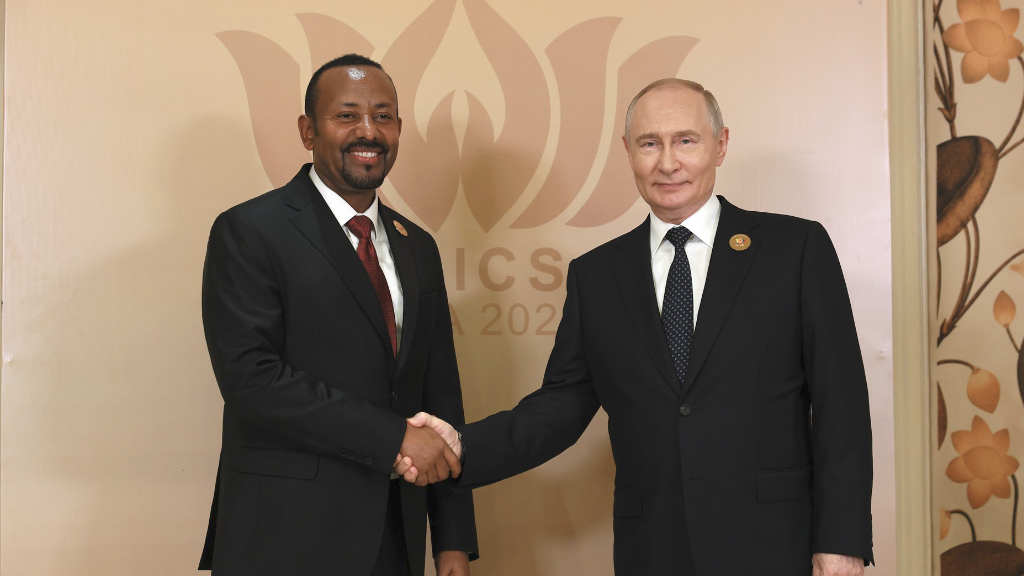

The Russian President, Vladimir Putin has met with Abiy Ahmed, the Prime Minister of Ethiopia on the sidelines of the BRICS Summit in India. Boths sides also presented large delegations.
The Russian delegation included, amongst others, Foreign Minister Sergei Lavrov; Deputy Prime Minister Alexei Overchuk, Aide to the President Yury Ushakov; Minister of Agriculture Oksana Lut; Minister of Health Mikhail Murashko; Minister of Economic Development and Chair of the Russian part of the of the Russian-Ethiopian Commission on Economic, Scientific and Technical Cooperation Maxim Reshetnikov; Director of the Federal Service for Military Technical Cooperation Dmitry Shugayev; Deputy Minister of Energy Pavel Sorokin; Deputy Minister of Finance Ivan Chebeskov; Deputy Governor of the Central Bank Vladimir Chistyukhin; President of the Russian Fertiliser Producers Association, member of the Board of the Russian Union of Industrialists and Entrepreneurs and Head of the Russian Segment of the BRICS Business Council Andrei Guryev, and Director General of Rosatom State Atomic Energy Corporation Alexei Likhachev.
President Putin’s remarks to the Ethiopian Prime Minister were as follows:
“Mister Prime Minister, I am glad to meet with you again.
I know that yesterday your country celebrated the New Year 2019 according to the Ethiopian calendar, and I would like to congratulate you and the entire friendly Ethiopian people on this holiday. Today’s meeting is taking place on the sidelines of the BRICS Summit. Now, BRICS is a fully fledged strategic partnership designed to consolidate the positions of the global majority and shape the outlines of a just, multipolar international order.
Since January 1, 2024, Ethiopia has been a full-fledged member of the group and we are very glad about it. It is symbolic that the beginning of our Ethiopian friends’ practical work within the BRICS mechanisms coincided with the beginning of Russia’s chairmanship. Since then, Ethiopia has been making a constructive contribution to its diverse activities.
As for the bilateral relations, as you mentioned, we have now discussed almost everything while we were riding in the car, and I would like to point out again that Ethiopia is a long-standing and reliable partner of Russia on the African continent. I can state with satisfaction that Russian-Ethiopian ties continue to develop based on the principles of equality and mutual benefit. I want to thank you, Mr Prime Minister, for your personal contribution that you are making to strengthen our ties.
We have achieved a rapid growth in mutual trade. In 2025, it more than tripled and continues to grow. This is a good indicator.
We pay considerable attention to humanitarian cooperation. More than 20,000 of your citizens have received an education in Russia and this provides a very good foundation for our future humanitarian ties.
Russia attaches particular importance to the comprehensive development of relations with African countries in general. Ethiopia has actively participated in the Russia-Africa summits. This year, as we agreed, we look forwards to your visit for the third summit, which is to be held in Moscow on October 28–29, and we will hold another bilateral meeting. Today, we have the opportunity to discuss the entire range of our relations.”
This was Ahmed’s response:
“Mr President, as always, it is a great honour to have the opportunity to see you. We have been discussing so many critical issues. I valued our time together in Moscow. Since our last meeting, things have been going so well. Our trade has grown several times. I hope there is a big room to grow still.
A month ago, the Minister of Foreign Affairs of Russia, Mr Lavrov, came to Ethiopia. We sent him back with a “seven-year discount”. He was old when he came, but he came back younger because we are in 2019. He came as 2026, and he went back younger, ready to serve you for longer.
Things have been going very, very well since our last meeting. In terms of our military cooperation, trade exchange, investment and, as you have said, scholarships for students, we are very grateful for our bilateral relationship, as well as in the multilateral aspect.
Without Russia’s support, Ethiopia cannot be a member of the BRICS. We are always grateful for that. We know what you have done and we are grateful. I am sure we will pay back when the time comes. Thank you very much for our meeting.”
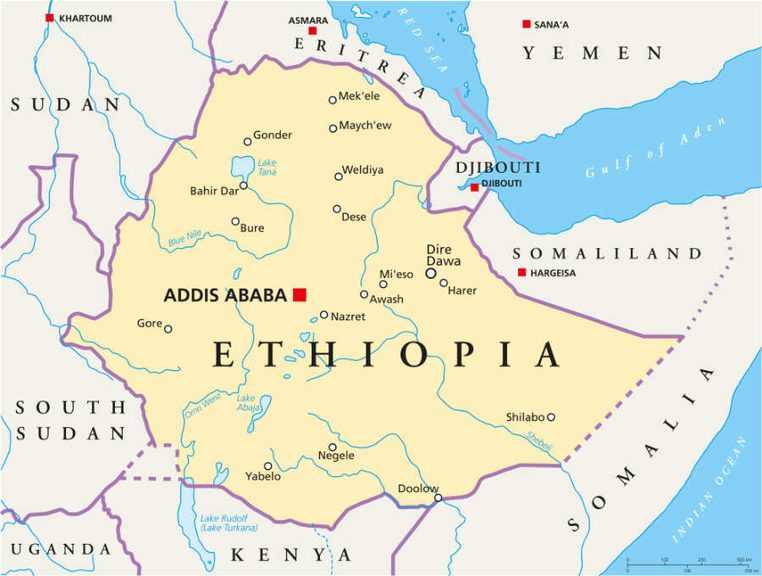
While Ethiopia is perhaps considered a less-important member of BRICS, it is in fact a regional power in Africa. The country is a member of the African Continental Free Trade Agreement (AfCFTA) and the second largest economy in the Common Market for Eastern and Southern Africa (COMESA) trade bloc, which also includes Burundi, Comoros, DR Congo, Djibouti, Egypt, Eritrea, Eswatini, Kenya, Libya, Madagascar, Malawi, Mauritius, Rwanda and the Seychelles.
Ethiopia’s economy is diverse, with agriculture as its backbone, employing 70% of the workforce and contributing 40% to GDP. Key exports include coffee, cereals, pulses, oilseeds, khat, and livestock. The textile and apparel industry is growing rapidly, supported by government initiatives and foreign investment in industrial parks like Hawassa. Manufacturing is expanding, focusing on food processing, leather, footwear, and cement. Ethiopia is a leader in renewable energy, particularly hydroelectric power, with the Grand Ethiopian Renaissance Dam (GERD) as a key project. The mining sector, focused on gold, gemstones, tantalum, and potash, has untapped potential. Services like banking, telecommunications, and tourism are growing, and heavy investments in infrastructure, including roads and railways, are driving construction. Additionally, Ethiopia is focusing on digital transformation in sectors like education, healthcare, and banking through its growing IT industry.
With a population of about 132.06 million, Ethiopia had a 2025 GDP (PPP) of US$656 billion, a GDP growth rate of 9.2%, and a GDP per capita (PPP) of US$3,373.
Russia-Ethiopia Bilateral Trade
Bilateral trade between Russia and Ethiopia reached US$435 million in 2025, tripling over the past three years. Ethiopia exports mainly coffee and dried vegetable products to Russia, while Russia exports mainly wheat, and grains. However, this relatively simple historic trade is about to become something rather more dynamic.
Nuclear Energy
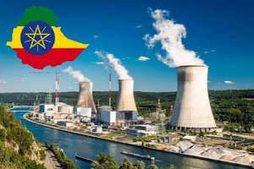
In September 2025, Ethiopia took a historic step by signing a nuclear power plant development action plan with Russia. The agreement between the Russian State Atomic Energy Corporation (Rosatom) and Ethiopian Electric Power (EEP) was formalized in Moscow. Rosatom, Russia’s nuclear power agency, is conducting a feasibility study to develop a NPP in Ethiopia. This will assess Ethiopia’s non-energy sector to identify how nuclear technology can address the country’s economic needs. This analysis will help compile a list of potential users of these technologies, laying the groundwork for a market for commercial products and services based on potential NPP capabilities.
Ethiopia’s nuclear ambitions align closely with its broader US$30 billion infrastructure plan spearheaded by Prime Minister Abiy Ahmed. Under this initiative, Ethiopia plans to operate two nuclear reactor units between 2032 and 2034, each with a capacity of around 1,200 MW. Small Modular Reactors (SMRs) are also under consideration for decentralized applications and remote areas.
The Center for Nuclear Science and Technology (CNST)
The Center for Nuclear Science and Technology (CNST) is a project separate from the NPP. In November 2024, a Rosatom subsidiary and Ethiopia’s Ministry of Innovation and Technology signed a contract for the development of a feasibility study for the centre. Rosatom is analysing Ethiopia’s non-energy economic sectors to determine how nuclear and radiation technologies can meet the country’s needs beyond power generation — in industry, medicine, and agriculture. Based on this analysis, a list of potential consumers of these technologies will be compiled, laying the foundation for a market of commercial products and services based at the centre. In addition, a site selection process is underway: possible locations are being identified and preliminary engineering surveys are being conducted. The centre is expected to include a research reactor, a laboratory complex, and a nuclear medicine centre.
Agriculture
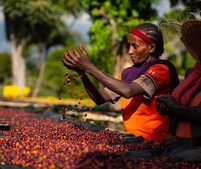
Ethiopia and Russia are stepping up efforts to deepen cooperation in agriculture, with a focus on boosting trade in coffee and improving access to key agricultural inputs. Possessing Africa’s second largest population, Ethiopia is also having to deal with global warming stresses. Collaboration with Russia includes bioengineering of crops to more drought-resistant varieties. Discussions centred on increasing productivity through the introduction of modern mechanisation and advanced farming solutions.
Ethiopia is also increasing its imports of Russian fertilisers: in 2025, Russia supplied approximately 500,000 tons, meaning Russia’s share in Ethiopia’s fertiliser imports rose from 22% to 28% in H1 2026.
Digital Trade
The Digital trade sector is also starting to take off. The Wildberries & Russ joint venture (RWB LLC) signing a cooperation agreement with Ethiopia’s sovereign wealth fund, Ethiopian Investment Holdings (EIH) in late 2025. The agreement provides for joint efforts to localize RWB products for the Ethiopian market, as well as partnership and support through investment and technology initiatives that promote e-commerce and infrastructure development in Ethiopia.
RWB CEO Robert Mirzoyan has previously said “We plan to tap the Ethiopian and other African markets in the near future. The Russian and Ethiopian markets are very appealing and offer very good export potential for manufacturers in both countries. RWB’s entry will bring the expertise of an international digital platform to the country’s logistics infrastructure, boosting the development of entrepreneurship and the advertising market.”
Manufacturing
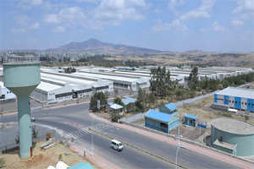
That attitude is reflected in the fact that given Ethiopia’s membership of AfCFTA and COMESA, it can become an attractive base from which Russian businesses and potential Russia-Ethiopian JV’s can collaborate to reach the wider African market. To this end, Russia is interested in the Bole Lemi Special Economic Zone, which has previously been visited by Russian Ministers. Both sides discussed expanding cooperation across a wide range of sectors, including agricultural and energy machinery, pharmaceuticals and unmanned technologies. The parties agreed to further examine conditions for localising Russian manufacturing facilities at the site, signalling a move towards deeper industrial integration and technology transfer.
Another landmark manufacturing project is the planned construction of an aluminum smelter with an annual capacity of 500,000 tons. In November 2025, at a meeting of the Russian‑Ethiopian intergovernmental commission, UC Rusal and Ethiopia’s sovereign fund Ethiopian Investment Holdings signed a memorandum of understanding. The cost of the first phase is estimated at approximately USD 1 billion, with a construction period of 3–4 years. The plant could use alumina from Rusal’s Guinean assets as raw material and rely on the hydropower generated by the Grand Ethiopian Renaissance Dam (GERD) as its energy base, enabling the production of ‘green’ aluminum with a low carbon footprint. Preliminary surveys and a feasibility study are already underway.
Defence
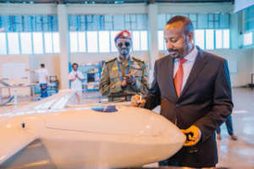
Russia and Ethiopia have a historic relationship in the military and defence sectors, going back to the days of the USSR. Dmitry Shugaev, Russia’s Director of Military-Technical Cooperation (FSMTC) was present at the meeting and stated that “This is an air defense and aviation issue, especially since our Mi-24 and Mi-17 helicopters are in service. Unmanned aircraft are a whole new segment of weapons now coming to the fore.”
He described Ethiopia as one of the leading African countries seeking to develop military-technical cooperation with Russia. According to him, a significant portion of Ethiopia’s Russian- and Soviet-made military equipment is in need of modernisation and repair — primarily T-72 tanks. A request has also been recorded for the construction and modernisation of a plant in Bishoftu that can manufacture and repair armoured vehicles.
Russia-Africa Summit

The third Russia-Africa Summit takes place from October 28-29 in Moscow and will be hosted by President Putin. A significant Ethiopian delegation is again expected to attend to further develop bilateral ties.
Summary
While in terms of the actual figures – less than US$500 million in trade – the Russia-Ethiopia relationship is relatively small, it is showing considerable promise. This will take time to develop, however the successful planned operations of NPP by 2032 – just six years from now will provide significant electricity capacity and sustainability to Ethiopia’s manufacturing sector. At that point we are likely to see a trade boom and more Russian investment – with an eye on the larger African market.
In the meantime we can expect to see a continuation of trade development, notably agricultural driven involving both Ethiopian crops and Russian fertilizers. Smaller manufacturers may also be attracted to enter the Ethiopian market as the Wildberries & Russ venture starts to make inroads into the domestic market with the natural development of this being the eventual establishment of local businesses and joint ventures – with a special economic zone already available.