 Русский




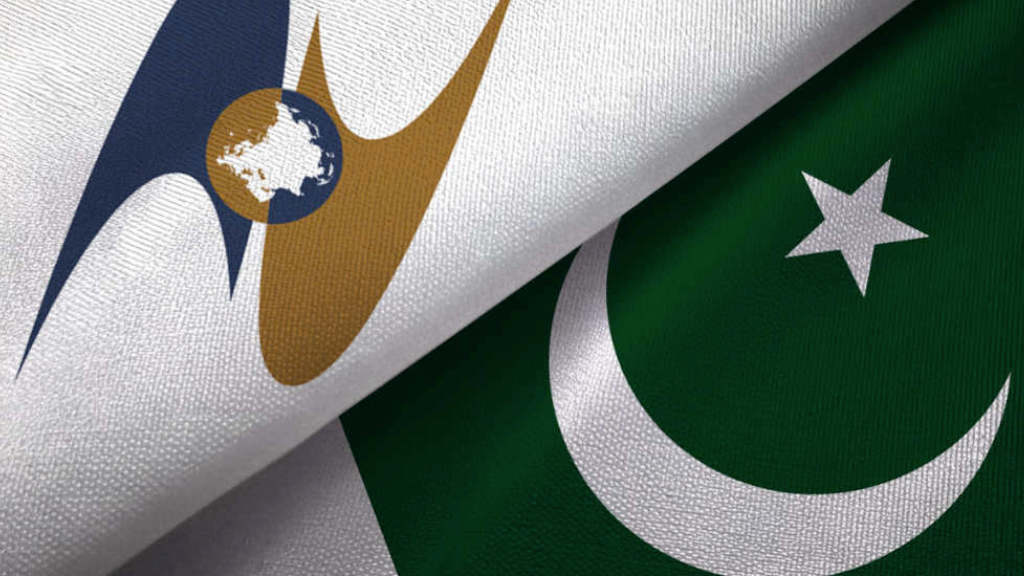

Islamabad will sign a free trade agreement with the Eurasian Economic Union (EAEU), although the process could take from a few months to two years, according to Pakistani Ambassador to Russia Faisal Niaz Tirmizi.
He stated this week that “We have already launched this process to create a free trade zone with the Eurasian Economic Union, as Pakistan is a natural partner in the International North-South Transport Corridor. I can see a day in the near future when people from Murmansk, Minsk, and Moscow will be able to travel to Islamabad, Karachi, or Gwadar through all the countries along the INSTC. Pakistan strongly believes that as part of the Eurasian region, it has to have more people-to-people and business-to-business contacts with all the countries of the EAEU. We have already started the process. There has been communication between Pakistan’s Commerce Minister and the head of the Eurasian Economic Union. We will be able to reach a free trade agreement. It might take from few months to a year or two, but no more than that.”
He noted that there are many things Pakistan could import and export from Russia, Kazakhstan, Belarus, and Kyrgyzstan, adding that “There are so many things that Pakistan can provide to this region. We can be a part of each other’s economic and food security. This is exactly the kind of connectivity we are working on, because we believe that ultimately, people-to-people contacts, economic, business, and cultural ties provide real security, peace, and integration in Eurasia.”
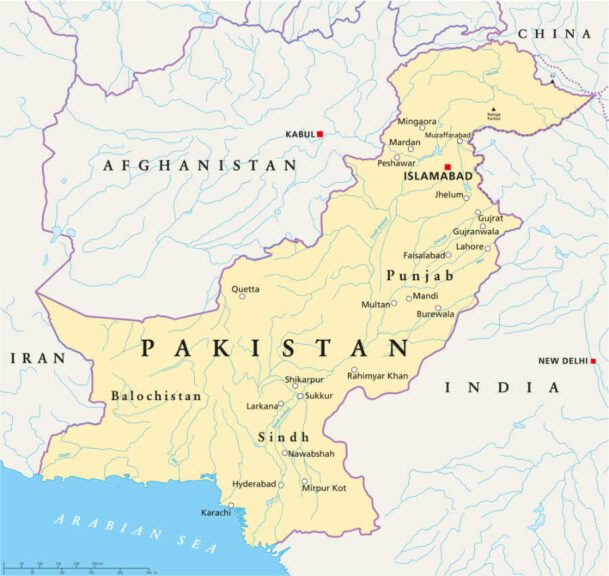
Pakistan is strategically located at the crossroads of Central Asia, the Middle East, and South Asia. It is a developing agro-industrial country that is among the countries with the greatest potential for economic growth in the 21st century.
The key industries are agriculture, textiles, chemicals, metallurgy, and engineering, as well as mining. The country is actively developing information technology, although the sector faces several challenges.
Agriculture is the backbone of the economy, employing approximately 42% of the workforce. The main crops are wheat, cotton, rice, sugar cane, and mangoes. The textile industry is a key export sector, accounting for about 60% of the country’s exports in 2023. Pakistan ranks fourth in the world in terms of cotton production. The chemical industry includes the production of fertilizers, plastics, and pharmaceuticals. The country also produces steel, aluminum, automobiles, and agricultural machinery. Pakistan has reserves of coal, natural gas, oil (about 300 million barrels), copper ore, chromium ore, marble, table salt, limestone, uranium, phosphates, barite, sulfur, and precious and semi-precious stones.
The country is also focusing on expanding its IT sector, becoming a growing center for software development and outsourcing. The government is working to diversify the economy and promote growth in sectors such as cement, steel, and chemicals. Pakistan’s automotive industry is expanding with increased investment, and its oil and gas sector remains essential for energy and industrial production.
Pakistan is part of several free trade agreements (FTAs) and regional trade groups that improve its access to international markets. These include the South Asian Free Trade Area (SAFTA) and the China-Pakistan Free Trade Agreement (CPFTA), which boosts trade with China, especially in textiles, agriculture, and chemicals. The country has been a significant recipient of China’s Belt & Road Initiative investments, which have been designed to improve Pakistan’s antiquated transport and logistics architecture and help the country to industrialize. There has been occasional resistance to these projects.
Pakistan is also a member of the regional SAARC trade agreement, which includes Afghanistan, Bangladesh, Bhutan, India, Maldives, Nepal, and Sri Lanka. Pakistan also enjoys trade preferences under agreements with the European Union and the United States. It is also a member of the Shanghai Cooperation Organisation and has expressed interest in BRICS, although India’s founding membership has blocked this route at present.
With a population of around 255 million, Pakistan’s GDP PPP estimate for 2026 is US$2.17 trillion, with a GDP PPP per capita of US$5,810. In January, the International Monetary Fund (IMF) projected a 3.6% growth in Pakistan’s real GDP for the fiscal year ending in June 2026. This forecast was based on the successful completion of IMF audits, which has helped mitigate default risks and restore investor confidence.
Pakistan’s Current Trade With The EAEU
| Country | Import Value USD | Export Value USD | Commodities |
| Armenia | 1.1 million | 380,000 | Medical, Chemical |
(trade remains very low as the two countries historically lacked formal diplomatic ties until establishing official relations in August 2025).
| Belarus | 26 million | 300,000 | Agricultural goods, industrial machinery, textiles |
| Kazakhstan | 98 million | 45 million | Agricultural goods, Energy |
| Kyrgyzstan | 500,000 | 4.5 million | Pharmaceuticals, Agriculture, Light Industrial goods |
| Russia | 180 million | 149 million | Energy products, Agricultural goods, Textiles |
Total EAEU exports to Pakistan: US$305.6 million
Total Pakistan exports to the EAEU: US$199.18 million
Total Pakistan-EAEU trade value: US$504.78