Русский








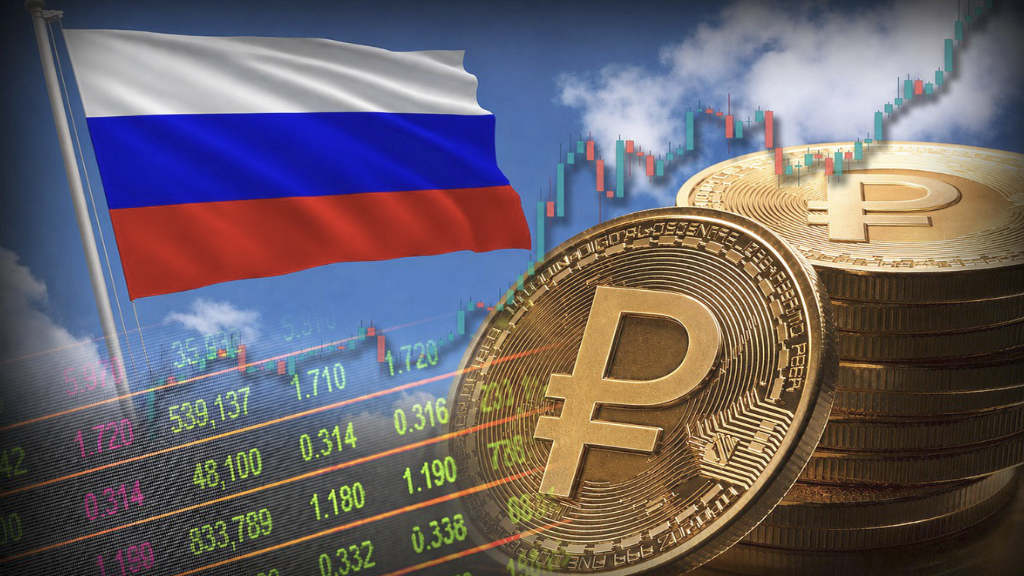

The Russian President, Vladimir Putin, has signed into law a landmark cryptocurrency bill that authorized cryptocurrency trading. It will be regulated by the Bank of Russia as part of Russia’ financial system.
The Law on Digital Currencies and Digital Rights, signed and published on Tuesday, sets operating rules for cryptocurrency exchanges, digital asset custodians and other market participants, regulates conditions for investors buying cryptocurrencies, and covers the circulation, accounting and storage of digital currency and foreign digital instruments, as well as mining, issuance and circulation of digital rights. It also regulates businesses run by operators of information systems issuing digital financial assets, digital currency exchange institutions, digital asset custodians, brokers, asset management companies, trading organizers and clearing institutions.
According to blockchain analytics firm Chainalysis, Russia ranks as Europe’s largest crypto market by transaction volume, with the Russian Finance Ministry estimating domestic crypto trading totals around ₽50 billion (US$650 million) daily.
The legislation is part of the government’s broader effort to bring crypto activity out of the shadow economy while facilitating cross-border trade after Western sanctions restricted Russia’s access to the West’s dollar and euro-based financial system.
What changes does the new law bring?
Until now, Russians could legally own cryptocurrencies, but trading largely took place on foreign platforms or through services operating outside Russia’s regulatory framework.
The new law creates the country’s first regulated cryptocurrency market. From September 1, 2026, Russians will be able to buy and sell approved cryptocurrencies through licensed platforms supervised by the Central Bank. New digital repositories will keep records of who owns crypto assets, similar to the way traditional financial assets are recorded.
However, it should be noted that cryptocurrencies remain strictly prohibited for the exchange or payment for domestic goods and services within Russia.
Who can buy cryptocurrencies under the new law?
Both ordinary Russians and investment professionals will be able to buy cryptocurrencies, although investors will face stricter rules.
Retail investors will first have to pass a basic knowledge test and will be limited to buying up to ₽300,000 (US$3,800) worth of crypto per year through each platform. Professional, or “qualified,” investors will also have to pass the test but will not face investment limits.
Which cryptocurrencies are approved?
At first, only the world’s largest and most actively traded cryptocurrencies will be available on Russia’s regulated market. To qualify automatically, a cryptocurrency must have had an average market capitalization of more than ₽5 trillion (about US$64 billion) and average daily trading volumes above ₽1 trillion (US$12.8 billion) over the previous two years.
According to Central Bank First Deputy Governor Vladimir Chistyukhin, Bitcoin, Ether (Ethereum) and the USDT stablecoin currently meet those requirements. The Central Bank will be able to approve additional cryptocurrencies in the future if they meet the criteria.
Crypto mining
Crypto mining is already legal in Russia, but it is subject to strict rules. Industrial miners must register with the authorities, report the cryptocurrency they produce and pay taxes on their earnings. Individuals can still mine crypto at home without registering, provided their electricity use stays below government limits.
Mining is also restricted in parts of the country where electricity supplies are under strain. The government has banned or seasonally limited mining in several regions until at least 2031 to prevent power shortages. The new legislation leaves the existing mining framework largely unchanged.
Sanctions Issues
In April this year, the EU’s 20th sanctions package banned transactions involving the RUBx stablecoin and the planned Digital Ruble, citing concerns they could be used to circumvent sanctions. Last month, the 21st package expanded crypto-related restrictions by banning transactions with additional crypto platforms and service providers. The new law provides for a direct evasion of the EU attempts to hinder Russian trade and financial settlements.
Impact on Russia’s foreign trade
While cryptocurrencies remain banned for everyday payments inside Russia, businesses can continue using them for cross-border settlements. Exporters and importers may settle transactions directly using crypto wallets or through licensed intermediaries.
The move is intended to give Russian businesses more options for paying foreign partners at a time when Western sanctions have disrupted access to parts of the traditional international financial system. Most Russian banks were cut off from the SWIFT global payments system from 2022 and face restrictions on transactions in dollars and euros, prompting Moscow to look for alternative payment channels.
Russia has increasingly settled transactions in Rubles and the national currencies of its trading partners, such as the Chinese RMB Yuan and the Indian Rupee.
Russian exporters and importers can conduct international payments under foreign trade contracts directly or through specialized licensed intermediaries using various digital assets and wallets. The framework provides a legal structure for parallel international payment channels, mitigating traditional SWIFT and correspondent banking bottlenecks with friendly trading partners. Permitted settlement instruments include major liquid digital assets and stablecoins tied to non-Western or alternative fiat equivalents. This is likely to have a significant positive impact on Russian trade flows.
Other alternative settlement systems
Crypto is not the only new method of settling financial transactions involving Russia. Russia has a widely used and advanced QR payment ecosystem. The primary national infrastructure is the Faster Payments System (SBP) operated by the Bank of Russia, which allows instant purchases and transfers by scanning QR codes through mobile banking apps. This is increasingly being rolled out in other countries, including Argentina, Egypt, Tajikistan, and Turkiye, amongst others. This allows Russian nationals to pay for goods and services via their banks app while visiting these countries. It will only be a matter of time before these systems are rolled out in other favoured destinations such as China, India and vacation hotspots such as Thailand and Vietnam.
The lasting impact of Western financial sanctions on Russia, while they have inflicted short-term difficulties, has actually been to usher in new, non-Western controlled financial technologies that bypass the West altogether.