
 Русский




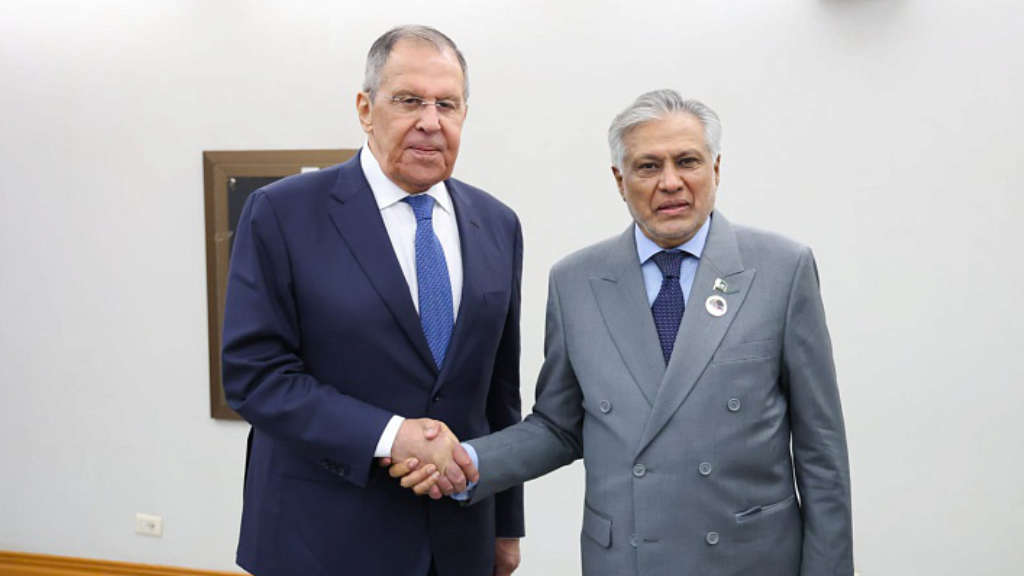

Russia’s Foreign Minister Sergey Lavrov has met with Mohammad Ishaq Dar, the Deputy Prime Minister and Foreign Minister of Pakistan. The two sides discussed key bilateral matters and reviewed a number of issues on the regional and international agenda, including cooperation within the framework of the Shanghai Cooperation Organisation and the United Nations.
The most important aspect of Russia-Pakistan relations today is that they are increasingly developing, with trade growth illustrating this transformation. Bilateral trade rose from approximately US$696.99 million in 2021 before reaching a record US$1 billion in 2023. In 2025, trade turnover had climbed another 30% to approximately US$1.3 billion despite sanctions pressure, payment restrictions and logistical challenges. While the numbers may appear small when compared to Russian trade with China and India and even Bangladesh (US$2 billion), the point is the growth rate. It outstrips global growth by a factor of ten times.
What is emerging is not simply a larger trade relationship but a broader process of Eurasian integration. Discussions regarding direct rail connectivity through Iran and Azerbaijan, the potential inclusion of Pakistan in INSTC, exploration of alternative maritime routes, the development of new payment mechanisms and negotiations concerning EAEU market access all point toward a larger strategic objective. Increasingly, Russia and Pakistan are not merely trading with one another; they are participating in the construction of new Eurasian economic corridors capable of reshaping regional commerce.
Among all recent developments in bilateral relations, perhaps none carries greater strategic significance than the proposal to connect Pakistan’s Gwadar Port with the INSTC. This already links Russia with Iran, Azerbaijan, Central Asia and India through interconnected rail, road and maritime networks. Adding Gwadar to this system fundamentally expands its geographic reach and provides an alternative to Iran’s Chabahar Port should Strait of Hormuz problems continue. Combined with Chabahar, it increases trade capacity. This would provide Russia and the Eurasian Economic Union (EAEU) members with a direct connection to the Arabian Sea while simultaneously integrating Pakistan into one of the most important emerging trade architectures across Eurasia. For its part, Pakistan is also involved in discussions concerning a free trade agreement with the EAEU.
Over the past four years, bilateral engagement has expanded across energy, trade, security, transport, industry, education, science and technology. High-level contacts intensified, with Prime Minister Shehbaz Sharif and President Vladimir Putin holding four meetings in recent years, while the Pakistan-Russia Intergovernmental Commission has evolved into the principal mechanism coordinating cooperation across multiple sectors. The pending visit by Pakistan’s Prime Minister Sharif to Moscow can be expected to further strengthen energy ties between Russia and Pakistan.
Both countries are looking to finalize a comprehensive Programme of Economic Cooperation extending through 2030. This programme seeks to create a long-term framework covering trade, energy, transport, investment, industry and technological cooperation. Both Moscow and Islamabad recognize that bilateral trade remains constrained by structural obstacles, including payment mechanisms, limited banking connectivity and logistical inefficiencies. The 2030 programme is specifically designed to address these challenges while creating predictable mechanisms for future cooperation. Pakistani officials have repeatedly described the agreement as capable of elevating economic relations to an entirely new level.
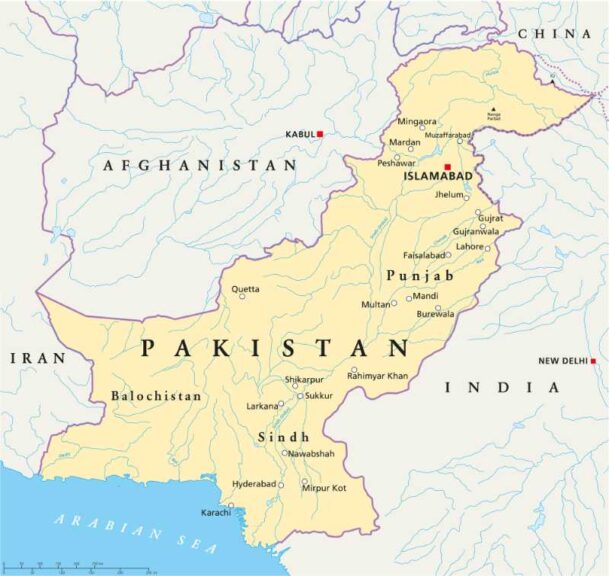
Pakistan and Russia are discussing a cooperation agreement in the oil sector, including in exploration, production, and refining. The Pakistan Stream Gas Pipeline remains one of the most ambitious long-term projects connecting the two countries. Designed to stretch approximately 1,100 kilometres with a planned capacity of 12.4 billion cubic metres annually, the pipeline would connect LNG terminals in Karachi with major industrial and population centres in Punjab. The planned cost is US$2.25 billion, with negotiations over its construction continuing between Moscow and Islamabad.
Energy cooperation has become the most significant and tangible dimension of Pakistan–Russia relations. Pakistan’s energy vulnerability has been exposed during instability in Gulf shipping routes and the Strait of Hormuz, through which nearly 70% of Pakistan’s oil is imported. Pakistan consumes around 500,000-600,000 barrels of oil per day, while the latest 2026 reports suggest that Pakistan’s crude reserves have fallen to 11 days of supply amid disruptions in LNG imports and regional uncertainty. Fuel price surges have triggered economic strain, emergency measures, reduced public operating hours, and transport subsidies affecting nearly 30 million users.
Russia, meanwhile, has emerged as an increasingly important alternative energy supplier. After its first crude shipment to Pakistan in 2023, Russia expanded supplies, with Pakistan reportedly importing over 733,000 barrels of Russian crude in recent procurement cycles, with further shipments under discussion. Russia’s pricing flexibility and alternative supply options have positioned it as a stabilizing energy partner during periods of regional disruption.
Bilateral trade between Russia and Pakistan reached about US$1.3 billion in 2025, with a 13% rise over the previous year. Russian exports mainly are energy products, fertilizers and machinery, while Pakistani exports include rice, textiles and leather goods. Agricultural trade dominates, with Russia and Pakistan also engaging in direct barter for products such as oranges and legumes. The key driver in developing this, however, remains investment into logistics and Pakistan joining the INSTC – a move that India may well want to resist.