 Русский




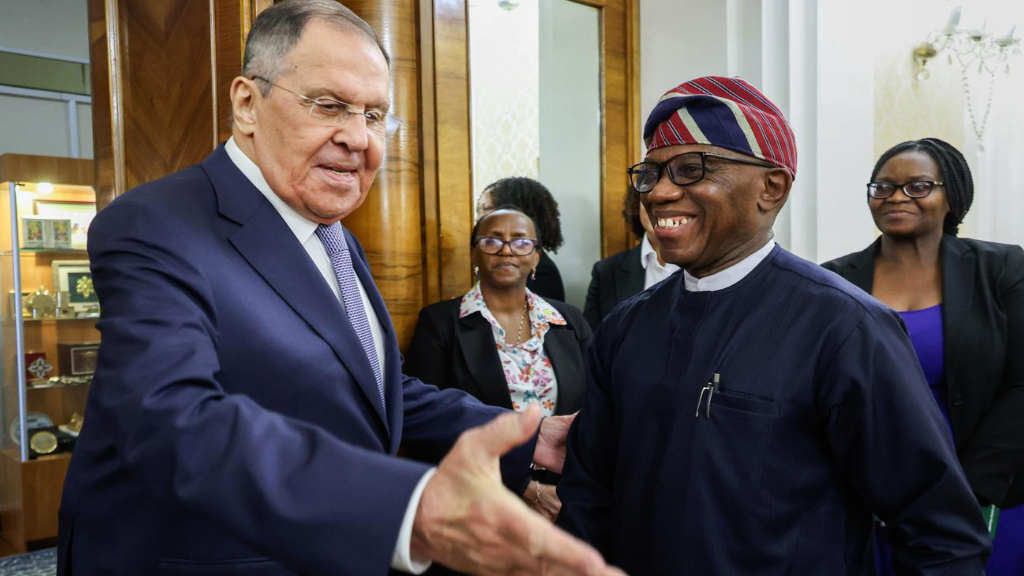

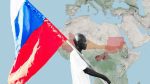
The Russian Foreign Minister, Sergey Lavrov, and several other high-ranking Russian ministers have met with Bankole Adeoye, the African Union Commissioner for Political Affairs, Peace, and Security, in Moscow. Adeoye earlier met with the Russian Ministry of the Interior, the Ministry of Defense, and the Central Election Commission.
The African Union comprises 55 African member states (Morocco is the only exception) and was launched in 2002. It is responsible for pan-African trade, infrastructure, development, and security and was hugely influential in securing the African Continental Free Trade Agreement (AfCFTA), which eliminated 90% of intra-African tariffs on continental trade.
Lavrov told Adeoye that “Our relations with the African continent, with the African Union, and with virtually all African countries are progressing positively and steadily. They rest on a very solid and reliable foundation, built during the struggle against colonialism and the strengthening of independent states on your continent. Our country has made a significant contribution to both the process of decolonization and the development of statehood in African countries. That foundation allows us to move forward and address the new challenges facing our African friends.
Today, we are witnessing a remarkable phenomenon: Africa’s “second awakening.” Having achieved political independence, and after decades of independent development, African countries now want to be masters of their own natural resources. Amid profound changes and upheavals on the global stage, we see a clear desire among Africans to make the fullest possible use of what nature and God have given them for the benefit of their people, rather than remaining raw material appendages of global corporations.
This means developing manufacturing and heavy industries and doing everything possible to ensure that the added value from natural resources stays, as much as possible, in African countries. Our country has vast experience in helping to create national industry and agriculture in African nations. And now, I believe, is the right time to put that experience to practical and meaningful use in a new environment.
The Russia-Africa Partnership Forum is focused precisely on these matters. The third Russia-Africa Summit will be held in Moscow on October 28-29, 2026. We hope that most African leaders will be able to attend in person, along with the Chair of the African Union Commission, Mahmoud Ali Youssouf.
In the meantime, we are expanding our diplomatic presence in Africa. In recent years, we have opened more than a dozen embassies. There are now 45 in total, with another four in the pipeline. We are always glad to work with African diplomats serving at our embassies here in Moscow. We have not forgotten the idea recently put forward by our African friends—to establish an African Union representative office in Moscow. We will be very happy to facilitate that step.
We have a broad agenda, and the tasks are even more ambitious. I hope that your visit and your intensive talks here in the Russian capital will help to outline concrete steps for addressing these challenges. My colleagues have briefed me on your detailed discussions about ways to further strengthen the partnership between the Russian Federation and the African Union. I find these ideas thought-provoking and useful.”
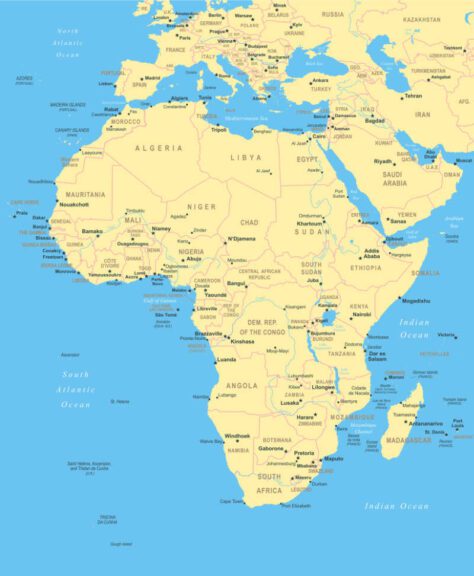
Russia’s trade with Africa has been rapidly increasing, albeit from a relatively low initial base. Trade turnover between Russia and the entire African continent hit US$27.7 billion in 2025, according to Irina Abramova, director of the Institute for African Studies of the Russian Academy of Sciences, representing a 43% increase on 2024. Moscow has plans to double this volume by 2030.
Russia’s top five African trade partners are currently Egypt, followed by Nigeria, Senegal , Côte d’Ivoire, and Morocco. Pan-African trade is somewhat erratic, hindered by regional security issues, poor infrastructure, and a lack of finance, yet on the other hand, it is boosted by Africa’s massive raw material reserves, increasing infrastructure investment by China and India, growing markets and populations, and improved Russian diplomatic and trade attention. In short, Russia’s relationship with Africa is a long-term project that will yield increasingly valuable returns.
Russia’s main exports at this moment include energy—Rosatom is building a NPP in Egypt and has numerous nuclear energy projects and negotiations underway in Africa, including with Tanzania, Mali, Burkina Faso, Ethiopia, Equatorial Guinea, Rwanda, South Africa, Niger, as well as oil projects in Nigeria, the Republic of Congo, and hydroelectric plants also in the Congo. The African continent is also set to become the third largest importer Russian coal after China and India.
On top of this are numerous mining activities, including Uranium, Gold, and Diamonds.
Russia is also interested in developing African Ports, with activities taking place in Togo, Sudan, and a Free Trade Zone at Port Said in Egypt.
Meanwhile, the Russia-Africa agricultural sector is also booming. Russian exports of both grain, including wheat as well as fertilizers have grown by over 50% in the past three years.
The fast pace of Russian trade growth with Africa has not gone unnoticed. With the deterioration of Russia’s relations with Europe, Russia has been deploying its diplomats to friendlier regions and has been opening a significant number of new embassies in Africa and is close to full diplomatic coverage of the entire continent.
Events such as the Russia-Africa Summit, which this year will be held in October in Moscow, have also developed to become key bridges in multilateral trade.