Русский




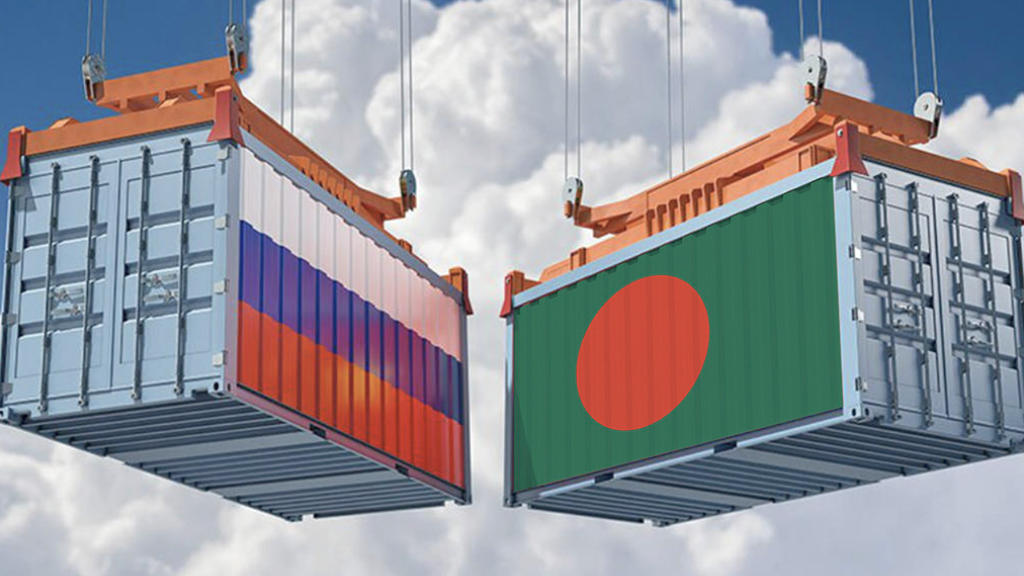
Bangladesh and Russia have signed a new institutional framework to expand a bilateral trade corridor worth approximately US$1.7 billion, with an agreement signed in Dhaka on November 5, 2026, providing for joint commercial projects, investment promotion, trade exhibitions and business missions.
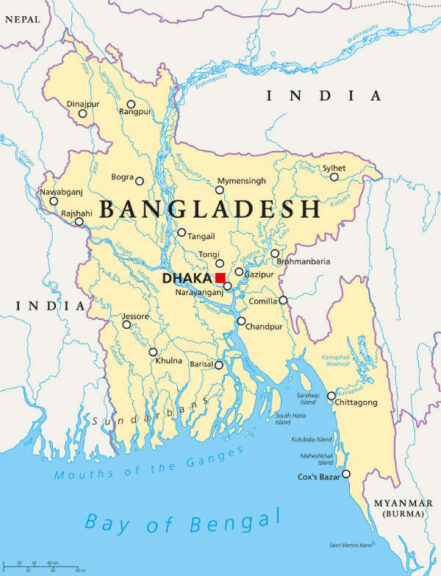
The Federation of Bangladesh Chambers of Commerce and Industry (FBCCI) and the Russia-Bangladesh Business Council signed the Memorandum of Understanding (MoU) at the FBCCI headquarters in Motijheel, creating a platform for companies from both countries to develop partnerships across agriculture, energy, pharmaceuticals, industrial production, information technology and financial services. This agreement opens new channels for joint ventures, agricultural supplies, LNG imports and industrial investment as the fifth bilateral commission meeting advances cooperation in banking, technology and nuclear energy.
The deal comes as bilateral merchandise trade remains heavily concentrated in Russian agricultural and industrial supplies and Bangladeshi manufactured exports. During the fiscal year 2024-25, Bangladesh exported US$353.9 million in goods to Russia and imported approximately US$1.36 billion, according to the FBCCI. Russian wheat, fertilisers, agricultural commodities and machinery dominate the import side, while Bangladeshi ready-made garments, jute, leather goods, pharmaceuticals, headgear, furniture and food products form the principal export categories. The new business framework is intended to connect these established flows with joint ventures, industrial sourcing, technology transfer and investment projects.
Two New Agreements Establish A New Cooperation Framework
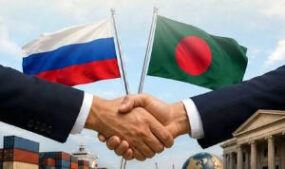
The November 5-6 programme in Dhaka produced two important institutional outcomes.
The FBCCI-Russia-Bangladesh Business Council Commercial MoU
Signed on November 5, the business MoU provides for regular exchange of updated information on trade and investment opportunities, implementation of joint projects involving companies from both countries, and the organisation of trade fairs, exhibitions, business missions and investment forums. It was signed during the Bangladesh-Russia Business Dialogue, jointly organised by FBCCI and the Russia-Bangladesh Business Council and chaired by FBCCI Administrator Md Fazlul Hoque.
The dialogue also established a practical agenda for continuing business consultations. Russia-Bangladesh Business Council Chairman Mia Sattar described the meeting as the first formal business exchange between the council and FBCCI and indicated that further consultations would follow. The significance is that the two organisations now have a framework for connecting individual exporters, importers, banks, manufacturers and investors rather than relying exclusively on periodic official discussions.
Intergovernmental Commission on Trade, Economic, Scientific and Technical Cooperation Protocol
The second outcome came at the fifth meeting of the Intergovernmental Commission on Trade, Economic, Scientific and Technical Cooperation. Bangladesh’s Economic Relations Division Secretary Shahriar Kader Siddiky and Russian delegation leader Ilya Shestakov signed the agreed protocol on behalf of their respective countries on November 6. Shestakov is head of Russia’s Federal Agency for Fisheries and chaired the Russian side of the commission. The IGC, established in 2017, is the principal institutional mechanism for coordinating bilateral economic, scientific and technical cooperation. Four meetings had previously taken place, with the fifth bringing senior officials, sectoral specialists, representatives of companies, partner agencies and business communities together in Dhaka.
Russian participation included senior representatives from the ministries responsible for energy, economic development and education, alongside other agencies and business organisations. The protocol prioritises trade, industry, agriculture, electricity, energy, education, scientific research, technology and technical cooperation. Russia placed particular emphasis on commercial relations, agricultural supplies, science, ICT, financial and banking services, culture and sports. Bangladesh highlighted electricity and energy, agricultural technology, fisheries, livestock, industrial investment, skills development, education and research.
Priority Areas of Cooperation

The two countries identified the following priority areas for cooperation:
Power and Energy
Ensuring the smooth implementation of ongoing projects and expanding technical cooperation in new energy sectors.
Agriculture, Fisheries and Livestock
Transferring advanced agriultural technologies, strengthening research and laboratory facilities, and promoting scientific cooperation in fisheries development.
Science, ICT and Technology
Expanding joint initiatives in digitalisation, technology transfer, scientific research and technological development.
Finance and Banking
Improving banking and financial transaction mechanisms, facilitating bilateral trade and addressing obstacles to cross-border payments.
Education and Skills Development
Expanding opportunities for Bangladeshi students and researchers in higher education and scientific research, while strengthening technical training and skilled workforce development.
Trade Composition Reveals Substantial Room For Expansion
The existing trade structure provides a clear commercial basis for the new initiatives. Bangladesh’s exports to Russia reached US$665.31 million in FY2020-21 and US$638.30 million in FY2021-22 before declining to US$353.96 million in FY2024-25 and approximately US$257.26 million in FY2025-26. The latest figure represents a contraction of approximately 61% from the FY2020-21 peak. Ready-made garments account for more than 95% of Bangladeshi exports to Russia. Major product categories include cotton T-shirts and singlets, women’s and girls’ cotton trousers, men’s and boys’ cotton trousers, knitted jerseys and pullovers. Jute yarn, shrimp and home textiles also contribute to shipments.
Pharmaceuticals, leather products, ceramics, furniture and food processing represent additional areas for diversification. The decline in garment shipments has been particularly important for Bangladeshi manufacturers. Industry representatives have identified difficulties in receiving export proceeds as a major obstacle.
Bangladesh’s apparel exporters have been estimated to hold more than US$1 billion in outstanding payments from Russian buyers, according to industry representatives cited in October 2026 reporting. Individual mid-sized knitwear businesses have also reported several million dollars in delayed receivables. Russia’s position as a supplier of food-security commodities remains substantial. Bangladesh imported approximately US1.36 billion worth of Russian goods in FY2024-25. The principal categories include wheat, fertilisers, agricultural products, machinery, mechanical appliances and nuclear-related equipment.
Wheat remains particularly important. Russia supplied approximately 3.5 million tonnes to Bangladesh in agricultural year 2023-24, accounting for more than half of the country’s wheat imports in that period. However, the supplier composition subsequently changed: Bangladesh imported approximately 1.679 million tonnes of Russian wheat in FY2025-26, while Argentina supplied around 2.2 million tonnes.
This demonstrates both the continuing Russian market presence and the competitive environment in which Russian exporters operate. Fertilisers provide another established commercial channel. A July 2024 agreement between the Trading Corporation of Bangladesh and Russia’s Prodintorg provided for at least 300,000 tonnes of potassium chloride deliveries through June 2025. Russian suppliers have also maintained an important position in Bangladesh’s broader agricultural-input market. The immediate commercial opportunity is therefore two-sided: Russia can expand supplies of food, fertilisers and industrial equipment, while Bangladesh can rebuild garment exports and increase shipments of pharmaceuticals, leather, jute products and processed foods.
LNG, LPG and Gazprom Open Another Energy Corridor
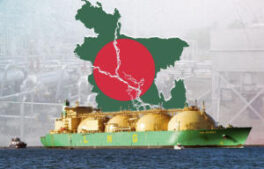
Energy cooperation emerged as one of the most commercially significant subjects of the November commission discussions. Bangladesh is exploring long-term Russian supplies of liquefied natural gas (LNG) and liquefied petroleum gas (LPG) to support growing domestic demand and industrial consumption.
Discussions on November 5 included possible LNG supplies from Russia’s Sakhalin-2 project, the Portovaya LNG facility and the Ust-Luga complex, alongside cooperation connected with an ethane-rich gas processing complex. Russia’s Gazprom indicated its readiness to facilitate direct discussions between Petrobangla and Sakhalin Energy concerning potential Sakhalin-2 supplies if Bangladesh decides to proceed.
This is commercially significant because it creates a possible direct negotiation channel between Bangladesh’s national gas company and the Russian project operator. Gazprom has maintained an operational presence in Bangladesh since 2012, participating in gas exploration and drilling activities. Its work has included wells in Bhola, where additional exploration opportunities were identified in 2023. The company’s experience in drilling, well development and technical services provides an existing industrial foundation for further cooperation. The potential LNG arrangement would complement the established Russian role in Bangladesh’s nuclear-energy programme. It would also broaden bilateral energy cooperation beyond project-based technical assistance towards recurring commodity supplies, long-term procurement and possible infrastructure development. For Bangladesh, the commercial significance lies in diversifying gas procurement and supporting industrial production. For Russian suppliers, the opportunity is to establish a longer-term energy relationship with a major South Asian market.
The Rooppur NPP Remains The Primary Industrial Partnership
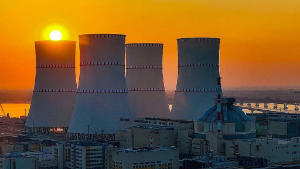
The US$12.65 billion Rooppur Nuclear Power Plant in Pabna remains the largest established Russian-backed industrial project in Bangladesh. Russia is providing financing, technology and technical assistance for the construction of two VVER-1200 reactors, each with an installed capacity of 1,200 megawatts. Russian state nuclear corporation Rosatom is implementing the project through its engineering subsidiary Atomstroyexport, while the Bangladesh Atomic Energy Commission is the implementing organisation on the Bangladeshi side.
The project reached an important operational milestone in October 2026. On October 8, Bangladesh’s Atomic Energy Regulatory Authority approved the first controlled nuclear reaction at Unit 1. On October 29, the regulator authorised the plant to begin power-start-up activities. Trial electricity supply to the national grid was expected in November, subject to completion of commissioning and safety procedures. During an October 9 meeting in Moscow, Rosatom Director General Alexey Likhachev and Bangladesh’s Science and Technology Minister Faqir Mahbub Anam discussed the project’s progress and the timetable for grid connection. The two-unit facility, with a combined capacity of 2,400 MW, is expected to supply approximately 11 percent of Bangladesh’s electricity demand when fully operational. Rosatom also indicated that commissioning and initial start-up activities for Unit 2 would begin in 2027. The project has implications beyond electricity generation. Its implementation involves specialised nuclear machinery, engineering services, fuel supply, technical training, safety systems and long-term operational cooperation. It also creates opportunities for further cooperation in nuclear science, engineering education and specialist workforce development.
Banking, Payments & Financial Infrastructure
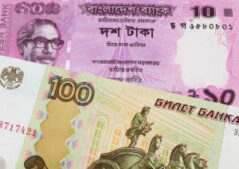
Financial cooperation was another central component of the November discussions. Both delegations recognised that payment arrangements have become one of the principal constraints on expanding commercial transactions, particularly following restrictions on Russian financial institutions and disruptions to conventional correspondent-banking channels.
Russian delegation head Ilya Shestakov stressed that a sustainable bilateral payment infrastructure was essential to unlocking trade potential. Russia is interested in establishing more direct relationships between Russian banks and Bangladeshi financial institutions, including the possible use of digital financial instruments for settling import and export transactions. Exim Bank of Russia, operating within the Russian Export Centre Group, has expressed interest in expanding cooperation with Bangladeshi financial institutions.
Earlier proposals have included opening a Russian bank branch in Dhaka, developing an independent bilateral settlement infrastructure and using Indian rupees for selected trade transactions.
The Russian side has also raised the possibility of digital financial instruments for commercial payments. The issue has direct implications for the Rooppur project. Bangladesh has deposited funds with Sonali Bank for repayment of Russian project loans, but transfers to the relevant Russian financial institution have encountered restrictions. The resulting complications affect not only sovereign project financing but also the confidence of commercial exporters and importers. There are, however, important compliance considerations. Exim Bank of Russia and its parent organisation, the Russian Export Centre, are subject to US sanctions. Any proposed arrangement involving these institutions therefore requires careful examination of applicable financial regulations and the exposure of participating Bangladeshi banks.
The November dialogue also brought together representatives of Bangladesh’s banking and capital-market institutions. Bangladesh Association of Banks Chairman Abdul Hai Sarker and Bangladesh Bank Executive Director Imam Abu Sayeed participated, alongside Economic Relations Division Joint Secretary Aynur Akter Panna. Dhaka Stock Exchange Chairman Mominul Islam proposed stronger institutional cooperation between the Dhaka Stock Exchange and Moscow Exchange, particularly through experience-sharing and capital-market development. This creates another potential area of financial-sector engagement beyond the immediate settlement of merchandise trade.
Russia’s Proposal For Rupee Trade & The Bangladesh Yuan Precedent

The payment-settlement question is central to expanding Bangladesh-Russia trade because the two countries already have substantial commercial transactions yet face difficulties transferring funds through conventional banking channels. Bangladesh’s experience with China offers a practical reference point: Bangladeshi authorised dealer banks are permitted to maintain Chinese yuan correspondent or nostro accounts, allowing importers and exporters to open and settle letters of credit directly in yuan rather than converting every transaction through the US dollar.
This arrangement provides a recognised banking channel for yuan-denominated trade, although it does not remove all currency, liquidity or transaction risks. Russia has proposed a different arrangement: settling Bangladesh-Russia trade in Indian rupees, establishing dedicated bilateral payment infrastructure and allowing a Russian bank to open a branch in Dhaka.
The proposal was raised ahead of the fifth Intergovernmental Commission meeting and reflects Moscow’s effort to restore transactions disrupted by restrictions on Russian banks. However, the yuan precedent also demonstrates why adopting another currency does not automatically solve the problem. Bangladesh’s earlier attempt to use Chinese yuan for Russian transactions, including Rooppur-related payments, reportedly failed to secure continued participation from banks concerned about exposure to sanctions.
There is also a regulatory distinction: Bangladesh and India launched an Indian-rupee settlement mechanism in July 2023, involving the Sonali Bank and Eastern Bank on the Bangladeshi side and the SBI and ICICI Bank in India, but that bilateral facility does not automatically authorise rupee settlement between Bangladesh and Russia.
Bangladesh Bank officials have indicated that the existing rules restrict the use of rupees to India-Bangladesh trade. The practical task, therefore, is to establish an approved banking and settlement structure that can handle Bangladesh-Russia payments without exposing participating banks to unacceptable compliance risks. The fifth IGC’s discussions on financial transactions, together with Russia’s interest in cooperation involving Exim Bank of Russia and Bangladeshi financial institutions, provide a basis for further technical negotiations; they should not, however, be presented as an already operational payment agreement.
VEB.RF, Invest Bangladesh & Industrial Investment Opportunities

Investment promotion was another important outcome of the commission’s work. A proposed cooperation arrangement between Russia’s state development corporation VEB.RF and Invest Bangladesh focuses on information exchange and the identification of investment opportunities.
The proposed partnership is intended to improve connections between investors, industrial enterprises and business organisations, allowing potential projects to be identified and developed through direct institutional cooperation. It is particularly relevant to industrial production, agro-processing, pharmaceuticals, telecommunications infrastructure and small and medium-sized enterprises.
The FBCCI has encouraged Russian companies to consider sourcing partnerships and joint ventures in Bangladesh’s special economic zones and high-tech parks. Potential areas include pharmaceutical manufacturing, agro-processed foods, technology transfer, telecommunications infrastructure and industrial components. For Russian companies, Bangladesh offers a large domestic consumer market, established export-oriented manufacturing facilities and access to wider South Asian and international supply chains. For Bangladeshi businesses, Russian technology, machinery, agricultural expertise and industrial inputs could support production expansion and diversification.
The proposed VEB.RF-Invest Bangladesh arrangement should be distinguished from the signed FBCCI-Russia-Bangladesh Business Council MoU: the former was identified as an investment-cooperation initiative, while the latter was formally signed on November 5. Customs cooperation is another component of the commercial agenda. Both countries agreed to advance preparations for an agreement on cooperation and mutual assistance in customs matters. Improved customs coordination could support more predictable clearance procedures, information exchange and the movement of agricultural commodities, industrial equipment and manufactured goods.
Agriculture, Fisheries, Fertilisers & Food Security
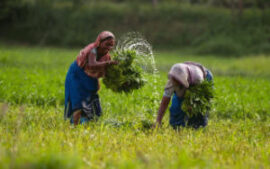
Agriculture remains one of the most established areas of bilateral economic cooperation. Russia is a major supplier of wheat and fertilisers to Bangladesh, while both sides are seeking to expand technical cooperation in agricultural research, fisheries, livestock and production technologies. Shestakov’s position as head of the Federal Agency for Fisheries gives the Russian delegation a direct institutional connection to fisheries cooperation. Bangladesh has emphasised scientific and technical collaboration in fisheries and livestock, including opportunities for research, skills development and improved production methods.
Russia is also interested in increasing supplies of agricultural products, processed food and fertilisers. The established involvement of Russian supplier Prodintorg in potassium chloride deliveries illustrates the potential for longer-term procurement arrangements. Expanded fertiliser cooperation would support Bangladesh’s agricultural productivity, while Russian exporters would gain a more predictable market for agricultural inputs.
In August, Bangladesh’s Cabinet Committee on Government Purchase (CCGP) approved a proposal to import 35,000 metric tons of Muriate of Potash (MOP) fertilizer from Russia under a state-to-state arrangement. The fertilizer will be supplied by Russia’s state-owned JSC Foreign Economic Corporation under its agreement with the Bangladesh Agricultural Development Corporation (BADC). The contract is valued at approximately Tk 168.29 crore (US$13.53 million) while the purchase price has been fixed at US$388.55 per metric tonne, with an allowable variation of plus or minus ten percent in shipment volume.
On the surface, 35,000 tonnes appears to be a routine procurement decision. In reality, it represents another building block in a much larger supply architecture. This latest shipment is not an isolated transaction but part of an expanding procurement framework between Bangladesh and Russia. Previous contracts covered similar volumes, while BADC has now renewed arrangements covering approximately 595,000 tonnes of MOP fertilizer for the 2026-27 fiscal year, making Russia one of Bangladesh’s largest long-term fertilizer suppliers.
Traders and market analysts have also described recent agreements exceeding half a million tonnes as the largest fertilizer cooperation package ever concluded between the two governments. Unlike purchases made through volatile international spot markets, these government-to-government agreements provide Bangladesh with predictable pricing, assured delivery schedules and reduced procurement uncertainty during periods of global supply disruptions.
From Moscow’s perspective, they also create a stable long-term export market in South Asia for one of Russia’s globally competitive industries. The two countries also discussed cooperation between companies in agriculture and industry, including financial and non-financial assistance for implementing commercial projects. This is important because the objective is not limited to purchasing commodities: it includes developing production relationships, research partnerships and industrial processing capacity.
Education, ICT & Technology Transfer

Education and human-resource development featured prominently in Bangladesh’s priorities. Discussions included expanding opportunities for Bangladeshi students at Russian higher-education institutions, increasing educational quotas and strengthening exchanges in science, technology and research. The Russian side also identified information and communication technology, cybersecurity and e-governance as potential areas for joint work. These sectors provide opportunities for Russian technology companies to develop partnerships with Bangladeshi institutions and private enterprises. Technology cooperation could extend to digital public services, cybersecurity infrastructure, industrial automation, telecommunications and technical training. For Bangladesh, cooperation in these areas would complement its industrial-development priorities; for Russian enterprises, it would provide additional opportunities to develop technology-related services and commercial partnerships.
Summary
The November meetings have established a broader framework covering two distinct but complementary levels of cooperation. The FBCCI-Russia-Bangladesh Business Council MoU creates a business-to-business mechanism, while the fifth IGC protocol establishes priorities for official, technical and sectoral cooperation. The commercial significance becomes clearer when the trade figures are considered together. Bangladesh’s exports to Russia declined from US$665.31 million in FY2020-21 to US$257.26 million in FY2025-26, while Russian imports into Bangladesh maintained a substantially larger position.
Restoring export payments, diversifying Bangladeshi products and expanding Russian agricultural and energy supplies would therefore be central to achieving more balanced trade growth. For Russian companies, the opportunities extend across wheat, fertilisers, LNG, LPG, nuclear engineering, gas exploration, industrial machinery, financial services and digital technologies. Gazprom, Rosatom, Atomstroyexport, Sakhalin Energy, Exim Bank of Russia, VEB.RF and Prodintorg represent the principal Russian corporate and institutional connections identified in the cooperation agenda.
For Bangladeshi enterprises, the opportunities include garment exports, pharmaceuticals, leather, jute, ceramics, agro-processing, fisheries and industrial joint ventures. FBCCI, Invest Bangladesh, the banking sector, the stock exchanges and the sectoral business associations now have institutional channels through which these opportunities can be pursued.
The next stage will depend on converting the signed business MoU and IGC protocol into company-level contracts, investment decisions, procurement arrangements and functioning financial channels. The discussions on LNG supplies, VEB.RF-Invest Bangladesh cooperation, customs assistance and financial settlement provide identifiable areas for follow-up.
The central economic outcome of the November 5-6 meetings is therefore the widening of Bangladesh-Russia cooperation beyond its traditional concentration in wheat, fertilisers and the Rooppur nuclear project. The new framework connects energy procurement, industrial investment, financial infrastructure, manufactured exports, technology transfer and education within one expanding commercial relationship. With bilateral merchandise trade already around US$1.7 billion in FY2024-25, the priority is to make these institutional arrangements operational and translate existing demand into a wider range of sustainable business transactions.