Русский




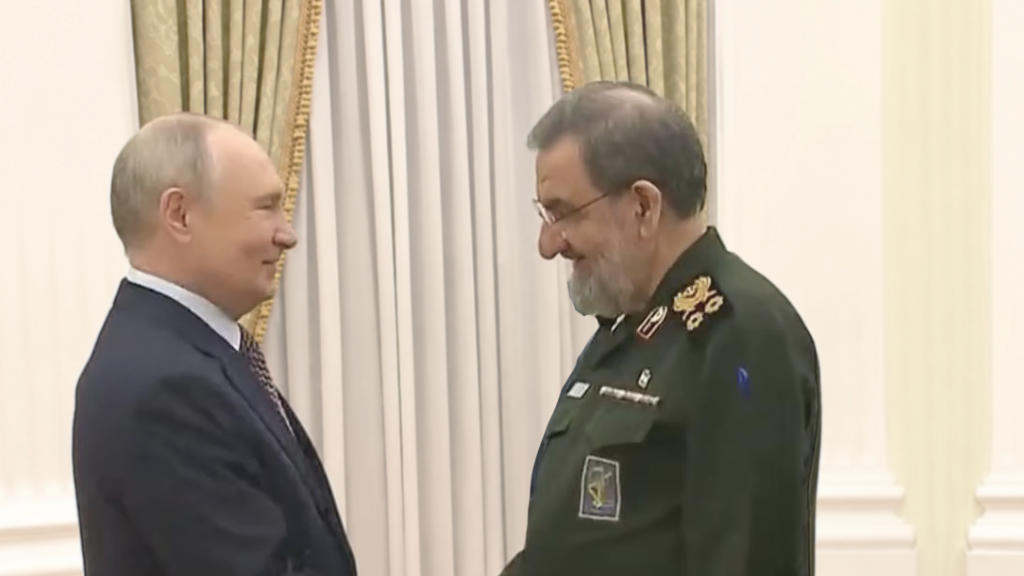

Russia’s President Putin has met with Iranian Supreme National Security Council Secretary Mohsen Rezaei in Moscow to discuss the construction of gas pipelines from Russia to Iran and Russian gas supplies to Iran, in addition to the post-US-Iran war situation and regional security.
Putin said that he would make every possible effort to bring an end to the current conflict in the Middle East.
The discussions included the following topics:
Russia-Iran Gas Pipeline
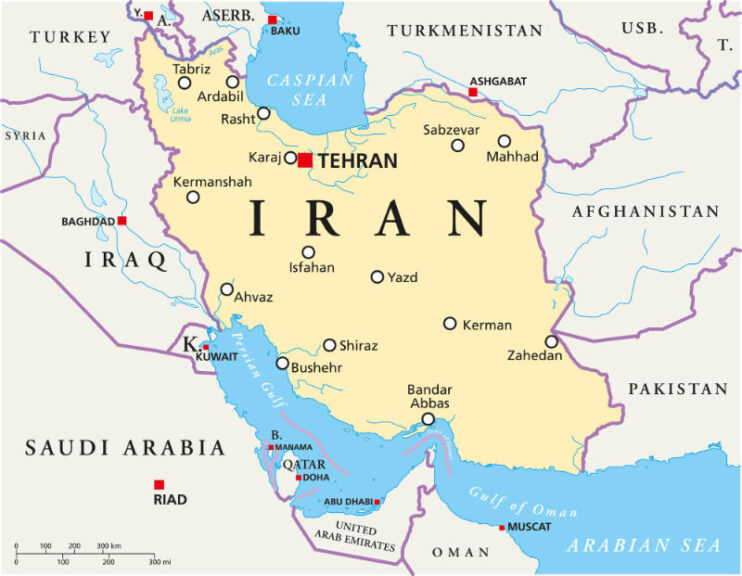
The pipeline discussions concern a major long-term natural gas pipeline project to help ease Iran’s severe domestic gas shortages and allow Russia to export gas through Iran to regional markets. These plans for a long-term dedicated pipeline with a capacity of up to 110 billion cubic meters (bcm) per year, with the first phase projected to reach 55 bcm annually within two to three years of construction.
Short-term cooperation plans include a swap arrangement via Azerbaijan (where Russia supplies northern Azerbaijan and Iran receives gas from the south), while long-term proposals explore direct pipeline routes—including options passing through Azerbaijan or under the Caspian Sea.
Despite holding some of the world’s largest natural gas reserves, Iran faces severe domestic gas shortages worsened by winter peak demands, aging infrastructure at fields like South Pars, and war damage to processing facilities. Russian gas imports aim to ease these immediate domestic gaps.
Having lost a significant portion of its European gas export market, Moscow is looking for new regional buyers and transit/resale hubs to monetize its huge gas production. While political momentum and high-level diplomatic messages have accelerated talks, firm construction timelines, final route decisions, and full financing agreements remain under negotiation.
The Rasht-Astara Railway
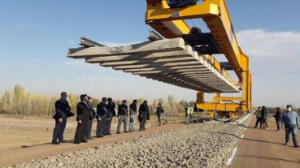
Russia and Iran have signed documents regarding access to land plots for the construction of the Rasht-Astara railway line. Russian Deputy Prime Minister Andrei Nikitin said that “a package of documents for the Rasht-Astara railway line project has been drawn up in Tehran. The Russian organization Caspian Services and the Iranian company CDTIC signed a protocol granting access to land plots along the entire route for advanced engineering surveys, as well as a supplementary agreement to the contract. Nikitin said that “the plots have been handed over, enabling us to continue upfront engineering and giving us more time to do the necessary work. This year, Russian specialists have already built a geodetic control network and carried out aerial photography. Hydrometeorological surveys and a topographic survey are now underway.”
Russia and Iran began carrying out surveying for the Rasht-Astara railway line in May last year. The plans involve building a railway track 162 kilometers in length and building eight new stations, 56 trestles, 73 bridges, and 30 overpasses. The section will form part of the International North-South Transport Corridor.
The International North-South Transport Corridor links northern Europe with states in the Persian Gulf and Indian Ocean via Russia, the Caucasus, and Central Asia. Russia, Iran, and India signed an agreement on the creation of a multimodal corridor in 2002, and it now has 12 participating countries. The corridor comprises three routes—a western route along the western coast of the Caspian Sea, an eastern route along the eastern coast, and the trans-Caspian route through the Caspian Sea.
Grain Supplies
Iran has retained its lead in purchases of Russian grain since the start of the 2026-2027 agricultural season. According to preliminary data, 1.895 million tonnes were shipped to Iran, including significant purchases of Russian barley and corn.
Nuclear Power
Russia and Iran have significantly expanded their nuclear and strategic energy cooperation during 2026, underscored by major multi-billion-dollar infrastructure agreements. These include a major US$25 billion framework involving Rosatom to construct multiple Russian-supported reactors.
Under agreements finalized in 2025 and moving forward through 2026, Rosatom is supporting the construction of four Generation III reactors near Sirik in Iran’s Hormozgan province, designed to generate roughly 5 gigawatts of electricity. Meanwhile, construction continues on Units 2 and 3 at the Bushehr Nuclear Power Plant, with Unit 2 targeted for operations around 2029. Unit 1 remains Iran’s sole operating commercial power reactor.
Iranian officials announced in late October 2026 that Iran and Russia are working on a protocol to accelerate the joint development and construction of small modular nuclear reactors. The legal foundation of this deepened cooperation is the two nations’ Comprehensive Strategic Partnership Treaty, which officially entered into force in October 2025.
Russian President Vladimir Putin reported that bilateral trade increased by 10.4% during the first eight months of 2026, following a 21% rise in 2025. If that growth rate is maintained during the rest of this year, Russia-Iran 2026 bilateral trade will reach about US$6.4 billion. That growth has been based upon Iran’s membership of BRICS and its recent Free Trade Agreement with the Eurasian Economic Union, which includes Russia.