Русский




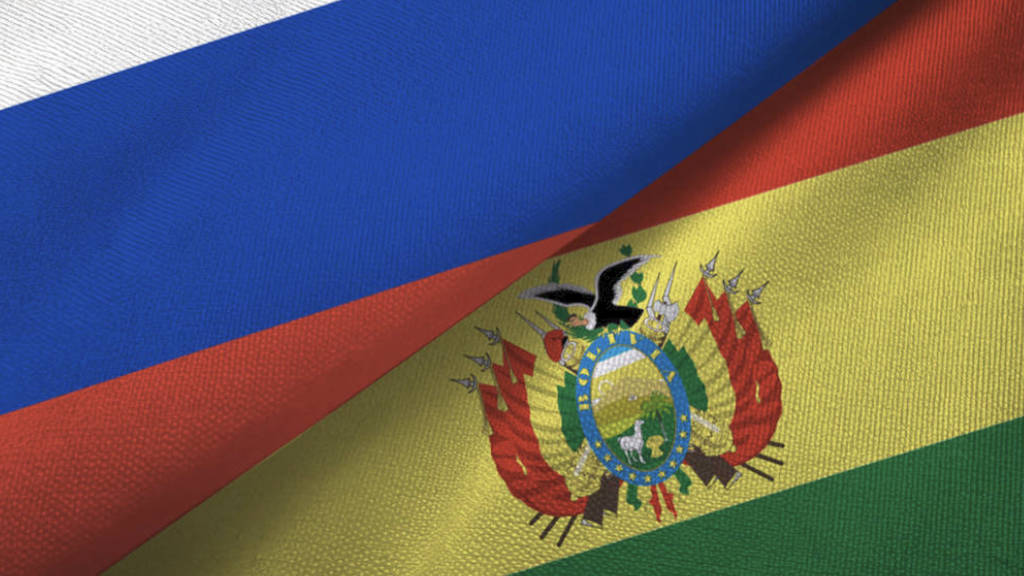

Bolivia, the most recent full member of Mercosur (following the parliamentary ratification of its accession in 2024), maintains a commercial relationship with Russia that is small in volume but highly illustrative: trade concentrated in very few products, is extremely volatile, and has a balance that has favored Russia without interruption every year since 2012. This article examines the relationship between the two countries over the past 25 years, drawing on official statistics from Bolivia’s COMEX portal (with data from the National Statistics Institute), with a focus on the bilateral trade structure, its cycles, and the most recent changes.
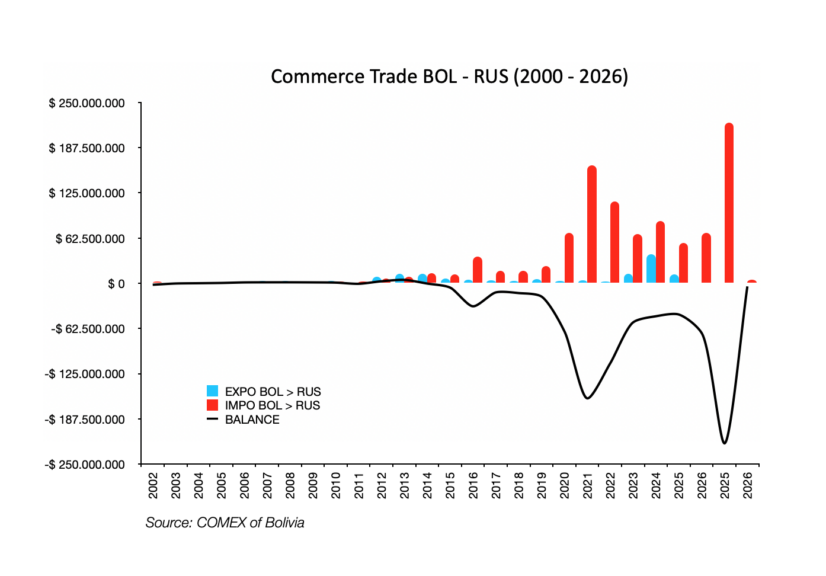
Between 2000 and 2008, trade was almost symbolic-it never exceeded US$6 million a year (the peak was US$5.5 million in 2005), and, between 2003 and 2008, the balance favored Bolivia. For Russia, the relationship was somewhat irrelevant: in 2005, Bolivia accounted for 0.003% of its total imports.
Russia-Bolivia Bilateral Trade Cycles
The first sign of change came between 2010 and 2012, led by inorganic chemicals: Bolivian exports rose from US$1.6 million in 2009 to US$9.3 million in 2010 and US$13.2 million in 2011. At the same time, purchases from Russia began to grow-US$13.6 million in 2012-and since then the balance has favored Russia without interruption.
Between 2013 and 2017 the relationship evolved. Bolivian exports fell to between US$3 million and US$5 million a year, while purchases from Russia jumped to US$36.7 million in 2014 (192% more than the previous year), including US$23.4 million in fuels, and settled at around US$17 million in 2015 and 2016 and US$24 million in 2017.
The real change of scale came in 2018: imports from Russia rose 190% to US$69.3 million, including US$40.7 million in machinery and electrical equipment, and in 2019 they more than doubled to US$163.1 million, 76% of which was fuel. That was followed by trade values of US$113.2 million in 2020 and US$67.5 million in 2021.
2022 saw Bolivia’s reach its current Russian exports peak: US$39.8 million, 87% of it in inorganic chemicals (US$34.8 million), plus US$4.6 million in meat. It proved a fleeting success, however: sales fell to US$12.2 million in 2023, US$0.9 million in 2024, and US$0.5 million in 2025, with the chemicals category at zero since 2024. Even in its best year, Russia accounted for barely 0.3% of Bolivia’s total exports.
Purchases from Russia, by contrast, hit their record in 2025: US$221.9 million (219% more than in 2024), of which US$191.5 million, or 86%, was fuel. That year accounted for 2.2% of Bolivia’s total imports, compared with 0.7% in 2024. But the pattern was abruptly cut short in 2026: between January and August, imports from Russia total just US$4.5 million, 97.6% less than in the same period of 2025 (US$187.1 million), with fuels falling from US$164.5 million to US$0.4 million. Bolivian exports to Russia were a mere US$0.09 million, 67% less.
On that trajectory, annual trade averaged US$5.7 million between 2000 and 2011, US$59.3 million between 2012 and 2021, and US$121.5 million between 2022 and 2025: like Brazil, and unlike Argentina and Paraguay, Bolivia trades more with Russia after 2022 than before, although the average is affected by 2025. Between 2000 and 2025, Bolivia sold US$152 million to Russia and bought US$996 million from it, 6.6 times more; the cumulative balance in Russia’s favor is around US$844 million.
Russia Imports From Bolivia
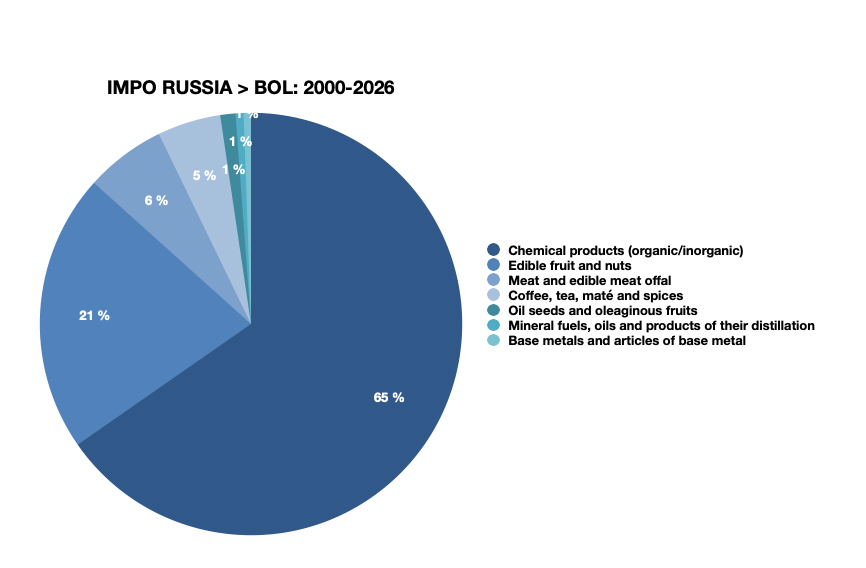
Bolivian exports to Russia are small but highly concentrated: three categories account for 91% of the US$150 million exported between 2000 and 2025, namely inorganic chemicals (64%), fruit and nuts (21%), and meat (6%). Coffee, tea, and spices contribute another 5%. Of the US$150 million, US$137 million came from just these three categories.
Inorganic chemicals are also responsible for the two peaks in the series: 2011 (US$10.6 million of US$13.2 million) and 2022 (US$34.8 million of US$39.8 million). The available statistics report the tariff chapter, not the exact product. Meat, which appears only in 2021, was practically the sole category of sales in 2024 (US$0.8 million of US$0.9 million).
Russia Exports To Bolivia
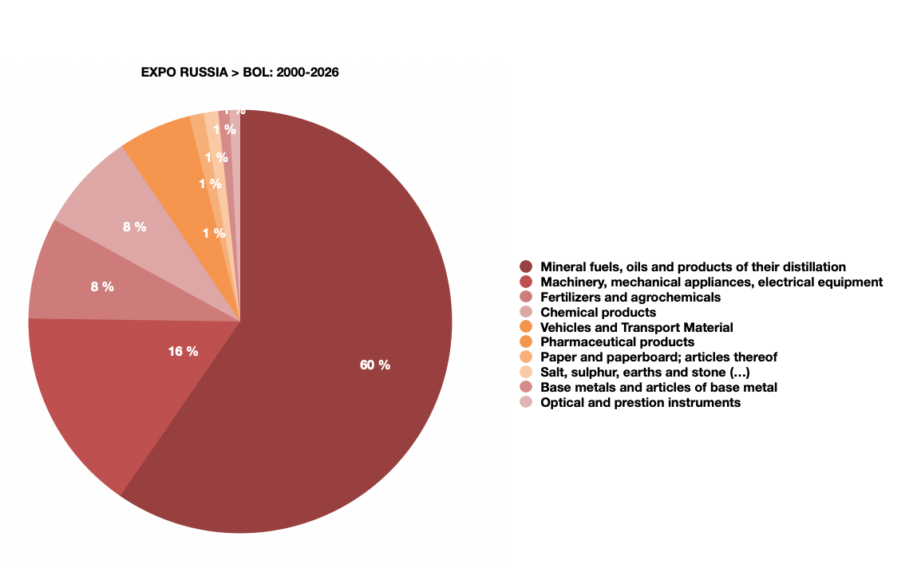
Bolivian purchases from Russia totaled US$996 million between 2000 and 2025 (CIF value), with five categories accounting for 94% of the total: fuels and energy products (59%, around US$588 million), machinery and electrical equipment (15%), fertilizers and agrochemicals (8%), chemical products (7.5%), and vehicles and transport equipment (4%).
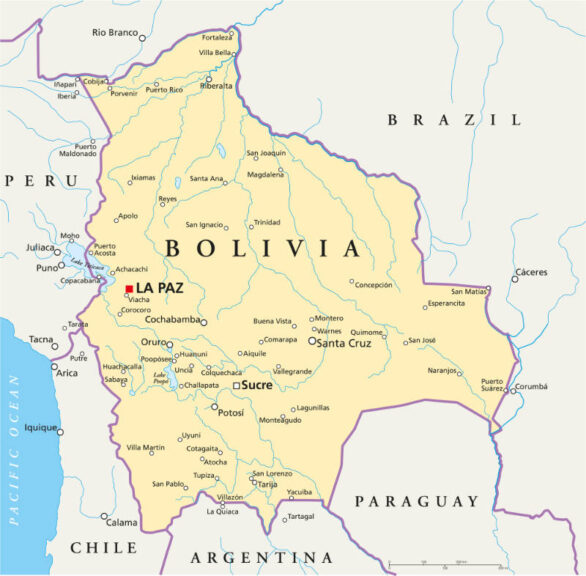
While in the rest of the Mercosur bloc fertilizers carry a weight comparable to that of fuels, in Bolivia fuels far exceed fertilizers (59% versus 8%), while machinery purchases have peaks of their own: US$40.7 million in 2018 and US$34.8 million in 2024. Another feature is irregularity: rather than a continuous flow, fuel purchases arrive in sudden quantities, with US$23.4 million in 2014, US$124.2 million in 2019, and US$191.5 million in 2025, with intermediate years ranging from almost zero to US$81 million. Bolivia, which is landlocked, receives its goods through the ports of third countries; in 2023, shipments of Russian diesel and crude bound for Bolivia went through the Chilean port of Arica.
Looking Ahead
Bolivia illustrates the extreme of asymmetry: for Russia, trade with Bolivia has never exceeded 0.05% of its exports (2025) or 0.015% of its imports (2022); for Bolivia, by contrast, Russia accounted for 2.2% of its imports in 2025, a cyclical high driven by fuels.
The relationship thus hinges on a single factor: Bolivia’s need to import fuels. Bolivia imports between 86% and 95% of the diesel it consumes, ever since natural gas production declined, and in 2025 it went through a shortage that led it to authorize private imports of diesel, gasoline, and LPG for three months and, in February 2026, imports of crude oil, with contracts with international trading firms. That opening to new suppliers may explain part of the collapse in purchases from Russia in 2026.
On the export side the problem is the reverse: there is no consolidated product. Inorganic chemicals explain the two peaks but disappeared in 2024, and meat, the only category with sales in 2024 and 2025, is marginal. Bolivia’s incorporation as a full Mercosur member opens a broader regional trade framework, but until a stable export offering emerges, the relationship will remain that of an occasional buyer of fuels and an occasional seller of one-off products.
As in the rest of the Mercosur bloc, the series shows jumps associated with shocks, such as the fuel shortages of 2019 and 2025, and the Ukraine conflict, meaning that trade volatility is currently the rule rather than the exception in Russia-Bolivian trade.
The Russian-Bolivian Intergovernmental Commission on Trade and Economic Cooperation coordinates bilateral ties between Russia and Bolivia, focusing on energy, nuclear technology, agriculture, transport, and education, and works to expand economic exchanges, scientific partnerships, and diplomatic alignment-although that too is somewhat moribund-it hasn’t met since 2017.
However, there are signs that this could be changing. Both nations coordinate economic objectives through bilateral commissions and alignment within expanded multilateral platforms like BRICS, of which Bolivia became a partner state in 2025. La Paz views the partnership as a key channel for alternative development financing, regional investments, and expanded trade with major emerging economies. Russia has also identified Mercosur as a key strategic trade and development target as part of its current Foreign Policy Initiative.
Russia has recently increased fuel exports-including low-sulphur diesel and gasoline shipments-to help landlocked Bolivia combat domestic energy and fuel shortages. State gas firm Gazprom also maintains cooperation agreements with Bolivia’s YPFB.
Russia’s state atomic energy corporation Rosatom (via its subsidiary Uranium One Group) signed a US$970 million direct lithium extraction agreement in 2024 to develop projects in the Uyuni salt flat, though legislative and political debates in Bolivia have slowed rollout timelines, while Rosatom built the El Alto Center for Nuclear Research and Technology in Bolivia, featuring medical and irradiation applications. Russia also provides humanitarian agricultural support, including grain shipments aimed at reinforcing food security and social programs. These green shoots may yet evolve to place more emphasis on bilateral relations, although much work still needs to be done.
This article was provided by Martin Epstein, an experienced economic analyst based in Argentina. He may be reached at info@russiaspivottoasia.com