
 Русский






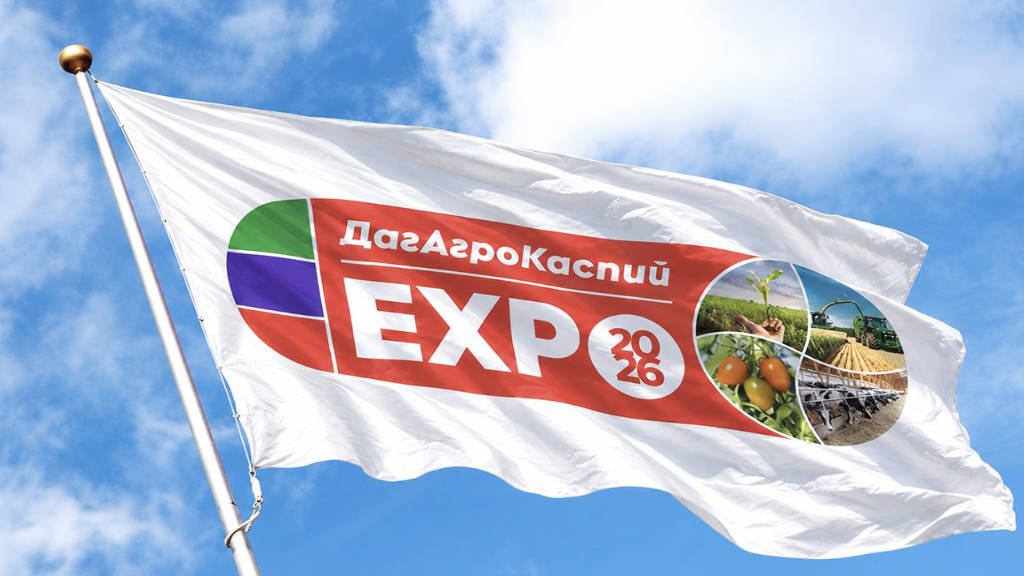

Russia’s greenhouse vegetable industry is targeting annual production of 2 million tonnes, while Dagestan is positioning itself as a production centre for tomatoes, flowers and other high-value agricultural products. The fourth DagAgroCaspian agro-industrial forum, held on September 29-30, 2026, at the Ali Aliyev Sports Palace in Kaspiysk, brought together more than 100 companies from Russian regions and international markets, including China, India, Turkey and Belarus. Exhibits covered agricultural machinery, greenhouse equipment, irrigation systems, seeds and plant-protection products, connecting technology suppliers with farmers seeking to increase yields and reduce operating costs. Russia’s greenhouse vegetable industry is expanding towards annual production of 2 million tonnes, while Dagestan is developing a larger role in vegetable cultivation, horticulture, flower production and agricultural processing. These opportunities shaped the commercial agenda of the fourth DagAgroCaspian agro-industrial forum.
Dagestan is in the north Caucasus mountains and has a lengthy border with the Caspian Sea. It has long been regarded as premium agricultural land, and with access to the INSTC and trade routes, is looking to export its produce to Central and South Asia.
The two-day exhibition connected farmers and producers with agricultural machinery manufacturers, greenhouse equipment suppliers, irrigation specialists, seed producers and plant-protection technology providers. Russian, Belarusian and Chinese machinery featured in the outdoor exhibition area, while the indoor pavilions showcased greenhouse installations, irrigation systems, seeds and agricultural chemicals. Participants also examined technologies for orchards, vineyards, livestock operations and protected cultivation.
The commercial opportunity rests on measurable production growth. Russia harvested a record 1.65 million tonnes of greenhouse vegetables in 2025, 1.2% more than in 2024, while Dagestan produced 85,000 tonnes of greenhouse vegetables across 600 hectares. The forum’s significance was therefore not simply the number of exhibitors but the opportunity to connect a growing regional agricultural market with equipment and technologies capable of increasing yields, controlling production costs and expanding value-added processing.
Russia’s Greenhouse Market Moves Towards 2 Million Tonnes
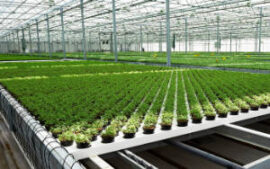
Alexey Sitnikov, president of the Association of Greenhouses of Russia and a State Duma deputy, identified greenhouse production as an area in which domestic technology, import substitution and expanded cultivation capacity could support further growth. Russian greenhouse vegetable production reached 1.65 million tonnes in 2025, approximately three times the level of 12 years earlier, according to industry figures discussed around the forum.
The winter greenhouse area reached approximately 3,460 hectares in 2025, compared with 3,350 hectares in 2024 and slightly more than 3,000 hectares in 2020. Average yields, however, declined from 48.7 kilograms per square metre in 2024 to 47.6 kilograms in 2025. That combination of expanding acreage and lower average productivity highlights the commercial importance of better climate management, irrigation, nutrient delivery and automation.
Cucumbers are the strongest example of Russia’s import-substitution progress. Sitnikov said domestic production now covers approximately 96% of demand for cucumbers and 80% for tomatoes, compared with around 25% for cucumbers in 2013. The next objective is to increase national greenhouse vegetable production towards 2 million tonnes, reduce residual import dependence, particularly in the Far Eastern Federal District, and develop export capacity.
Federal support for the vegetable and potato development project was budgeted at ₽945.3 million (US$11.5 million) in 2026, up from ₽840.2 million in 2025. Approximately 27% of the 2026 allocation was designated for greenhouse vegetable production. This funding provides an important policy backdrop for equipment suppliers and greenhouse operators.
Dagestan’s 85,000-Tonne Greenhouse Sector
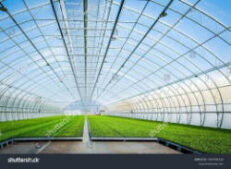
Dagestan entered the forum with a substantial agricultural production base. Ivan Golub, acting Minister of Agriculture and Food of the republic at the time of the event, reported that local farms harvested 85,000 tonnes of greenhouse vegetables in 2025 from approximately 600 hectares of protected cultivation.
The immediate commercial priorities are to expand greenhouse acreage, modernise cultivation techniques and improve fruit and vegetable production. Sitnikov argued that Dagestan could develop into a major Russian cluster for greenhouse tomatoes. Its existing agricultural skills, production base and growing demand for modern equipment create opportunities for greenhouse construction, irrigation installation, climate-control systems and specialist cultivation services.
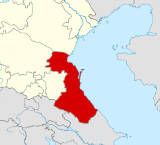
The wider agricultural economy provides further demand. Dagestan’s agricultural production was valued at more than ₽276 billion (US$3.36 billion) in 2025, an increase of 2.4% over 2024, according to regional agricultural authorities. Crop production exceeded ₽135 billion up 2.6%, while livestock production surpassed ₽141 billion, up 2.2%.
Open-field vegetable production reached 1.57 million tonnes in 2025, an increase of 100,000 tonnes, or 6.8%, year on year. Farmers harvested the crop from 39,700 hectares, achieving an average yield of 396.2 centners per hectare. Levashinsky district produced 383,200 tonnes, Derbentsky nearly 321,000 tonnes, Kizlyarsky approximately 250,000 tonnes and Akushinsky 121,500 tonnes. These figures identify potential customers for irrigation equipment, harvesting machinery, storage facilities, packaging systems and transport services.
The region’s agricultural growth also creates a logistics challenge: larger harvests need efficient collection, sorting, storage and distribution to reach markets before product quality deteriorates. That makes the forum’s attention to agro-aggregation and agro-logistics commercially relevant alongside its machinery and cultivation displays.
International Suppliers: Russia, Belarus, China, Türkiye and India
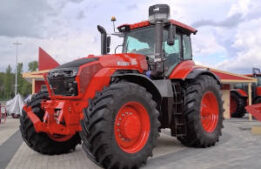
The international dimension was central to DagAgroCaspian-2026. More than 100 companies presented agricultural developments, with Russia, Belarus, China, Türkiye and India among the represented markets. The exhibition combined domestic machinery with equipment from Belarusian and Chinese manufacturers, providing regional farmers with opportunities to compare available technologies and discuss potential procurement and servicing arrangements.
The equipment on display covered soil preparation, planting, forage production, greenhouse installations, irrigation, seeds, fertilisers and plant-protection products. These categories serve different stages of the agricultural supply chain, from establishing an orchard to improving greenhouse productivity and mechanising livestock operations.
China’s participation was particularly relevant to the machinery and greenhouse-equipment segments, while Belarusian manufacturers supplied another source of agricultural machinery. Turkish and Indian participants added further international commercial connections. The business model is straightforward: farmers can assess equipment in person, compare technical specifications and discuss delivery, installation, maintenance and training. For suppliers, the opportunity extends beyond selling machinery to establishing regional distribution networks, spare-parts services and longer-term relationships with agricultural enterprises.
Automation and Precision Irrigation: Companies and Products
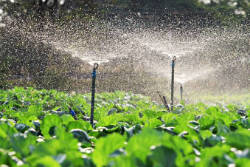
Advanced Grower Systems, associated with the OverGrower technology range, illustrated the role of automation in greenhouse and open-field farming. Its displayed product portfolio included GrowerMix-30 for medium and large farms, GrowerMix-10 for small and medium-sized operations, and GrowerJet-10 for smaller greenhouse facilities.
The OverGrower automation complex uses a 10-inch display and supports RS485, Ethernet and ZigBee connectivity. Its functions are intended to give operators greater control over irrigation, nutrient delivery and cultivation conditions. The associated equipment includes DOSER fertiliser-dosing modules, SENSORS-02OG solution-monitoring equipment, LEVEL-01OG tank-level monitoring, HydroSoil-01OG soil and substrate analysis, and CLIMATE-10OG outdoor weather monitoring.
These products address a practical cost problem. Greenhouse production can be energy-intensive, with energy accounting for as much as half of operating costs in some production systems. Automated climate management and more precise irrigation can help operators reduce unnecessary consumption of water, fertilisers and electricity. OverGrower also presented LuxaVita LED lighting with liquid-cooling technology, designed to reduce power consumption while maintaining growing conditions.
The commercial significance lies in the potential to combine equipment into an integrated production system rather than purchase isolated components. Irrigation controllers, nutrient dosers, environmental sensors and lighting controls can help growers monitor input use and improve consistency. Actual savings, however, depend on installation costs, crop type, energy prices, operating practices and measured performance at each farm; no verified forum-wide savings figure was disclosed.
Research-and-production company Shar also promoted its products at the exhibition. Its presence added another domestic supplier to the equipment and agricultural technology mix. The available information does not establish a comprehensive company-by-company exhibitor list or disclose individual contracts concluded by Advanced Grower Systems, Shar or other participating businesses.
Horticulture, Viticulture and Agricultural Processing
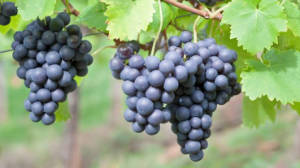
The forum’s business programme extended beyond greenhouse vegetables. Round tables and specialist discussions addressed horticulture, viticulture, phytosanitary security, agricultural cooperation, meat and milk processing, innovative cultivation technologies, agro-aggregation and agricultural logistics.
These subjects reflect the structure of Dagestan’s agricultural economy. The region’s large open-field vegetable harvest and established fruit and vineyard production create demand for modern irrigation, orchard management, crop protection, processing and distribution. Mechanisation and more effective post-harvest handling can help producers improve marketable output without relying exclusively on expanding cultivated land.
The exhibition also included finished food products, with visitors sampling cheeses produced by AliYak LLC. The company’s presence demonstrated the importance of processing and branded food production alongside primary agriculture. Higher agricultural output creates a larger potential supply base for processors, but commercial returns depend on reliable procurement, food safety, packaging, refrigeration and access to retail and wholesale markets.
Students from Dagestan State Agrarian University and the Agrarian College of Dagestanskie Ogni visited the exhibition. Their participation connected agricultural education with practical equipment and technologies that future agronomists and farm managers may use.
Flower Production: A Potential New Investment Cluster
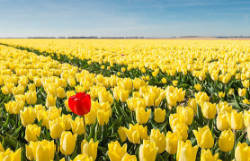
Flower cultivation emerged as another potential growth area. Sitnikov argued that Dagestan could become a national centre for flower production, as well as greenhouse tomatoes. Domestic flower production remains a relatively small share of Russia’s market, creating scope for new cultivation facilities and specialised equipment.
Russian flower output reached approximately 462 million stems in 2025, while domestic products accounted for about 18% of the market, according to industry figures reported in February 2026. The area devoted to flower greenhouses reached 230 hectares in 2025, compared with 174 hectares in 2018. These figures differ from the higher estimate of more than 330 hectares cited in other industry commentary, so they should not be combined without clarifying their respective definitions.
For Dagestan, a flower-production cluster would require more than greenhouse construction. Commercial development would depend on lighting, climate control, irrigation, and suitable planting material, cold storage, packaging and rapid distribution. Roses and other cut flowers are sensitive to temperature and handling, making energy efficiency and logistics particularly important to profitability.
Livestock: 4.671 Million Sheep and Digital Farm Management
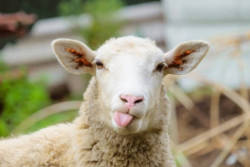
Livestock was another important element of the forum’s agenda. On September 30, Indira Karaeva, a deputy minister in Dagestan’s agriculture and food administration, discussed the need to recount livestock numbers in connection with the digitisation of agricultural records and changing reporting requirements.
The republic had 60 breeding enterprises: three pedigree breeding plants, 49 breeding reproducers, eight gene-pool farms, one spotted-deer breeding operation and one horse-breeding enterprise. Dagestan’s sheep flock stood at 4.671 million head.
These figures create a substantial operational base for animal identification, veterinary services, feed management, breeding records and livestock logistics. Accurate livestock data can support disease monitoring, breeding programmes and better planning of meat production and processing capacity. The forum’s wider focus on agricultural cooperation and meat and milk processing also addressed the need to connect livestock producers with downstream businesses.
Sharip Sharipov, first deputy minister of agriculture and food of Dagestan and head of the forum’s organising committee, highlighted the practical value of the business programme for farmers, horticultural producers and livestock operators. The event was organised by the regional Ministry of Agriculture and Food and the Association of Greenhouses of Dagestan.
Summary: Commercial Outcomes and the Next Stage
DagAgroCaspian-2026 brought more than 100 companies together over two days, with international participation, machinery displays and discussions spanning greenhouse production, irrigation, automation, horticulture, livestock and food processing. Its central commercial proposition was the connection between agricultural growth and the equipment required to sustain it.
Russia’s greenhouse vegetable output of 1.65 million tonnes, Dagestan’s 85,000 tonnes of greenhouse vegetables and 1.57 million tonnes of open-field vegetables, and the republic’s agricultural production value of more than ₽276 billion provide measurable context for the market opportunity. The national objective of reaching 2 million tonnes of greenhouse vegetables offers a further indication of potential demand for cultivation technology.
Nevertheless, the distinction between market opportunity and completed business is important. The forum’s commercial outcomes should therefore be assessed through its supplier connections, technologies presented and production challenges addressed, rather than an unsupported monetary total.
The next measure of success will be whether those contacts lead to equipment orders, installed greenhouse capacity, lower input costs, higher yields, new processing facilities and more. reliable distribution. For Dagestan, the priority is to translate agricultural scale into productivity and value-added output. For Russian and international suppliers, Kaspiysk offers access to a market where greenhouse expansion, intensive horticulture and livestock modernisation create identifiable demand for machinery, irrigation systems, automation and agricultural services.
This article was written by Ms Khatun, an expert in Russia-Asian affairs. She may be reached at info@russiaspivottoasia.com
