 Русский




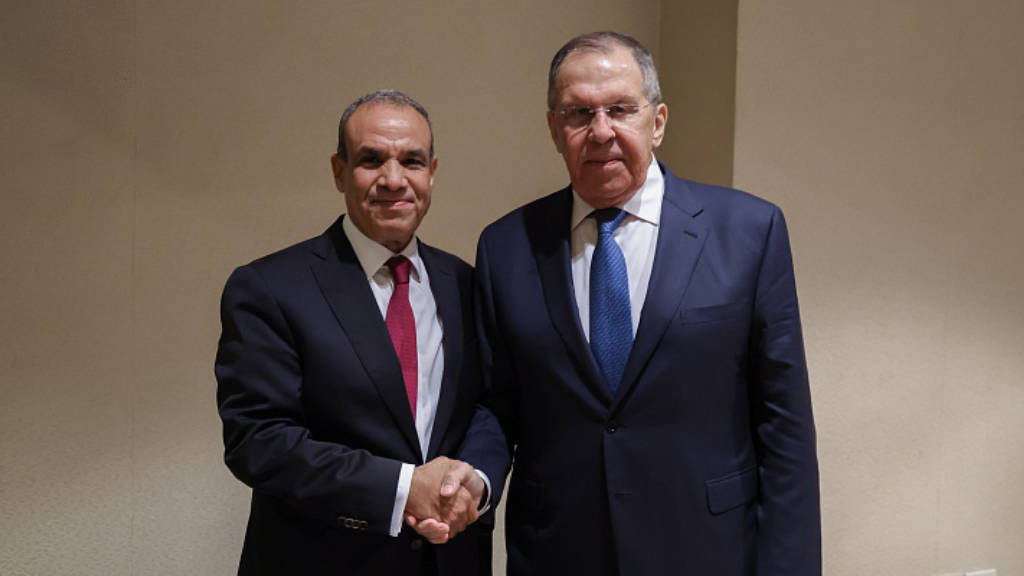

The Russian Foreign Minister, Sergey Lavrov has met with Badr Abdelatty, the Egyptian Minister of Foreign Affairs.
They discussed the situation in the Middle East, which has become volatile as the result of the US-Israeli actions against Iran. Both sides emphasised the imperative of redoubling political and diplomatic efforts to settle differences with due regard for the legitimate interests of all regional countries.
They also discussed issues of Russian-Egyptian cooperation, including the mutual commitment to the further strengthening of strategic partnership, expansion of trade and economic cooperation, and the continued implementation of numerous, major infrastructure projects.
Russia and Egypt are both full members of the BRICS group, while Egypt is currently negotiating a Free Trade Agreement with the Eurasian Economic Union. Russia-Egypt relations are developing in several key areas, including in logistics, energy, agriculture, finance, tourism and trade. We discuss these as follows.
Russia-Egypt Infrastructure & Logistics Development
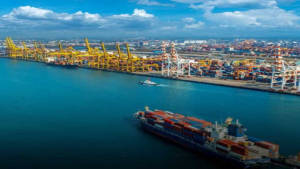
Russia views Egypt as a Gateway to North Africa and the Middle East markets and is constructing a huge Russian Industrial Zone (RIZ) near Port Said (close to the Suez Canal) to support this. There are three economic supporting pillars to justify this development. These are:
The African Continental Free Trade Agreement (AfCFTA)
Egypt is a member of AfCFTA, a pan-African trade bloc that has eliminated tariffs on 95% on all intra-African traded products (Eritrea being the only exception). This means that products can be sourced from across Africa then processed into finished items at the RIZ. The RIZ itself will provide import duty and VAT exemptions on products imported from Russia (or elsewhere) to be combined with any African sourced components, allowing for cash-flow alleviation during the manufacturing and processing stage. Finished products can then be sold locally onto the Egyptian market (when import duties and VAT may apply) or re-exported to other markets in Africa or beyond.
The Greater Arab Free Trade Agreement (GAFTA)
Egypt is also a member of GAFTA, which provides similar free trade between products manufactured in Egypt and also includes Bahrain, Iraq, Kuwait, Lebanon, Libya, Morocco, Oman, Qatar, Saudi Arabia, Sudan, Syria, Tunisia, and the United Arab Emirates. Rules of origin of products do apply but generally allow for at least 50% of the component parts to be Egyptian in origin.
The Egypt-Eurasian Economic Union Free Trade Agreement
This is still being negotiated however when ratified will allow Egypt access to markets in Russia as well as Armenia, Belarus, Kazakhstan and Kyrgyzstan, as well as in the opposite direction. The most recent EAEU FTA involved Iran and reduced tariffs on 95% on all traded products to be reduced to zero. Iran’s multilateral trade with the EAEU has boomed in the two years since it was ratified, with Russian trade growth expanding by 13% in 2025.
The RIZ is currently being constructed and should be operational by 2029.
Russia-Egypt Energy Relations
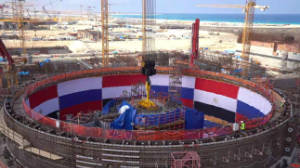
Russia’s Rosatom are currently building North Africa’s first Nuclear Power Plant at El Dabaa, about 320 kilometers northwest of Cairo. The design for the power station includes four 1200-MW power units with VVER-1200 reactors. Rosatom Group plans to commission the first unit in 2028. The project is costing US$28.75 billion of which Russia is financing 85% as a state loan of US$25 billion while Egypt is providing the remaining 15% in the form of installments. The Russian loan has a repayment period of 22 years, with an annual interest rate of 3%.
Rosatom CEO Alexei Likhachev said last month that “The Egyptian government is discussing the creation of new units with us, additional ones contracted under the El Dabaa project, and joint work on small, including floating, nuclear power plants, as well as creating centers of nuclear medicine.” Likhachev also confirmed Russian plans to supply nuclear fuel to the El Dabaa NPP. Egypt’s nuclear strategy aims to secure reliable baseload electricity, save natural gas for export, and reduce carbon emissions.
The two sides are also involved in the oil sector with Russia drilling several blocs in the Sinai region. The Russian state-owned company Zarubezhneft has joined two major offshore oil blocks—South East Ras El Ush and East Gebel El Zeit—with resources estimated at over 200 million barrels. In August 2025, it signed a US$14 million deal to drill four wells in the onshore North El-Khatatba block in the Nile Delta.
Lukoil was awarded the South Wadi El-Sahl block in the Eastern Desert last year, committing to invest US$22.5 million to drill six exploratory wells. It also operates in the West Esh El Mallaha (WEEM) concession.
Beyond oil, Russia is involved in major Egyptian gas projects. Rosneft holds a 30% stake in the Zohr gas field, the Mediterranean’s largest, which has received specific sanctions exemptions from the UK to continue operations.
Russia-Egypt Agricultural Trade & Food Security
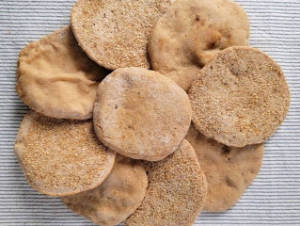
The actions of the European Union in diverting Russian grain meant for export to Egypt by sanctioning and seizing Russian vessels did not go down well in Cairo and created temporary food shortages in the country in 2022. (Pakistan was also seriously affected). As a result, Egypt has stepped up its agricultural trade with Russia, and especially in wheat and other grains. For example, Russia has exported record volumes of barley and wheat to Egypt, while Cairo and Moscow have also been discussing the possibility of establishing an Agricultural Grain Exchange in collaboration with other BRICS members to better regulate and protect supplies in the event of global trade disruptions.
In addition, Russian companies want to increase sunflower oil production in Egypt both for local consumption and export to other African markets.
Russia-Egypt Finance & Tourism Developments
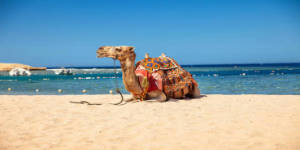
With European destinations now distinctly unwelcoming to Russians, this trade has now migrated to mainly African and Asian destinations. Egypt is a primary market for Russian tourists, with 1.7 million Russian tourists, representing a 40.5% year on year increase, visiting the country in 2025. That accounts for 17% of the local tourism industry’s revenue and is worth an estimated US$2.8 billion in income earned from visiting Russians. Visa-free access for nationals on both sides is also being discussed.
To cater for the Russian tourism demand, and to get around Russians being cut off from SWIFT payment networks, the two countries have installed a satellite-telecommunications payment network that works by using QR codes on items for sale in Egyptian stores.
Egypt is actively developing its digital economy, supporting the introduction of QR payments and the expansion of cashless settlements. The enormous potential of the local market is accelerating these processes as more than 40% of local Egyptians do not use banks. Russian banks and digital payments companies are working with Egyptian counterparts to fill this gap.
Russia-Egypt Bilateral Trade
Bilateral trade between the two countries reached US$10.5 billion (excluding the tourism input), in 202 and grew about 12% from the previous year, according to Georgy Borisenko, the Russian Ambassador to Cairo. That can be expected to increase significantly once the Egypt-Eurasian Economic Union free trade agreement is ratified, which is expected to be later in 2026 or during 2027.
The current US$10.5 billion in trade is catered for by Egypt becoming Russia’s single largest wheat buyer worldwide, taking in 10 million tons. Wheat exports in 2025 were valued at approximately US$3.1 billion—about one-third of the total bilateral trade.
The second-largest export category (US$1.3 billion) is iron and steel, fuelled by two major Egyptian construction drives. One is the New Capital being built 45 kilometers east of Cairo, and the other the previously discussed El-Dabaa nuclear power plant.
Russia also supplies Egypt with vegetable and animal oils, timber, petroleum products, fertilizers, legumes, machinery, aluminium, and plastics. In return, the Russian market receives Egyptian fruits, vegetables, and nuts.