 Русский




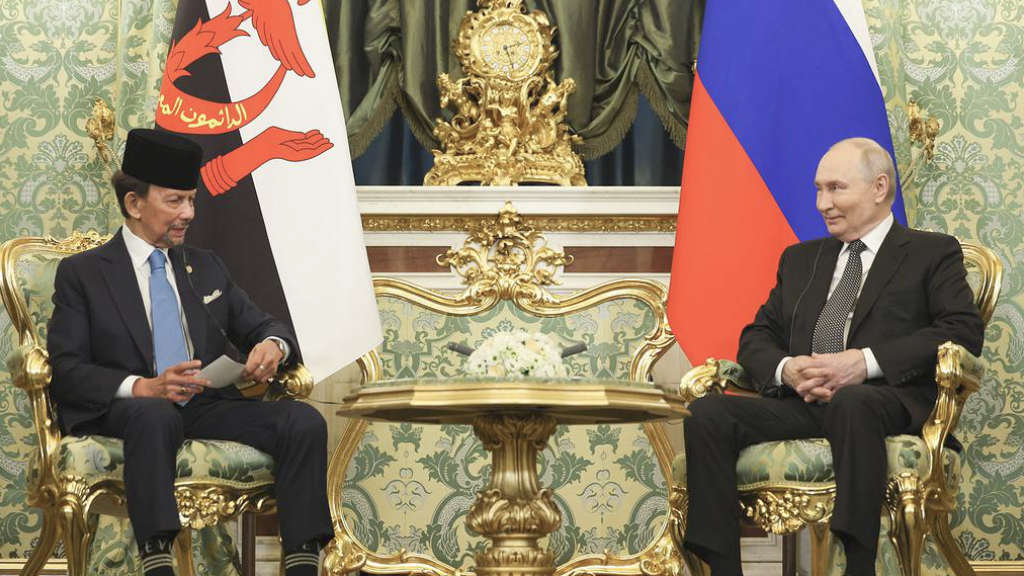

The Russian President, Vladimir Putin, has met with the Sultan of Brunei Darussalam, Hassanal Bolkiah in Moscow, and signed a joint declaration to raise the level of bilateral relations to a strategic partnership. Several other important issues were also discussed. This is what they had to say, and the immediate impact of the discussions.
Vladimir Putin: “Your Majesty, Please allow me to warmly welcome you to Moscow. We had an opportunity to meet just recently in Shenzhen during the APEC Summit. I would like to note that this October, we marked the 35th anniversary of diplomatic relations between our countries. Over this period, we have made significant progress in expanding our contacts across all areas.
I would also like to note that our trade and economic ties are improving. Although trade remains modest in absolute terms, the trend is very positive: this year, our trade will exceed US$1 billion, and there are favourable conditions for its future growth. I am primarily referring to our cooperation in the financial sphere, which allows us to develop our contacts across the board.
I am very pleased to have this opportunity to compare notes on political issues and the situation in the region. Our relations have always been not merely friendly but also based on trust. Following today’s meeting and your state visit, we will sign a declaration on elevating our relations to a higher level, the level of a strategic partnership.
We have always maintained strong humanitarian ties, particularly in culture and education, and we are ready to continue developing them in these areas. At the same time, issues related to enhancing defence capability and security have also always been and remain in the focus of our attention. We are grateful to you for cooperation in this sphere, including matters related to the operation of the Russian Navy.
Your Majesty, we are very pleased to see you and grateful for your decision to introduce mutual visa-free travel between our countries. This will certainly help increase tourist flows, as it is already doing, and promote direct contacts between our citizens. Overall, I would like to note that our relations are developing steadily, and we are very pleased about this.”
Sultan of Brunei: “It is a great honour and pleasure to meet you again, Mr President. We were pleased with the outcome of the APEC meeting in Shenzhen last week. I hope your meeting with President Trump and President Xi also went well. And thank you for your gracious invitation and the hospitality extended to me and my delegation.
I am deeply honoured to undertake my second state visit to the Russian Federation. This is a special gesture that reflects the strong bonds of friendship between our two countries which have continued to grow over the past 25 years. It is a pleasure to be back in Moscow – a city that holds many fond memories from my state visit in 2005.
I am confident our discussion today can chart an even more ambitious path for our relations. Lastly, I look forward to welcoming you to Brunei so that we may continue this friendship as you have warmly welcomed me in Russia. Thank you.”
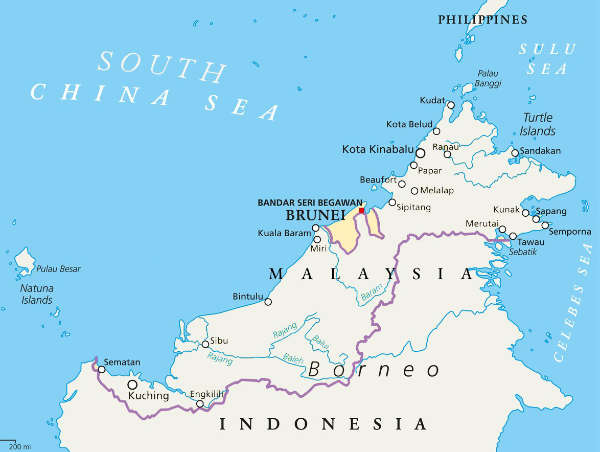
Brunei Economic Summary
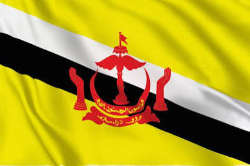
Brunei is geographically well-positioned on trade routes as well as being a link between the ASEAN islands in South-East Asia. It is an Islamic Sultanate.
The oil and liquefied natural gas sectors are the main drivers of Brunei Darussalam’s economy. Crude oil, petroleum derivatives, and liquefied natural gas are the three main export goods. The US, ASEAN nations, and Japan are the primary destinations for these commodities.
Exploiting its enormous natural gas and petroleum reserves is Brunei’s main source of income. The state has been able to provide its residents with one of the highest per capita incomes in Asia because to oil and gas profits, but they have also left the nation reliant on a single commodity that is volatile in the market. Furthermore, the majority of Brunei’s food and almost all of its manufactured items are imported.
Brunei is a member of the Association of Southeast Asian Nations (ASEAN), the Asia-Pacific Economic Cooperation (APEC), the World Trade Organisation (WTO), and the Brunei, Indonesia, Malaysia, and the Philippines-East ASEAN Growth Area (BIMP-EAGA). As part of the ASEAN+ 6 (Australia, the People’s Republic of China, India, Japan, South Korea and New Zealand) trade pact, Brunei is also a party to the Regional Comprehensive Economic Partnership.
Brunei has a population of some 500,000 within its relatively small territory of 5,700 square kilometres. The national GDP (PPP) is about US$45.5 billion, while it has a GDP per capita (PPP) of approximately US$88,000. It is on course to achieve a GDP growth rate of 1.9% in 2026.
The Russia-Brunei Joint Declaration & Strategic Partnership
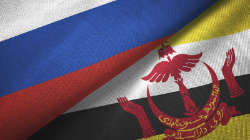
The Joint Declaration, which was adopted following the talks, is aimed at elevating the status of Russia-Brunei relations to a strategic partnership.
This comprehensive document sets out ambitious goals and outlines long-term interaction plans between our two nations across all key areas. This includes the further expansion of bilateral trade and the diversification of its structure, including channels for banking and financial cooperation and the use of national currencies in financial settlements. This will help to safeguard mutual trade and investments against the negative impact of the global political climate and volatility in international markets.
Russia and Brunei have a shared interest in strengthening partnership in energy, which is the traditional flagship sector of their bilateral ties. Russia has stated that is it ready to assist in enhancing the yield from the currently operating oil and gas fields in Brunei, as well as the extraction of hard-to-recover mineral resources, and are prepared to share Russia’s unique energy experience, expertise, and technical solutions in the energy sector. Russia also sees the potential for exporting Russian petrochemical products to Brunei and for implementing joint renewable and nuclear energy projects (see below for specifics on the Russian NPP offer).
Both sides are also looking at opportunities are emerging for cooperation in the agro-industrial sector. Russian companies are proposing to supply essential goods to Brunei, such as grain, mineral fertilisers and meat, including halal-certified products. Brunei is a major food importer.
As part of the declaration, both sides have reaffirmed their commitment to further promoting exchanges in science and education, healthcare and sport, as well as through youth and religious organisations. Bruneian film directors participated in the 2026 Kazan International Film Festival, while a student delegation from Brunei took an active part in the Russia-ASEAN Youth Summit held in Vladivostok in October. In Brunei, a Russian literature department was recently opened at the University of Technology Brunei, while a similar centre at Brunei’s National Library has also been in high demand. Russia will assist Brunei in training qualified personnel, with Government-funded scholarship quotas allocated annually for Brunei students, and active inter-university ties maintained, including under the memorandum of partnership between the Higher School of Economics and the University Brunei Darussalam, signed last year.
A visa-free regime is in place between Russia and Brunei, which facilitates the expansion of bilateral business and cultural contacts, and the development of bilateral tourism.
Both Russia and Brunei also agreed to coordinate their positions on the international stage, with the talks demonstrating that the two nations hold similar or coinciding approaches to the most pressing issues on the global and regional agendas. They will continue to cooperate closely at multilateral forums, primarily the UN and APEC, and within the Russia-ASEAN format. Russian naval vessels will also continue to call at Bruneian ports.
Nuclear Power
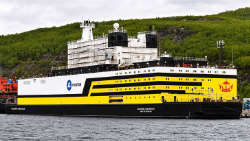
Russia has offered Brunei small floating nuclear power plants (FNPPs), with Russia’s state nuclear corporation, Rosatom, announcing that it has assessed Brunei’s power grid and identified floating reactors as the optimal solution for Brunei’s energy needs.
Rosatom CEO Alexei Likhachev stated that Brunei’s energy system is best suited for a small-scale floating unit equipped with two 55-megawatt (MW) reactors – a 100–110 MW class floating power unit utilizing twin RITM-200M reactors adapted for warm, tropical climates. If Brunei accepts the offer, Rosatom plans to introduce a full development package. This includes assisting with public outreach, training local personnel, and building regulatory and state infrastructure.
Brunei is currently the only APEC economy without a joint project with Rosatom. The proposal follows Rosatom’s recent expansion in Southeast Asia, including an October 2026 contract with Indonesia to supply two floating nuclear power units with a combined capacity of 200 MW.
Russia-Brunei Bilateral Trade
Complete, standalone full-year 2025 bilateral trade totals between Russia and Brunei are not published in available reports, though recent trade analyses and 2024–2026 figures show a sharp imbalance dominated by Russian oil. As Putin just stated, the trade turnover is expected to exceed US$1 billion this year.
The Observatory of Economic Complexity reports that Russian exports to Brunei totalled US$826 million in 2024, almost entirely crude petroleum (US$825 million). Trade flows from Brunei to Russia however remain very small. Trade shipment records covering April 2024 to March 2025 show US$85.43 thousand in Russian imports from Brunei across three shipments, led by organic chemicals, miscellaneous chemical products, and knitted apparel.
Nevertheless, increasing Russian involvement and investment in Brunei’s energy sector can be expected, mainly to develop alternative supply chains and energy sources following problems with the Strait of Hormuz.