Русский




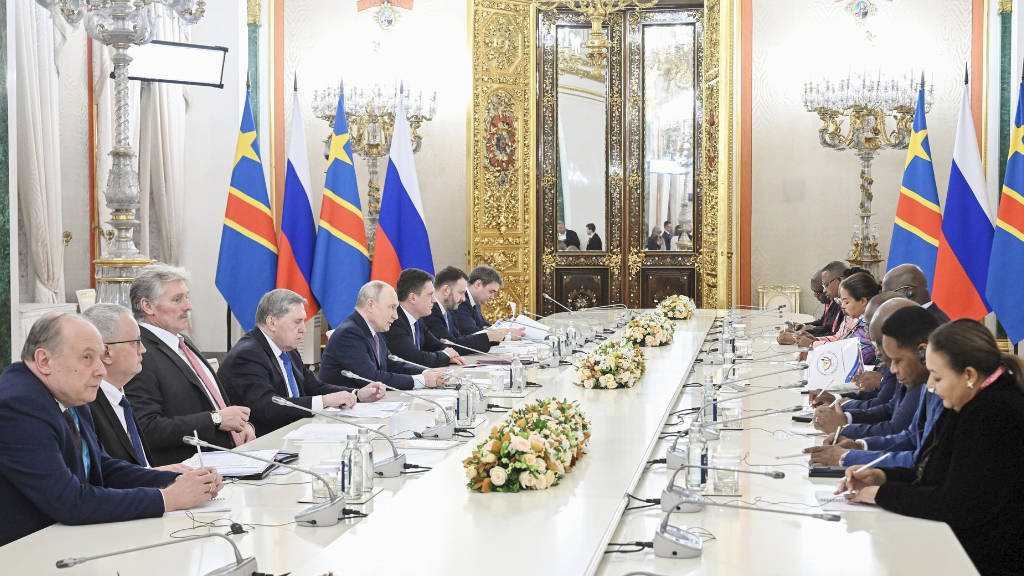
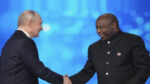
The Russian President, Vladimir Putin, has met with Felix Antoine Tshisekedi Tshilombo, the President of the Democratic Republic of the Congo in the Kremlin, on the sidelines of the 2026 Russia-Africa Summit.
Taking part in the meeting on the Russian side were Deputy Prime Minister Alexander Novak, Deputy Chief of Staff of the Presidential Executive Office Maxim Oreshkin, Deputy Chief of Staff of the Presidential Executive Office – Presidential Press Secretary Dmitry Peskov, Presidential Aide Yury Ushakov, Ambassador Extraordinary and Plenipotentiary of the Russian Federation to the Democratic Republic of the Congo Karl Tikhaze, Minister of Economic Development Maxim Reshetnikov, Deputy Foreign Minister Georgy Borisenko and Deputy Defence Minister Vasily Osmakov.
This is what the two Presidents had to say:
Vladimir Putin: “Mr President, friends, I am glad to see you. At the outset, I would like to thank you for your attention to such an effective instrument for developing relations between Russia and Africa as the Russia–Africa Forum. We appreciate your attention. Thank you for your contribution to this summit’s success.
Regarding our bilateral relations, last year we marked 65 years of the establishment of diplomatic relations between Russia and the Democratic Republic of the Congo. We value the current level of our cooperation. As Doctor Honoris Causa of the Peoples’ Friendship University of Russia, you can see that we remember and hold in high regard the first prime minister of your country – Patrice Lumumba, the true fighter for freedom and independence of African peoples. His name is indeed highly regarded in Russia.
The Democratic Republic of the Congo is among Russia’s promising and reliable partners on the African continent. The Russian-Congolese commercial ties are strengthening, our trade turnover is growing. Hopefully, the Intergovernmental Commission on Trade, Economic, Scientific and Technical Cooperation will elevate our cooperation to a new, higher level.
Our humanitarian contacts are advancing. In view of Congolese students’ high interest in studying in Russia, we currently allocate 100 scholarships annually to your country’s citizens.
Overall, we strive for strengthening our friendship with African states, including the Democratic Republic of the Congo. We are open to equitable cooperation based on mutual respect and consideration for the interests of both parties.
Once again, today we have a good opportunity to discuss the current state of and prospects for Russian-Congolese cooperation, and some issues on the regional and international agendas.”
Félix-Antoine Tshisekedi: “Thank you, Mr President. I would like to once again express my gratitude for the invitation and the warm reception accorded to me and my delegation. I would also like to thank you for your warm words and for the honorary doctorate from the Patrice Lumumba Peoples’ Friendship University of Russia. This is a historic symbol that unites our peoples. And I would also like to thank you for the support you have provided to the DRC over the years in helping us overcome the difficulties we have faced since 1961.
I would like to reaffirm that the DRC hopes to diversify our relations in a spirit of sovereignty and alignment of our approaches. I would like our countries to expand cooperation in the sphere of investments.
After the first day of the Russia–Africa Forum, you invited me to tour the exhibition. It was devoted to the opportunities emerging in the energy sector and other areas that might be of interest to the Democratic Republic of the Congo. These include, for example, the processing of our natural resources, agriculture and digitalisation. In the sphere of digitalisation, we took a particular interest in the tax collection system.
The Democratic Republic of the Congo strives to diversify its economy, and we would like to do so primarily through agriculture. I noted that there are many opportunities in this domain that are of great interest and through which we could revitalise our partnership with Russia.
We truly need peace to translate all this into reality. For nearly 30 years now, the DRC has endured the horrors of war in the east of our country. We would therefore like Russia, as a permanent member of the UN Security Council, to help us achieve this peace. The Washington and Doha processes were launched, but, unfortunately, they have yielded no concrete results.
Take Resolution 2773, which was adopted, yet remains unimplemented in practice. I would therefore like to emphasise that this resolution requires the withdrawal of Rwandan military personnel who are illegally occupying the east of the DRC, the cessation of hostilities, respect for territorial integrity, and the restoration of the rule of law in our country. Nothing has been done, and we hope that, thanks to our relations with Russia, which we would like to intensify, we will be able to count on your support in this matter.
Furthermore, I would like to note that on December 20, the mandate of the MONUSCO mission (United Nations Organisation Stabilisation Mission in the Democratic Republic of the Congo) will expire. We hope that it will be renewed. We also hope for Russia’s support in backing the initiative to extend the mission’s mandate.
We would like to reaffirm that the extension of this mandate must be approved within the framework of the UN. Finally, I would like to propose a bilateral roadmap to you, a roadmap based on three pillars: economic cooperation, Russia’s support for peace efforts, and diplomatic coordination of our efforts.”
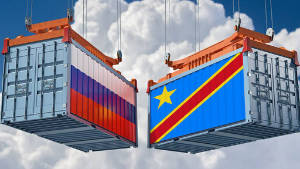
Russia, Democratic Republic of The Congo Bilateral Trade
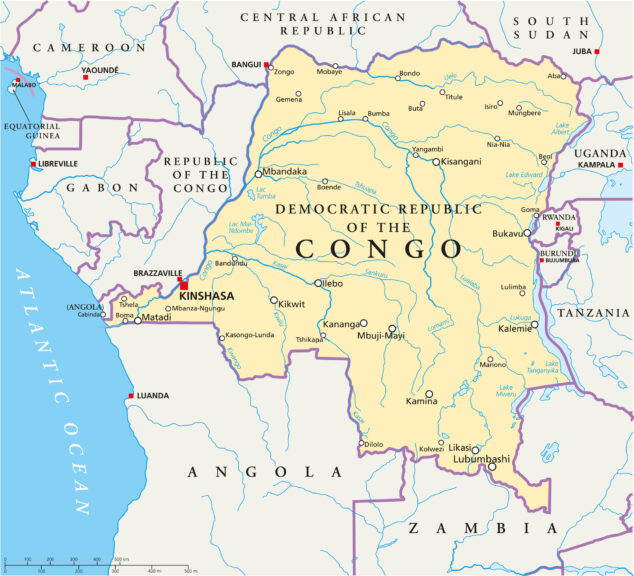
The Democratic Republic of Congo’s (DRC) strategic position allows it to play a central role in heartland of the African continent. Despite its central African location, it is a member of the East African Community trade zone, the second-largest country in Africa and the 11th-largest in the world. It is currently hindered by its conflict with Rwanda in the eastern DRC, which has recently intensified following major rebel advances and a dramatic political shift. Over 7 million people remain displaced, 26.5 million face acute hunger, and rampant gender-based violence and disease outbreaks (including mpox and cholera) continue to devastate the region.
The DRC covers 2,345 million square km with the population of about 115 million. The DRC’s GDP (PPP) stands at US$235 billion, while GDP per capita (PPP) is US$2,130. 2026 GDP growth estimates are positive at 5.4%.
The DRC is rich in natural resources, with mining playing a central role in its economy. The country is home to vast, yet largely untapped, reserves of gold and copper, and it is the world’s largest producer of cobalt ore, a crucial mineral for battery production. In addition to cobalt, the DRC is a major producer of copper and industrial diamonds, further boosting its mining sector. In recent years, there has been growing interest in diversifying the country’s economy through the development of carbon credit markets. These markets, which are driven by investments in forestry and agriculture, offer opportunities for sustainable economic growth and diversification. By focusing on environmental sustainability, the DRC aims to reduce its reliance on mining while exploring new avenues for economic development. Agriculture, while less developed than the mining sector, also plays an important role in the economy, with crops such as cassava, maize, rice, and plantains being cultivated throughout the country.
The DRC has bilateral trade agreements with more than 50 nations and is a member of several regional and international trade organisations, such as the Common Market for Eastern and Southern Africa (COMESA), the Economic Community of Central African States (ECCAS), the Nile Basin Initiative (NBI), the Economic Community of the Great Lakes Countries (ECGLC), the Organisation for Harmonisation of the Business Law in Africa (OHADA), the World Trade Organisation (WTO), the Southern African Development Community (SADC), the East African Community (EAC) and the African Continental Free Trade Agreement (AfCFTA). The DRC is a signatory to SADC but is not a member of the SADC Free Trade Area.
Development progress has been limited in the east of the county however due to the long running military conflict. Although the DRC is extremely rich in natural resources but has suffered from political instability, a lack of infrastructure, corruption, and centuries of both commercial and colonial extraction and exploitation, followed by more than 60 years of independence, with little widespread development. The DRC’s untapped deposits of raw minerals are estimated to be worth in excess of US$24 trillion. The country has 70% of the world’s coltan, a third of its cobalt, more than 30% of its diamond reserves, and a tenth of world copper reserves.
Democratic Republic of Congo – Russia bilateral trade reached US$13.5 million in 2025, with most of this being Russian exports of grain. However, a major development at the 2026 Russia-Africa summit was the establishment of a permanent intergovernmental commission to structure economic, commercial, technological and technical cooperation between the two countries.
The signing represents a major step in the effort to give relations between Kinshasa and Moscow a more structured, practical and results-oriented foundation. According to the official announcement from the DRC Ministry of Foreign Affairs, the commission will provide a permanent institutional framework through which the two governments can identify opportunities, negotiate projects and monitor their implementation.
The new commission gives the DRC and Russia a formal channel for advancing cooperation beyond occasional diplomatic meetings. Instead of beginning a new process whenever a project is proposed, the two countries will have a standing mechanism through which ministries, technical agencies and other relevant institutions can coordinate their work.
The commission is designed to help both governments:
- Identify priority areas of mutual interest;
- Examine and negotiate proposed cooperation projects;
- Connect the appropriate ministries and technical institutions;
- Monitor the implementation of approved initiatives;
- Address administrative or technical obstacles; and
- Maintain regular dialogue on economic and commercial relations.
This streamlines the basis on which bilateral trade and investment can proceed and can be expected to result in bilateral trade increases in addition to making it easier for Russian investors to examine and identify key areas of interest within the DRC. This is especially applicable to the mining sector and industrial manufacturing industries.