Русский




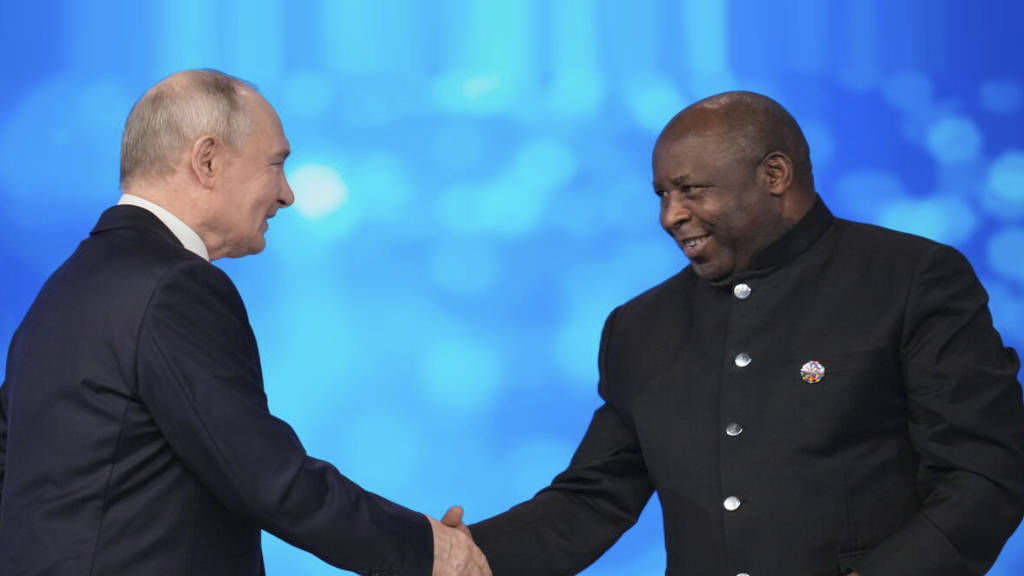
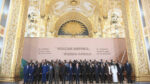
The President of Russia, Vladimir Putin, and the Chairman of the African Union, the President of the Republic of Burundi, Evariste Ndayishimiye gave a joint press conference following the 3rd Russia-Africa Summit.
In it they discussed the results of the summit, the multilateral work and progress that had been carried out, the expected results and further progress to be made. They both focused on Russia-Africa trade, security, legal and financial reforms, the need for localisation investment in Africa, energy, agriculture, and the need for coordinated involvement at global institutions such as the United Nations and World Bank. In doing so, they effectively united the goals of 95% of Africa’s continental foreign policy with Russia’s own foreign policy directives. This is a significant achievement.
When suitable, we have interjected with comments, additional material and analysis styled ‘RPA’. This article is of special interest to anyone involved in the Russian and African economic spaces.
This is what they had to say:
President Putin: “President Ndayishimiye, Ladies and Gentlemen, the 3rd Russia–Africa Summit has just concluded, and on behalf of its participants, President of the Republic of Burundi Evariste Ndayishimiye – representing the nation that currently chairs the African Union – and I would like to present our assessments of the joint work undertaken and the decisions adopted today.
I would like to emphasise that this is already the 3rd Russia–Africa Summit. Holding such large-scale events has become a good tradition and clearly demonstrates the firm determination of both Russia and African states to further strengthen and develop multifaceted ties in the spirit of genuine partnership and mutual respect for the sake of universal growth and prosperity.
It is deeply gratifying that twenty-one African leaders, high-level delegations from the overwhelming majority of the continent’s states, and the heads of virtually all leading African integration bodies took part in the Moscow summit.”
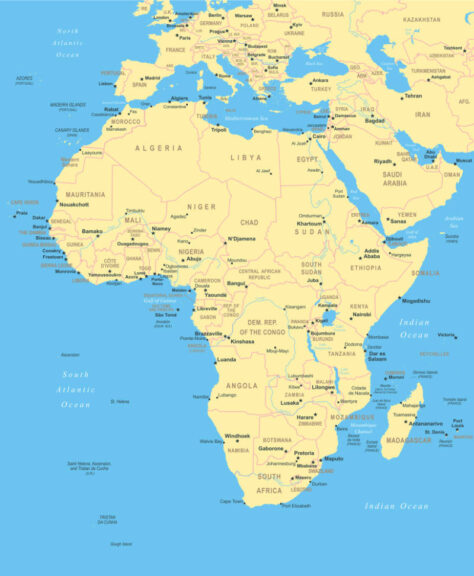
RPA: Official delegations from 48 of Africa’s 54 countries attended the event.
Putin: “The motto of the 2026 summit was “For Peace, Security and Development”. In essence, this motto has determined the course and themes of our discussions. We discussed a wide range of issues concerning Russian-African relations, both on the international stage and directly within the framework of cooperation between Russia and Africa in the political, economic and humanitarian spheres.
Each participant in the summit had the opportunity to take the floor, express their views, share ideas and put forward initiatives in the context of Russian-African cooperation and the resolution of topical regional and international issues. There were indeed many interesting assessments and constructive proposals, and as a result of such a broad discussion, a comprehensive picture has emerged, encompassing the full spectrum of opinions. This fully reflects the views of leaders representing all the diversity of the African continent and its regions and subregions, home to an immensely diverse array of ethnic groups, peoples and world religions and confessions.
The Moscow Declaration
Our productive joint work culminated in the Moscow Declaration, which was approved at the summit. This comprehensive, long-term document reaffirms the commitment of all our countries to building a just and democratic multipolar world order based on the universally recognised principles of international law and the Charter of the United Nations.”
RPA: The Moscow Declaration consists of 101 points divided into five sections: political and legal co-operation, security, the economy, humanitarian co-operation, and environmental protection and climate. We address these as follows:
In the political sphere, the parties agreed to co-ordinate their positions on reforming the UN Security Council to expand the representation of African states. Russia and African countries also intend to jointly oppose unilateral sanctions, the freezing of sovereign assets and the politicisation of international judicial institutions. The document also provides for co-ordinated efforts to ease and lift UN Security Council restrictions on African states that are no longer relevant.
Particular attention in the declaration is devoted to addressing the consequences of colonialism. Summit participants agreed to seek the establishment of legal mechanisms to assess and compensate for damage inflicted on African countries during the colonial period. The parties also supported the return of cultural artefacts removed from the continent during the colonial era to their countries of origin.
Concerning African security, Russia and African states intend to facilitate conflict resolution on the continent based on the principle of “African solutions to African problems”. The declaration provides for promoting an initiative to establish a permanent high-level Russia–Africa dialogue mechanism to co-ordinate efforts to combat terrorism and extremism, as well as address food and information security issues.
The economic section of the document provides for removing trade barriers, expanding exports of value-added African products and developing sustainable mechanisms for mutual settlements. The parties intend to support investment projects, the localisation of production and the processing of mineral resources directly in the countries where they are extracted. The need to expand African countries’ participation in the governance of the International Monetary Fund and the World Bank is also highlighted.
In the energy sector, summit participants reaffirmed their interest in developing oil and gas, nuclear, hydropower and renewable energy. The declaration also mentions the African initiative Mission 300, which aims to provide 300 million people on the continent with access to electricity by 2030.
In the humanitarian sphere, the parties agreed to expand educational exchanges and Russian language programmes, develop joint scientific research and strengthen co-operation in healthcare. In particular, the document provides for training medical personnel, supplying medicines and mobile anti-epidemic laboratories, and strengthening African countries’ preparedness for epidemics.
A separate point is devoted to co-operation between media outlets. Russia and African states intend to support the opening of media representative offices, journalist training, information exchange and the implementation of joint media projects.
In the environmental sector, summit participants agreed to develop joint projects on reforestation, reducing greenhouse gas emissions and adapting to climate change. The parties also opposed the use of the climate agenda to introduce discriminatory trade restrictions.
Putin: “Our common interest in further developing equitable relations is also clearly reflected – relations built on honesty, partnership and mutual benefit. This relationship draws on the rich experience of cooperation accumulated, among other things, during the African peoples’ struggle against colonial oppression and the subsequent establishment of young African states, a process to which our country actively contributed. All the participants in the summit were united in the view that preserving these time-tested traditions of friendship is the best guarantee of a successful future for Russian-African relations.
I would also like to note that an extensive list of specific tasks for developing Russia’s ties with African states in the economic, commercial, social and humanitarian spheres, and for implementing the decisions of this summit, is set out in the Joint Action Plan for the period up to 2029, which was adopted today. Prominent among these objectives are the qualitative and quantitative expansion of mutual trade and the improvement of its structure.”
RPA: The joint Russia–Africa Partnership Forum Action Plan through 2029 sets out tasks for advancing cooperation in economic, commercial, social and humanitarian fields. Ndayishimiye said the political declaration establishes priorities, financial mechanisms, implementation schedules, areas of responsibility and expected timelines for delivering the agreements. He described the action plan as the operational framework for cooperation over the next three years, stressing that the success of the summit would depend on translating its decisions into tangible results.
Another Joint Action Plan was also signed the previous day between Russia and the Southern Africa Development Community (SADC) which includes Angola, Botswana, Comoros, the Democratic Republic of Congo (DRC), Eswatini, Lesotho, Madagascar, Malawi, Mauritius, Mozambique, Namibia, Seychelles, South Africa, Tanzania, Zambia, and Zimbabwe. Our report on that document is here.
Putin: “We are convinced that the current level of Russian-African trade – standing at US$27 billion – is, of course, far from its limit. In many ways, we are only at the very beginning of this journey. As for our investments, they already amount to tens of billions of dollars. We will undoubtedly increase our trade turnover, there’s no doubt about it.
The discussions demonstrated that our countries are determined to continue working together to increase mutual trade, remove remaining trade barriers and expand supplies of Russian industrial goods, machinery, equipment, fertiliser and agricultural products to Africa – all of which enjoy a strong reputation on the continent.
Naturally, Russia remains fully open to expanding its purchases of a wide range of goods produced in Africa. The numerous negotiations held on the sidelines of the summit among ministries, agencies and the business community clearly demonstrate this strong interest.”
RPA: The localisation of production for African markets by foreign investors is a key point of the African Union’s development plans. Ndayishimiye himself stated that it was a preferred requirement for foreign manufacturers producing goods for the Africa market – and pertinent regional export markets – to manufacture them in Africa. Russia has been following this practice – the example of KAMAZ manufacturing trucks in Mali is a primary example.
There are sound economic arguments for doing this. The AfCFTA agreement has reduced cross-border taxes on 95% of all inter-African traded goods to zero, while African labour is generally far less expensive than in Russia. While productivity may currently be lower, attention to worker training and management will close this gap – which is exactly what happened in Vietnam when it began to compete with China in the light industrial manufacturing sector 20 years ago.
Putin: “Closer alignment between the integration processes that are underway in Africa and those on the Eurasian continent, in which Russia participates, could further enhance reciprocal trade. This issue was discussed in practical terms yesterday during a separate, highly substantive meeting with the heads of pan-African organisations. The leaders of two major Eurasian entities – the EAEU and the CIS – were also invited to take part.
Our Eurasian organisations are ready to work together with their pan-African counterparts. Our African partners have expressed support for the need to further improve mechanisms for financing reciprocal trade. Already, 85% of financial settlements for commercial transactions are carried out in national currencies, including the Russian ruble. This enables us to effectively shield our mutual trade and investment from global market fluctuations and instability in the international political landscape.
The discussion held at the summit reaffirmed that many African leaders regard agriculture as a key area for cooperation with Russia. They look to our country to continue taking every effort to strengthen food security across the African continent and supply their consumer markets with essential food products. We are, of course, ready and willing to do so. Russia will continue to act as a responsible supplier of grain to Africa, providing it, as in the past, both under commercial contracts and on a gratuitous basis.
African leaders have also expressed interest in attracting Russian businesses to their countries to help boost agricultural production. We are, of course, ready to share our expertise in the agricultural sector with our African partners and help them adopt the most innovative, cutting-edge technologies in livestock farming, crop production, and the processing and storage of agricultural products.
Cooperation in the energy sector was also discussed in detail. Many participants highlighted Russia’s significant contribution over the decades to the development of national energy systems across African countries. Russia has consistently sought to meet the growing demand for hydrocarbon fuels in African economies, while also addressing other needs, which I will touch upon next.
With the involvement of our companies, large-scale projects are being implemented in the power sector. This applies not only to traditional power generation but also to nuclear power. Rosatom, for example – as is well known – is building a nuclear power plant in Egypt and implementing a whole range of peaceful nuclear energy programmes with other African partners. We see considerable interest both in large power plants and small-capacity nuclear reactors, as well as in the use of nuclear technologies in medicine and agriculture. We are fully ready for these joint initiatives.
It is worth emphasising that over the past few days, representatives of African countries and their Russian colleagues have signed a large number of bilateral interdepartmental and commercial documents aimed at deepening industrial cooperation, implementing projects in the information and communications sector, and introducing innovative Russian digital solutions, including those based on artificial intelligence, across a wide variety of sectors of African economies and in public administration.
I would like to highlight in particular the complete mutual understanding among summit participants regarding the need to maintain cultural, scientific, educational, sporting, tourism, youth and other humanitarian exchanges at a high level, as well as partnership through the media and mass communications.
In all these areas of interaction with our African partners and friends, specific requests were made for further Russian assistance in training qualified personnel and the workforce, improving sanitary and epidemiological well-being, and environmental conservation. The Russian side will, of course, meet these needs. We will continue to increase the number of African students studying in Russia, including on state scholarships. I would like to say that this work is also needed here in Russia and is highly beneficial to us. Why? Because people who have worked and studied here, who have gained knowledge and acquired skills, then use them in their own countries and, naturally, look to their partners in Russia. These are the people we can rely on in these countries.
A record number of African citizens – almost 40,000 – are already studying at Russian universities in 2026. For the 2026–2027 academic year, the scholarship quota has been increased by a further 5,500 places.
Our African partners have also supported the idea of expanding the network of branches of Russian universities in their countries and creating new educational centres to help promote the Russian language, science and culture. Several colleagues spoke of opening Russian cultural centres.
I would like to emphasise that we have also taken on board everything our African friends said about the importance of expanding cooperation with Russia in areas such as healthcare and the fight against epidemics. We will increase the supply of effective medicines, transfer mobile laboratories and conduct joint exercises to respond to outbreaks of infection. I mentioned, in particular, the decision to extend the Russian programme of assistance to African countries in countering infections until 2029.
As usual, international political issues were discussed in detail at the summit. To reiterate, our countries are natural partners in the efforts to create a new, fairer and multipolar world. We maintain close foreign policy coordination and engage actively through bilateral and multilateral channels at the UN and other international organisations.
It has become clear that the views of Russia and Africa on most of the pressing issues on the global and regional agenda are not only very close but often coincide. Together we do everything we can to strengthen the role of African states in global affairs, and we advocate fairer representation of Africans in the global decision-making system, including the UN Security Council and the international financial institutions.
I agree with my colleagues that the world has changed dramatically and that international organisations, of course, need reform. Naturally, this should be carefully considered, balanced and coordinated, and the main decisions should be adopted by broad consensus. But our African friends are absolutely right to raise this issue, and the timing is right, too.
And, of course, it was highly valuable for all of us to hear African leaders’ views on the pressing issues facing their respective regions: the Sahara-Sahel, North Africa and the Maghreb, the Horn of Africa, the Great Lakes region, as well as Central and Southern Africa. The challenges confronting these regions and subregions are unique and specific, yet many of the threats they face are common to different parts of the continent and call for collective solutions.”
RPA: We discussed the situation as concerns the Western Sahara here and meetings with the Alliance of Sahel States here.
Putin: “In addition to the summit’s plenary sessions and the Economic and Humanitarian Forum, we held a number of productive bilateral meetings. These engagements will continue tonight and tomorrow, with discussions scheduled to take place with the majority of the African leaders attending our summit.
I would like to reiterate that Russia is sincerely committed to building a truly strategic and multifaceted partnership with Africa. We are encouraged to see that our African friends are equally committed to working together, hand in hand. Overall, we share the view that the third Russia–Africa Summit was a success and will undoubtedly give a powerful boost to the further development of Russia–Africa cooperation.
The decisions reached will be implemented systematically, including through permanent mechanisms for promoting cooperation between Russia and Africa. These include the Partnership Forum, which brings together sectoral agencies, as well as businesses, civil society and expert communities from all our countries. The Forum’s work is coordinated through regular meetings of foreign ministers.
It is also important to note that all the leaders expressed unanimous support for continuing the practice of holding regular Russia–Africa summits. The venue and date of the next summit will be agreed upon in due course.
In conclusion, I would like to thank our African colleagues once again for their active and productive engagement here in Moscow over the past few days, and to wish all summit participants every success and all the very best. I am confident that our African friends will achieve their goals through their own determination, industriousness, and cultural traditions and values, as well as through the hard work and aspirations of their peoples to improve their living standards and secure a more equitable place in the global order. Russia, for its part, will do everything within its power to support these efforts, drawing on our longstanding traditional ties.
Thank you for your attention.”
Chairperson of the African Union, Evariste Ndayishimiye: “Dear friend, President of Russia Vladimir Putin, Ladies and Gentlemen, at the close of this summit, I would like to thank God, the Most Beneficent, the Most Merciful, and to express once again my sincere gratitude to the President of the Russian Federation, his Government, and the Russian people, for the successful organisation of the 3rd Russia–Africa Summit, which was held in the beautiful historic city of Moscow.
I would like to express once again my deep gratitude for the warm reception and hospitality shown to all African delegations and, in particular, to the delegation of my country, Burundi.
I am truly pleased that our work in Moscow has been so productive. We have carried out invaluable work and discussed many challenges amid the numerous conflict situations around the world. The outcomes underscore the importance of constant dialogue between Africa and its friend and strategic partner, the Russian Federation.
I therefore welcome the fruitful exchange of views between our two sides – Africa and Russia – both in bilateral and multilateral formats. I also welcome the common vision of development that characterises our efforts, and our determination to enhance our cooperation and strengthen the historically friendly ties between Russia and the African continent – a partnership based on the shared values of peace, justice, solidarity, mutual respect, sovereignty and direct people-to-people contacts.
This summit took place in an international background marked by profound political and geopolitical transformations and challenges relating to access to strategic resources. We noted the determination of African countries to diversify their partnerships and strengthen their sovereignty. In this context, the Heads of State and Government are ready to strengthen cooperation with Russia, not only in terms of political relations but also in areas where Russia can help accelerate economic advancement, civilisational progress and regional integration, and help achieve the continent’s sustainable development.
Following the summit, I can say that we have successfully concluded a political declaration that will benefit future generations. The document is well structured: we have set out priorities, financial mechanisms, a calendar and timetable for implementing our agreements, defined areas of responsibility and noted the dates on which we expect to see results.
The results achieved at the summit are reflected in the conclusion of a joint Russia – Africa Partnership Forum Action Plan for the period up to 2029. This is the operational framework for cooperation between the two sides, which we will use over the next three years. More broadly, the third Russia–Africa Summit has given us an opportunity to change the quality of our cooperation and, on the basis of political solidarity, to strengthen economic cooperation, increase exports and accelerate work between the continent and Russia.
We must combat technological dependence and the appropriation of technology, develop innovation in Africa, strengthen initiatives on the African continent and integrate them successfully, and honour our common commitments through various programmes. This evolution of our actions is reflected in successes in many areas.
On the political front, we are working together to build a more just and democratic multilateral world order based on the UN Charter, the sovereign equality of states and non-interference in internal affairs. Africa has a common position on reforming the UN Security Council, as expressed in the Ezulwini Consensus and the Sirte Declaration.
We also affirm our will for Africa to be better represented in the international financial institutions. We likewise see partnership with the BRICS group as a promising area of our work in securing Africa’s more active participation in international integration.
On peace and security, we uphold the principle that any external partnership must strengthen the African Union and our economic community. We therefore support initiatives that will run until 2030 and advocate more predictable and more equitable financing for peace in Africa under the relevant UN Security Council resolution.
As for economic and humanitarian cooperation, we discussed numerous initiatives to promote trade and investment between Russia and Africa. We agreed that our cooperation needs to be diversified. We also agreed to strengthen ties in education, culture, healthcare, sport, youth affairs, and the media, including through partnerships between universities, research institutions and vocational schools, as well as student exchange programmes.
We have adopted a Declaration on Artificial Intelligence, in which we call for equitable cooperation, with the United Nations playing a central role. In the same spirit, we advocate the meaningful implementation of the UN Framework Convention on Climate Change and the Paris Agreement, as we look ahead to the UN Climate Change Conference (COP31), scheduled to take place in Ethiopia in 2027. We are also developing joint projects focused on reforestation and reducing harmful emissions.
The final declaration we have just adopted is not merely a list of resolutions and decisions. We will also implement a joint Action Plan, which will require considerable effort and work through our established joint mechanisms.
Africa’s young people are dynamic and demanding, and they expect tangible results from the implementation of these documents. They look forward to scholarships, more ambitious energy initiatives and more digital solutions.
I would like to emphasise that we are now entering a new decisive phase, in which we must focus on creating greater added value. Russian investors should come to Africa and invest there, to help us. We must work together to build mutually beneficial cooperation. We therefore hope that this summit will deliver tangible results that will benefit the peoples on both sides. Thank you.”
There then followed a Q&A session with questions put to both Presidents.
Question: “It is clear to all that Russia has long advocated a multipolar world and regards Africa as a key strategic partner. At the same time, African countries, as we can see and as you heard today from many – indeed, one might even say all – of the leaders present in Moscow, aspire to play a more prominent role in international decision-making rather than serve as an arena for rivalry between great powers. My question is addressed to both of you. In your view, can the partnership between Russia and Africa help African countries assume their rightful place in a multipolar world and become an influential force in global politics, rather than an arena for competing for influence?”
Putin: “As for the notion that African countries might remain, or become, an object of rivalry between major states – well, that question is addressed to the wrong quarter. Russia has never considered African nations as territories to be competed over. Throughout history, African countries have been friends of our country. We have not pursued any colonial policies. It is the opposite: we helped them to liberate themselves from the neo-colonial yoke.
In our discussions, both yesterday and today, our African friends have repeatedly stated that genuine independence today means digital, financial and economic independence in the broadest sense. Naturally, African countries aspire to play a greater role in global decision-making processes, and we fully support this.
I have already told our colleagues – and I have once again set out our well-known position – that, in view of the fundamental changes taking place in the world, practically all major international institutions, including the UN, are unquestionably in need of reform. The only caveat is that such decisions should be taken on the basis of a broad consensus, and that we should not throw the baby out with the bathwater. We must be careful not to destroy something that, while perhaps rightly criticised today, is nonetheless the only universal international instrument of its kind, including the United Nations.
Humanity has no other organisation of that kind. Yes, perhaps it does not work exactly as we would wish, but it nonetheless exists, it does work, and it serves as a platform for coordinating positions.
I am absolutely convinced that Africa must be represented there on a permanent basis, including in the Security Council. But our African friends must also decide on the form of Africa’s representation: whether as a single voice, or whether certain African states will rotate on the UN Security Council. This is an ongoing process, but we support it and believe that this is the correct approach to the issue.”
Ndayishimiye: “First of all, I would like once again to reaffirm the importance of the friendship between Russia and Africa. We stood together during the struggle against the colonisers, and we remain united today. Today we have entered a period of emancipation, liberation and the struggle against poverty. And at this time, we stand shoulder to shoulder with our friend, Russia. We are not talking about competition, because the old colonial powers no longer hold sway. We live in a completely different world; Africa has been reborn. We can choose our partners for ourselves. When there is freedom to choose partners, we can no longer speak of competition.
Africa liberated itself in the past, and that is precisely why today we have resolved to embark on a new stage based on new values and on a partnership that benefits each side on an equal footing. We have an all-weather friend, a loyal friend, and together with Russia we will continue to move forward.”
Question: “Mr President Putin, a day earlier, we saw you in an unusual role – frankly speaking, you were acting as a tour guide for your African guests at an exhibition showcasing what our country has to offer the states of the African continent. What do you think made the strongest impression on our African guests?”
Putin: “Regarding yesterday’s tour of the exhibition, which we prepared and offered to our African friends, I do not think I was truly acting as a guide. My colleagues, the federal ministers, were responsible for that. As our conversation progressed, it simply felt as though there was more that could be added. And I was happy to do so, because the topics we presented at this exhibition represent areas where Russia has achieved a certain level of success – areas we could propose not just for discussion with our African friends, but for collaboration too, with agriculture as a prime example.
You see, quite recently, in the early 2000s, Russia was an absolute buyer of grain and other agricultural products. And now we are first in the world in grain exports. You know what kind of problems we faced? And our African friends are facing similar problems. When we began to increase grain production, we faced constraints in logistics, because all our seaports were designed to receive goods, not to ship them out. There is a difference here, after all. There is a similar situation in some African countries. But the real point is not logistics – it is the productivity and efficiency of today’s Russian technologies. And my colleagues from the Government said that we can easily adapt our technologies to other climatic conditions.
And of course, our African partners are right. Right about what? They have a very large area of agricultural land, and what they need is modern technology. The sector can be transformed – and Africa will not only become a food producer, not only fully cover its own needs, but will also be able to export to foreign markets. That is the first point.
The second area concerns digital technologies. After all, Russia, alongside the United States and the People’s Republic of China, is one of the few countries to achieve full sovereignty in the digital sphere. Our platform solutions are highly advanced and effective. These technologies are being developed not only within the Russian Federation. Our companies compete successfully in international markets, which is also of considerable interest to our partners.
What is the advantage of our electronic trading platforms? Through these platforms, just as with other digital solutions, a small producer in an African village can easily sell their goods in Moscow supermarkets, and so forth. We certainly have much to offer in this regard.
In healthcare, these cutting-edge technologies are being actively implemented. We have discussed in detail how this system is structured, for example, in Moscow. In Russia, we still face many challenges in healthcare – that is clear – and we need to roll out the Moscow experience to other regions of the Russian Federation. But why not offer these same solutions to our friends in other countries, including African states? Transport, logistics, energy – there are many areas where we are traditionally strong, and in recent years our expertise in these fields has only grown.
We have already discussed the construction of nuclear power plants. Of the 32 nuclear power units currently under construction abroad, 28 are being built by the Rosatom State Corporation. The investments involved are considerable. In just one nuclear power plant in Egypt, we are investing almost US$25 billion. There are other similar examples: the project in Turkiye costs approximately the same. Admittedly, Turkiye is not in Africa, but we are fully prepared to carry out similar work in Africa as well.
Our partners are showing great interest in small nuclear power plants. Across the world, practically all our competitors talk about their readiness to build small-capacity nuclear power plants, but so far no one has actually built any. Only in Russia have such small nuclear power plants been built and put into operation, specifically in the North. We are currently completing the construction of two more such plants.
Thus, we certainly have much to offer. We have much to offer in logistics, and we have much to offer in education. This is all the more relevant given that, as I have already mentioned, education is a traditional area of our cooperation. There are many fascinating areas that are of great interest to our African partners.
What are we saying? We are saying that Africa is the continent of the future. And that is indeed the case. The population is growing at a very rapid pace. Young people under the age of 35 make up 70 percent of Africa’s population. Naturally, young people strive for education and a higher standard of living, and rapid urbanisation is underway. Africa, of course, needs development. As our colleagues have noted, Africa is not asking for anything; it is only offering various options for cooperation. We are ready to develop our traditional friendly relations on a completely new, modern footing. I was simply trying to highlight what I believe are areas of particular interest for the future direction of our cooperation.”
Question: “Mr President, Russia is striving to restore historical justice with regard to the African continent and harness its positive image in order to interact with Africa on a new footing. How can Russia help Africa resolve internal crises, especially in the Horn of Africa, the Great Lakes region and southern Africa? Can Russia help in any way? After all, Russia is a friend, and we all trust Russia. I believe that Russia is a state that can restore historical justice, serve as a model for us and prevent global hegemony.”
Putin: “History is a matter of what has already happened, and nothing can be changed now. But by knowing history and remembering its tragic pages, we can strive to ensure that nothing of the kind that befell humanity in previous decades or centuries – nothing endured during major wars or armed conflicts – is ever repeated. We in Russia remember all this well: the lessons of both the First and Second World Wars. As for the situation in Africa, we greatly value the trust you have just mentioned. We feel that trust and try to approach all these complex issues in Africa very carefully – very carefully indeed – and hold consultations with all parties involved in any given conflict. We will continue to act in the same spirit, relying on that trust and never abusing it. We will work both in international fora and in bilateral formats.
Certain results are being achieved. These are rather complex and sensitive matters for all parties involved in any given conflict. We are in contact with practically everyone. I hope that our influence, one way or another, will help prevent new conflicts and resolve those that already exist. In any event, we very much hope that further escalation will be avoided.”
Summary: Russia-Africa Trade Development & Looking Ahead
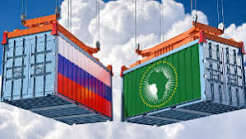
The 2026 Russia-Africa summit appears to have been an unqualified success – 22 African Heads of State attended, with 48 of Africa’s 52 countries all sending significant delegations. It appears to have been the event that has really given Russia-Africa relations and substantial push. That said, there is a lot of development work to be carried out. Russia’s total trade with the African Continent has reached about US$27 billion in 2025. That is up from US$18 billion in 2022, a growth rate of 50% over the three-year period. Pan-Africa -Russia trade also appears to have been growing at about 6% during 2026.
However, while the growth trajectory is impressive, the Russian figures are dwarfed by Chinese and Indian trade with Africa. Trade between China and Africa reached a record US$348.05 billion in 2025, marking a 17.7% increase, while trade between India and Africa reached about US$103 billion and increased by 14% over the same period. Neither will want to reduce their hold on their African trade, while all three countries are also members of BRICS.
This means that Russia will need to find trade development and investment areas in Africa that will not overly compete with Chinese and Indian interests. However, there is plenty for Russia to develop that should avoid treading on Beijing and New Delhi’s feet.
The signing of an Action Plan between Russia and Africa through to 2029 signals strong intent on behalf of both Russia and the African Union to substantially boost multilateral trade. While the combined multilateral trade figures with Russia are collectively low compared with China and India, there also appear to be major corridors in which obvious import and export needs can be fulfilled.
Agriculture
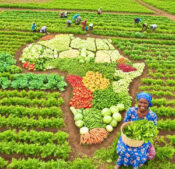
Numerous African nations are significant agricultural producers. These include:
- Nigeria: US$104 billion (5th globally) — leads in cassava, yams, rice, bananas, shea nuts, and ginger.
- Egypt: US$42 billion (12th globally) — leads in dates, tomatoes, citrus, and vegetables.
- Ethiopia: US$38 billion (18th globally) — leads in coffee, wheat, and honey.
- Kenya: US$23 billion (27th globally) — leads in tea and avocados.
- Algeria: US$20 billion (31st globally).
- Tanzania: US$16 billion (34th globally) — leads in beans and cashews.
- Morocco: US$13.4 billion (41st globally).
- Ghana: US$13.19 billion (42nd globally) — major cocoa and crop producer.
- Côte d’Ivoire US$13.11 billion (43rd globally) — world leader in cocoa.
- Democratic Republic of Congo (DRC):US$10 billion (45th globally).
Russia is of course one of the world’s largest exporters of fertilizers.
Minerals
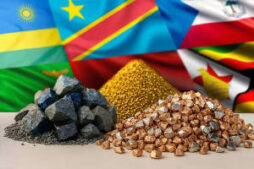
Africa holds roughly 30% of the world’s mineral reserves. The largest producers are:
- South Africa (Exports valued at US$124.96 billion) A leading producer of gold, manganese, and platinum-group metals.
- Angola (US$32.04 billion) — A major supplier of diamonds, oil, and iron ore.
- Egypt (US$23.22 billion) — Known for gold, copper, phosphates, and industrial minerals.
- Ghana (US$14.97 billion) — One of Africa’s top gold and bauxite producers.
- The Democratic Republic of Congo (US$13.69 billion) It holds massive untapped reserves and is the world’s largest producer of cobalt (over 70–84% of global output) and a top copper producer.
- Gabon (US$10.92 billion) — A global producer of manganese and petroleum.
- Zimbabwe (US$9.77 billion) — a significant producer of platinum, chrome, and gold.
Russia has considerable mining experience and possesses technologies, equipment and know-how, especially in difficult extraction technologies that it can sell.
Oil
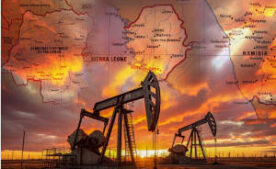
- Nigeria: Production of 1.5 million barrels per day.
- Algeria: Production of 1.2 million barrels per day.
- Libya: Production of 1.4 million barrels per day
- Angola: Production of 1.1 million barrels per day
- Egypt: Production of 0.52 million barrels per day
- Republic of the Congo: Production of 0.3 million barrels per day
Gas
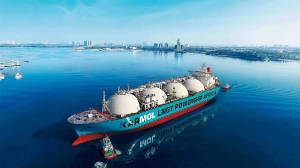
- Algeria: Ranks as the top LNG and natural gas producer in Africa, with an annual LNG export capacity of approximately 29.3 million metric tons per year (mtpa) (operating key terminals like Arzew GL1Z and GL2Z).
- Nigeria: The second-largest LNG exporter in Africa, featuring an export capacity of around 22.2 mtpa anchored by the major Nigeria LNG (NLNG) terminal in Rivers State.
- Egypt: Possesses an LNG export capacity of about 13 mtpa (featuring the Damietta LNG terminal), though export volumes fluctuate based on domestic energy demands.
- Angola: Operates the Angola LNG terminal in Zaire province with a capacity of roughly 5.2 mtpa.
- Equatorial Guinea & Cameroon: Maintain active smaller-scale LNG liquefaction and export operations along the Gulf of Guinea
Russia possesses significant energy industry technical know-how and machinery. That provides opportunities not just for Russian mining and energy investments, but also in supplying equipment such as vehicles. The Kamaz truck manufacturing investment in Mali points to a way ahead – the localisation of industrial equipment.
Nuclear
In addition, to satisfy their mutual development needs, African countries need improved energy infrastructure to power their industrial development. To this end, Rosatom and its subsidiaries are already discussing small modular NPP with numerous African countries to provide exactly this. These include Rosatom discussing floating NPP projects with Egypt, Tanzania, Togo, Namibia; and exploring the possibility of large-scale NPP with Uganda and Ghana.
Port Development
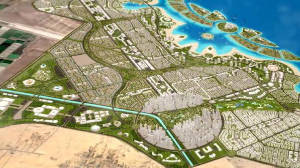
Many African countries have significant coastlines, meaning port development and the creation of industrial and free trade zones will also be on the agenda. Russia is already developing such a zone at Port Said in Egypt and has held discussions with Madagascar and Sudan over similar projects.
Fisheries
Tied to this are fisheries development – several African nations participated in the Great African Fishing Expedition involving Russian research vessels in 2024, including Angola, Cameroon, The Congo, Eritrea, Equatorial Guinea, Gabon, Guinea-Bissau, Guinea, Mozambique, Madagascar, Mauritania, Mauritius, Morocco, Mozambique, Nigeria, Sao Tome and Principe, Senegal, and Sierra Leone.
Tourism
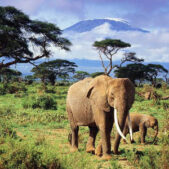
In addition, there is significant Russian tourism growth to several African countries, with Egypt. Morocco, Mauritius, the Seychelles, and Zanzibar (Tanzania) all experiencing significant volumes of Russian visitors. Other destinations, including the Comoros islands and adventure safaris in South Africa and Namibia are also showing strong development. Russian tourists are sought after – financial analysis of Russian outbound tourists has revealed they now spend more overseas than European visitors do.
As can be seen, there is substantial room for improving Russian trade with the African Continent. The 2029 Action Plan institutionalizes this and can be expected to yield results. Given existing trade development trends, Russia-Africa trade can be expected to increase to about US$32-34 billion by 2030. Impetus from the 2029 Action Plan could increase this further if its contents are acted upon – making Africa one of Russia’s fastest growth markets.