Русский




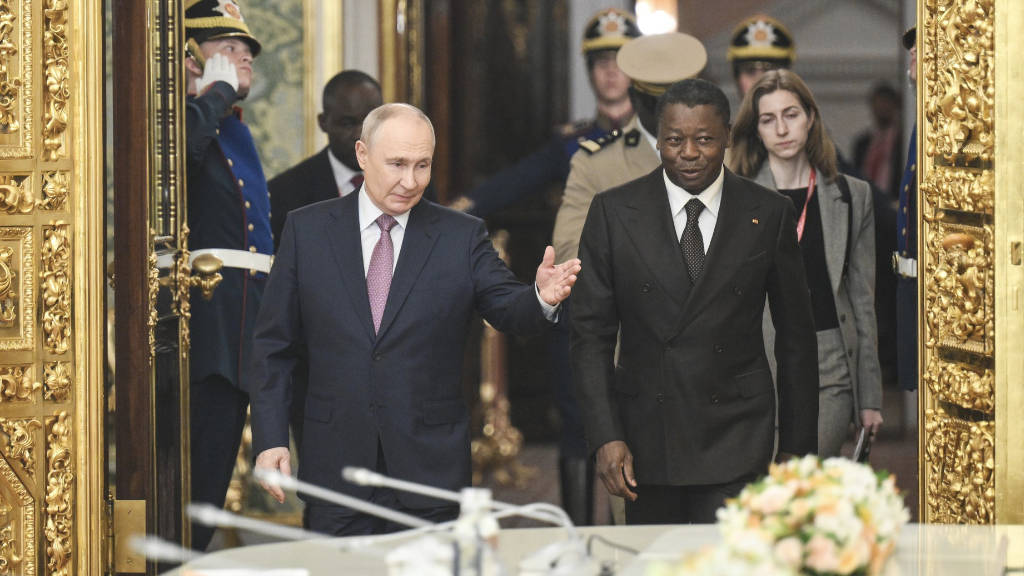
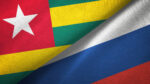
The Russian President, Vladimir Putin met with Faure Gnassingbé, the First President and Prime Minister of Togo on the sidelines of the 2026 Russia–Africa Summit.
On the Russian side, attending the meeting were Deputy Prime Minister Alexander Novak, Deputy Chief of Staff of the Presidential Executive Office Maxim Oreshkin, Deputy Chief of Staff of the Presidential Executive Office – Presidential Press Secretary Dmitry Peskov, Presidential Aide Yury Ushakov, Ambassador Extraordinary and Plenipotentiary of the Russian Federation to the Togolese Republic Igor Yevdokimov, Minister of Energy, Russian Co-Chair of the Russian-Togolese Intergovernmental Commission on Trade, Economic, Scientific and Technical Cooperation Sergei Tsivilev, Deputy Foreign Minister Georgy Borisenko, Deputy Defence Minister Vasily Osmakov, Chief of the Main Directorate of the General Staff of the Russian Armed Forces – Deputy Chief of the General Staff of the Russian Armed Forces Igor Kostyukov, Deputy Chief of the Main Directorate of the General Staff of the Russian Armed Forces Andrei Averyanov, Chairman of the Business Council for Cooperation with the Central African Republic, Chairman of the Board of Directors of OKTO Group Alexei Tolokonnikov, Director General of State Atomic Energy Corporation Rosatom Alexei Likhachev, and PSB Bank CEO Pyotr Fradkov.
This is what the two Presidents had to say:
Vladimir Putin: Mr Prime Minister, friends, It is a great pleasure to see you. I would like to thank you once again for the attention you give to the advancement of Russian-African ties and for taking part in the event, which I believe was a great success.
We appreciate the attention that Togo’s leadership devotes to enhancing cooperation with Russia. I would now like to turn to our bilateral relations. We held talks in Moscow in November 2025 and also had further opportunities to engage with one another at various other forums.
Our cooperation with Togo has been strong and productive for decades – indeed, 66 years have passed since our two countries established diplomatic relations.
In September 2026, a core inter-state document – an agreement setting out the principles governing our relations – entered into force. In August, the Russian Embassy in Lomé resumed its operations, and preparations are now underway to open a Togolese Embassy in Moscow.
Trade and economic cooperation is also progressing well. In 2025, bilateral trade reached US$852 million, and an intergovernmental commission began its work this year. We hope to inject fresh energy into our mutually beneficial cooperation across a range of areas, such as energy, transport and logistics, geological exploration, and agriculture.
We are also paying particular attention to humanitarian cooperation. Every year, we receive an increasing number of applications from young people in your country wishing to study at Russian universities. As of today, more than 900 Togolese nationals have received their education in Russia, while over 440 young people are currently studying here. There are also plans to open two partner Russian Houses in Lomé under the auspices of the Centre for Public Diplomacy.
We value your support for Russian initiatives at the United Nations and other international platforms. Today, we will have an opportunity to discuss other matters of mutual interest.”
Faure Essozimna Gnassingbé: “First of all, on behalf of my delegation and personally, I would like to express my gratitude for the warm welcome and hospitality we have received since our arrival in Moscow.
I would also like to sincerely thank you for the efficient organisation of the third Russia–Africa Summit. Hosting such a meeting and organising it on such an exceptional level does your country great credit while demonstrating the vitality of the Russia–Africa dialogue. Furthermore, Mr President, I would like to thank you sincerely for making time for this meeting and for showing us such great patience.
Mr President, as you mentioned, we met in November 2025 to launch discussions and set things in motion, and those efforts began to promptly bear fruit, with agreements taking shape. We now have an Intergovernmental Commission, which held its meeting in September. To date, we have signed seven important memoranda covering a range of areas.”
Russia-Togo Agreements
The agreements that Gnassingbé referred to include:
- Military Cooperation Agreement (2025): Ratified by Russia, this framework covers joint military exercises, officer training and capacity-building, intelligence and counter-terrorism information sharing, and emergency medical assistance.
- Intergovernmental Joint Commission Records & MoUs (October 2026): Finalized cooperation protocols spanning mining, energy, hydrocarbons, agriculture, trade, transportation, information technology, science, education, and a specific protocol on cultural heritage with the Russian Academy of Sciences.
- Eurasia Nonprofit Agreement (October 2026): Covers humanitarian assistance, education, scientific research, culture, social development, and potential project financing for healthcare and infrastructure.
- Rossotrudnichestvo Agreement (October 2026): Focusing on cultural, educational, scientific, and humanitarian exchanges, including scholarships for Togolese students at Russian universities.
- National Human Rights Commission (CNDH) MoU: Signed between Togo’s CNDH and the Russian Human Rights Commissioner to promote and protect fundamental rights.
- Embassy Openings: Agreements to establish and operationalize full diplomatic embassies in both Lomé and Moscow.
Russia, Togo Bilateral Trade & Investment
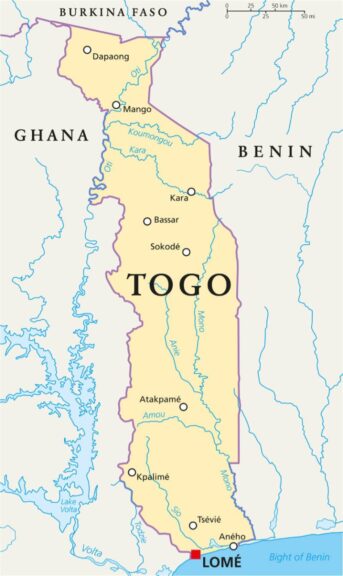
The economy of Togo is diverse, with agriculture playing a central role, contributing approximately 42% of GDP and providing employment to a significant portion of the population. The country is known for its production of key agricultural commodities such as cocoa, coffee, corn, rice, cassava, yams, cotton, beans, and millet, all cultivated across its fertile lands. Mining is another critical sector, with Togo holding the world’s fourth-largest phosphate reserves. The state-owned Société Nouvelle des Phosphates du Togo (SNPT) leads phosphate production. In addition, Togo extracts gold, bauxite, marble, limestone, and other minerals. The industrial sector is complemented by cement production, textiles, and breweries. The services sector, especially trade, transportation, and telecommunications, plays a crucial role in bolstering Togo’s status as an economic hub in the region.
Togo benefits from its membership in ECOWAS (Economic Community of West African States), which promotes economic integration and free trade with 14 other West African nations. ECOWAS facilitates the free movement of goods, services, and capital among its members, backed by a common external tariff. Togo is also part of UEMOA (West African Economic and Monetary Union), which includes eight countries sharing the CFA franc as their currency and encouraging regional economic cooperation. Additionally, Togo is a signatory to the African Continental Free Trade Area (AfCFTA), aimed at creating a single market for goods and services across Africa to enhance intra-continental trade. On the international stage, Togo is a member of the World Trade Organization (WTO), ensuring adherence to global trade regulations and benefiting from mechanisms like dispute resolution and trade liberalization.
With a population of about 9.6 million, Togo has a GDP (PPP) of US$33 billion and a GDP per capita (PPP) of US$3,470. GDP is projected to grow by 5% in 2026.
Russia’s bilateral trade with Togo has been growing and reached US$852 million in 2025, with Russia exporting mineral fertilizers and Togo exporting fruits and nuts. Russia also sent its first shipment of wheat to Togo earlier this year.
There have been additional developments. The first Russia-Togo Joint Intergovernmental Commission held its inaugural session in Lomé from in September this year, identifying priority areas including investment promotion and protection, customs, agriculture, energy, information technology, and transport.
Russia has also demonstrated investment interest in Togo’s Lome Port, being the only port on the West African coast from which several cities can be reached by road within one day. Goods can be moved within a reasonable time at competitive costs. It includes a Free Trade Zone, handles 80% of the trade flow in Togo, and additionally serves the Sahel countries – Burkina Faso, Mali and Niger – where Russia also has significant economic interests, and in nuclear energy and mining in particular.
Rosatom (Russia’s state nuclear corporation) signed a memorandum of understanding with Togo’s Ministry of Energy regarding peaceful uses of nuclear energy and discussions on potential floating nuclear power plant projects, while additional agreements include plans for a master plan for Togo’s water and energy resources, assessing water resources, and modernizing infrastructure.
These measures will not only strengthen food security across Africa, including Togo, during a period of global fragility, but also create significant long-term potential for expanded wheat and grain trade between Russia and African nations—including, as previously noted, the Sahel region.
On the Togolese side, Russian investments and partnerships could boost value-added production in agriculture, mining (notably phosphates), and logistics, sectors where Togo is already competitive. According to both leaders, these developments could drive bilateral trade into tens or even hundreds of millions of dollars annually, reinforcing Russia’s broader economic footprint in West Africa.