Русский




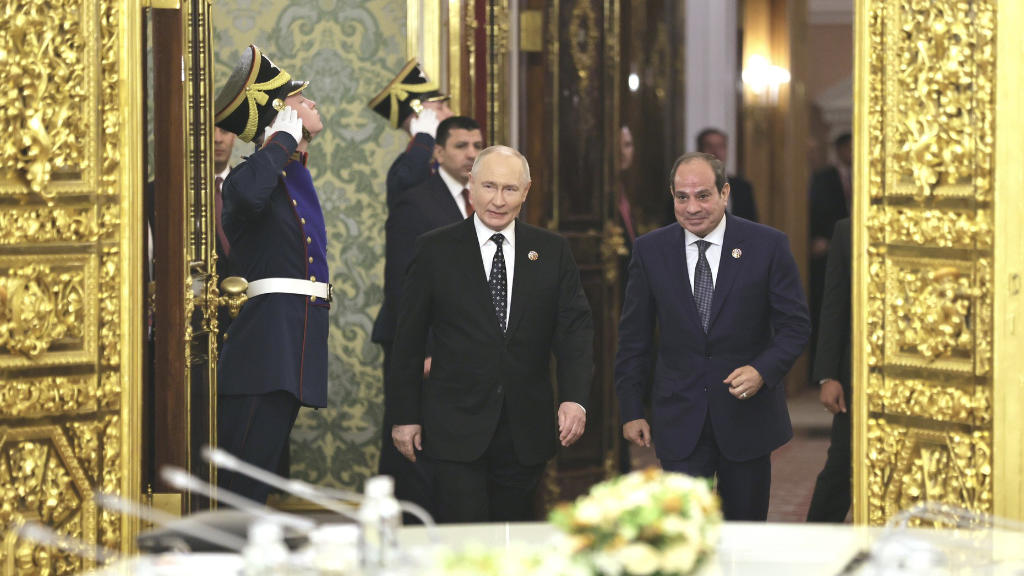
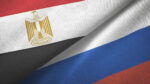
The President of Russia, Vladimir Putin has met with Abdel Fattah el-Sisi, the President of Egypt, at the 2026 Russia-Africa Summit.
On the Russian side, the meeting was attended by Foreign Minister Sergei Lavrov; Deputy Prime Minister Alexander Novak; Deputy Prime Minister – Minister of Finance Anton Siluanov; Deputy Chief of Staff of the Presidential Executive Office Maxim Oreshkin; Deputy Chief of Staff of the Presidential Executive Office – Presidential Press Secretary Dmitry Peskov; Presidential Aide Yury Ushakov; Ambassador Extraordinary and Plenipotentiary of the Russian Federation to the Arab Republic of Egypt Artur Lyukmanov; Minister of Industry and Trade and Russian Co-Chair of the Joint Russian-Egyptian Commission on Trade, Economic, Scientific and Technical Cooperation Anton Alikhanov; Minister of Agriculture Oksana Lut; Minister of Economic Development Maxim Reshetnikov; Governor of the Central Bank Elvira Nabiullina; Director of the Federal Service for Military Technical Cooperation Dmitry Shugayev; Deputy Defence Minister Vasily Osmakov; Chairman of the Russian Fertiliser Producers Association Andrei Guryev; General Director of Zarubezhneft Sergei Kudryashov; Director General of Rosatom State Corporation Alexei Likhachev; and CEO of Rosoboronexport Alexander Mikheyev.
This is what they had to say:
Vladimir Putin: “Mr President, friends, We are very pleased to welcome you all. We are grateful to you for taking the time to attend the Russia–Africa Summit. You and I were at the very origins of this format and held the first Russia–Africa meeting at the highest level in Sochi in 2019.
I recall clearly how it all began. I remember that I asked you to lead this process, and you embraced it with great goodwill and agreed to take on this role. And, one might say, largely thanks to your initiative, this process got under way and progressed quite actively and productively.
Since then, a great deal has been achieved through our joint efforts. The key indicator is that trade between Russia and Africa is growing. Since 2022, its total volume has increased by 50% and exceeded US$27 billion, with Egypt accounting for a significant share of this total.
On September 11, on the sidelines of the BRICS Summit in New Delhi, you and I had a productive exchange of views on the situation in the region and on the further strengthening of friendly ties between Russia and Egypt. The historical relationship between our two countries is rooted in mutual respect, consideration for each other’s interests and mutual assistance. It is developing successfully in accordance with the Agreement on Comprehensive Partnership and Strategic Cooperation.
Despite regional tensions, bilateral trade continues to grow steadily, rising by 14% in the first eight months of this year alone. In 2025, it reached record high levels, exceeding US$10 billion for the first time.
The joint intergovernmental commission is working productively, and preparations are underway for its 16th meeting, which will take place in Egypt in 2027.
Our flagship project – the construction of the El Dabaa Nuclear Power Plant in Egypt – is proceeding on schedule. In the first six months of this year, more than 1.2 million of our tourists visited Egypt, with the total for the whole of 2025 reaching approximately 1.5 million.
Today, we have a great opportunity to continue discussing promising areas for long-term bilateral cooperation. We will also touch upon other issues of mutual interest.
I would like to emphasise once again how pleased we are to see you here in Russia.”
Fattah el-Sisi: “Mr President, it is a great pleasure to see you. Allow me to express my gratitude for your hospitality and warm welcome. I would also like to thank you for today’s event. I see that you work very hard, and I find that truly admirable.
Today, we are striving to strengthen our strategic partnership and hope to expand cooperation between our countries across various sectors – primarily in the economy and trade, as well as in areas related to grain supplies, which are of great importance to our nation. Furthermore, there is the El Dabaa project, which stands as the most significant undertaking in our bilateral engagement.
We are committed to completing these projects according to the established timelines, and we are making every effort to fulfil our payment obligations. I am counting on your support to ensure that we meet our deadlines; we would very much like to maintain the current project schedule.
We look forward to strengthening and broadening our cooperation, including the potential for installing new power units after 2030, as well as the development of a research reactor and a testing centre. We are also interested in collaborating on small modular reactors and floating nuclear power plants, and in deepening our partnership in specialised industrial sectors, such as the extraction of uranium and rare metals.
Regarding the industrial zone, we also hope for your support. To successfully launch and implement the Russian industrial zone project, we are fully prepared to provide all necessary incentives, benefits, and support to the Russian management company.”
Egypt’s Economic Background
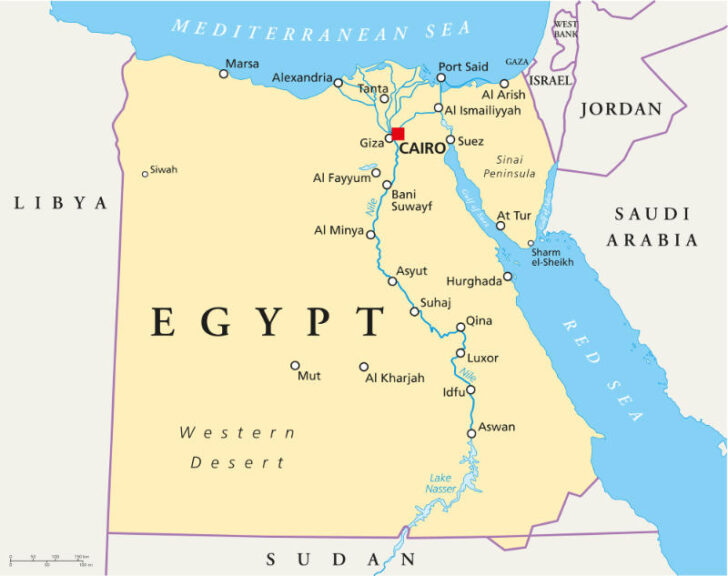
Egypt is located in the northeastern corner of Africa, at the crossroads of Africa and the Middle East, with key access to both the Mediterranean Sea and the Red Sea. Its strategic position connects the Mediterranean to the Suez Canal and onto the Persian Gulf and Indian Ocean, important global shipping routes which have come under recent conflict stress. It is Russia’s largest trade and investment partner in Africa.
With a population of approximately 116.5 million, Egypt has a GDP (PPP) of US$2.57 trillion and a GDP per capita (PPP) of US$23,321, with a projected GDP growth of 5.1% for 2026.
Egypt’s economy includes industries such as oil and gas, which remain key drivers of the economy, contributing a significant portion of export earnings. The country is a major natural gas producer, with significant investments in gas fields such as the Zohr gas field. Oil continues to be a vital source of revenue.
Other important sectors include textiles and garments, which are a significant contributor to Egypt’s industrial output and exports, particularly cotton and garments. The agriculture sector is essential to the economy, with wheat, rice, and cotton being major products, despite challenges such as water scarcity. Additionally, construction and real estate are expanding, driven by infrastructure development and urbanization, while tourism remains a key industry due to Egypt’s historical landmarks. The country is also investing in expanding manufacturing, particularly in areas like food processing, chemicals, and pharmaceuticals. The information technology (IT) sector is growing rapidly, positioning Egypt as a regional hub for outsourcing and technology services.
As a member of several trade agreements, Egypt enjoys access to various international markets. Key trade agreements include the Greater Arab Free Trade Area (GAFTA), which reduces tariffs and trade barriers among Arab countries; the Comprehensive Economic Partnership Agreement (CEPA) with the European Union, which grants preferential trade terms for Egyptian goods; and the Egypt-EU Association Agreement, which provides access to the EU market, benefiting key sectors such as agriculture and textiles.
Egypt is also a member of the Common Market for Eastern and Southern Africa (COMESA), Egypt-China Free Trade Agreement, Egypt-India Free Trade Agreement, and is engaged in African Continental Free Trade Area (AfCFTA), which facilitates greater regional integration. Additionally, Egypt has agreements with the United States and Mercosur (Argentina, Brazil, Paraguay, Uruguay) to enhance trade.
Egypt is a also a full member of BRICS and a dialogue partner with the Shanghai Cooperation Organisation. Is close to reaching a Free Trade Agreement with the Eurasian Economic Union.
Russia-Egypt Trade & Investment
Russia’s trade with Egypt is increasingly multi-faceted and ranges from nuclear power plants, to oil and gas, fertilizers and agriculture, including significant grain exports. The two sides are currently developing a Russian Free Trade Zone at Port Said, while Russian railways are also investing in the Egyptian rail network. The El-Dabaa NPP is a critical part of bilateral relations. The US$30 billion facility features four 1,200-megawatt units totaling 4,800 MW. The first reactor is slated to begin generating energy around 2028, with full operational capacity anticipated by 2030.
Egypt and Russia are actively discussing the addition of more reactors and expanding nuclear cooperation. Russian state nuclear corporation Rosatom and Egyptian officials discussed adding two extra units (Units 5 and 6) to the El Dabaa Nuclear Power Plant project.
Egyptian President Abdel-Fattah El-Sisi and Russian President Vladimir Putin formally reviewed the potential expansion of the Dabaa plant during these bilateral talks. Both countries are also exploring future cooperation on small modular reactor (SMR) technology for remote areas and industrial uses.
The El Dabaa project is also key to Russia being able to show off its nuclear energy expertise to other African countries wanting the same technology.
In terms of Russia’s bilateral and multilateral trade with Egypt and Africa, the Port Said ‘Russian Investment Zone’ (RIZ) is also key. As Egypt is a member of the African Continental Free Trade Agreement (AfCFTA) and the BRICS and is currently negotiating a free trade agreement with the Eurasian Economic Union. The RIZ will also have a bonded zone. This means that Russian investors can establish operations in Port Said to manufacture and produce products without the need to initially pay import duties or VAT, leaving them free to source Russian, EAEU, and African components to manufacture a finished item. There is then the option to sell to the African and Middle Eastern markets (at which point Egyptian import duties and VAT are levied) or reexport back to Russia or the EAEU and sell there. The benefits of this structure are the lower wages and higher availability of Egyptian labour, reduced tax overheads, a larger component sourcing market, and a larger sales market. Bilateral trade between Egypt and Russia reached record levels of US$10.5 billion in 2025, according to official preliminary reports and diplomatic statements. Agricultural trade expanded by over 15% in the first four months of 2026, driven heavily by fertilizer flows and grain exports. With Putin suggesting that 2026 trade levels had further increased by 14% in 8M 2026, if maintained this will provide a total of US$11.97 billion for the full year.