 Русский




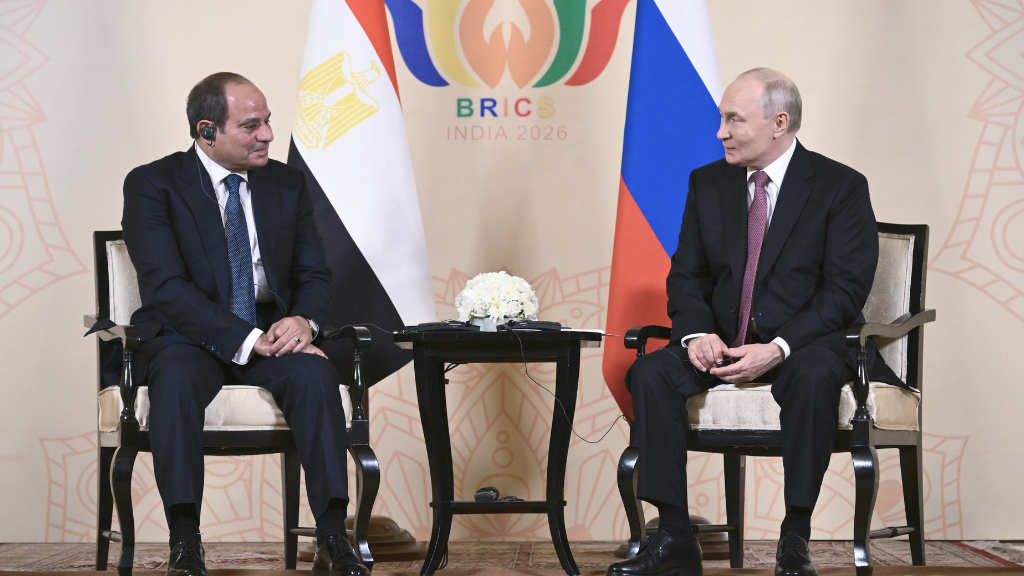

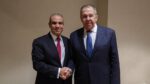
The Russian President Vladimir Putin met with Abdel Fattah el-Sisi, the President of Egypt on the sidelines of the BRICS summit in New Delhi. Both bought sizeable delegations.
On the Russian side, the meeting was attended by Foreign Minister Sergei Lavrov, Aide to the President Yury Ushakov, Minister of Agriculture Oksana Lut, Minister of Economic Development Maxim Reshetnikov, Director of the Federal Service for Military-Technical Cooperation Dmitry Shugayev, First Deputy Minister of Energy Pavel Sorokin, and CEO of the State Atomic Energy Corporation Rosatom Alexei Likhachev.
This is what Putin had to say:
“Mr President,
It has been a long time since we last met. I am very pleased to see you again. These are turbulent times, and a great many events are unfolding. We remain in contact, as do our colleagues, and our key initiatives are pressing ahead, with plans being implemented. Bilateral trade is growing, and its structure is steadily improving. I would like to reiterate that major projects are being carried out – strictly according to plan – despite any challenges.
We are in constant contact on the international agenda. And we are very pleased to see Egypt, our long-standing and reliable friend in the region, growing stronger under your leadership.
I recall how, under your leadership – back in Sochi – we established the new Russia–Africa format. The next summit in this format is being held this year, and we would be delighted to welcome you to Moscow this autumn, in October, for these events.
Many developments are unfolding both in the region and across the globe. For me, it is not merely interesting but of great importance to know your position on all these issues. You know that we take Egypt’s stance into account in our practical policy-making; today’s meeting is therefore highly valuable. I am very pleased that we can hold consultations today on the sidelines of the BRICS summit on both bilateral issues and the international agenda.”
El-Sisi replied:
“Thank you very much, Mr President. I am always happy to see my dear friend.
As you mentioned, the volume of trade between our two countries has exceeded US$10 billion, and we are delivering major projects – such as the El Dabaa Nuclear Power Plant. We are grateful to you for your assistance in this matter and the efforts being made by Rosatom.
Turning to the regional situation, it is certainly crucial to achieve stability – particularly with regard to the security of maritime areas and shipping lanes, and freedom of navigation.
Also you are well aware that Egypt imports large quantities of grain from Russia and Ukraine. Naturally, ensuring the stability of these supplies is of great importance to us. We would like to achieve stability – to steady the situation through our joint efforts. I am very grateful to you.”
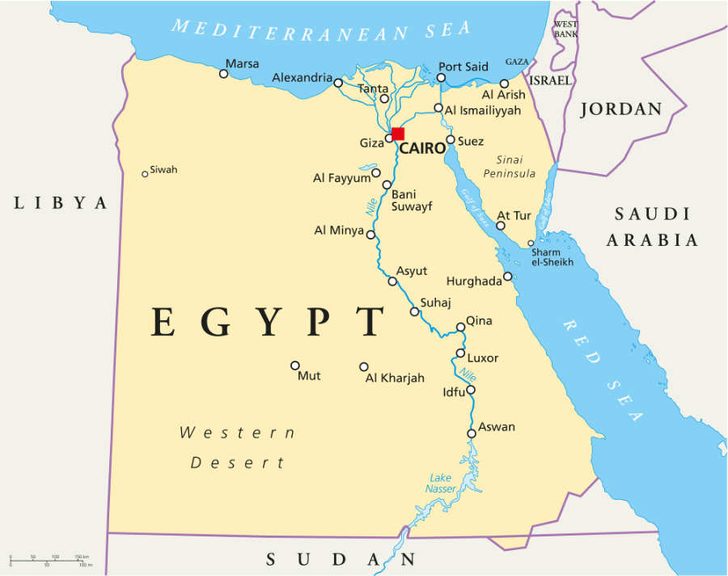
Egypt is located in the northeastern corner of Africa, at the crossroads of Africa and the Middle East, with key access to both the Mediterranean Sea and the Red Sea. Its strategic position connects the Mediterranean to the Suez Canal and onto the Persian Gulf and Indian Ocean, important global shipping routes which have come under recent conflict stress.
Egypt’s economy includes industries such as oil and gas, which remain key drivers of the economy, contributing a significant portion of export earnings. The country is a major natural gas producer, with significant investments in gas fields such as the Zohr gas field. Oil continues to be a vital source of revenue.
Other important sectors include textiles and garments, which are a significant contributor to Egypt’s industrial output and exports, particularly cotton and garments. The agriculture sector is essential to the economy, with wheat, rice, and cotton being major products, despite challenges such as water scarcity. Additionally, construction and real estate are expanding, driven by infrastructure development and urbanization, while tourism remains a key industry due to Egypt’s historical landmarks. The country is also investing in expanding manufacturing, particularly in areas like food processing, chemicals, and pharmaceuticals. The information technology (IT) sector is growing rapidly, positioning Egypt as a regional hub for outsourcing and technology services.
Russia’s trade with Egypt is increasingly multi-faceted and ranges from nuclear power plants, to oil and gas, fertilizers and agriculture, including significant grain exports. The two sides are currently developing a Russian Free Trade Zone at Port Said, while Russian railways are also investing in the Egyptian rail network.
As a member of several trade agreements, Egypt enjoys access to various international markets. Key trade agreements include the Greater Arab Free Trade Area (GAFTA), which reduces tariffs and trade barriers among Arab countries; the Comprehensive Economic Partnership Agreement (CEPA) with the European Union, which grants preferential trade terms for Egyptian goods; and the Egypt-EU Association Agreement, which provides access to the EU market, benefiting key sectors such as agriculture and textiles.
Egypt is also a member of the Common Market for Eastern and Southern Africa (COMESA), Egypt-China Free Trade Agreement, Egypt-India Free Trade Agreement, and is engaged in African Continental Free Trade Area (AfCFTA), which facilitates greater regional integration. Additionally, Egypt has agreements with the United States and Mercosur (Argentina, Brazil, Paraguay, Uruguay) to enhance trade.
Egypt is a also a full member of BRICS and a dialogue partner with the Shanghai Cooperation Organisation. Is close to reaching a Free Trade Agreement with the Eurasian Economic Union.
With a population of approximately 116.5 million, Egypt has a GDP (PPP) of US$2.57 trillion and a GDP per capita (PPP) of US$23,321, with a projected GDP growth of 5.1% for 2026.
Bilateral trade between Egypt and Russia reached record levels of US$10.5 billion in 2025, according to official preliminary reports and diplomatic statements. Agricultural trade expanded by over 15% in the first four months of 2026, driven heavily by fertilizer flows and grain exports.
In accordance with the disciplines of the meetings attendees, we examine recent sectoral developments as follows:
Agriculture

Agricultural trade and development between Russia and Egypt expanded significantly in 2026, driven by higher grain shipments, increased fertilizer flows, and strategic talks on regional logistics hubs. Bilateral agricultural trade turnover between Russia and Egypt increased by 15% in the first four months of 2026 compared to the previous year.
Russia remained a leading supplier of agricultural commodities to Egypt, shipping 4.9 million tonnes of goods in H1 2026, with wheat and oil-and-fat products comprising the bulk of the volume.
Egypt continues to supply key fresh and processed produce to Russia, including fruits, vegetables, berries, and frozen goods, with Egyptian food exports to Russia reaching approximately US$613 million in value between January and July.
Trade in mineral fertilizers showed robust potential following substantial turnover growth from previous periods, with both nations seeking to expand pesticide and agricultural input cooperation.
High-level talks involving leadership from both countries—including discussions between Russian President Vladimir Putin and Egyptian officials—advanced plans to establish a major grain and energy logistics hub in Egypt. Proposals focused on positioning Egyptian ports as a central warehousing and redistribution center for Russian grain destined for wider African and Middle Eastern markets.
Egypt and Russia are also exploring streamlining procurement procedures by allowing Russian suppliers and companies to register on Egypt’s unified procurement platforms and commodity exchanges.
Industrial Zone
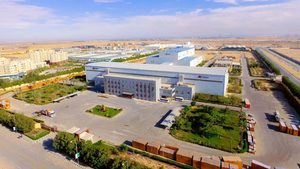
Bilateral cooperation also extends to the Russian Industrial Zone within the Suez Canal Economic Zone (SCZONE), aligning long-term industrial assets with Egypt’s broader energy and trade framework.
This zone will be located at two sites: next to the port of Ain Sokhna at the southern entrance to the Suez Canal on the Red Sea coast and in the eastern part of Port Said at the northern entrance to the canal on the Mediterranean coast.
This facility will allow Russian companies to export component parts into the Zone, were jointly with Egyptian partners, they can integrate these with African sourced components to manufacture finished products that can be resold onto the wider African market, or, when the Egypt-Eurasian Economic Union FTA is concluded, back to Russia and the EAEU nations. Construction work stats next year and is scheduled to be completed by mid-2030.
Military
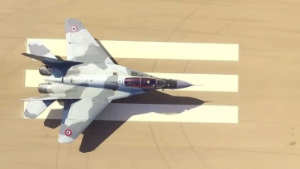
Egypt and Russia have expanded their military and strategic cooperation in 2026 through high-profile equipment displays, major infrastructure partnerships, and joint aerospace exhibitions.
For example, during the July 2026 opening of Egypt’s new State Strategic Command headquarters (the “Octagon”), Egypt publicly displayed its Russian-made S-300VM air-defense system for the first time. Russian aircraft, including MiG-29 jets and Ka-52 helicopters, also participated in the inauguration event.
In September 2026, Russia used the El Alamein International Airshow in Egypt for major international debuts. This included the first international flight and static displays of the export-oriented fifth-generation Su-57E fighter jet.
Russia also debuted its cost-effective, drone-like air-launched weapons, including the S-71K Kovyor, S-71M Monokhrom, and S8000 Banderol—alongside the Su-57E in Egypt. Rosoboronexport announced a landmark contract at the El Alamein airshow for the first export of more than 10 Yak-130M trainer-combat aircraft.
Nuclear Energy
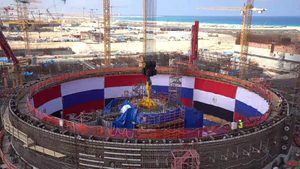
Egypt and Russia have been advancing key bilateral energy and infrastructure projects in 2026, most notably the El Dabaa Nuclear Power Plant built by Russia’s Rosatom. Workers installed the reactor pressure vessel for the second power unit in mid-2026. The US$30 billion facility features four 1,200-megawatt units totaling 4,800 MW.Timeline: The first reactor is slated to begin generating energy around 2028, with full operational capacity anticipated by 2030.
Egypt and Russia are actively discussing the addition of more reactors and expanding nuclear cooperation. Russian state nuclear corporation Rosatom and Egyptian officials discussed adding two extra units (Units 5 and 6) to the El Dabaa Nuclear Power Plant project.
Egyptian President Abdel-Fattah El-Sisi and Russian President Vladimir Putin formally reviewed the potential expansion of the Dabaa plant during these bilateral talks. Both countries are also exploring future cooperation on small modular reactor (SMR) technology for remote areas and industrial uses.
Tourism
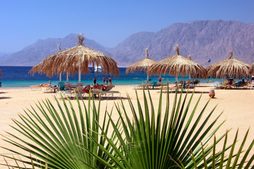
Russian aviation authorities have accredited Egypt’s Alexandria and El Alamein international airports for direct flights, opening up new Mediterranean coastal destinations for Russian tourists. Millions of Russian tourists visit Egypt annually, complementing educational exchanges that see thousands of Egyptian students enrolled in Russian institutions. We can expect to see winter sun charter flights announced by Russian airlines shortly.
Summary
Bilateral relations between Egypt and Russia in 2026 have centered on expanding major infrastructure projects, strengthening trade through BRICS coordination, and advancing strategic cooperation in energy and food security. Key to this are four main areas:
- The El-Dabaa Nuclear Power Plant;
- The Russian Industrial Zone (RIZ);
- Trade and Food Security, including a potential grain distribution hub;
- BRICS and Regional Commerce
Their joint membership of BRICS has accelerated dialogue on alternative local-currency settlements, supply chain integration, and regional food security, with this likely to continue.