Русский




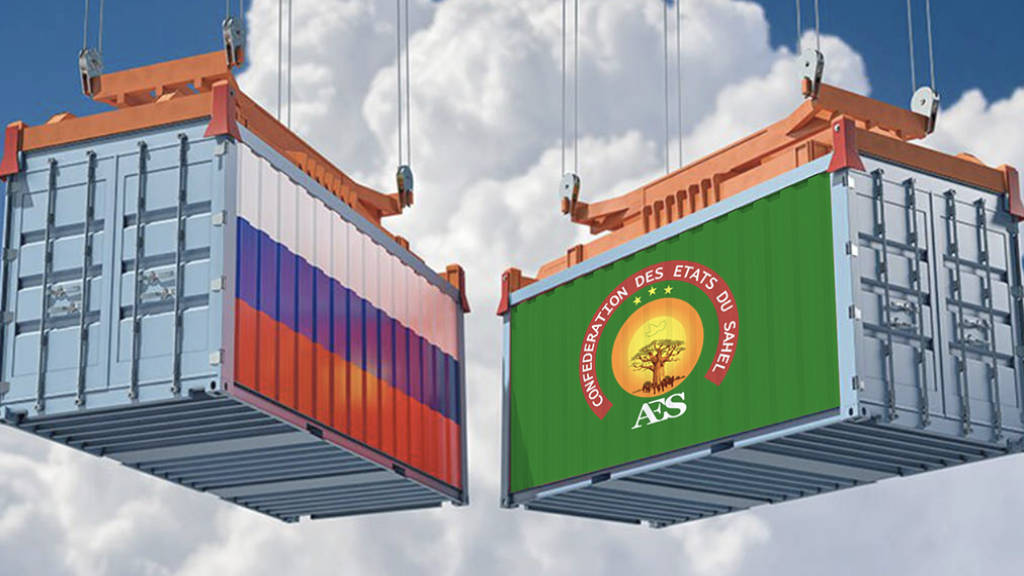
Russia considers it necessary to give an impetus to economic cooperation with African countries, and current trade turnover does not match the existing potential, Tatyana Dovgalenko, the director of the Russian Foreign Ministry’s Department of Partnership with Africa, has said. She was speaking during a meeting with the Economic Ministers of the Sahel countries – Burkina Faso, Mali and Niger.
Dovgalenko said that “We have managed to bring the political dialogue and joint work on security issues to a qualitatively new level. Contacts between the ministers of foreign affairs, defense, justice and education are developing. And now it is extremely important to give an impetus to economic cooperation specifically, because trade turnover with our countries is low and far from its potential. We have requests from partners for creating added value on the African continent, for the localization of production. We fully support this and see in it objective processes of the formation of a distinctive and influential center of global development in Africa. The common tasks for the countries at present are “stimulating investment growth and launching infrastructure initiatives in line with the needs of the Alliance of Sahel States countries in the energy, agriculture, logistics and extractive industries.”
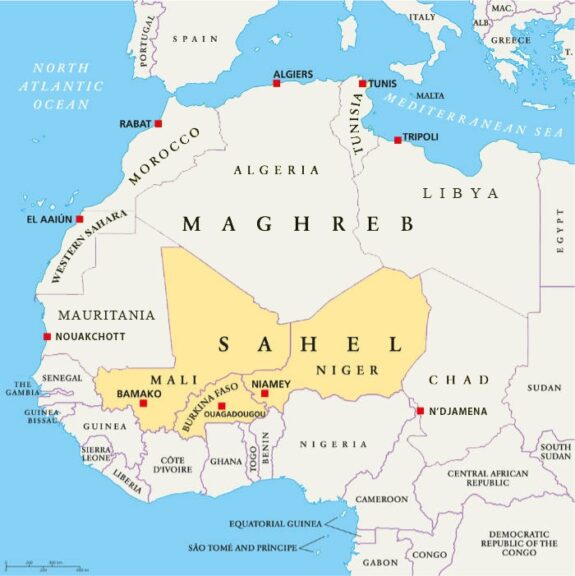
The Alliance of Sahel States was established in late 2023 as a security bloc following disagreements with fellow members of the Economic Community of West African States (ECOWAS) to which they all previously belonged, following successful military coups in each of the AES countries.
The development of the AES and the pivot to Russia is capable of changing the geopolitical nature of the entire African continent. While the AES nations are amongst the most militant (all are juntas) there is also a great deal of support for their actions in expelling their previous colonial powers, and especially France.
Russia, which is free of any colonial past in Africa, and which has a more socialist aspect to its geopolitics than the more capitalistic minded Europeans do, is seen as an ideal partner and more prepared to share resources as opposed to simply taking them – accusations long levelled at Paris. Dovgalenko’s comments that Russia would support localisation is indicative of this approach.
Nonetheless, while the diminishing of old European power and influence is generally welcomed in Africa, there remains concerns that the AES nations could also evolve into long-term military dictatorships. Accordingly, how the AES develops beyond the junta aspect and into both regional security, prosperity and development are challenges that will unfold over time. At present, what the region actually needs is stability matched with progress, and it is to this end the AES Junta’s have been aligning themselves with the Russian and Chinese political models as opposed to the overly capitalistic/democratic models currently engaged in the West. The latter are seen as increasingly chaotic when applied to Africa and far too influenced by vested business interests with minimal concerns for the African people.
Russia’s guidance and investment in this will be a crucial part of AES – and to some extent Africa’s future independence and sovereignty as an emerging, prosperous continent in its own right.