Русский






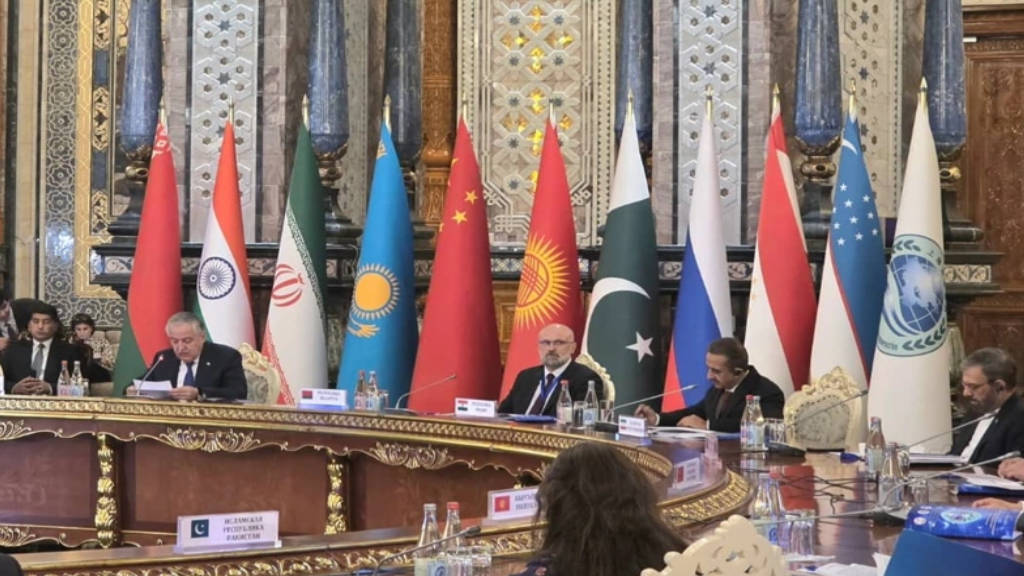

The Shanghai Cooperation Organisation (SCO) Council of Heads of Government meeting in Dushanbe on October 20 brought together a 2026-2030 trade cooperation roadmap, plans for a digital freight platform and an industrial investment-project database, and renewed efforts to establish an SCO Development Bank. Together, these initiatives aim to build on existing trade flows and expand cross-border infrastructure, investment and industrial cooperation. Trade between Russia and its Shanghai Cooperation Organisation (SCO) partners increased by 18% in the first half of 2026, following a combined trade turnover exceeding ₽30 trillion (US$372.6 billion), in 2025.
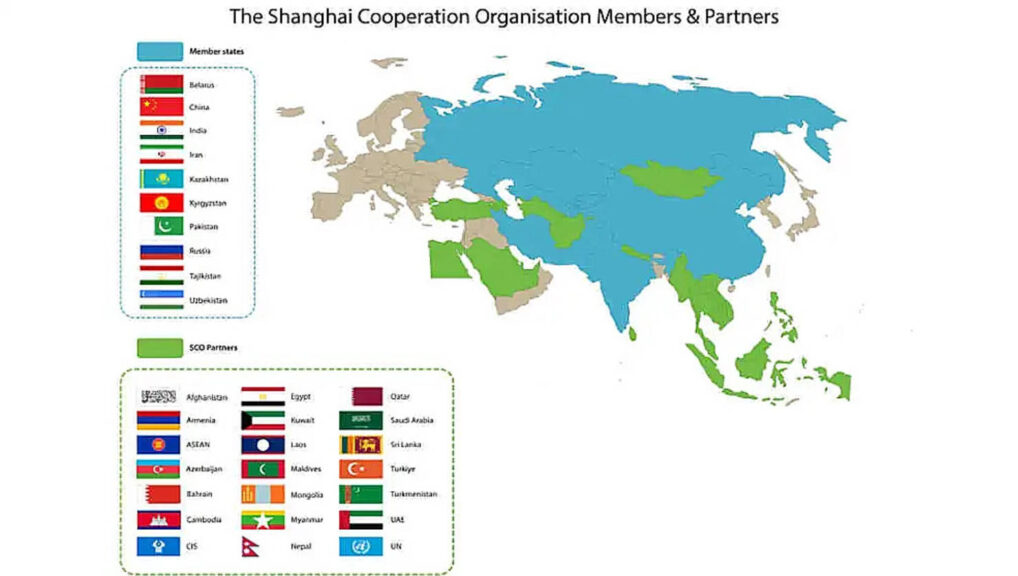
The SCO includes Belarus, China, India, Iran, Kazakhstan, Kyrgyzstan, Pakistan, Russia, Tajikistan and Uzbekistan as full members. Afghanistan and Mongolia, have observer status within the SCO, while Azerbaijan, Armenia, Bahrain, Egypt, Cambodia, Qatar, Kuwait, Laos, the Maldives, Myanmar, Nepal, the UAE, Saudi Arabia, Türkiye and Sri Lanka are dialogue partners.
The trade figures provide the commercial foundation for the bloc’s latest push to reduce transport costs, simplify customs procedures, expand settlements in national currencies and channel investment into industrial, energy, agricultural and digital projects.
The central economic question is whether the SCO can convert these established trade flows into more integrated supply chains. The meeting in Dushanbe produced decisions on the 2026-2030 multilateral trade and economic cooperation programme, a digital platform for international multimodal freight transport and a database of industrial investment projects. Together, these initiatives target three practical constraints on intra-SCO commerce: fragmented logistics, limited visibility of investment opportunities and the cost and complexity of cross-border payments.
The SCO Economic Implementation Programme

The meeting was held under the chairmanship of Tajikistan’s Prime Minister Kokhir Rasulzoda. President Emomali Rahmon received the heads of delegations in Dushanbe, while the sessions included Russian Prime Minister Mikhail Mishustin, Chinese Premier Li Qiang, Kazakh Prime Minister Olzhas Bektenov, Belarusian Prime Minister Alexander Turchin, Indian Defence Minister Rajnath Singh, Iranian First Vice-President Mohammad Reza Aref, Kyrgyz First Deputy Cabinet Chairman Daniyar Amangeldiev, Pakistani Deputy Prime Minister and Foreign Minister Mohammad Ishaq Dar, and Uzbek Prime Minister Abdulla Aripov. SCO Secretary-General Nurlan Yermekbayev and SCO Regional Anti-Terrorist Structure Executive Committee Director Ularbek Sharsheev also participated. Mongolia’s First Deputy Prime Minister Zhambyn Enkhbayar and Turkmenistan’s Deputy Chairman of the Cabinet of Ministers Khojamyrat Geldimyradov also attended as guests.
The outcome package contains eight principal decisions or decision areas, alongside the Joint Communiqué. These cover the report on events and meetings implementing the Programme of Multilateral Trade and Economic Cooperation; the SCO’s 2026-2030 Action Plan; the SCO’s 2025 financial report; the 2027 budget; translation services for its permanent bodies; amendments to remuneration, guarantees and compensation rules for officials; the concept for an SCO digital platform for international multimodal freight transport; and regulations governing a databank of industrial investment projects across member states.
The distinction between these instruments matter. The five-year action plan establishes the economic work programme; the freight platform is intended to improve transport coordination; and the industrial databank creates a framework for identifying investment opportunities. The financial report and 2027 budget provide institutional oversight, while the translation and personnel decisions address the organisation’s administrative capacity.
Mishustin Puts Trade Growth, Settlements & Industrial Production At The Centre

Mikhail Mishustin’s principal economic message in Dushanbe was that expanding trade should be accompanied by changes in its composition and supporting infrastructure. He highlighted the expansion of settlements in national currencies: whereas these represented around half of transactions five years earlier, they now account for the majority.
For Russia, the next stage involves simplifying export and import procedures, increasing the share of higher-value-added goods and expanding cooperation in industry, energy, agriculture, finance and banking. The emphasis on value addition is significant: higher trade turnover alone does not establish deeper industrial integration. Joint production, mutual investment and shared technology development can create more durable commercial relationships than exchanges dominated by raw materials or finished products supplied by one side.
Mishustin also pointed to Russia’s technology-enterprise base. More than 7,000 small technology companies operate in Russia, with combined turnover exceeding ₽1 trillion (US$12.4 billion), in 2025. (These are defined as companies with turnover of up to ₽4 billion, or US$50 million). He proposed sharing Russian experience in supporting these businesses and using the SCO’s network of technology parks to promote cooperation. The opportunity is to connect smaller firms to markets and partners across the organisation, although the public outcome announcements do not identify a dedicated funding allocation, a list of participating companies or a quantified target for joint ventures.
Russia’s agricultural trade is another important element of this offer. The wider economic material accompanying the Dushanbe agenda puts Russian agricultural exports to SCO partners at US$22 billion in 2025, up 12.5%. Combined with the push for improved freight coordination and reduced border friction, this gives agriculture a concrete commercial role alongside industrial cooperation and technology services.
Li Qiang Links Market Integration With Technology & Transport Corridors
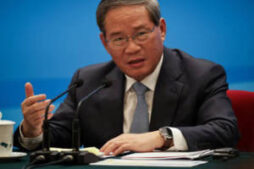
Chinese Premier Li Qiang’s address provided the meeting’s broadest industrial and connectivity framework. He argued that differences in natural resources, technology and market size should be treated as complementary strengths, rather than obstacles to cooperation. He called for stronger market and industrial connectivity, trade and investment facilitation, fewer barriers and more resilient international industrial and supply chains.
Li identified several practical channels: the International Economic and Trade Cooperation Initiative on Green Mining and Minerals, digital trade and investment, the Pilot Zone for Silk Road E-commerce Cooperation and the Smart Customs Cooperation Partnership. The latter two initiatives are particularly relevant to reducing information and administrative barriers between suppliers, customs authorities and buyers. Their commercial value will depend on implementation, interoperability and participation by firms across member states.
Transport was another priority. Li called for stronger international corridors, including Arctic waterways and the Trans-Caspian International Transport Corridor, and more extensive multimodal transport. He also encouraged participation in the United Nations Convention on Negotiable Cargo Documents, which could support the use of negotiable cargo documentation across international land-logistics chains. These proposals complement the SCO’s newly approved freight-platform concept, but they should not be mistaken for a single integrated route already operating under a new agreement.
China also offered sector-specific cooperation. Li proposed establishing branches of the Demonstration Base for Agricultural Technology Exchange and Training with interested countries and providing funding for 1,000 medical workers from SCO member states to study in China through the China-SCO Cooperation Center for Metabolic Diseases. In energy, he supported cooperation in traditional energy supply alongside the transition to lower-carbon systems, including through a China-SCO Energy Cooperation Platform and a China-SCO Platform for Green Industry Cooperation focused on green energy, energy storage and digital grids. His argument was that the SCO should move from broad consensus to projects that produce measurable benefits. For industry, that means joint production and stable supply chains; for transport, more reliable corridors; and for digital trade, shared systems that allow companies to reach markets with fewer procedural obstacles.
China’s Trade Data Shows The Scale Of The Manufacturing Opportunity

China’s commercial position gives this agenda considerable weight. The economic figures compiled in the accompanying research put China’s trade with SCO partners in the first nine months of 2026 increasing up 17.48%, with Russia trade increasing by 25.3%. During the first seven months of 2026, China’s automobile exports to SCO partners increased 71.2%. Mechanical and electrical products accounted for more than 60% of China’s exports to the bloc. On the Chinese import side, metal ores rose 44.9% and agricultural products 25.6%. Together, these figures indicate that intra-SCO commerce encompasses machinery, vehicles, mineral inputs, food and agricultural goods, rather than being limited to energy trade.
China-Tajikistan trade provides a more specific bilateral indicator: 2025 trade growth was 12.5%. For Tajikistan, stronger transport connections, investment visibility and digital trade systems could help broaden its commercial links beyond individual bilateral relationships. For China, the economic case is to connect its industrial exporters with a wider range of markets and resource suppliers.
The challenge is to ensure that the resulting growth creates local industrial capacity as well as higher import volumes. The SCO’s industrial project databank could help identify opportunities for manufacturing partnerships, mineral processing, logistics services and agricultural technology.
Kazakhstan Targets A Unified Transport Strategy

Kazakh Prime Minister Olzhas Bektenov brought the connectivity agenda down to corridor planning, payment practices and digital infrastructure. Kazakhstan proposed integrating China’s Belt and Road Initiative with existing and planned regional routes and developing a unified SCO Transport Connectivity Strategy through 2035. It also called for accelerating the modernisation of maritime and dry ports under the SCO Action Plan for the Development of Ports and Logistics Centres through 2030.
The Trans-Caspian International Transport Route was identified as a platform for practical cooperation, with annual freight volumes targeted at 10 million tonnes. That figure is a target. Reaching it will require coordinated investment in ports, railways, road links, border facilities and cargo-handling systems, together with predictable transit procedures.
Payments provide a second measurable benchmark. Bektenov said national currencies already account for nearly 70% of Kazakhstan’s cross-border payments with SCO member states. Kazakhstan also reported that its IT-services exports had grown 34-fold over five years to US$1.1 billion. It proposed an SCO network of artificial-intelligence centres to pool expertise and facilitate the exchange and scaling of technological solutions.
The proposed network could link Kazakhstan’s digital-service providers with industrial, agricultural and logistics users across the bloc. A complementary proposal would use the United Nations Economic and Social Commission for Asia and the Pacific’s Asian and Pacific Centre for Digital Solutions in Almaty to facilitate technology exchange. Kazakhstan’s agenda therefore combines physical connectivity with digital services and payment systems, three components that must work together if the region is to reduce the cost and uncertainty of cross-border commerce.
Pakistan Presses For An SCO Development Bank, Investment Funds And Local-Currency Finance

Pakistan’s Deputy Prime Minister and Foreign Minister Mohammad Ishaq Dar argued that the SCO needs financial mechanisms capable of supporting regional development and limiting exposure to external financial shocks. He called for accelerating national-currency settlements and establishing an SCO Development Bank, Development Fund and Investment Fund.
Dar also proposed strengthening the SCO Interbank Consortium, whose member institutions could help finance infrastructure upgrades while work on a development bank continues. He identified Habib Bank Limited (HBL), which chairs the consortium, as a potential coordinator of that effort. He called for stronger direct business-to-business links through the SCO Business Council, joint trade exhibitions and streamlined customs procedures, particularly for small and medium-sized enterprises.
The financing argument is straightforward: a corridor or industrial project needs more than political endorsement. It requires a project pipeline, credible sponsors, financing terms, payment arrangements and mechanisms for distributing risk. A development bank could potentially bring these elements together, but its capital structure, contributions, governance, eligibility criteria and lending terms remain unresolved.
Russian Deputy Prime Minister Alexei Overchuk made that limitation explicit in his comments after the meeting. He said the bank’s operating principles were still under discussion and that it was too early to specify how much each participating country would contribute. The broad support for an independent institution operating in national currencies had not yet settled the questions of funding sources, mobilisation of capital or operational rules. In the interim, the Interbank Consortium, existing national banking systems and bilateral financing arrangements remain important potential channels for project development.
Tajikistan Connects The Policy Agenda To Logistics & Investment

For host country Tajikistan, the meeting was part of a broader sequence of economic activities designed to turn the SCO chairmanship into practical cooperation. Prime Minister Kokhir Rasulzoda chaired the 20 October proceedings, while President Emomali Rahmon met the visiting delegation heads. Rahmon highlighted trade and investment, transport links, industrial and agro-industrial cooperation, digitalisation, green technologies, energy and food security, alongside water management and environmental protection.
Tajikistan’s role was particularly visible in the preparation of the investment agenda. On 8-9 October, Dushanbe hosted the tenth meeting of the SCO Special Working Group on Investment Facilitation, under Tajik chairmanship and in hybrid format. Delegates reviewed the implementation of earlier decisions and the investment component of the SCO Economic Development Strategy to 2030. They exchanged information about national investment climates and measures to improve them and adopted a Protocol.
The working group focused on six practical areas: green energy, hydropower, mining, transport and logistics infrastructure, the digital economy, agriculture and water infrastructure. Participants supported continued cooperation in these fields, including bilaterally. The combination matters because infrastructure and investment opportunities do not always fit neatly within multilateral programmes: a regional railway, power connection or agricultural supply chain may require bilateral agreements before it can become a larger SCO project.
On 21 October, the first SCO Transport and Logistics roundtable took place in Dushanbe. Organised on the initiative of the Tajik Chamber of Commerce and Industry and Ministry of Transport, with support from the Tajik government and SCO Business Council, it brought together more than 60 participants. Deputy Transport Minister Shoista Saidmurodzoda and First Deputy Chairman of the Chamber of Commerce and Industry Nasimjon Anvarov delivered opening remarks.
The roundtable also hosted the first expanded meeting of two SCO Business Council working groups, covering transport and logistics and agriculture. Discussions addressed international transport corridors, road transport conditions, agricultural logistics, phytosanitary requirements, refrigerated transport, delivery temperatures and digital platforms for cross-border food trade. These issues are directly relevant to perishable exports: even where tariffs and demand are favourable, unreliable cold chains, incompatible certification requirements and border delays can undermine competitiveness. The immediate result of the round table meeting was coordination between business representatives, sector specialists, chambers of commerce and public agencies, with the objective of increasing mutual trade and agricultural exports.
September’s Startup & Trade Meetings Supplied The Project Pipeline

The October agreements followed a series of September meetings. Held in Mumbai on 9-10 October 2026, the SCO Symposium on Financing Infrastructure Projects in Central Asia was organised by India’s Ministry of External Affairs, FICCI and India Infrastructure Finance Company Limited (IIFCL), bringing together SCO Interbank Consortium member banks, investment and infrastructure companies, technology firms and academic representatives. Across six sessions, participants discussed financing infrastructure projects in Central Asia in transport, healthcare, tourism, agriculture and other sectors, with welcome remarks from Bihar Governor Syed Ata Hasnain, India’s SCO National Coordinator Alok Dimri, SCO Deputy Secretary-General Ahmad Saidmurodzoda, FICCI President Sunil Sangai and IIFCL Managing Director Rohit Rishi. The symposium also hosted the inaugural meeting of the SCO Asia Economic Dialogue, an initiative launched by India to strengthen regional economic discussion.
On 17 September, Dushanbe hosted the 25th meeting of ministers responsible for foreign economic and foreign trade activities of SCO member states, chaired by Tajik Minister of Economic Development and Trade Abdurahmon Abdurahmonzoda. Delegations discussed economic conditions, sustainable growth, macroeconomic stability, trade barriers, procedures, transport connectivity and resilient production and trade chains. The ministers adopted a Joint Statement, approved regulations for a Special Working Group on the Development of the Creative Economy and agreed on the draft 2026-2030 trade cooperation action plan for submission to the heads of government. The creative-economy mechanism adds a new sectoral channel to the traditional focus on industry, energy, agriculture and transport.
On 29 September, the SCO Startup Forum convened in Dushanbe within the TAJ-TECH 2026 International Technology Forum, attracting more than 1,000 participants from government bodies, international organisations, technology companies, investment funds and startup ecosystems. Companies and participants from Tajikistan, Uzbekistan, Iran, China and Kazakhstan took part in panel discussions and sessions. SCO Secretariat Counsellor Behrooz Mokhtari highlighted Tajikistan’s initiative to build an SCO startup ecosystem.
The forum’s purpose was to connect entrepreneurs with investors and public agencies, promote the exchange of experience, attract capital and develop joint technology projects. Kyrgyzstan also presented opportunities in venture financing and digital cooperation at TAJ-TECH. Its National Investment Agency was represented by Deputy Head Meirimbek Koichumanov, who discussed technological entrepreneurship, venture funding, investor digitalisation and cooperation with SCO partners. The programme included sessions on private-sector IT startups and venture investment, as well as AI, cybersecurity, digital public services and technology transfer.
On 15 October, the SCO Council of National Coordinators began a meeting in Dushanbe under Pakistan’s chairmanship, with representatives of the ten member states, the Secretariat and the SCO Regional Anti-Terrorist Structure. The meeting prepared for the heads-of-government session and reviewed current work across economic, political-diplomatic and cultural-humanitarian areas. These September and October activities formed a sequence: ministers developed the roadmap, investment specialists reviewed priority sectors, startups and investors explored project opportunities, and national coordinators prepared the final decisions for adoption.
The Industrial Investment Databank & Multimodal Platform Are The Key Implementation Tests

The most consequential operational decisions from Dushanbe are the concept for the digital freight platform and the regulation governing the industrial investment-project databank. They address different stages of the same commercial process. The databank is intended to make industrial investment opportunities easier to identify, while the transport platform is intended to improve coordination for cargo moving across multiple modes and jurisdictions.
The two instruments are complementary. An investor considering a manufacturing facility needs information about suppliers, markets, infrastructure and potential partners. Once production begins, the company needs predictable freight routes, customs procedures and delivery schedules. Connecting project identification with logistics planning would help make cross-border industrial projects more commercially viable.
The potential sectors extend beyond heavy industry. Mining and mineral processing, agricultural products, hydropower, green energy, digital services and water infrastructure all appeared in the investment-facilitation discussions. Chinese proposals for green-mineral cooperation, smart customs and digital trade, alongside Kazakhstan’s AI-centre initiative and Russia’s technology-park proposal, provide possible sources of projects for this wider agenda. The industrial databank’s value will depend on the number and quality of projects entered and whether investors can use it to establish direct commercial contacts.
Financial Cooperation Must Move Beyond Declarations

The Joint Communiqué supports deeper cooperation in banking and financial services, the exchange of information and best practices, and the gradual expansion of national-currency settlements. It also calls for a stable, transparent and predictable trading environment, improved conditions for investment, and stronger support for joint ventures and investment projects. These commitments reinforce the proposals advanced by Russia, China, Kazakhstan and Pakistan.
The practical challenge is to align settlement systems, banking relationships and project finance across economies with different regulations and financial infrastructure. National currencies already play a larger role in Russian-SCO trade than five years ago, while Kazakhstan reports a share approaching 70% for its cross-border payments with SCO partners. These indicators suggest that local-currency payments are an established commercial practice.
The SCO Interbank Consortium could provide an interim framework for cooperation between participating banks. A future SCO Development Bank, Development Fund or Investment Fund could broaden the range of financing instruments, but these remain distinct proposals with outstanding design questions. The next indicators to watch are formal decisions on institutional structure, capital contributions, governance, eligible projects and lending arrangements.
Intra-SCO Trade: Building Regional Production Chains
The SCO’s economic scale is considerable. Its economic relationships span major manufacturing centres, energy and mineral producers, agricultural exporters, transport corridors and rapidly developing digital-service markets.
Russia contributes a large trade base, agricultural exports and technology enterprises. China brings manufacturing capacity, digital commerce initiatives and industrial supply chains. Kazakhstan offers a strategic position in Eurasian transport, growing IT-services exports and experience with national-currency settlements. Kyrgyzstan has highlighted the China-Kyrgyzstan-Uzbekistan railway and the proposed Tamchy special financial and investment zone in the Issyk-Kul region. Pakistan is advocating financing mechanisms and stronger links between South Asia, Central Asia and Eurasia. Tajikistan is using its chairmanship to bring transport, investment and startup stakeholders into a more coordinated process.
The China-Kyrgyzstan-Uzbekistan railway is particularly important to the connectivity discussion. Kyrgyz First Deputy Cabinet Chairman Daniyar Amangeldiev highlighted it alongside the Tamchy zone as a project relevant to reducing transport costs and improving the movement of goods. The same caution applies to the Trans-Caspian route, Arctic waterways and proposed digital transport systems. Their strategic importance is clear, but commercial outcomes depend on infrastructure capacity, border management, financing and reliable operations. The objective is not simply to announce more corridors; it is to make routes interoperable and commercially dependable for exporters and importers.
Summary
The Council of Heads of Government’s chairmanship passed to Uzbekistan, with the next meeting scheduled there in 2027. This provides the next opportunity to assess implementation of the 2026-2030 Action Plan and progress on the freight platform, investment databank, Development Bank discussions and sectoral cooperation. For businesses, the most useful measures of progress will be practical rather than rhetorical: more industrial projects entering the databank, new joint ventures, additional financing commitments, faster customs clearance, more reliable multimodal freight, expanded local-currency settlement and a higher share of value-added products in regional trade. The 10-million-tonne annual target for the Trans-Caspian route, Kazakhstan’s 70% national-currency payment share and Russia’s 18% first-half trade growth offer reference points.
The Dushanbe meeting also approved the SCO’s 2027 budget and decisions on the 2025 financial report, translation services and remuneration arrangements for officials of permanent bodies. Those administrative decisions are less immediately visible to companies than the transport and investment instruments, but they form part of the institutional framework required to implement a multi-year programme. The central outcome of Dushanbe is a shift from broad economic commitments towards an implementation framework built around trade facilitation, transport digitalisation, investment visibility and financial cooperation. Russia’s trade figures, China’s manufacturing and technology initiatives, Kazakhstan’s corridor proposals, Pakistan’s financing agenda and Tajikistan’s investment and logistics meetings provide the commercial basis for that shift. The next phase will be judged by whether these mechanisms generate identifiable projects, mobilise capital and reduce the cost of moving goods across the SCO region. The summit established a roadmap, but the economic return will depend on delivery: projects financed, routes improved, customs procedures simplified and businesses able to trade and invest across borders with greater predictability.
This article was written by I.K. Hasan, a South Asia-based independent researcher, columnist, and freelance journalist. He can be reached at info@russiaspivottoasia.com