
 Русский





Russian Deputy Energy Minister Roman Marshavin and Indonesia’s Vice Minister of Energy and Mineral Resources Yuliot Tanjung, the co-chairs of the Russian-Indonesian working group for energy cooperation, have discussed the fuel shortage in Asian countries created by the closure of the Strait of Hormuz at the Russia-Islamic World forum, the Energy Ministry has reported.
Marshavin confirmed Russia’s willingness to increase exports to countries in the Global South and help ensure their energy security. He said that “Russia is prepared to supply fuel to regions where there is sustainable long-term demand and to states that are building constructive business relationships with us.”
Another issue on their bilateral agenda was the certification of Russian produce, including the establishment of a joint working group dedicated to aligning the standards of both countries.
They also discussed cooperating in nuclear development. Russia said it was prepared to act as a strategic partner, assisting Indonesia in building nuclear power plants and creating a national nuclear energy industry.
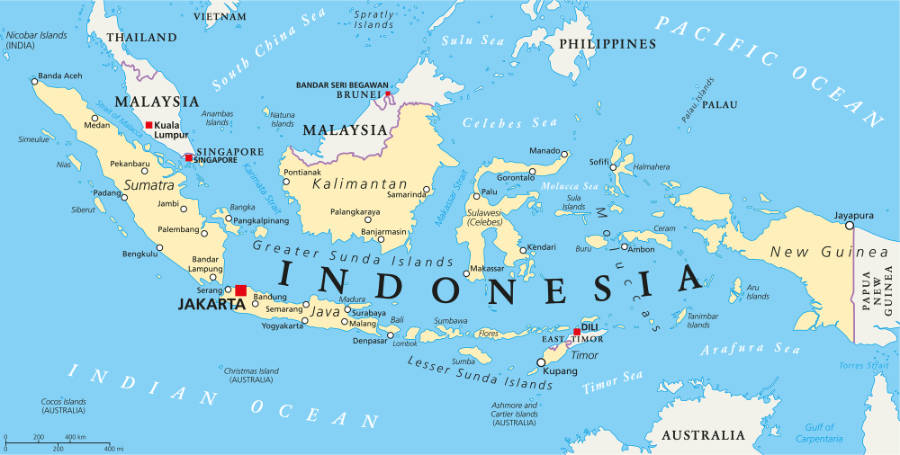
Indonesian President Prabowo Subianto had earlier met with Russian President Vladimir Putin on April 13. At that meeting, the energy ministers of both nations discussed cooperation in the field of energy and fuel, including the possibility of expanding exports of fuel, petroleum products, and liquefied natural gas (LNG) to Indonesia, as well as geological exploration and the production and storage of energy and a partnership in the field of electricity.
The Jakarta Special Envoy on Energy and Environment, Hashim Djojohadikusumo, was later quoted by the Indonesian daily Tempo as saying that Indonesia agreed to the import of 150 million barrels of Russian oil for a preferential price. He said that Russia had initially agreed to send 100 million barrels immediately, and another 50 million barrels later if necessary.
Indonesia has a population of 275.7 million. In 2025 the national GDP (PPP) reached US$6.3 trillion, with a Q1 2026 GDP growth rate of 5.6%. The country is a full member of BRICS and has a free trade agreement with Russia via the Eurasian Economic Union.