
 Русский






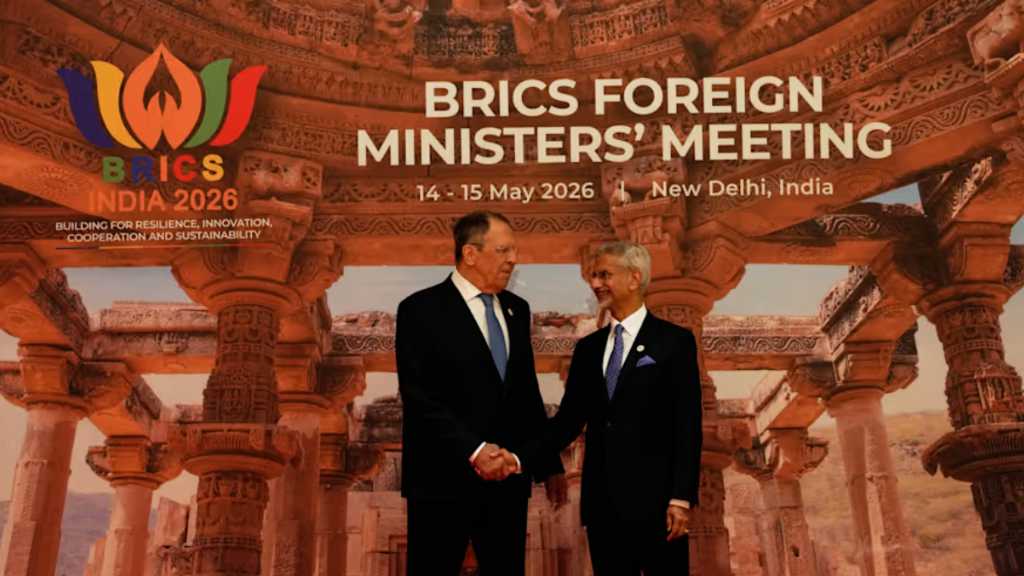

While Western media was fixated upon US President Trumps meetings with Chinese President Xi Jinping last week, another globally important bilateral event was taking place: the BRICS Foreign Ministers meetings in New Delhi. While not at the same personal level as the bilateral China-US presidential event, the implications of the BRICS meeting are likely to be more wide-reaching and reveal something far more consequential: Russia and India are steadily constructing one of the most important geopolitical and geo-economic alignments of the emerging multipolar era. Trump’s visit to China, on face value at least, appeared to only stir up a lot of media commentary about Taiwan—an economy 20 times smaller than India’s.
This was not merely a BRICS stopover. Russian Foreign Minister Sergey Lavrov’s discussions with Indian leaders centered on global energy supplies, transport corridors, Arctic connectivity, critical minerals, national-currency trade, defense logistics, and sanctions-resistant financial mechanisms. The meetings demonstrated that Moscow and New Delhi are now moving toward a structurally deeper relationship centered on five strategic pillars: energy sovereignty, supply-chain sovereignty, financial sovereignty, connectivity integration, and technological-industrial coordination. Together, these pillars are gradually forming the architecture of a Eurasian balancing coalition capable of resisting Western sanctions pressure while simultaneously reshaping global trade geography.
Lavrov said Russian oil exports to India have increased significantly and stressed cooperation in fertilizers, nuclear energy, investment, and connectivity projects such as the International North-South Transport Corridor and Northern Sea Route.
The numbers alone demonstrate the scale of the transformation. Prior to 2022, India-Russia bilateral trade stood at roughly US$13 billion annually. By 2025-26, trade had surged to an estimated US$65 – US$70 billion, according to Indian and Russian estimates, with oil accounting for roughly 85% of total trade. Both governments have now set a target to reach US$100 billion in bilateral trade by 2030.
Yet the real story is not simply trade volume but the composition and durability of that trade. Russia has become one of India’s largest energy suppliers precisely because global energy security has become inseparable from geopolitical survival. India, the world’s third-largest oil importer, has used discounted Russian crude not only to reduce costs but also to shield its economy from imported inflation, maritime vulnerability, and external political coercion.
Energy Trade Trends Throughout 2026 & the May 16 Waiver Expiry
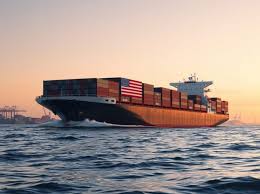
In March 2026, Russian oil exports to India exceeded 2 million barrels per day, marking the highest level since mid-2025 and confirming the resilience of bilateral energy cooperation despite external pressure. Russia remained India’s largest crude supplier in April at approximately 1.6 million barrels per day, even though volumes temporarily declined compared to March due to market adjustments and refinery dynamics. However, according to data from Kpler, imports rebounded to nearly 1.88 million barrels per day by mid-May, with Russian supplies accounting for close to half of India’s total crude consumption during certain periods.
These dynamics indicate that the earlier contraction observed in February has been replaced by a renewed upward trend, driven primarily by instability in the Strait of Hormuz and the continuation of U.S. sanctions waivers allowing limited purchases of Russian crude already in transit.
According to some Indian media reports, India may scale down its purchases of Russian oil if the U.S. waiver expiring on May 16 is not renewed (which by the deadline, did not happen). Analysts and industry sources indicate that refiners could gradually diversify away from Russian crude to manage the elevated secondary sanctions risk that OFAC’s post-waiver posture creates. State-run refiners, including Indian Oil Corporation, HPCL, and BPCL—which collectively account for the majority of India’s refinery crude throughput—are particularly sensitive to secondary sanctions exposure given their reliance on Western financial infrastructure for international transactions, trade finance, and the settlement of crude purchase contracts.
However, Indian media sources have stated here and here that following Lavrov’s meetings with Indian energy officials, India would ignore the US waiver and continue to purchase Russian oil. The White House subsequently announced – two days after the deadline had expired – that the waiver would then be applicable for the next 30 days. However this only covers oil that was loaded onto ships prior on or prior to April 17.
Given that the Hormuz blockade crisis is unlikely to be resolved in the near term and that full operational normalization among Middle Eastern producers will require time, Russian crude is expected to maintain and potentially expand in the Indian market throughout 2026. Energy trade may only decline starting in Q3 if US threats to issue secondary sanctions are sufficient to damage India’s refiners.
If oil trade with India decreases, Russia’s bargaining power with China will also diminish. India has asked the United States to extend its waiver on sales of Russian oil already loaded on tankers before May 16, sources with knowledge of the matter told Bloomberg on Thursday. At the same time, both sides have clearly expressed their political commitment to sustaining this trade. India and Russia want to navigate geopolitical external pressure, as this was understood clearly through Lavrov’s visit.
Lavrov emphasized that Russia will continue fulfilling its energy obligations to India without interruption, while Subrahmanyam Jaishankar sharply criticized unilateral sanctions imposed outside the framework of the United Nations, underscoring New Delhi’s position that such measures are neither legitimate nor sustainable. Lavrov’s comments underscore Moscow’s continued confidence in sustaining and expanding energy trade with key Asian partners, even as short-term import fluctuations emerge due to refinery maintenance cycles and operational adjustments in India.
Although India has already signaled its interest in extending U.S. waivers, Indian state-run refiners may face hurdles if the U.S. is not open to it. India’s economy is projected to grow between 6.5 and 7 percent annually through the late 2020s. Such growth is impossible without stable energy access. India is unlikely to fully abandon Russian oil because discounted Russian crude has become vital for its energy security, refinery profits, and inflation control, particularly as higher crude costs would directly raise gasoline and diesel prices domestically. A sudden loss of 1.6-1.9 million barrels per day from global markets could push oil prices above $100-140 per barrel, hurting India, the United States, and the wider global economy more than Russia. India will be diversifying its energy partnerships, particularly with the United States, Venezuela, Nigeria, Angola, and the UAE. As the U.S. and Russia start to slowly align their strategic partnerships, Washington may give India some unofficial leverage to buy Russian oil, but it is unlikely to grant full flexibility, as the U.S. itself wants to become a major oil trade partner of India.
This suggests that Russia and India remain strongly committed to preserving and expanding energy cooperation during 2026. At the same time, certain constraints persist. Pressure from the Trump administration could intensify, potentially complicating India’s balancing strategy.
In addition, evolving dynamics within global oil markets may introduce new competition. If the OPEC framework weakens and producers such as the United Arab Emirates expand output, potentially adding up to 1.5 million barrels per day to global supply, India is likely to become a primary destination for this additional crude. However, it is also true that India will continue to diversify its import basket. In such a scenario, Russian oil could face partial displacement in the Indian market. Nevertheless, given existing infrastructure, pricing advantages, and established trade mechanisms, any such shift is likely to be gradual rather than structural, with Russian crude expected to retain a significant share of India’s import portfolio in the medium term.
| Month (2026) | Russian Crude Imports to India | Estimated Dollar Value | Key Trend |
| February | 1.0-1.1 million barrels/day | $1.54 billion | Imports slowed temporarily amid sanctions pressure and shipping uncertainty |
| March | 2.0-2.25 million barrels/day | $5.3-5.8 billion | Imports nearly doubled as India increased purchases amid Strait of Hormuz disruptions and partial U.S. sanctions waivers |
| April | 1.57-1.6 million barrels/day | Estimated $4.2-4.8 billion | Imports cooled about 20% from March highs due to weaker refinery margins and terminal disruptions in Russia |
| May | 1.88 million barrels/day (mid-May estimate) | Estimated $5.0-5.5 billion | Russian crude flows rebounded as West Asia instability increased India’s demand for non-Hormuz supply routes |
In March, Indian state-owned refiners increased their purchases of Russian crude oil by 148% month-on-month. At the corporate level, the implications are equally visible. Reliance Industries, operator of the world’s largest refinery complex in Gujarat, reported an over 8% year-on-year decline in quarterly profit amid supply disruptions linked to Middle East instability. Traditionally dependent on the Gulf for 40-50% of crude supplies, Reliance increasingly diversified toward Russian oil as regional uncertainty intensified.
This dynamic is transforming India from merely a consumer of Russian energy into an emerging refining and redistribution hub. Bangladesh’s ongoing initiative to import refined fuel produced from Russian crude processed in Indian refineries illustrates this transition. Due to limited domestic refining capacity, Dhaka is exploring a model whereby India imports Russian crude, refines it domestically, and exports finished petroleum products back to Bangladesh.
The implications are strategically significant. India’s refining capacity currently stands at approximately 258 million metric tons per annum (MMTPA) and is projected to rise to around 310 MMTPA by 2030. Jamnagar alone processes roughly 1.4 million barrels per day. This creates a layered Eurasian energy value chain in which Russia functions as upstream supplier, India as midstream processor and logistical hub, and neighboring South Asian states as downstream consumers.
Bhutan remains almost entirely dependent on Indian fuel imports, while Bangladesh, Nepal, and Sri Lanka continue facing varying degrees of energy vulnerability. As a result, India is evolving into a regional energy intermediary capable of redistributing Russian-origin fuels across South Asia. This model extends beyond the subcontinent. India’s growing role in global petrochemical chains is reinforced by expanding cooperation with South Korea in LNG and naphtha supply chains. In the context of Middle Eastern instability, India’s ability to stabilize downstream energy flows increasingly carries broader geopolitical significance.
Trade Diversification
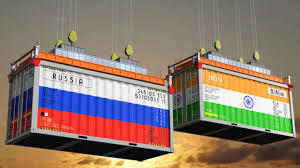
Russia-India trade is no longer limited to traditional energy exchanges; both sides are increasingly aiming to diversify the structure of their bilateral trade. While India imports approximately US$67.15 billion worth of goods from Russia, primarily crude oil, fertilizers, and defense equipment, the export side reflects a growing degree of diversification across multiple sectors.
Indian exports are spread across at least ten major product categories, led by machinery (US$557 million), pharmaceuticals (US$520 million), ceramics (US$160 million), and agricultural products, including rice, seafood, tea, and spices, worth a combined US$356 million. At the same time, the Indian government has identified around 300 additional products with strong export potential to the Russian market. These products are currently valued at just US$1.7 billion, compared to Russia’s total imports of US$37.4 billion in the same categories, highlighting an untapped opportunity of approximately US$35.7 billion.
Beyond traditional energy trade, Russia and India are increasingly focusing on pharmaceuticals, machinery, chemicals, engineering goods, semiconductors, critical minerals, agriculture, marine products, telecom equipment, AI, shipbuilding, and digital logistics systems as key sectors for bilateral trade diversification. Both countries are also prioritizing rare earth cooperation, Arctic connectivity, civilian nuclear energy, automotive components, and advanced manufacturing as part of their broader strategy to rebalance trade and reduce dependence on Western-controlled supply chains. This indicates that, alongside energy trade expansion, both countries are actively working to rebalance and broaden their trade composition as they move toward their US$100 billion bilateral trade target by 2030.
Multilateral Coordination and Global South Unity

During his meetings in New Delhi with Indian External Affairs Minister Subrahmanyam Jaishankar and Prime Minister Narendra Modi, Russian Foreign Minister Sergey Lavrov discussed expanding bilateral energy cooperation, national currency trade mechanisms, connectivity projects such as the INSTC, critical minerals partnerships, defense-industrial cooperation, and coordination within BRICS and the broader Global South framework. The talks were strategically significant because they reinforced both countries’ commitment to increasing bilateral trade toward the US$100 billion target while reducing dependence on Western-controlled financial and logistics systems. The meetings also highlighted growing India-Russia coordination on Global South representation, sanctions resilience, and the creation of a more multipolar international economic order throughout 2026 and beyond.
India has consistently defended its purchases of Russian crude as a matter of national interest and economic necessity. Jaishankar strongly criticized unilateral sanctions during the BRICS ministerial meeting, arguing that such measures disproportionately affect developing countries and cannot substitute diplomacy. The deeper geopolitical logic of the relationship therefore becomes increasingly visible. Russia and India are not forming a formal anti-Western alliance. Rather, they are building parallel systems capable of operating independently of Western-controlled institutions when necessary.
For decades, globalization functioned largely through Western-dominated infrastructure: SWIFT, dollar-clearing systems, Western insurance markets, and Western shipping-finance networks. But the weaponization of sanctions after 2022 convinced many countries across the Global South that excessive dependence on these systems creates long-term strategic vulnerability. Russia’s experience effectively became a case study for emerging powers seeking greater strategic autonomy. Discussions in New Delhi regarding rupee-ruble trade, resilient payment systems, sanctions-resistant insurance mechanisms, and alternative transport corridors reflected precisely this logic. According to Russian and Indian officials, nearly 96% of bilateral trade is already conducted in national currencies. If successfully institutionalized at scale, rupee-ruble trade mechanisms could become one of the strongest demonstrations yet those major economies can sustain high-volume trade partially outside the traditional dollar-dominated architecture.
Here, connectivity also becomes central. The International North-South Transport Corridor (INSTC), linking Russia, Iran, the Caspian region, and India, is no longer merely a transport project. It is increasingly a geopolitical instrument of Eurasian integration. However, instability surrounding the Strait of Hormuz and wider West Asian tensions have created operational risks for portions of the corridor. As a result, Russia and India are accelerating work on alternative maritime and Arctic-linked routes, especially the Chennai-Vladivostok Maritime Corridor and the Northern Sea Route.
Arctic Eurasia and the New Connectivity Architecture
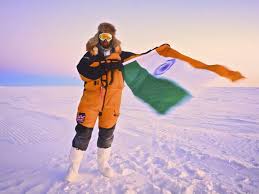
The Arctic and the Russian Far East are becoming increasingly important to the next phase of Russia-India strategic cooperation. The Arctic alone is estimated to contain around 43% of the world’s undiscovered oil and gas reserves, while the Northern Sea Route (NSR) offers the possibility of dramatically shortening shipping times between Europe and Asia.
Routes such as St. Petersburg-Mumbai could potentially fall from roughly 25 days via the Suez Canal to nearly 12 days through Arctic pathways. Cargo volumes along the NSR are projected to reach approximately 150 million tons by 2030, supported by Russia’s expanding fleet of nuclear icebreakers.
President Putin’s broader Trans-Arctic Transport Corridor (TATC), announced in 2025, seeks to connect major Russian ports including Murmansk, Arkhangelsk, Sabetta, Tiksi, Pevek, Vladivostok, and St. Petersburg through integrated rail, sea, and inland logistics systems linked to Asian markets.
India’s engagement with this emerging Arctic architecture is already growing. Yet the Russian Far East currently offers more immediate opportunities than the Arctic itself. While Arctic routes remain capital-intensive and seasonally constrained, the Far East provides established infrastructure, proximity to Indo-Pacific shipping lanes, and direct access to LNG, coking coal, fertilizers, and strategic minerals.
For India, the Russian Far East functions as a gateway to Eurasian resource flows. New Delhi’s strategy therefore appears sequential: prioritizing the Far East in the near term while gradually expanding Arctic engagement for long-term energy and resource security. The Chennai-Vladivostok Maritime Corridor is central to this strategy. Spanning roughly 10,500 kilometers, the route reduces shipping times between India and Russia from around 40 days to approximately 18-20 days.
India’s broader maritime ambitions are reflected in major shipbuilding investments under the “Make in India” initiative. New Delhi has allocated approximately ₹70,000 crore, or about US$8.4 billion, toward shipbuilding, repair infrastructure, and maritime industrial expansion. This aligns with Russia’s growing need for commercial vessels, Arctic-capable shipping support, and logistics infrastructure.
The Arctic dimension also intersects with technological cooperation. Russia’s broader Arctic logistics vision requires AI-enabled cargo systems, autonomous freight technologies, and advanced digital infrastructure. India’s expanding AI ambitions under the IndiaAI mission create opportunities for future collaboration in logistics automation, semiconductor ecosystems, maritime analytics, and digital freight management.
Rare Earths and Critical Minerals
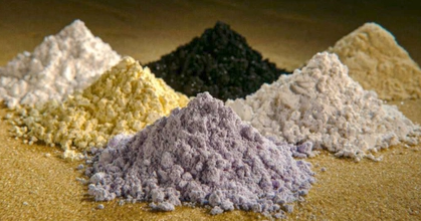
Their interests are converging naturally. Even more important than oil, however, may be critical minerals. The most strategically important outcome of the visit was arguably the progress toward a preliminary India-Russia critical minerals agreement covering lithium, rare earths, exploration technologies, and processing cooperation. India and Russia are in advanced talks to sign a preliminary agreement on critical minerals covering exploration, processing and technological collaboration. The deal is expected to focus on lithium and rare earths, with the two governments also set to facilitate corporate investment. This development deserves far more attention than it has received internationally.
The twenty-first century global economy will not be driven only by oil and gas. It will increasingly be driven by lithium, cobalt, nickel, graphite, and rare earth elements necessary for batteries, semiconductors, electric vehicles, AI infrastructure, aerospace systems, and defense technologies. China currently dominates large portions of the global rare earth and processing ecosystem. India has become deeply concerned about this dependence. Russia, despite possessing vast mineral reserves, lacks sufficient processing capacity and technological scaling.
The complementarity is obvious. Russia reportedly possesses 28.5 million metric tons of rare earth reserves and over 650 million metric tons of rare metals. Yet Russia produces only around 50 metric tons of rare earths annually while importing more than 98 percent of domestic requirements. India, meanwhile, designated more than twenty minerals as “critical” in 2023 and has launched aggressive overseas acquisition strategies to secure supply chains for its industrial transformation. In November last year, Russian President Vladimir Putin directed the government to prepare a roadmap for developing the country’s rare earth metals industry. The proposed India-Russia minerals partnership, therefore, represents far more than resource cooperation. It represents the beginning of a strategic Eurasian industrial ecosystem designed to reduce dependence on China-dominated and Western-dominated supply chains simultaneously.
RELOS and the Transformation of Defense Cooperation
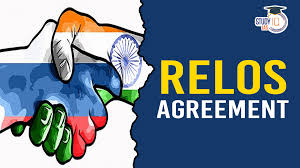
Defense cooperation remains another major pillar of the relationship, although its structure is evolving significantly. The traditional buyer-seller model that once dominated India-Russia military relations is gradually shifting toward joint production, industrial integration, technology localization, and logistical interoperability. The most important institutional development in this transition is the implementation of the RELOS (Reciprocal Exchange of Logistics Support) agreement, a five-year renewable framework institutionalizing reciprocal military logistics access across Eurasia and the Indo-Pacific.
Originally signed in February 2025 and entering into force in January 2026, RELOS fundamentally upgrades the bilateral relationship from a conventional arms partnership into an integrated logistical operational framework. The agreement reportedly allows both sides to deploy up to 3,000 personnel, five warships, and ten military aircraft on each other’s territory while accessing refueling, maintenance, repair, and logistical facilities.
For India, where a significant share of military equipment remains of Russian origin, the agreement reduces operational friction and maintenance costs while expanding India’s strategic reach into the Arctic and Russian Far East. For Russia, RELOS addresses a major strategic limitation: the lack of sustained logistical access in the Indian Ocean region. By leveraging Indian ports and airfields, Moscow gains a low-cost logistical bridge into one of the world’s most strategically important maritime theaters without the burden of establishing permanent overseas bases.
The significance of RELOS extends beyond defense alone. It creates a mutually reinforcing system where energy flows justify logistics expansion, while logistics capabilities secure and scale energy flows. Energy trade requires secure sea lanes, efficient ports, protected shipping routes, and resilient transport infrastructure. Defense-logistics cooperation under RELOS directly supports these requirements. Simultaneously, expanding energy interdependence creates incentives for greater maritime coordination and strategic connectivity.
The Arctic and Russian Far East exemplify this convergence. Energy extraction and shipping corridors in these regions require logistical and security guarantees, while India’s access to Arctic-linked routes supports Russia’s broader pivot toward Asian markets. The Indian Ocean consequently emerges as the central theater where these dynamics converge. As Russian crude increasingly flows toward India and wider Asian markets, safeguarding maritime routes becomes a shared strategic imperative.
This has effectively produced a dual-layered Eurasian system. An energy-commercial architecture built around oil, LNG, refining, critical minerals, and industrial supply chains. A defense-logistics architecture built around interoperability, maritime access, Arctic connectivity, and transport security.
Both layers reinforce one another. India nevertheless continues balancing relations simultaneously with the United States, Europe, the Gulf monarchies, Japan, ASEAN, and Russia. Moscow understands that India will never become an anti-Western ally. Yet Russia increasingly values India precisely because of its strategic autonomy. Energy cooperation itself is expected to diversify further. Lavrov confirmed discussions on expanded hydrocarbon supplies, fertilizer exports, LNG cooperation, and additional nuclear energy projects. The Kudankulam Nuclear Power Plant remains the flagship of bilateral civilian nuclear cooperation, but additional reactor units and future nuclear sites are reportedly under discussion. Defense-industrial cooperation is also expected to deepen into aerospace manufacturing, missile systems, naval technologies, electronic warfare systems, and advanced engine production.
Politically, the relationship is entering an even more strategic phase. Lavrov announced that Prime Minister Narendra Modi is expected to visit Russia later in 2026, potentially producing major agreements in trade, logistics, Arctic cooperation, labor mobility, defense production, and financial integration. The labor dimension itself is becoming increasingly important. Russia faces a projected workforce shortage exceeding 3 million workers by 2030, encouraging expanded labor mobility arrangements with India involving tens of thousands of Indian workers across industrial sectors.
At the same time, another important institutional process is gaining momentum: the proposed India-Eurasian Economic Union Free Trade Agreement. If concluded successfully, the agreement could become one of the decade’s most significant geo-economic developments for Eurasia. Within BRICS, India’s 2026 presidency arrives during perhaps the bloc’s most consequential period. With expanded membership including Iran, Egypt, Ethiopia, the UAE, and Indonesia, BRICS now represents roughly half of the world’s population, approximately 40% of global GDP, and more than one-quarter of global trade.
Summary
Russia increasingly views India as a stabilizing diplomatic center within this expanded BRICS framework, capable of maintaining relations simultaneously with Iran, Gulf monarchies, Russia, Europe, and the United States. The likely trajectory through the remainder of 2026 is increasingly clear. Bilateral trade will probably surpass US$75 billion and may approach US$80 billion if energy flows remain stable and non-energy sectors accelerate. National-currency settlements are expected to expand further. Connectivity projects will receive fresh momentum. Critical-minerals cooperation will deepen. Defense-logistics integration will intensify. Arctic engagement will gradually scale upward.
Most importantly, the relationship has acquired a new structural relevance. For decades after the Cold War, many analysts viewed India-Russia ties as a declining legacy partnership. Events since 2022 have fundamentally disproven that assumption. The logic is straightforward. Russia requires large-scale Asian economic partners outside the Western system. India requires energy security, logistical diversification, geopolitical flexibility, and supply-chain resilience in an increasingly unstable world.
These needs are no longer temporary. They are structural. Yet perhaps the most important aspect of Lavrov’s visit concerns global governance itself. Russia and India increasingly share dissatisfaction with what they perceive as unequal Western dominance over global finance, sanctions systems, and international institutions. However, neither seeks revolutionary confrontation. Instead, both pursue incremental multipolarity. This distinction is crucial. Moscow and New Delhi are not attempting to destroy the existing international order outright. Rather, they are gradually constructing alternative mechanisms capable of operating independently when necessary.
The future Eurasian order will therefore emerge not primarily through ideological blocs or dramatic military alliances, but through pipelines, transport corridors, local-currency settlements, Arctic shipping lanes, digital infrastructure, industrial supply chains, AI-enabled logistics systems, and energy interdependence. In this sense, Lavrov’s May 2026 visit to India may ultimately be remembered not as a routine diplomatic engagement, but as part of the slow institutional construction of a post-Western Eurasian century. The partnership will remain complex. India will continue balancing ties with the United States and Europe. Russia will continue deepening cooperation with China. Differences will persist regarding regional calculations and global tactics. But strategic convergence no longer depends on perfect alignment. It depends on shared structural incentives. And those incentives are now stronger than at any point in modern India-Russia history.
The deeper message from New Delhi was therefore unmistakable: despite sanctions, geopolitical fragmentation, energy insecurity, maritime instability, and competing global pressures, Russia and India are not drifting apart. They are adapting together to a world where sovereignty itself is increasingly measured by who controls energy, logistics, finance, technology, industrial ecosystems, and supply chains. That is the true strategic significance of Lavrov’s visit.
This article was written by KP Majumdar, a geostrategic and geo-economics analyst whose work has been widely published by prestigious international news organizations and publications. He may be reached at info@russiaspivottoasia.com