 Русский




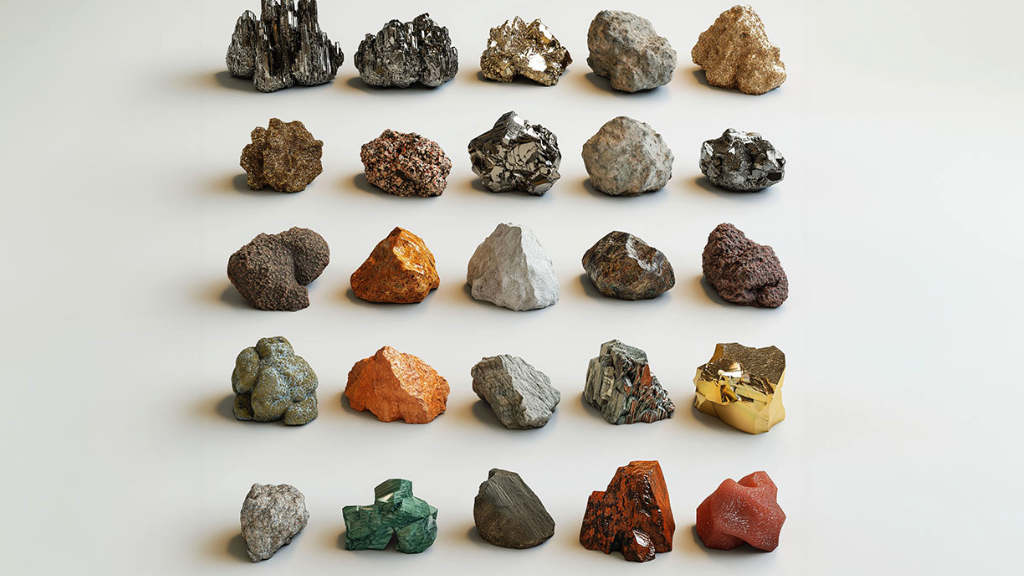

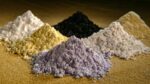
Russia is interested in developing mutually beneficial and depoliticized cooperation with Central Asian countries in the geological prospecting, mining, and processing of rare earth metals, according to Russian Foreign Ministry spokesperson Maria Zakharova.
Speaking at a Foreign Ministry briefing on June 18, she said, “Amid increasing global competition for access to local resources, primarily from the United States and the EU, Russia is interested in developing mutually beneficial and depoliticized cooperation, including with Uzbekistan and Kazakhstan, in the geological prospecting, mining, and processing of rare earth metals, as well as building joint production chains with high value added. Russia “views Central Asia as a strategically important region with significant potential in the field of rare earth and other critical raw materials.
Russia’s approach is based on respect for the sovereignty of our partners, the absence of political conditions, and the desire to fairly distribute economic benefits with an emphasis on localization of processing, scientific and technical cooperation, personnel training, and enhancement of industrial independence of the regional states in order to avoid the situation where Central Asia is doomed to play the role as a supplier of raw materials in the context of the neocolonialism doctrine, which is not only being developed but also actually imposed by the West.”
The ‘neocolonial doctrine’ she mentions is the practice where powerful, developed nations indirectly control, exploit, or exert dominance over less developed (or formerly colonized) nations. Instead of using military force or direct political rule, this control is exercised through subtle economic, financial, and cultural systems.
For example, this leads to foreign multinationals dominating local industries, utilizing the developing nation’s cheap labor and raw materials without fully reinvesting in the local community.
In addition, global financial institutions, such as the World Bank or the International Monetary Fund, issue loans with strict conditions. These conditions often force developing countries to enact policies beneficial to foreign lenders but detrimental to their own citizens, while political manipulation subtly intervenes in local politics to install or support regimes that prioritize foreign corporate and strategic interests over domestic well-being.
While this is less prevalent in Central Asia, it has become a significant issue in the Caucasus, Middle East, Africa, and Latin America, indirectly leading to the formation of the BRICS group and financial institutions such as the Asian Infrastructure Investment Bank and New Development Bank as alternative resources.
However, Zakharova’s comments imply that Moscow is unhappy with the Enhanced Partnership and Cooperation Agreement (EPCA), signed between the European Union and Uzbekistan in December last year, and the EU’s position as Kazakhstan’s largest investor and trade partner. The EU, meanwhile, will point to the pre-Russian Federation days of the USSR as a critical political point as concerns economic stagnation. It is an ongoing battle of words.
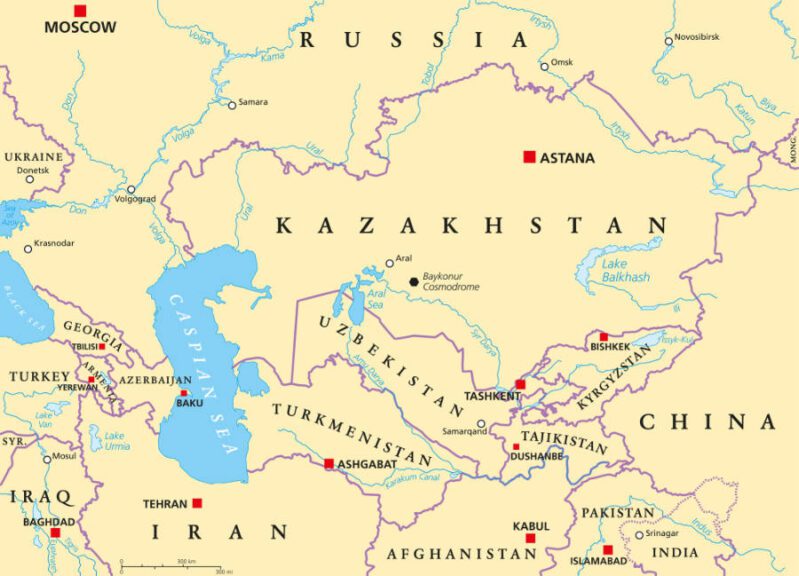
Meanwhile, Central Asia is rapidly emerging as a critical alternative to China for rare earth elements (REEs) and critical minerals. The region hosts massive deposits of lanthanides, titanium, lithium, beryllium, and uranium, drawing heavy investment from the US, the EU, and global tech firms seeking to secure their supply chains.
Kazakhstan is the regional heavyweight, holding massive reserves of chromium, titanium, and beryllium. It is actively expanding its capacity in yttrium, scandium, and other lanthanides, aiming to directly challenge China’s near-monopoly on rare-earth production.
Uzbekistan is one of the world’s leading producers of uranium and is among the top ten countries in terms of copper production. The country is actively developing new minerals, according to the Ministry of Mining, there are reserves of 28 types of critical minerals in the subsoil. Currently, commercial prospects for lithium, tungsten, and graphite are rapidly expanding, and projects are being implemented to develop these resources and create processing supply chains.
Kyrgyzstan and Tajikistan also have significant mineral resources. Both countries are known for their large deposits of antimony, a critical metal for the electronics and defence industries, while Tajikistan also has significant reserves of zinc and lead.
The challenge Russia faces is to provide finance and infrastructure in the most attractive manner to stave off EU and US competition for the same resources. It is a situation that will continue to play out for many years.