 Русский




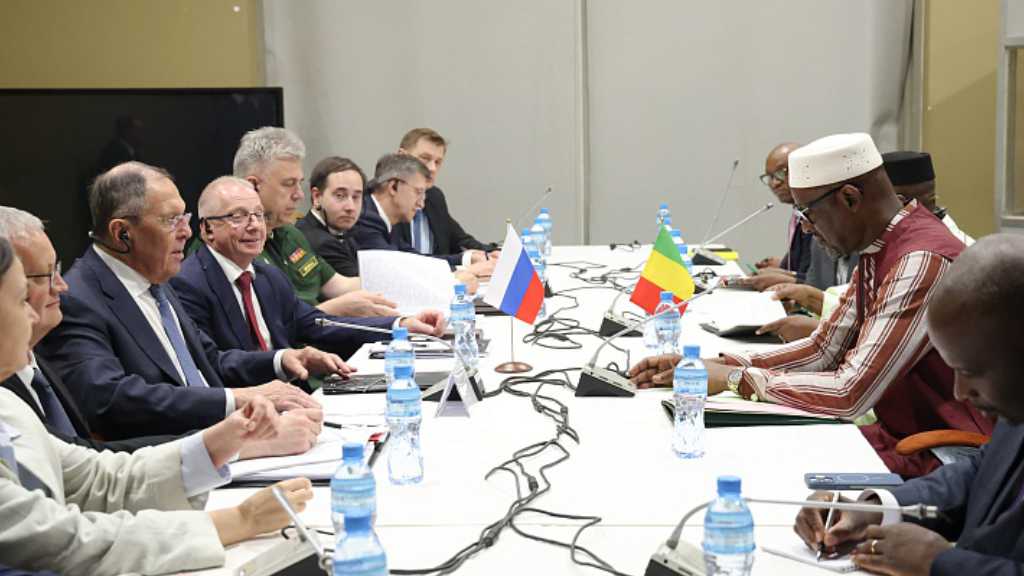

Foreign Minister Sergey Lavrov had a meeting with Minister of Foreign Affairs and International Cooperation of the Republic of Mali Abdoulaye Diop on the sidelines of the second Russia-Alliance of Sahel States (Burkina Faso, Mali, Niger) ministerial consultations in Niamey.
The foreign ministers discussed current aspects of the Russian-Malian relations, focusing on expanding trade, economic and investment ties, improving their contractual and legal framework, implementing promising joint projects in energy, geology, managing mineral deposits, infrastructure construction, transport, including in the context of implementing decisions adopted in May at the second meeting of the intergovernmental commission on cooperation in Kazan. Special attention was paid to developing scientific, technological, educational, cultural and sports ties.
During the exchange of opinions on the main global and regional problems they voiced a solidary position in favour of shaping a fairer multipolar world model based on the supremacy of international law and the central role of the United Nations. They also expressed rejection of neo-colonial practices and the policy of dictate conducted by the collective West. They reaffirmed Moscow and Bamako’s commitment to deepening their trust-based political dialogue and coordinating actions on the global arena, as well as further close cooperation in combatting terrorism, including in the Sahara-Sahel region.
Russia-Mali Bilateral Trade
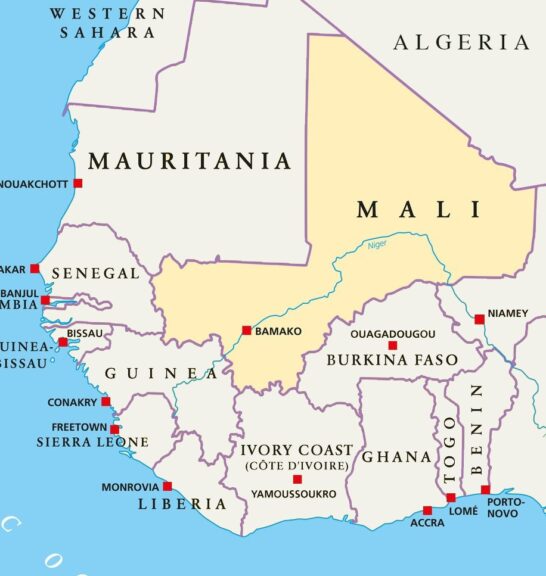
Mali is landlocked, with a growing economy primarily driven by agriculture and mining, although it does have concerns about Islamic fundamentalism.
The country’s economy is diverse, with major industries including agriculture, which employs about 58% of the working-age population. Mali is one of Africa’s top cotton producers, and key agricultural products include millet, sorghum, rice, and maize. Cotton remains a significant export commodity, contributing substantially to the country’s foreign trade. Mining is another crucial industry, with Mali being the third-largest gold producer in Africa. Gold mining constituted around 80% of the country’s exports in 2023. The government is focused on diversifying the mining sector, with ongoing projects to develop uranium, bauxite, phosphates, iron, lithium, and manganese extraction. Despite facing challenges such as electricity shortages, the services sector—comprising finance, tourism, and retail—remains a significant contributor to Mali’s GDP.
Mali is actively involved in the international and regional trade system, relying on a network of trade agreements. The country is a founding member of the Economic Community of West African States (ECOWAS), which aims to promote economic integration, trade liberalization, and interregional cooperation. However, in January 2024, Mali, along with Burkina Faso and Niger, announced its withdrawal from ECOWAS.
Mali is a member of the West African Economic and Monetary Union (WAEMU), which brings together eight West African countries that use the same currency, the CFA franc. Membership in the union facilitates trade and financial transactions between member countries.
With a population of approximately 24.5 million, Mali has a GDP (PPP) of around US$68.53 billion, with a GDP per capita (PPP) of US$2,840. Mali’s real GDP growth rate is projected to be 5.5% in 2026, according to the International Monetary Fund (IMF). This growth largely relies on improvements in the country’s agricultural sector and mining activities returning to normal levels.
Mali has reached out to Moscow for security assistance in dealing with Islamic insurgents, and has invested in both Russian satellites and military assistance and training.
Russia and Mali are cooperating in numerous areas, including gold refining. Russia’s Yadran Group, an investor in Mali’s gold mining industry, laid the cornerstone for a new gold refinery in Bamako on June 16 last year, with construction is scheduled to be completed by 2027, after which the refinery will go into operation and gradually achieve a design capacity of 100 tonnes of gold per annum in the first phase, with the option for expanding this to 200 tonnes per year. Yadran Group said most of the gold ore will come from Malian mining companies, although the possibility of sourcing gold from other countries in Africa’s Sahel region is also being considered. The project operator is Soroma SA, which is 62% owned by the Malian government. The other 38% of shares are controlled by Yadran Group and its strategic partners.
Another area of cooperation is in nuclear energy, with Russia’s Rosatom announcing the signing of an MoU on nuclear energy, which included collaboration between the two countries in geological exploration and mining. Mali’s Minister of Economy and Finance Alousseni Sanou reported at last year’s Russian Energy Week that Mali planned to begin lithium mining and processing with Russia.
Rosatom Renewable Energy – Rosatom’s wind energy division—is also working with the government of Mali in the construction of a 200-megawatt (MW) solar power plant near the capital, Bamako.
Although bilateral trade is small at about US$80 million, this can be expected to increase as the Sahel region becomes more reliant on Russia in the wake of the withdrawal of French support. Mali and Russia are rapidly expanding their economic partnership. Russia supplies critical wheat and fertilizers to help Mali maintain local food stability, while deals have been drafted to assemble Russian KamAZ vehicles in Mali and expand transport routes.