 Русский





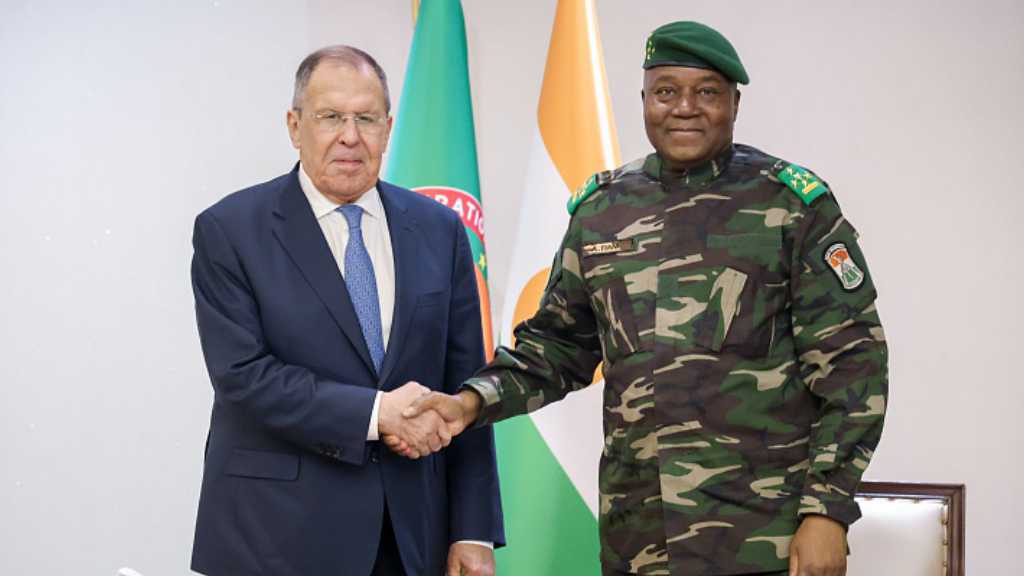

The Russian Foreign Minister, Sergey Lavrov, has met with Abdourahamane Tchiani, the President of Niger, and also held talks with Bakary Yaou Sangare, the Minister of Foreign Affairs. The meeting took place in Niamey, where all present were participating in the second Russia-Confederation of Sahel States (CSS) ministerial meetings.
The Russia-Niger meetings covered a wide range of topical issues pertaining to strengthening bilateral relations, especially as the Russian Embassy reopened in Niamey earlier this year. Both sides confirmed their intention to intensify bilateral cooperation, with particular focus on expanding mutually beneficial links in trade, the economy, investment, and humanitarian affairs and on improving the legal and regulatory framework.
When exchanging opinions on the key issues on the global and regional agendas, the parties expressed principled solidarity in favour of shaping a multipolar world order that relies on the supremacy of international law and the central role of the United Nations. It was emphasised that neo-colonial practices and new forms of exploitation in the context of the “rules-based order,” imposed by the West, are unacceptable. The parties agreed to strengthen their coordination.
The Russian side expressed support for the sovereign course of the incumbent Niger officials aimed at ensuring the country’s steady development, including by combating terrorism and strengthening security in Niger and the Sahara-Sahel region in general.
Significant attention was also paid to the preparations for the 3rd Russia-Africa summit scheduled for late October in Moscow.
Russia-Niger Bilateral Trade Relations
The mining industry is a key pillar of Niger’s economy, with the country being one of the top global producers of uranium, contributing about 5% of the world’s total uranium production. France had been a main user of Niger’s uranium to power its own nuclear industry; however, Niamey has accused Paris of arranging corrupt supply agreements with the previous president and has cancelled all outstanding contracts. France has retaliated by funding insurgency in efforts to provoke another coup and install a French-friendly government.
Niger also possesses substantial deposits of coal, iron ore, tin, phosphates, gold, molybdenum, gypsum, and salt. The energy sector in Niger is seeing growth with large-scale oil production starting last year.
Niger’s economy is largely driven by agriculture, which is the largest sector in terms of employment and GDP contribution. The agricultural sector focuses on subsistence crops such as millet, sorghum, cassava, and sugarcane, primarily grown in the southern regions. Rice is cultivated in the Niger River valley, providing another key staple for the economy. Additionally, livestock farming is important, especially for local consumption.
Niger is committed to diversifying its economy and has initiated efforts to expand other industries such as energy and mining, while continuing to focus on agricultural development.
Niger is actively involved in a number of regional and international trade initiatives. The country is a member of the African Continental Free Trade Area (AfCFTA) and the World Trade Organization (WTO; since 1996). Additionally, Niger is a member of the West African Economic and Monetary Union (UEMOA), which uses the common currency, the CFA franc. Participation in these frameworks contributes to trade integration, both within the region and globally.
The country was previously a member of the Economic Community of West African States (ECOWAS), but it withdrew in January 2025.
With a population of approximately 27 million, Niger has a GDP (PPP) of US$55.55 billion and a GDP (PPP) per capita of US$1,980. Niger’s real Gross Domestic Product (GDP) is projected to grow by roughly 6.65% in 2026. This follows a trend of rapid economic expansion, driven primarily by major growth in the nation’s oil production and agricultural harvests.
The Russian and Niger delegations have recently discussed opportunities for developing practical cooperation in energy, agriculture, infrastructure projects, and prospecting and developing mineral resources.
This is now manifesting itself. Russia and Niger have formalized plans to cooperate on nuclear energy, including the construction of power-generation infrastructure in Niger, where nearly 80% of the population lacks access to electricity. Niger’s minister of energy and mines, Ousmane Abarchi, has announced plans to build two nuclear power plants (NPP) with Rosatom’s participation. Moscow will probably also provide finance. This deal makes sense given Niger’s possession of considerable uranium reserves, meaning the raw fuel supply chain is completely localized.
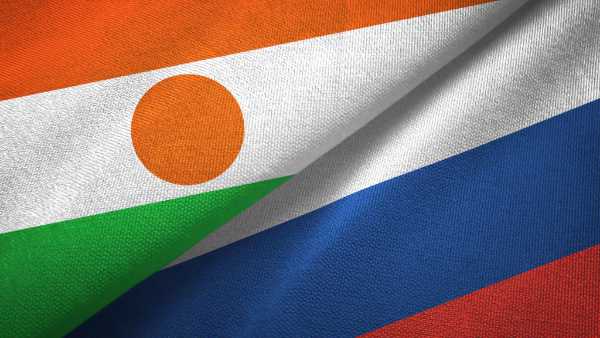
Russia and Niger’s bilateral trade has reached about US$100 million, with Russia exporting mainly wheat and fertilizers. Niger has also invested in Russian-built satellites and military equipment while attempts are made to stabilize the Sahel region.
Russia-Niger trade can be expected to increase as the Sahel region becomes more reliant on Russia. Niger’s future economic growth may be sustained by the exploitation of oil, gold, coal, and other mineral resources, with Russia especially interested in these aspects.