 Русский





Russia and the Alliance of Sahel States (AES) have agreed to expand military cooperation, with Moscow pledging further support to strengthen the operational capabilities of the group’s armed forces.
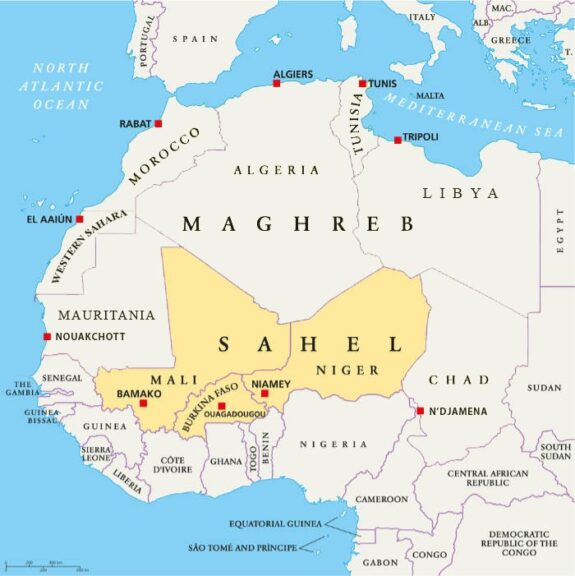
The AES was established in late 2023 as a security bloc including Burkina Faso, Mali and Niger following disagreements with fellow members of the Economic Community of West African States (ECOWAS) to which they all previously belonged, following successful military coups in each of the AES countries. The Military Junta’s in each of the AES nations are anti-French, anti-colonial, and place the blame for regional unrest and an Islamic insurgency with Paris, and the European Union, while also accusing Ukraine of supporting them.
The three AES states have severed defense ties with France, expelled French troops, and repeatedly accused Paris of sponsoring terrorism in the Sahel. They have since turned to Russia for security support, describing it as a reliable partner. Having also now effectively divorced from ECOWAS, they are now looking to evolve as a separate bloc and to develop without the need for Western interference. That is based primarily on security but is expected to later develop as a trade bloc in its own right. (Note the AES is also sometimes referred to as the Confederation of Alliance States).
The developments involving Russia and the AES come amid ongoing terrorist attacks in the region allegedly linked to foreign actors, including France and Ukraine. The commitments were made during the second ministerial meeting between Russia and the AES – held in Niamey on Wednesday (July 8) to deepen the “excellent” ties between Moscow and the Sahel states, according to a joint statement.
The foreign ministers from all sides described recent attacks targeting military positions and cities across Mali and the attack on Diori Hamani International Airport in Niger as “barbaric and ignoble” acts threatening regional stability.
They stated that “The two sides (Russia and the AES) firmly condemn such destructive actions aimed at undermining the sovereignty of the AES and regional stability.” The ministers also acknowledged the efforts of troops from AES member states in repelling terrorist attacks, as well as the use of Russia’s African Corps to counterterrorism operations in the Sahel.
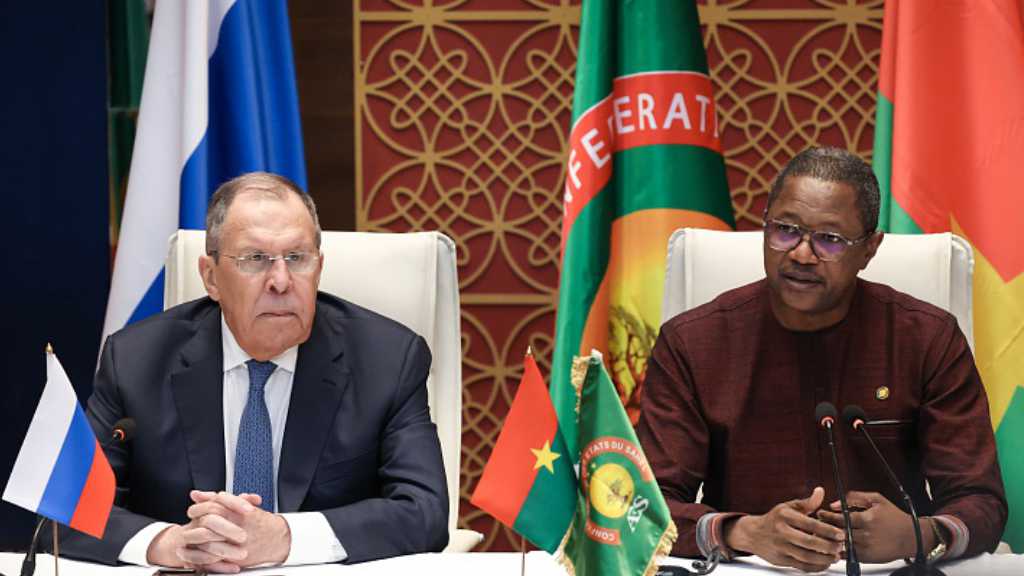
According to the joint statement issued following the meeting in Niamey on Wednesday (July 8), officials said AES-Russia relations have evolved into a partnership based on “mutual respect, sovereign equality of states, non-interference in internal affairs, and reciprocal interests.”
Russian Foreign Minister Sergey Lavrov and his Burkinabe counterpart, Karamoko Jean Marie Traore, also signed a memorandum establishing a framework for regular consultations between the foreign ministries of Russia and the AES. The agreement is designed to serve as a key mechanism for the Russia-AES partnership, with both sides agreeing to prioritize diplomatic, political, security, and strategic issues of common interest.
Lavrov took questions following the meetings.
Q: “What mechanisms does your country offer to the Alliance of Sahel States for a balanced and mutually beneficial partnership between the states?”
Lavrov: “We specifically focused on this matter today and discussed our results to date as well as future objectives. Just an hour ago, the President of the Republic of the Niger Abdourahamane Tchiani received us. We told him about our work, and what agreements have been formalised today. A joint statement has been adopted. It will be circulated for you to review. A memorandum has been adopted that establishes a regime of regular consultations between the foreign ministries. The first specific plan of such consultations for the next two years is attached to the memorandum.
The objectives mentioned in your question concern the establishment of further mechanisms for this group of four – the Alliance of Sahel States and Russia. This is our second meeting at the level of foreign ministers. The first meeting was held in Moscow. In September 2025, we held one more session on the sidelines of the UN General Assembly. We have agreed to meet in Russia next year.
We will take an opportunity to hold a meeting at every multilateral event we all attend. This will create a regularity in our contacts and proper monitoring of the implementation of our common agreements.
Among the main ideas supported today is extending our cooperation in the three plus one format to other areas besides foreign policy – primarily the economy and finance, including cooperation between central banks. We discussed the establishment of interparliamentary cooperation that should serve our common interests. This is another promising field considering the role of parliaments in legislative activity.
We discussed how we are going to use our cooperation mechanisms within the United Nations, including cooperation within the Group of Friends in Defence of the UN Charter. The group is a relevant format in view of the continuous attempts by our Western colleagues to either undermine the fundamental principles of the UN Charter or to interpret certain articles of the Charter in their favour, selectively and on a case-by-case basis.
The topic of counter-terrorism was, obviously, among our priorities today. There is also room for new mechanisms that can continuously monitor the factors stalling our development, including exposure and interception of financing channels. Terrorism is a problem that is highly topical for both the CSS and the Russian Federation.
Overall, the issue you’ve raised about our cooperation mechanisms becomes particularly important in situations when efforts to protect the sovereignty of the participating states have to go beyond declarations and require practical action. We are ready for such scenarios. We are interested in this format setting an example to other countries that wish to be guided by their own national interests rather than by somebody’s wishes or requests as they seek equal, mutually beneficial agreements in international cooperation.
I think we are on the right track. We will continue our cooperation across all the fields I have mentioned, and in many others. I have no doubt that in the future, new promising fields will emerge for us to apply our joint efforts.”
Q: “What is Russia’s view of the geopolitical changes in West Africa?”
Lavrov: “Geopolitics is evolving everywhere in the world and Africa is one of the most notable examples. In 1960, the United Nations adopted the Declaration on the Granting of Independence to Colonial Countries and Peoples, with the Soviet Union among its main initiators. The process of de-colonisation was launched. Most African countries have gained political independence; although there are still territories on the continent that remain under colonial rule despite multiple UN General Assembly resolutions that demanded completing de-colonisation. This is still an unfinished process.
Another important phenomenon is also now taking place. Having gained political independence, African countries started to feel that they are still dependent on former metropoles economically and financially. I would call this process Africa’s second awakening, as the continent not only wants to be politically independent but it also wants to have international legal standing and to be able to manage its natural resources and prevent them from being exported to other countries where the lion’s share of added value is produced and appropriated. This added value must be created on the African continent.
Russia is ready to provide active assistance. Since the Soviet Union, we have been largely involved in establishing state-owned industrial capacities and other sectors of the economy to ensure that our African friends can build the foundation for their independent economic development.
Today, when this matter is among the key issues for the African Union and other regional organisations on the African continent, our country, our companies and respective economic and financial bodies are ready to help our African friends with progress in this direction. A great deal has been done so far and even more is to be done. The scope of work is extensive. We are ready for it.”
Summary
The development of the AES and the pivot to Russia is capable of changing the geopolitical nature of the entire African continent. While the AES nations are amongst the most militant (all are juntas) there is also a great deal of support for their actions in expelling their previous colonial powers, and especially France.
Russia, which is free of any colonial past in Africa, and which has a more socialist aspect to its geopolitics than the more capitalistic minded Europeans do, is seen as an ideal partner and more prepared to share resources as opposed to simply taking them – accusations long levelled at Paris.
Nonetheless, while the diminishing of old European power and influence is generally welcomed in Africa, there remains concerns that the AES nations could also evolve into long-term military dictatorships. Accordingly, how the AES develops beyond the junta aspect and into both regional security, prosperity and development are challenges that will unfold over time. At present, what the region actually needs is stability matched with progress, and it is to this end the AES Junta’s have been aligning themselves with the Russian and Chinese political models as opposed to the overly capitalistic/democratic models currently engaged in the West. The latter are seen as increasingly chaotic when applied to Africa and far too influenced by vested business interests with minimal concerns for the African people.
Russia’s guidance in this will be a crucial part of AES – and to some extent Africa’s future independence and sovereignty as an emerging, prosperous continent in its own right.