
 Русский








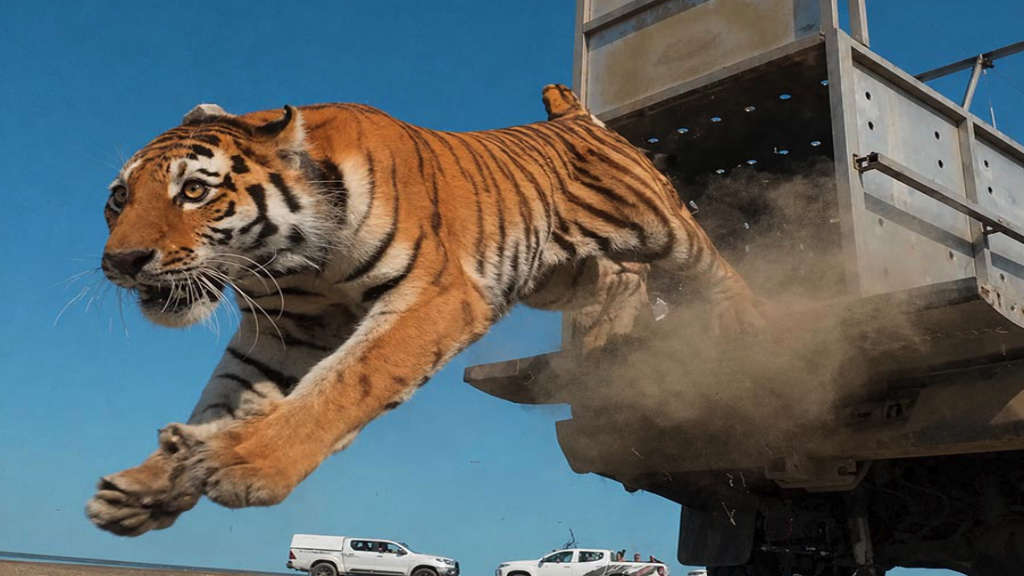

Tigers have returned to Kazakhstan after being extinct in the country for over 70 years. The Caspian Tiger – a subspecies of the wider Tiger Genus – was extant in Kazakhstan, Eastern Turkiye, Northern Iran, the Caspian Sea region, Central Asia, Northern Afghanistan and China’s Xinjiang region. It inhabited sparse forests and riverine corridors in this region until the 1970s and was assessed as extinct in 2003.
While the Caspian Tiger was also present in Southern Russia until the Middle Ages, the Tigers in the Russian Far East – known as the Amur Tiger have always been regarded as another sub-species. Yet contemporary research has revealed that the Caspian and Amur Tigers genetic difference is tiny – separated by just a single letter of genetic code. This points to the animals being essentially the same, with the tiniest genetic difference only created by the eventual separation of what were completely identical species a few hundred years ago by hunting and destruction of their mutual habitats. Over the resulting years, the Caspian and Far Eastern Tiger populations were isolated from each other. Today though, that situation has changed.
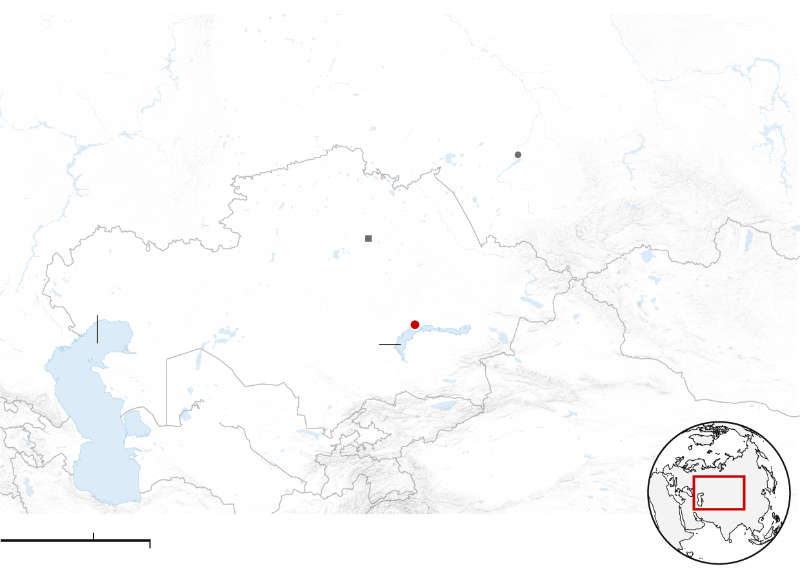
On 31 July, a female Amur Tiger named “Umit” – which means hope in Kazakh – was released into a nature reserve on the edge of Kazakhstan’s Lake Balkhash after more than a decade of careful planning to return the Tiger to the region. With this release, Kazakhstan became the first country to restore its Tiger range after they had been thought extinct.
Umit – a wild-caught female tiger transported from the Russian far east – will be joined by more Tigers in the coming years, with plans to establish a self-sustaining population of about 50. A wild-caught male flown from Russia is still being monitored by authorities and will be released when he is judged fit to survive alone. Two wild tiger cubs are also being reared on the reserve in special enclosures, with as little human contact as possible, and are likely to be released into the marshlands next year, to feast on boar, deer and kulans, a wild donkey.
Yerlan Nysanbayev, Kazakhstan’s Environment Minister said when the Tiger was released that “Today, we became witnesses of a truly historic event. There is a lot of work ahead on monitoring tigers and forming a stable population, but today the first and very important step has been taken.”
While this summer’s release is the first example of a cross-border tiger translocation, there have been several successful releases in the Russian far east as part of efforts to restore the Amur Tiger’s range. One scheme involves rescuing orphaned cubs whose mothers had been shot by hunters in Siberia, and then releasing them into remote areas when they are strong enough. This project has been a huge success.
Dale Miquelle, an authority on Siberian tigers who formerly headed the Wildlife Conservation Society Russia programme said that “The idea of bringing back a subspecies of tigers that has disappeared is very exciting. This is as close as we’re going to get to that process. The Siberian project success rate was pretty close to 100% after the release. These animals adapt amazingly quickly. One young female killed a Himalayan black bear within 24 hours of being released and others have learned to hunt on their own in the wild really quickly. I am very hopeful this Kazakh project can work. In Russia, a number of translocations resulted in the recolonisation of tiger habitat. So there’s a blueprint that suggests that this can work as long as there is suitable habitat and sufficient prey.”