
 Русский





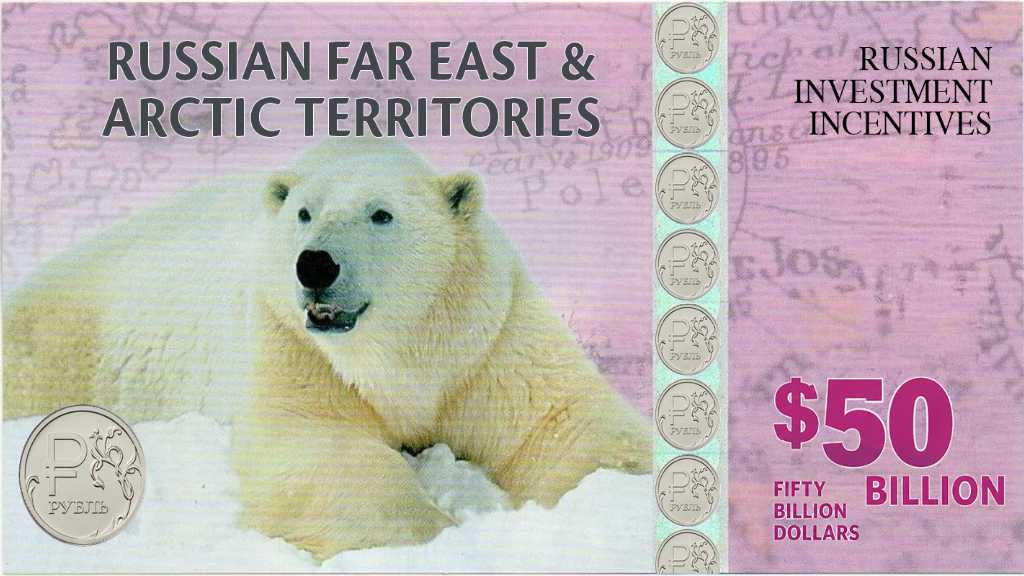

Legislative work to establish a unified preferential regime in the Russian Far East and Arctic is scheduled for completion in autumn 2026, according to Nikolay Kharitonov, the chairman of the Russian State Duma Committee on Development of the Far East and Arctic.
Russia’s Far East and Arctic regions covers nearly 70% of the country’s landmass, stretching across nine time zones and 24,000 km of coastline. These macro-regions hold massive economic significance, containing abundant natural resources and strategic maritime trade routes.
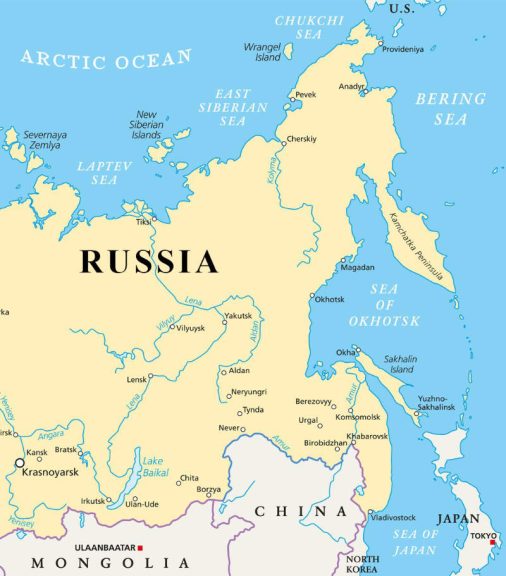
The Far Eastern Federal District stretches from the eastern borders of Siberia to the Pacific Ocean and covers approximately 40% of Russia’s territory. Its key transport and economic centres include Vladivostok (Russia’s largest port on the Pacific Ocean), Khabarovsk, Yakutsk, and Komsomolsk‑on‑Amur. The region shares land borders with China and North Korea, and maritime borders with the United States (via the Bering Strait) and Japan. As of 2025, the population of the region was about 7.9 million people.
The land area of the Russian Arctic Zone amounts to about 4.8 million km²—roughly 28% of the country’s territory. It fully includes the Chukotka Autonomous Okrug, as well as selected Arctic uluses (districts) of the Republic of Sakha (Yakutia). Other key regions within the zone are Murmansk Oblast and the Yamalo‑Nenets Autonomous Okrug. According to estimates for 2024, the population of the Arctic Zone is around 2.4 million people.
The proposed preferential regime will preserve conditions for existing residents while standardizing processes for acquiring resident status. Additional support is envisioned for investors in technology sectors.
Specific investor requirements will be established to qualify for residency and the relevant incentives, although some activities will be prohibited without state approval, including finance, excisable industries, and extraction of oil, gas, precious metals, and gemstones mining. The Supervisory Council of the unified Territory of Advanced Development will determine other prohibited activities for each Far Eastern region.
Prospective investors must commit to an investment volume of a minimum of ₽5 million (US$64,000) and must have no outstanding tax liabilities or overdue regulatory filings. Investment incentives are planned to be as follows:
- A 5-year, zero percent corporate income tax rate or the application of a federal investment tax deduction at 8% on the corporate income tax base for ten years. This will be capped at 20% of the capital expenditure for residents and at 5% of the pertinent income tax base for ten years and capped at 10% of capital expenditure for holding companies. (Note: The standard corporate income tax rate in Russia is 25%).
- Reduced mandatory insurance contributions, applicable exclusively to residents of Far Eastern Federal District and Arctic;
- Reduced property tax and land taxes;
- Reimbursement of customs duties for imported scientific and technological equipment;
- Free customs zone (ability to import duty-free into the Far East and Arctic regions as long as the equipment stays within the region). Dutiable rates vary depending upon the item; however, VAT in Russia is typically 22%.
- Free land use rights;
- Government-funded corporate utility infrastructure (water, electricity, etc.)
- Foreign labour allocation; (ability to hire overseas workers);
- Complimentary management company services, including brokerage, consulting, and legal issues.
The incentives are to be presented at the State Duma and are expected to be passed in the autumn. The applicable management body overseeing the application process is the pertinent Supervisory Council of the Unified Territory of Advanced Development, which determines resident status. These are the primary governing and oversight bodies for each Territory of Advanced Development (TAD or ASEZ), which are special economic zones in Russia. These councils ensure adherence to development plans and regional investment strategies.
The Russian government approves the composition of each supervisory council, which includes representatives from the Ministry for Development of the Far East, Ministry of Finance, Ministry of Economic Development, Ministry of Energy, and the Corporation for Development of the Far East and Arctic.
The incentive plans are part of the Arctic Investment Fund (led by the Russian Direct Investment Fund to attract international capital to Arctic infrastructure and rare-earth projects) and have an undisclosed total target value, although Moscow has earmarked roughly US$40 billion for regional economic development. For established state vehicles, the Far East and Arctic Development Fund (a subsidiary of VEB.RF) holds about US$915 million in assets.
Additionally, the broader Arctic Zone of the Russian Federation (AZRF) preferential regime lists over 600 approved projects accounting for US$9 billion in total planned investments. In total, the Russian government intends to invest about US$50 billion in Far East and Arctic development at this initial stage.