 Русский




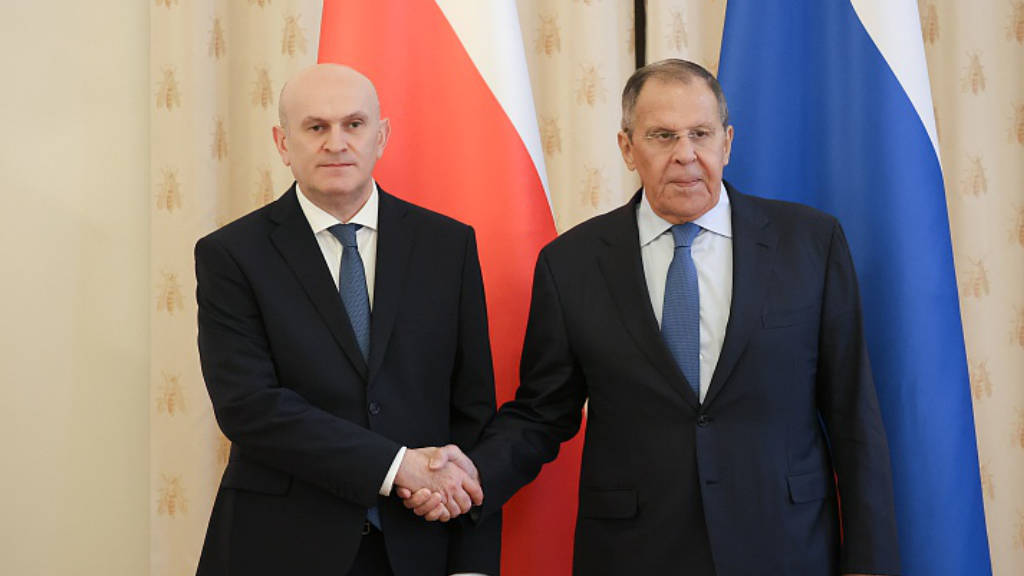

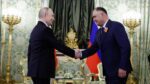
The Russian Foreign Minister, Sergey Lavrov, has meet with Akhsar Dzhioev, the Acting Foreign Minister of the Republic of South Ossetia, in Moscow.
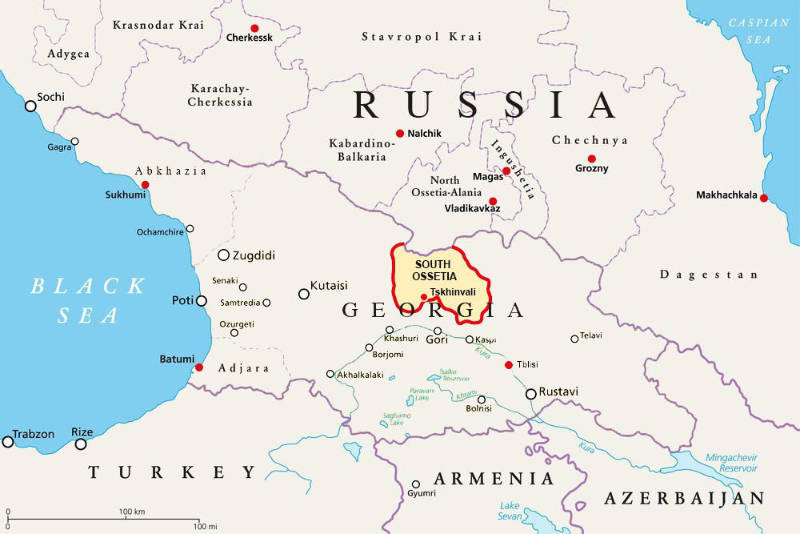
South Ossetia is a small, independent country generally reliant on Moscow, situated in the south Caucasus mountains. It has a population of about 56,500 and was formed following the brief 1991-92 war with Georgia and subsequent conflicts and was eventually partitioned off from the latter in 2008. South Ossetia is not recognised by the United Nations.
This is what Lavrov had to say:
“I am pleased to welcome you once again. It has become a good tradition for us to meet shortly after the important dates celebrated by our South Ossetian allies – the Day of the Russian Federation’s Recognition of the Independence of the Republic of South Ossetia on August 26, the anniversary of the establishment of diplomatic relations on September 9 and, of course, South Ossetia’s national holiday, Republic Day, on September 20. I would like to congratulate you on all these occasions.
Today, we have a good opportunity to discuss the current state of our bilateral relations and prospects for their further development following another important event that took place in September. An early presidential election was held in your country on September 18. It resulted in the victory of Acting Head of State and Head of Government Marat Kambolov, who assumed office yesterday, on September 30. A few days earlier, on September 19, President Vladimir Putin spoke with him by telephone. We share the assessment of the numerous international observers who monitored the election that it was conducted in full accordance with the law and without any violations. We will continue our close cooperation with the administration of President Marat Kambolov with a view to further strengthening our allied relations.
We are grateful for the solidarity and support for Russia’s position regarding the special military operation, as well as for the participation of South Ossetian citizens in combat operations and the humanitarian assistance provided. We also appreciate the support extended in organising the State Duma elections for Russian citizens residing in South Ossetia, who, as in Abkhazia, make up the majority of the population. Every opportunity was provided for them to exercise their right to vote as citizens of the Russian Federation.
Our relations continue to develop steadily. Bilateral trade increased by nearly 15% in 2025. The State Programme for the Socio-Economic Development of South Ossetia is being implemented with the support of the Moscow Government. New agreements have been reached on cooperation in the modernisation of transport infrastructure, notably the Nizhny Zaramag checkpoint on the Russian-South Ossetian border, as well as in healthcare, education and culture. All these efforts contribute to expanding humanitarian and cultural ties, something in which the peoples of Russia and South Ossetia share a strong interest.
We welcome your country’s openness to cooperation with all international partners that are willing to engage constructively. Representatives of Belarus, Nicaragua, Venezuela, Mexico, Tanzania, Kenya, Uganda, South Africa, Türkiye and Germany took part in observing the presidential election in the Republic of South Ossetia. The point is that in all these countries, and many others, there are public figures and non-governmental organisations that have no interest in bringing ideology into international relations. Instead, they seek to develop good-neighbourly relations – and broader ties as well – with countries that are equally open to such engagement. We understand and welcome this approach.
Naturally, the participation of representatives from such a broad range of countries is further evidence of South Ossetia’s international visibility. We will continue to provide diplomatic support to your country so that this recognition translates into concrete economic and humanitarian projects involving an even wider range of foreign partners.
Today, following the conversation between our presidents, we will review our bilateral relations. We will also discuss the situation on the “external front,” which I have already touched upon briefly. After that, together with Foreign Minister of Abkhazia Oleg Bartsits, we will discuss matters relating to the International Discussions on the South Caucasus, which concern the interests of all three of our countries.”
South Ossetia 2025-2026 Economic Performance
South Ossetia’s economy is primarily supported by small-scale agriculture, basic manufacturing, and some trade facilitated by Russia. Key activities include livestock farming, crop production, and minor food processing. These sectors are limited in scale, relying on Russian assistance for funding and infrastructure. The region also has some Russian tourism and forestry, but overall, its industries are underdeveloped due to political isolation and its restricted access to international markets.
South Ossetia’s trade options are also limited due to its limited recognition and reliance on Russian support. Since 2012, South Ossetia has a free trade agreement with Russia allowing goods to be freely exported, providing its only official trade outlet. However, despite this access, trade volumes remain minimal, and the practical implementation of this free trade framework remains hampered by bureaucratic hurdles.
South Ossetia’s economy remains modest and heavily reliant on Russian financial aid, with estimates placing its 2025 nominal GDP at around US$108 million. Lavrov mentioned in 2025 that South Ossetia’s GDP had grown 27.5% over the past five years. A challenge for Moscow is to wean the South Ossetian economy off Russian state loans and aid and onto a sustainable development path.
A new state programme of South Ossetia’s socioeconomic development for 2026−2030 is being drafted with Russia’s assistance. It will boost the further development of the country’s economic potential and is likely to focus on tourism development and agricultural trade. Progress is being made. South Ossetia established its first tourism portal in 2024. Entry into South Ossetia can only be achieved through Russia, with whom a visa-free arrangement is in place.
Foreign nationals wanting to visit South Ossetia for tourism must address the Committee on youth policy, sports and tourism of the Republic of South Ossetia and request an official invitation letter by emailing this contact.
Apart from the development of the tourist sector – which also requires investment – Russia imports mainly alcoholic beverages from South Ossetia, as well as dried fruits and nuts. South Ossetian brandy and wines, as is common throughout the Caucasus region, are considered premium items by Russian consumers. Bilateral trade accounts for about 95% of South Ossetia’s GDP, although the development of tourism, if successful, will help move the economy towards a better balanced and more viable commercial sector, albeit funded by Russia’s private sector and tourism as opposed to state support – goals for both Moscow and Tskhinval.
Progress towards achieving this appears to be consistent. In December 2025, additional agreements were signed to facilitate the implementation of the State programmes for the socio-economic development of South Ossetia for 2026-2030, aimed at promoting economic and investment activity in the republic, including budgetary investments in infrastructure facilities and state support for investment activities. Sergey Nazarov, the Russian Deputy Minister of Economic Development said at that time that “We plan to increase the GDP of South Ossetia 60% by 2030 and ensure an annual increase in their own revenues.” If this happens, the South Ossetian economy would achieve a nominal GDP of US$173 million over the next four years, indicating annual CAGR growth of 5.75%. Tourism investment and development would appear to be the key.