Русский





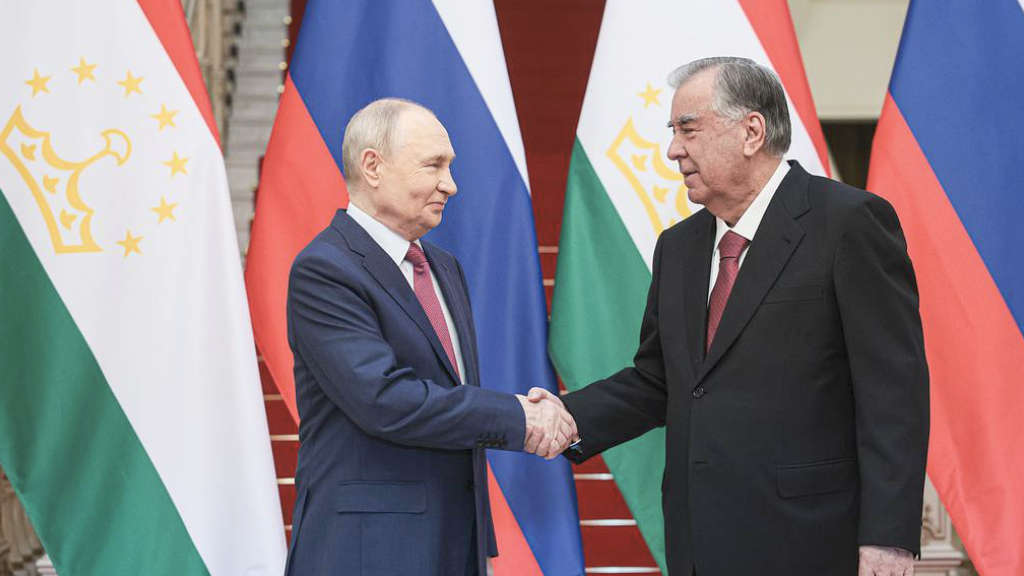

Having completed his two-day trip to China, Russian President Vladimir Putin arrived in Tajikistan on a working visit. Putin was invited by President Emomali Rahmon, who visited Moscow last week. Tajikistan’s leader attended the summit of the Collective Security Treaty Organization (CSTO), with Putin explaining that at that time, the two Presidents did not have enough time to discuss all important bilateral issues because of their busy schedules.
Putin stated in Dushanbe on Friday (November 20) that “Today, outside the framework of the Collective Security Treaty Organization (CSTO), we will have an opportunity to discuss separately issues related to regional security and the operation of our military base in Tajikistan.”
Russia operates the 201st Military Base in Tajikistan, which is its largest overseas military facility, garrisoned across Dushanbe and Bokhtar, with training conducted at sites such as the Lyaur testing ground. It is part of the Russian Ground Forces’ Central Military District. Russia has deployment rights in Tajikistan until 2042.
According to the Kremlin and Tajik presidential reports, Putin and Rahmon discussed regional security, the situation near Afghanistan, economic ties, the operations of the 201st Military Base outside the Collective Security Treaty Organization (CSTO) framework, with Russian Defence Ministry representatives joining the talks. Troops from the 201st Military Base participated in the ninth joint Druzhba drills with Pakistani special forces in October 2026.
Rahmon briefed Putin on conditions along the Tajikistan–Afghanistan border, including ongoing security incidents and smuggling. Putin said he would share outcomes from his recent visit to China.
In terms of trade, Putin highlighted trade growth of over 25% in 2025 and nearly 19% in the first nine months of 2026, noting cooperation across more than 70 Russian regions and thanking Rahmon for supporting the Russian language in Tajikistan.
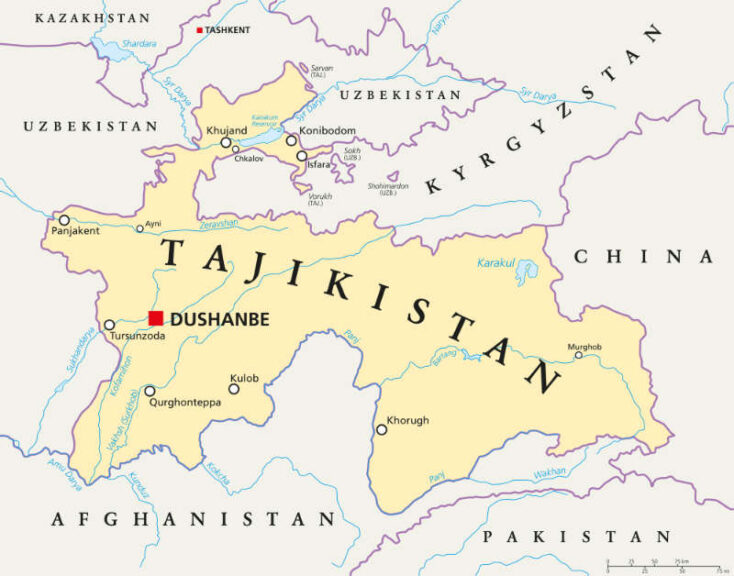
EU Sanctions Impacting Tajik Labor Remittances
Labor migration was also on the agenda, following recent pressures on migrants in Russia and EU sanctions on the money-transfer bank Unistream, which could prevent Tajik’s working in Russia remitting their earnings back to Tajikistan.
The EU added Unistream to its Russia sanctions list on November 16, citing loan-repayment grace periods offered to Russian military personnel involved in the war against Ukraine as grounds for the listing. Unistream disputed the EU’s rationale on November 18, stating it does not offer personal loans or repayment holidays, and said it expected minimal operational impact because it holds no European assets and settles transfers in rubles and CIS currencies. However, there could be potential risks to migrant remittances—particularly between Russia and Tajikistan—where Unistream is widely used. As of mid-November 2026, Unistream remained registered in Tajikistan with a license running until February 22, 2027, with no immediate suspension announced there, however the matter has reached Presidential levels of concern.
Remittances from migrant workers make up nearly half of Tajikistan’s US$18.8 billion (nominal) GDP. The vast majority of Tajik labor migrants work in Russia, with roughly 1.2 million Tajiks there in mid-2026, including about 400,000 settled residents alongside seasonal and short-term workers.
The European Union decision to issue sanctions against Unistream does not appear to have taken any note of the secondary issues this may impose of Tajik workers. They are also taken without prior consultation with the target – in short sanctioned entities are automatically presumed guilty. If they wish to challenge the ruling, they must make a case to the General Court of the EU. Challenges to EU sanctions before the General Court of the European Union generally take 16 to 22 months from filing to final judgment, though the total timeline varies depending on procedural complexity and appeals.