Русский





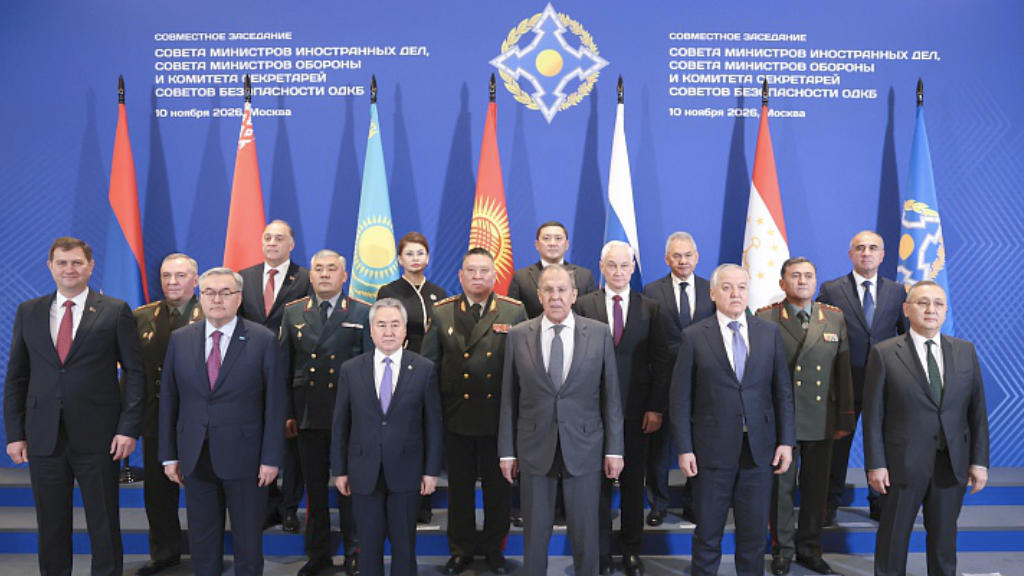

A flurry of Eurasian security meetings have taken place over the past week, with the 4th Minsk International Conference on Eurasian Security being held between November 3-4, while a Joint Meeting of the Council of Foreign Ministers, the Council of Defence Ministers and the Committee of Secretaries of Security Councils of the Collective Security Treaty Organisation (CSTO) was also held in Moscow on Tuesday (November 10).
These are pertinent to the Russia-Ukraine-United States talks currently taking place in Abu Dhabi, which are not only discussing a solution to the Ukraine conflict, but are additionally tasked with drafting a new European security architecture to ensure that peace is maintained and red lines understood and respected.
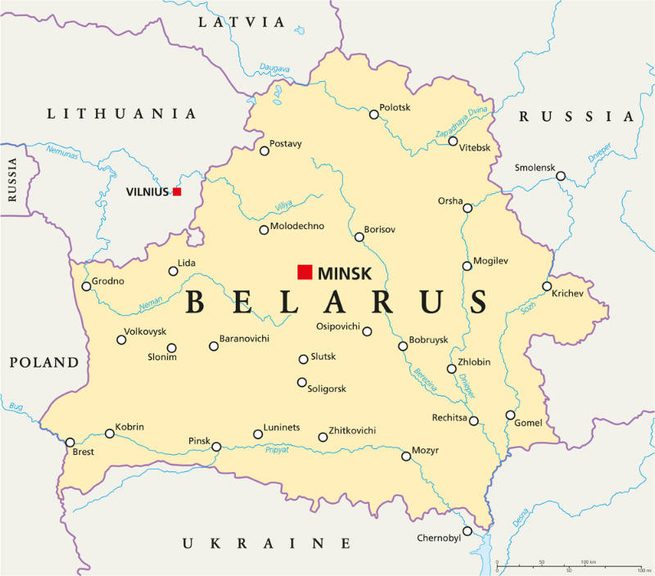
While Western media plays up the Ukraine conflict as a Russian issue, it should be remembered that Belarus – a CSTO member – also has a significant part in any European and Eurasian security agreements. Belarus has a border of 1,084km with Ukraine and a 1,250km border with three European Union members: Latvia, Lithuania and Poland.
This means that when assessing any potential agreements that may arise from the Abu Dhabi talks, attention should be paid to what occurred during the Minsk Eurasian Security talks as well as the CSTO 2026 Foreign Ministers discussions in Moscow yesterday (November 10).
The 4th Minsk International Conference on Eurasian Security
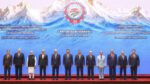
This event brought together over 800 participants from 50 countries, including heads of key regional organisations and integration associations across Eurasia – the Shanghai Cooperation Organisation (SCO), the Organization for Security and Co-operation in Europe (OSCE), the Commonwealth of Independent States (CIS), the CSTO, and Russia. This opened with a high-level plenary session including Aleksandr Lukashenko, the Belarus President.
Igor Sekreta, the Deputy Foreign Minister of Belarus, introduced the necessity of the event by stating “This conference was initially established in 2023 when it became finally clear that the security model created in Europe after the end of the cold war, despite the extensive tools in the field of arms control and confidence-building measures, could not pass the test of time. It did not take into account equally and fully the interests of all its participants and therefore could not prevent a security crisis that resulted in an open armed confrontation in the region. There was an understanding that the old system should be replaced by a security model that would cover the entire Eurasian continent and was based on the principle of equal and indivisible security.”
On that basis, the first working session of this years’ event focused on military and political security, arms control and military risk management. Participants agreed that the key steps in this area should include reducing military risks, intensifying inclusive dialogue and developing mechanisms for mutual military notifications.
The second working session addressed emerging and advanced technologies, information security, artificial intelligence, and countering disinformation and deepfakes. Participants particularly emphasised the need to ensure that human control is maintained over the use of artificial intelligence.
The third working session covered economic integration and cooperation. Discussions centered on the need to lift unilateral coercive measures that disrupt vital processes, including transport and logistics chains, healthcare, humanitarian activities, and the provision of food and energy security.
All of these themes are directly related to a new European Security architecture. They deal with conflict risk management, the need to engage in ‘inclusive dialogue’ to prevent misunderstandings, including ‘mutual military dialogues’ in addition to action plans for measures to be taken should future disruptions occur. These are useful, peace-related themes of direct relevance to eastern Eurasia as well as to the Europeans.
The OSCE Secretary General, Feridun H. Sinirlioğlu attended these meetings, his first visit to Minsk. Sinirlioğlu, a Turkish national, also met with Sergey Lavrov, the Russian Foreign Minister as well as Yana Lantratova, the Russian Commissioner for Human Rights, and Dmytro Lubinets, the Ukrainian Parliament Commissioner for Human Rights. This strongly suggests that Russia-Ukraine dialogue is taking place at the Human Rights level to design security and humanitarian measures between the two countries.
The Foreign Ministers Of The CSTO Meetings In Moscow
A joint meeting of the CSTO Council of Foreign Ministers, Council of Defence Ministers and Committee of Secretaries of Security Councils was held in Moscow, with Russia’s Foreign Minister, Sergey Lavrov chairing the event. The CSTO Secretary General Talatbek Masadykov and Chief of the CSTO Joint Staff Colonel General Andrey Serdyukov also attended. The CSTO is an intergovernmental security alliance in Eurasia, with the Foreign Ministers of Belarus, Kazakhstan, Kyrgyzstan, Russia, and Tajikistan participating. Armenia, despite being a member, did not join this meeting.
Masadykov briefed the participants on the military and political situation in the Organization’s collective security regions and its activities. A package of documents aimed at strengthening the collective security system was agreed upon. These documents are scheduled to be submitted for consideration at the forthcoming session of the CSTO Collective Security Council.
Ministers also took part in the International Forum on Collective Security, which included a number of planned panel discussions, among them a session entitled “The CSTO: New Challenges and Prospects for Regional Cooperation”.
This included talks on the situation within the CSTO’s area of responsibility and in adjacent regions – such as Ukraine – emphasising the need to further intensify joint efforts to strengthen the CSTO’s capacity to counter growing security challenges and threats, including the rising potential for conflict, terrorist activity, drug trafficking, illegal migration and cybercrime. This is also relevant to a post-war Ukraine where significant concerns are being made about the huge volumes of weapons in the country and their ability to fall into the hands of local as well as international criminal organisations.
Minister of Foreign Affairs of the Republic of Tajikistan Sirojiddin Muhriddin briefed participants on the priorities of his country’s chairmanship of the CSTO in 2027. The next meeting of the CSTO Council of Foreign Ministers will be held in Tajikistan in H1 2027. That takes the discussion to the Eastern part of Eurasia, where Tajikistan’s borders with Afghanistan are a more pressing feature of CSTO security concerns.
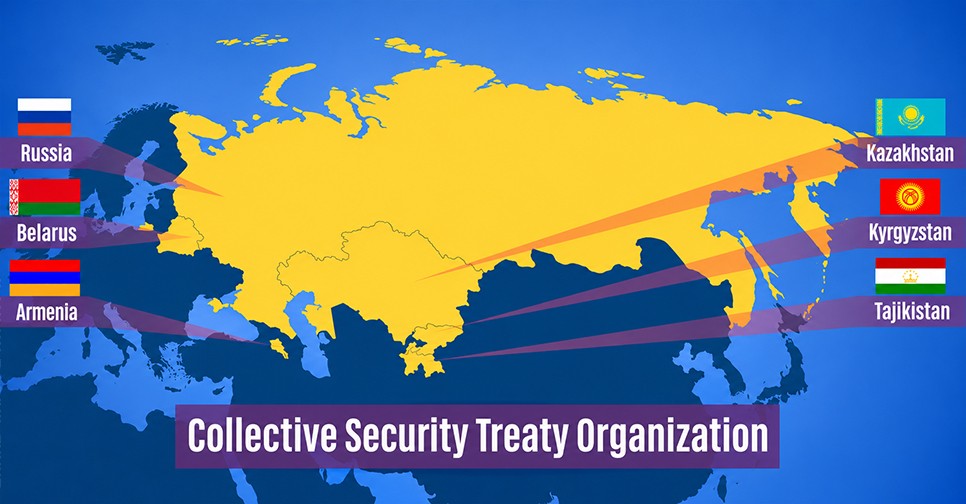
Of note are Lavrov’s remarks to the delegates, during which he stated that “Our work entails building a new security architecture on our shared continent of Eurasia, based on the principles of equal and indivisible security and open to all countries on the continent willing to engage constructively on an equal footing. During Russia’s chairmanship, we have placed particular emphasis on closer foreign policy coordination, on countering both traditional and new challenges and threats, and on strengthening the CSTO’s military capabilities. We have worked hard to reinforce the CSTO’s role as a key guarantor of regional security. This work reflects the priorities that Russia’s President Vladimir Putin, this year’s Chair of the Collective Security Council, set out with the support of the member states. We are grateful to our friends for their steadfast support as we pursue the objectives of Russia’s chairmanship. These efforts serve our common interests.”
Eurasian Security Summary
These events suggest that a unified position has been agreed amongst CSTO members and the attendees of the Minsk conference as concerns a potential security settlement with Ukraine, the European Union and the United States, who are all also currently involved in discussions in Abu Dhabi about both ending the Ukraine conflict – and putting into place a new Russia-European security platform to prevent such a conflict occurring again. Belarus, a CSTO member for example, has an extensive border with Ukraine – and the EU.
Due to the sensitive security and military content of such meetings, little of substance is generally released to the general public, however both the Minsk and Moscow events are of direct pertinence to what may – or may not – arise from the Ukraine talks currently taking place in the Middle East. It is pertinent to note that while the Western media tends to see the Ukraine conflict as involving just Europe, the United States and Russia – the aftermath has had a substantial impact on the entire Eurasian region and the collective views of the Eurasian continent – including actors in the Middle East itself, China, India and Central and South Asia. These concerns will also all need to be taken into consideration as concerns any Eurasian settlements and a European security architecture. All require stability to be able to plan and move ahead – and that means the vested interests in what happens with Ukraine extend way into the Eurasian continent and are not a purely European concern.