Русский






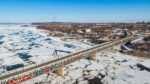
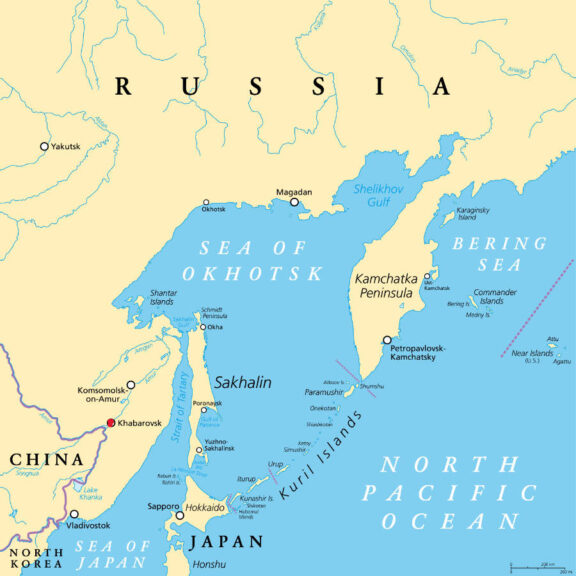
Russia is set to build a massive mining and metals hub costing more than ₽667 billion (US$8 billion) in Khabarovsk in the Russian Far East, Prime Minister Mikhail Mishustin has announced.
Mishustin has signed a decree expanding the Khabarovsk Territory of Advanced Development (TOR) to make way for the industrial complex, the government announced on Sunday (November 8). The project will be built around the Milkanskoye iron ore deposit in the remote Tuguro-Chumikansky district and will supply iron ore products to markets in China, India, and Indonesia.
It is expected to process up to 54 million tons of iron ore annually and produce 16 million tons of high-grade pellets used in steelmaking. The complex is scheduled to reach full capacity by 2032 and includes 180 km of new railway, automated conveyor systems, and a seaport terminal to ship finished products to domestic and overseas markets.
The investment is part of a portfolio of joint investment initiatives overseen by the Russian-Chinese Intergovernmental Commission on Investment Cooperation.
The hub is expected to create around 3,200 permanent jobs, with more than 5,000 workers needed during construction. Khabarovsk Governor Dmitry Demeshin said LLC Milkan, the project operator, will finance the necessary infrastructure without government funding. However, the government has provided investment incentives, including tax breaks, streamlined administrative procedures, and a free customs zone, reducing the costs of developing the massive industrial complex. The special economic regime is designed to attract private investment and accelerate industrial development in Russia’s eastern regions and is part of Russia’s push to turn its resource-rich Far East into a major industrial and export center, with a focus on producing higher-value goods rather than exporting unprocessed raw materials.
The Khabarovsk TOR already has around 130 resident companies with more than ₽474 billion (US$5.69 billion) in pledged investment. Of that, ₽414 billion (US$5.975 billion) has been invested, while businesses operating under the scheme have created more than 16,600 jobs, according to the regional authorities. Zones such as these mirror the highly successful Chinese Special Economic Zone (SEZ) type of investment incentives that helped the Chinese economy grow from US$150 billion in 1978, when the first SEZ was established in China, to US$21.55 trillion in 2026. China today has 2,543 development zones of various different types.
Russia has an extensive network of territories with preferential regimes designed to stimulate investment and regional development. The key instruments are the Advanced Development Territories (ADTs) – there are about 110 of them, including sites in the Far East, the Arctic, single‑industry towns, and closed administrative‑territorial entities.
Alongside them, 62 special economic zones (SEZs) of various types are in operation – from industrial and manufacturing to tourist and recreational, and port zones. In addition, there are two free economic zones in Crimea and Sevastopol. Taken together, considering only these regimes, the number of sites reaches 170–175.
With a broader approach – including industrial parks, innovation centres such as Skolkovo and Sirius, as well as the preferential regime of the Arctic zone – the total number of territories offering benefits is estimated at 300–400 sites. This multi‑tiered system enables flexible support for projects across different industries and regions of the country.
At the same time, in recent years the inflow of Western capital into such regimes has significantly decreased: sanctions prevent Western investors from using these regimes to the same extent as they did in China.
Moscow has been expanding special economic development zones across the Far East to draw private capital, build transport infrastructure, and strengthen trade with Asian economies. The region’s proximity to China and access to Pacific shipping routes have made it a key focus of Russia’s efforts to deepen economic ties with Asia.