Русский




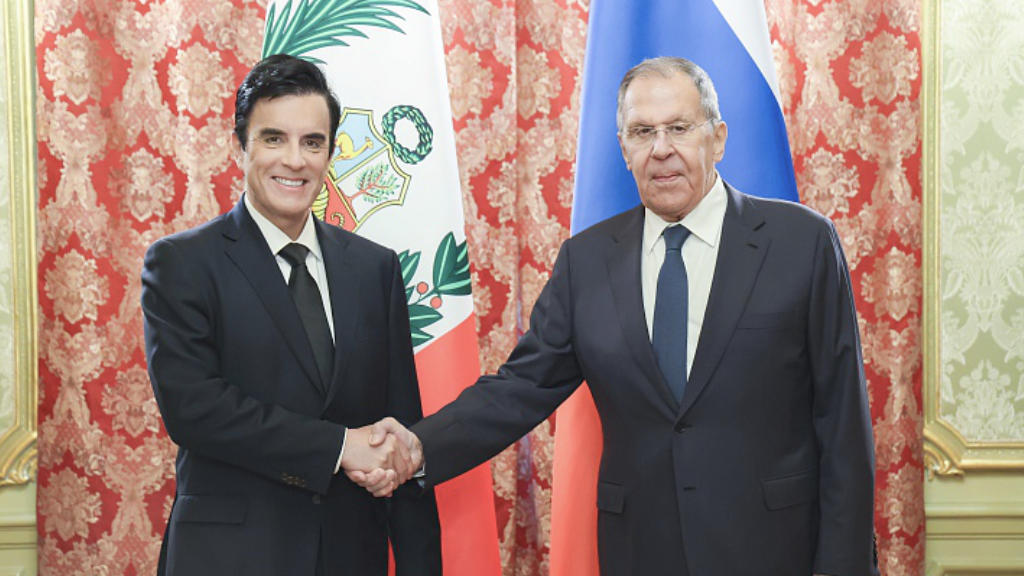
The Russian Foreign Minister, Sergey Lavrov, has met with Carlos Espá, the Foreign Minister of Peru, in Moscow. This is what Lavrov had to say, as well as our updates on Russia-Peru relations and the latest trade developments, including important regional events involving Peru taking place during 2026 and 2027.
Lavrov: “Mr Minister, welcome. I am particularly pleased to meet you in person. We consider your visit to be of great importance, as it marks the first face-to-face meeting between the foreign ministers of Russia and Peru since 2014. We hold Peruvian diplomacy in high regard, as it draws on the knowledge and experience accumulated over your country’s millennia-long history.
Both Peru and Russia are unique civilisations, which bring together many peoples and cultures. In our country, Peru is well known and appreciated for its distinctive traditions, music, and cuisine.
The history of our relations spans nearly 165 years. July 18 has become an informal day of Russian-Peruvian solidarity. Your visit to Moscow today, undertaken on the instruction of President Keiko Fujimori, provides an excellent opportunity to review the full range of our bilateral relations, exchange views on international and regional issues, and discuss our cooperation within the UN and other international organisations. I look forward to a productive discussion.”
During the talks, Espá expressed concern about Peruvian nationals who have taken part in hostilities in Ukraine. According to Peruvian data, more than 450 Peruvian mercenaries have been involved and recruited by both sides. He requested verifiable information from Lavrov about their fate, access to the wounded, and assistance in repatriating the bodies of the deceased.
In the bilateral arena, things moved to a more positive note. They discussed resuming the Joint Russian-Peruvian Intergovernmental Commission on Trade, Economic, Scientific and Technical Cooperation and Fisheries, expanding trade and economic cooperation, education, culture, and sports. This included bilateral projects in their mutual economic interests, including through banking channels; cooperating in education, science, culture and sport; and deepening humanitarian cooperation.
They additionally exchanged views on current issues on the global and regional agenda, including the election of a new UN Secretary-General, the forthcoming APEC Summit in Shenzhen, China, and Russia’s relations with regional integration associations in Latin America and the Caribbean. This includes the Community of Latin American and Caribbean States (CELAC), (CELAC), which includes 33 sovereign countries in Latin America and the Caribbean, representing over 600 million people. It also includes the Pacific Alliance and the Andean Community. Peru holds the presidency of all three of these bodies in 2027.
With Russia and Peru both Pacific Ocean nations, they are both taking part in the upcoming 2026 APEC summit, due to be held in Shenzhen, China, on November 18–19. It is highly possible that Espá’s visit to Moscow was also to arrange a potential presidential meeting between Presidents Putin and Fujimori at that event.
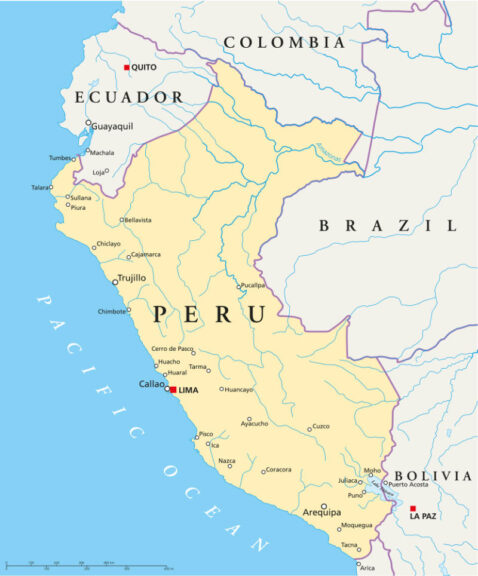
Peru has a population of about 34.2 million, a GDP (PPP) of US$703 billion, and a GDP per capita (PPP) of US$20,250. The projected GDP growth for 2026 is 3.4%.
Peru’s economy is heavily influenced by the mining sector, as the country is the world’s second-largest copper producer. The mining industry also includes the production of other valuable minerals such as silver and molybdenum, which has been seeing significant growth, driven by increased production. Agriculture remains a significant sector of the country’s economy. Peru is one of the world’s leading exporters of berries and fruits — including blueberries, grapes, avocados, and asparagus — as well as coffee and cocoa. In 2023, cocoa production reached approximately 230,000 metric tonnes, highlighting the growing importance of this crop. Peru is also the world’s largest exporter of fishmeal. At the same time, the country is a net importer of wheat and soybean products.
Additionally, Peru’s manufacturing industry, which includes textiles, chemicals, cement, and automotive components, continues to expand, especially with growth in the construction industry driven by infrastructure investments. The services sector, including finance, tourism, and retail, has also developed significantly, complementing the nation’s industrial growth.
Peru is an active participant in numerous free trade agreements. It is a member of APEC as well as the Andean Community (CAN), which promotes trade among Bolivia, Colombia, Ecuador, and Peru. As an associate member of Mercosur, Peru benefits from increased access to the regional markets of Argentina, Brazil, Paraguay, and Uruguay. The country is also a signatory of the Comprehensive and Progressive Agreement for Trans-Pacific Partnership (CPTPP), an agreement that fosters economic cooperation with 11 countries across the Asia-Pacific region. Peru has free trade agreements with the United States (US-Peru Trade Promotion Agreement), the European Union, China, and Canada, facilitating the exchange of goods, services, and investments. Additionally, Peru is a founding member of the Pacific Alliance, which promotes regional economic integration with Chile, Colombia, and Mexico, as well as participating in the World Trade Organization (WTO). With neighbouring Bolivia now a BRICS partner state, there have been suggestions that Peru may also join the group in some capacity.
As concerns APEC as a whole, Russia has targeted this region for growth. Russia’s trade volume with APEC countries is growing; at the end of 2025, it exceeded US$500 billion and has grown by 42.86% since 2023.
Peru’s 2027 Strategic Importance To Russia
As mentioned, Peru holds the Chair of three important trade blocs in 2027, all of which are of interest to Russia. These are:
The Community of Latin American and Caribbean States (CELAC)
CELAC includes Argentina, Bolivia, Brazil, Chile, Colombia, Costa Rica, Cuba, Dominican Republic, Ecuador, El Salvador, Guatemala, Honduras, Mexico, Nicaragua, Panama, Paraguay, Peru, Suriname, Uruguay, and Venezuela in addition to Antigua and Barbuda, Bahamas, Barbados, Belize, Dominica, Grenada, Guyana, Haiti, Jamaica, Saint Kitts and Nevis, Saint Lucia, Saint Vincent and the Grenadines, and Trinidad and Tobago.
Its role is to strengthen political, economic, social, and cultural integration across 33 Latin American and Caribbean nations and to serve as a single regional platform to forge consensus and represent Latin America and the Caribbean in global dialogues. It conducts structured external political and economic dialogues with major global partners, including the European Union, China, Russia, Japan, India, and others. CELAC’s key development goals and shared initiatives in areas such as food security (targeting Zero Hunger), sustainable development, science and education, disaster response, and regional security.
Pacific Alliance

The Pacific Alliance (Spanish: Alianza del Pacífico) is a Latin American regional integration and trade bloc established by Chile, Colombia, Mexico, and Peru in 2011. It represents a population of 225 million people and ranks among the top global trade and economic blocs in Latin America, representing roughly 35% of the region’s GDP. It is moving towards the free movement of goods, services, capital, and people among member states. Given its Pacific coastline it is increasingly aligning itself as a commercial and political bridge connecting Latin America with the Asia-Pacific region, including Russia, China, Japan, South Korea and the Eastern ASEAN nations.
Andean Community
The Andean Community (Spanish: Comunidad Andina, CAN) is a regional trade bloc and integration organization of about 114 million people. It promotes balanced and autonomous economic and social development through regional integration and currently includes Bolivia, Colombia, Ecuador, and Peru as full members. Associate members are Argentina, Brazil, Paraguay, Uruguay, and Chile, while Observers include Türkiye, Spain, Morocco, Greece, Panama, and the Dominican Republic.
The Andean Community has tariff-free movement of goods and services among member countries; in addition to free movement of people, its members’ citizens can travel, live, work, and study across member states using only their national identity documents, without needing a visa. It also works towards the elimination of additional international roaming charges, joint border development, coordinated foreign policies, and social/cultural integration.
Part of Espá’s meetings with Lavrov will have been to coordinate with Moscow elements of Russia’s interaction and potential development with each of these blocs during Peru’s 2027 chairmanship.
Russia-Peru Bilateral Trade
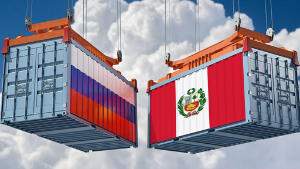
Russia-Peru bilateral trade and cooperation has been increasing, although trade volumes remain relatively small at US$483 million during 2025. However, it has been growing at rates of 20% since January that year, implying it may grow to a total of US$580 million by the end of 2026.
Peru’s main exports to Russia include edible fruits and nuts, tanning and dyeing extracts, and coffee, tea and spices. The key items in Russian exports to Peru are fertilizers (nitrogen, compound, and potash) and industrial ammonium nitrate‑based explosives for mining operations. In 2025, Russia retained its position as the leading supplier of fertilizers to Peru, accounting for over 39% of the country’s total imports in this product category. There have also been discussions concerning Russian fishing opportunities in the Pacific.
At present, although both Russia and Peru are Pacific Ocean nations, Russia’s FESCO (Far-Eastern Shipping Company) does not operate regular shipping or container services to Peru or South America. If regional Russia-Latin America-Pacific trade volumes can be built up, that could change.