 Русский





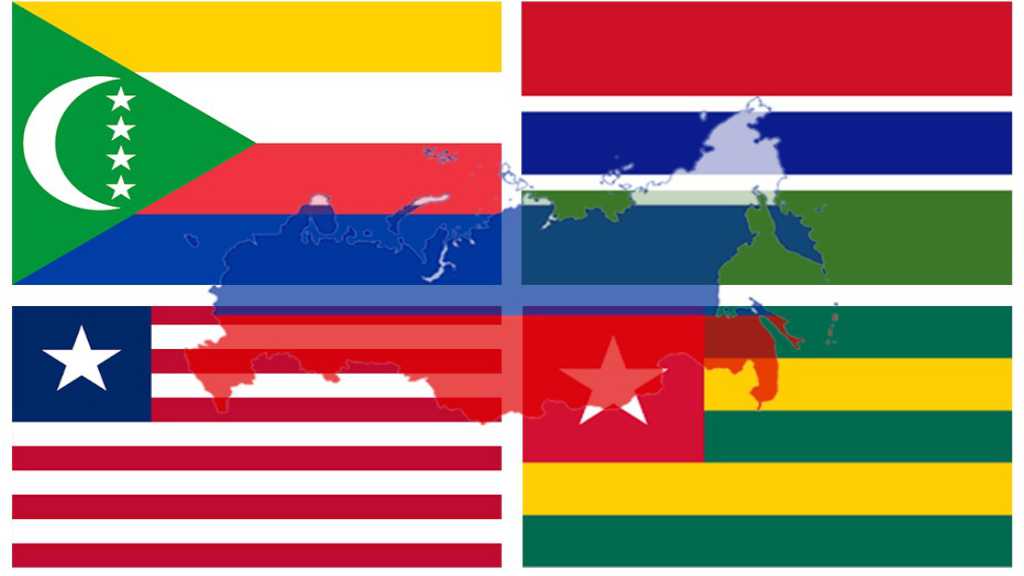

Russia’s Foreign Minister, Sergey Lavrov, has announced plans to open diplomatic missions in four more African countries, saying that “Next on our agenda is the launch of diplomatic missions in The Gambia, Liberia, Togo, and the Union of the Comoros.” He was speaking at a meeting of the Business Council under the Russian foreign ministry.
Lavrov noted that Russian embassies began operating in Niger, Sierra Leone, and South Sudan last year. A new ministerial department for partnership with Africa was also established, with Lavrov stating that “expanding Russia’s diplomatic presence on the continent contributes to developing relations.”
There are already 45 Russian embassies operating in Africa, with Lavrov noting that Moscow is quickly rebuilding its presence in African countries, which declined during the collapse of the Soviet Union. He added that “There will be only four or five countries left where we still need to establish full-fledged embassies, and then we will have 100% coverage of the entire African continent with our diplomatic presence.”
Anatoly Bashkin, director of the Russian Foreign Ministry’s Department of African States to the South, said that all decisions on the embassy in The Gambia have been made and an ambassador has been appointed. Logistical preparations are underway in the Comoros: premises are being sought and staff are being recruited. The situation is similar in Togo, where an ambassador will be appointed soon.
Russia’s total trade with Africa reached over US$27 billion in 2025, according to official data and analysis from the Russian Academy of Sciences. This reflects a steady upward trend in trade relations, driven heavily by Russian exports of grain, fertilizers, oil products, and arms.
Russian exports to Africa accounted for approximately US$22.7 billion of the turnover, with the majority of this trade concentrated with Algeria, Egypt, and South Africa. Trade is heavily weighted toward agricultural products (with Russian poultry, wheat, and dairy exports surging), mineral fuels, and military-technical contracts. An estimated 84% of Russia–Africa trade settlements were conducted in local currencies and rubles rather than the U.S. dollar, circumventing Western sanctions.