 Русский




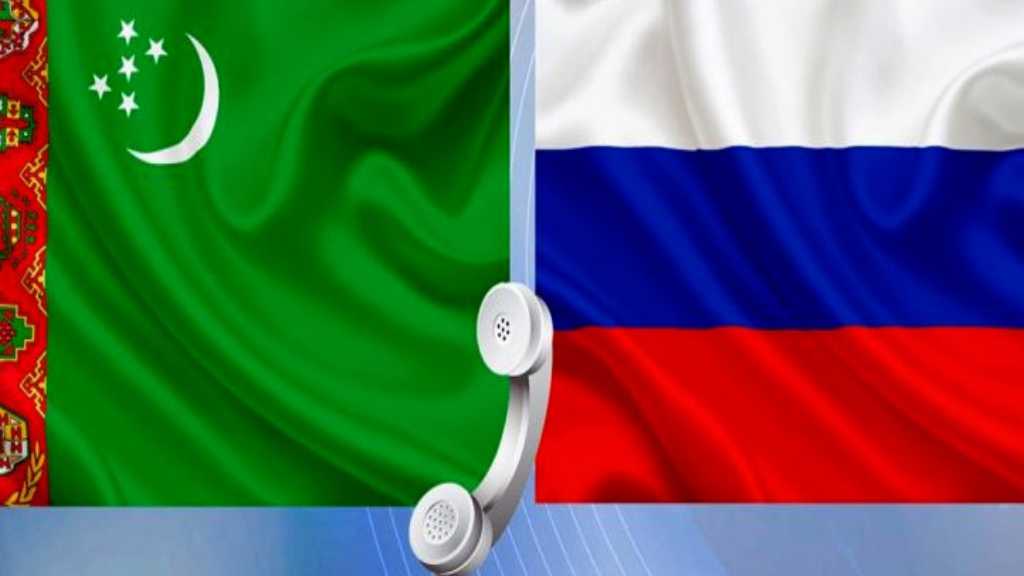

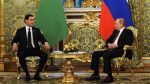
Russian President Vladimir Putin has had a phone conversation with Turkmen People’s Council Chairman and national leader Gurbanguly Berdimuhamedow. The Kremlin said that “The parties discussed current aspects of the continued strengthening of Russian-Turkmen strategic partnership and cooperation in the trade, economic, cultural, humanitarian, and other fields.”
They highlighted the importance of the upcoming meeting of the CIS Council of Heads of State to be chaired by Turkmenistan. Berdimuhamedov is currently in Kazan to participate in the 17th International Economic Russia-Islamic World Forum.
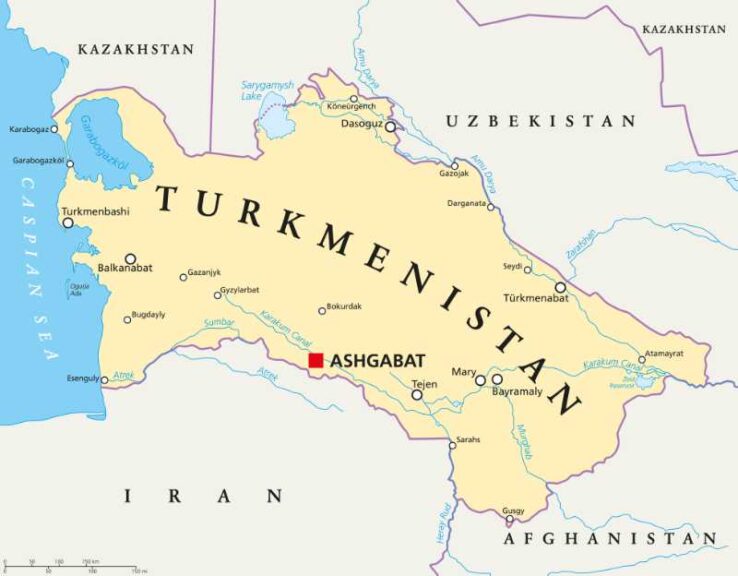
Putin and Berdimuhamedow are likely to have discussed Iran and especially the development of sustainable logistics and supply chain routes with the country, given that the Strait of Hormuz can be expected to remain problematic for some time. Both Russia and Turkmenistan are Caspian Sea nations, as is Iran. We discussed the issues concerning the use of the Caspian in terms of Iranian alternative logistics a few days ago here.
With Turkmenistan having a 1,148km long border with Iran, and the two countries having three main road border crossings, the opportunity is there for Turkmenistan to further secure its position as a key part of the International North-South Transport Corridor (INSTC). The two countries also agreed last year to develop two railway crossings to further increase freight and trade connectivity. The Turkmen capital, Ashgabat, is only 24 km north of the Iranian border, while Mashhad (Iran’s second-largest city) is just 75.5 km to the south. It can be expected that this region will experience considerable infrastructure development, possibly with Russian support, as any new corridor would also help develop Russia’s own import and export supply chains.
Turkmenistan is an associated member of the Commonwealth of Independent States.
As an associated member, Turkmenistan participates in the activities of the CIS, but with certain limitations. In military-related bodies (such as the Council of Defense Ministers), Turkmenistan is represented as an observer. Despite its special status, Turkmenistan has assumed the 2026 role of Chair in the CIS. As Chairman, the country determines the priority areas of development for the next year and monitors the implementation of CIS decisions.
Last year, Turkmenistan and Iran signed a roadmap for the development of bilateral trade of up to US$3 billion. At the same time, Iran has concluded a free trade agreement with the Eurasian Economic Union (EAEU), which also includes the Caspian states of Russia and Kazakhstan.
Turkmenistan-Russia trade volume increased by 58% in January-June 2025. By the end of 2025, it is likely to have exceeded US$2.5 billion.
Most of this bilateral trade has been agricultural, with Turkmenistan exporting to Russia fruits and vegetables, cotton, and linen. Turkmen tomatoes are considered amongst Central Asia’s best and are a major export crop. Russia’s exports include medical equipment and supplies, fertilizers, and increasing amounts of construction equipment as Turkmenistan upgrades its national transportation infrastructure.
With Iran’s southern coastline and supply chains under military pressure, it has a pressing need to develop its Caspian Sea and northern borders. Both Russia and Turkmenistan are primary partners to assist.