 Русский





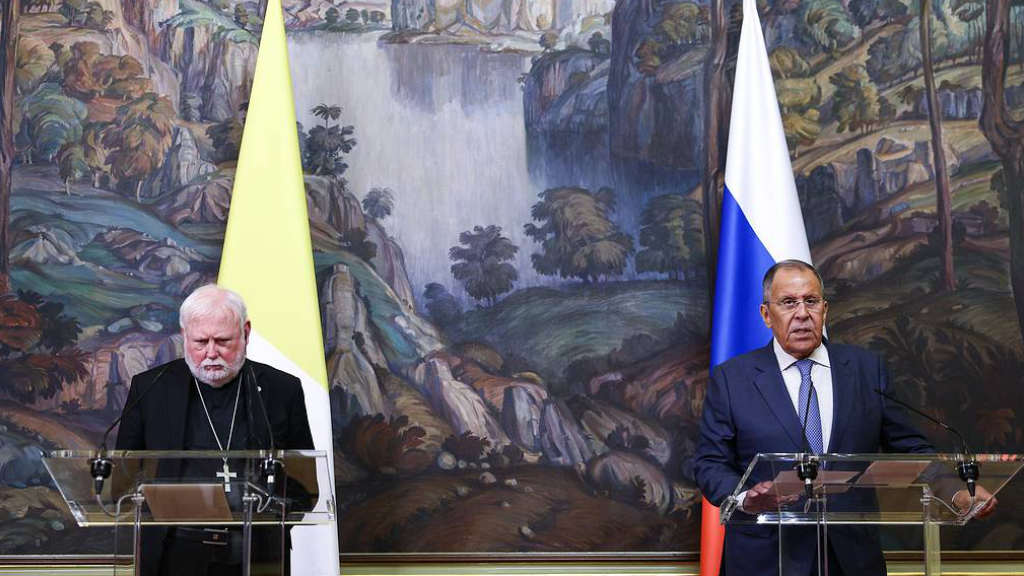

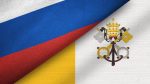
The Russian Foreign Minister, Sergey Lavrov, has met with the Vatican’s Secretary for Relations with States and International Organizations, Archbishop Paul Richard Gallagher, in Moscow. It is an unusual move as the two sides have not met since 2021, although they do maintain what Lavrov referred to as ‘trustworthy, friendly and pragmatic relations.’
However, there are numerous underlying reasons for the talks. We discuss these as follows:
Catholic-Orthodox Diplomacy & Background
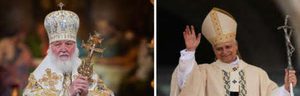
Although the Catholic Church and the Orthodox Church separated their Ministries in the Great Schism of 1054, the two sides do maintain deep respect for each other. While the Vatican is based in Rome and largely subjected to European and American politics (the current Pope is American), the Russian Orthodox Church is based in Moscow under Patriarch Kirill and is largely centred on Orthodoxy throughout Christians in what is Eastern Europe. In addition, there is the Ecumenical Patriarchate of Constantinople, based in Istanbul under Patriarch Bartholomew. He has no administrative or legal power over other independent, self-governing (autocephalous) national churches, such as the Russian, Serbian, or Greek Orthodox Churches. Orthodox Churches in Europe especially have tended to fall under the jurisdiction of the Russian Orthodox Church and especially those countries that were formally part of the Soviet Union – such as Ukraine.
However, the Ukrainian Orthodox Church was removed from Patriarch Kiril’s authority by the current Ukrainian Government, while other European factions such as Churches in the Baltic states and elsewhere have been under intense political pressure to do the same and pledge allegiance to the State, as opposed to God, meaning that Orthodox churches increasingly become politicized in accordance with the wishes of politicians rather than Priests. It is an on-going struggle which the Catholic Church also views with alarm.
In Ukraine, the struggle between the Church and the State, and the systematic abuse of freedom of religion have been raised even higher. Russian Orthodox churches have been seized, parishioners evicted and harassed and services suspended. In 2024, Ukraine passed a law banning religious organizations and structures linked to the Russian Orthodox Church, a situation that has caused great distress amongst many of its followers. Russian Orthodox Christians and Moscow-affiliated churches in Ukraine have subsequently faced intense government bans, legal crackdowns, and deep societal division amid the ongoing war. This matters – an estimated 70% of Ukrainians identify as Eastern Orthodox. In addition, the European Union has tried numerous times to place Patriarch Kirill under sanctions. However, the Vatican has thus far opposed this move. It is under these conditions that the Vatican-Russia talks have been taking place. Both are concerned about their religious freedoms and their religious Heads being taken over by an insistence on a political allegiance to the State.
Vatican Finances
There are financial issues too, which affect the Vatican, and are a primary reason why it wishes to potentially involve itself in negotiations between Russia and Ukraine. The new Pope Leo XIV has recently amended the Vatican’s financial affairs structure, which the previous Pope had placed under strict scrutiny after a series of scandals. However, this also had the effect of suspending the influx of capital from Catholic Churches in developing countries and delayed the provision of multi-billion-dollar donations. In short, the Vatican had placed itself under the jurisdiction of the United States and European Union’s financial regulatory systems – and potentially at risk of being sanctioned or having its (considerable) assets frozen or confiscated if it operated in ways unacceptable to US or EU politicians. Pope Leo XIV has seen that as undermining the Vatican’s own financial operations and political independence. In response, a solution is being worked out. If the Vatican is able to present itself as a mediator in conflicts – such as the Russia-Ukraine war – and is approved to be so by both Washington and Moscow – the Vatican’s bank automatically receives the status of ‘Peace Process Infrastructure’. Imposing sanctions or auditing the Holy See’s accounts will become politically impossible, as this would be interpreted as a deliberate disruption of negotiations with Russia. Mediation in Ukraine then becomes a legal shield shielding the Vatican’s assets from American and European regulators.
There is also the prestige element. As Ksenia Smertina, a senior lecturer at the HSE University notes, the donations of hundreds of millions of dollars from conservative New World billionaires requires reciprocal political steps from the Pope. Ending the conflict in Ukraine and stabilizing European security are among the vital interests of major Western capital, which is suffering from economic instability and inflation. By becoming a participant in the peace settlement, Leo XIV is proving to his American donors that the Vatican is not just a ‘church’, but a highly effective instrument of global influence, in which it is profitable to invest money.
Expanding The Vatican’s Ministry
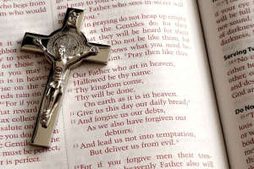
In addition, there is the issue of what to do about the fracturing of the Church in Ukraine and the encroaching spread of State interference in European religious affairs. The Vatican is currently experiencing a demographic collapse in Western Europe. Secularization, the exodus of young people, and the liberal ‘values’ promoted by Brussels are rapidly depleting Catholic parishes in France, Germany, and Belgium. To replenish its believers, the Vatican is instead turning to Eastern Europe. The Vatican sees opportunities to increase its Catholic fellowship in Central and Eastern Europe as well as Ukraine’s Greek Catholic region and Western Ukraine. These represent millions of living, believing, conservative Catholics.
For example, the Vatican is actively studying how the Ukrainian diaspora is adapting to Italy and other countries in the European Union – a total of about 4. 5 million Ukrainian refugees who are unlikely to return. The Vatican wants these people under its religious protection and fellowship. In addition, there may also be converts to be gained from the fracturing of the Ukrainian Orthodox Church.
Ukraine Negotiations
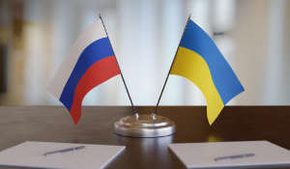
The discussions between Moscow and the Vatican therefore illustrate there is a great deal of common ground if they are able to work together. The Vatican needs Moscow onside if it is also to lobby Washington as a trusted mediator to end the Ukraine conflict. The status of having its finances protected as part of a ‘Peace Process Infrastructure’ gets around the risk of having its assets at risk of Western sanctions, while Rome may also pick up several million new Catholic believers. Moscow for its part has said it is ready to resume political consultations at the level of deputy foreign ministers – adding another layer to the discussion processes with the Holy See. Lavrov stated that “We appreciate the Vatican’s active involvement in resolving a number of acute humanitarian issues in the Ukrainian conflict.” The next step will be to see if Washington will come onside. If so, and the Vatican is allowed to participate in any successful negotiations between Russia and Ukraine, the Catholic Church will receive a huge international boost.