 Русский




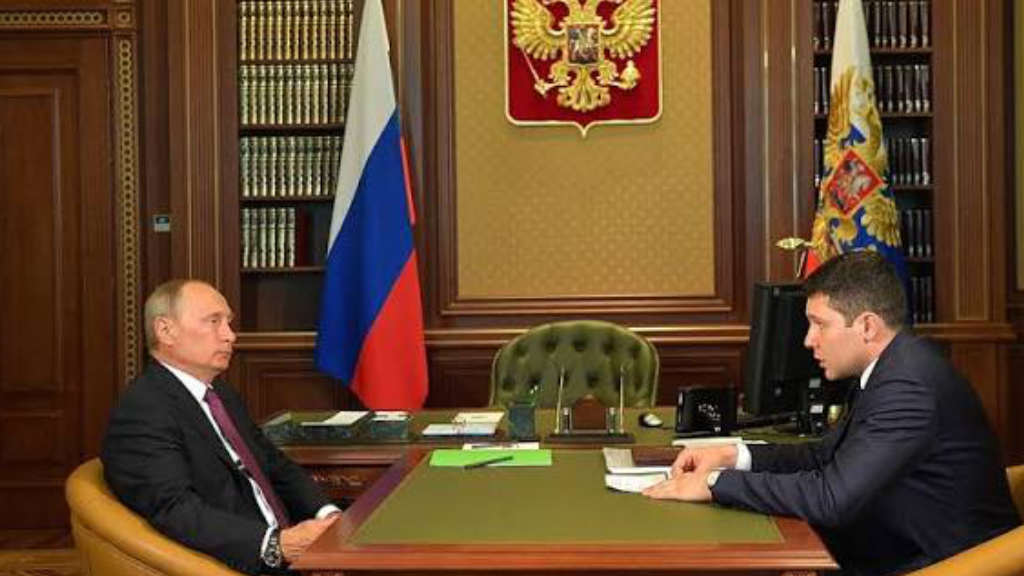

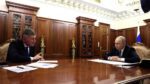
The Russian Minister of Industry and Trade, Anton Alikhanov, has met with Russian President Vladimir Putin to discuss the Russian manufacturing sector performance for 2025 following extensive internal analysis for the previous few months. He also updated Putin on the status of several national-level projects.
What Alikhanov found was that despite all the challenges, the Russian manufacturing industry has expanded by almost 25% over the past five years. That is an average over this period of 5% per annum. To compare, the average growth of the European Union over the same period has been practically zero and may have contracted. The 2025 Russian data shows that Russia’s industrial output increased by 3.6%, slowing somewhat due to the high-base effect compared to 2023 and 2024.
Alikhanov said that “a substantial increase in investment has supported this expansion. In 2021, investment in this sector amounted to about ₽3 trillion (US$35 billion), and we concluded 2025 with a figure of ₽7.3 trillion (US$85.5 billion). In comparable prices, this represents a 1.5-fold increase over this period. The volume of newly launched capacity also surged by more than 80%.”
There has been some downside, with Alikhanov adding that “Despite these positive developments, demand has been decelerating in certain sectors, and some industries currently have redundancies. We have several requests for using this capacity. Our suggestion is to expand the national procurement framework for government institutions and state-owned companies to include not only finished goods, which represent something tangible, but also works and services. This would ensure they are provided using Russian products, among other things. We are currently discussing this matter with our colleagues from the Finance Ministry and the Economic Development Ministry and are ready to draft specific legislative proposals.”
He also commented on the Russian labour market, saying that “growing labour efficiency and higher output have led to higher salaries. Last year, average salaries in real terms in the manufacturing sector increased by almost 14% and are now approaching ₽100,000 (US$1,170) per month.”
High-Speed Rail
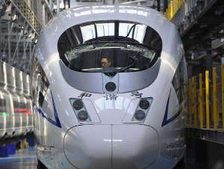
Alikhanov focused on Russia’s internal investment programme and said, ‘The investment activity mentioned is largely attributable to and supported by the mechanisms we oversee. This includes the Industrial Development Fund, which has already provided funding to 2,200 projects for a total of almost ₽850 billion (US$10 billion), including major projects such as building trains for the high-speed railway.“
That is a reference to Russia’s first dedicated high-speed rail line connecting Moscow and Saint Petersburg, which is currently under construction and scheduled to open in 2028. It will reduce the journey time to 2 hours and 15 minutes compared to 3.5 to 4 hours on the current Sapsan service. Again, there are comparisons with the EU. It is advancing a massive €345 billion high-speed rail plan to connect the continent with fast, green, and unified train travel by 2040 – 18 years after the first Russian high-speed rail is operational.
Special Investment Contracts & Data Centre Investment

Alikhanov then discussed Russia’s Special Investment Contracts (SPIC) scheme and the possibility of extending this into the data centre industry. He said these have been in high demand, with over 100 such contracts signed since their introduction, adding that “SPIC has enabled us to raise over ₽2 trillion (US$24 billion) in investment for the Russian economy.”
A Special Investment Contract (SPIC) is an agreement between a (typically Russian) private investor and the Russian state designed to boost domestic manufacturing and technology localisation. The investor builds or upgrades a factory in Russia. The state guarantees stable taxes and rules, plus support such as various subsidies. The key goal of SPIC is to replace previously imported goods with locally made products and bring new technology to the Russian market.
Discussing data centres, Alikhanov said that “we also have a proposal and hope that you will support it. The main purpose of signing Special Investment Contracts was to expand or upgrade capacity, while we suggest also offering ‘consumer-grade special investment contracts’. What do I mean by this? Take data centres – this is a good example. They also want to receive specific preferences and tax deductions. In this context, we would like to propose the following procedure.
A construction project costing ₽1 billion requires about ₽7 billion worth of purchased equipment, including servers, and all kinds of data storage systems. Russia already makes enough of them with a good level of localisation. We would like to be able to offer SPIC for building data processing centres as long as investors promise and assume a binding obligation to buy Russian equipment. This way, we will increase demand in the private sector instead of just for government procurement or by offering tax incentives for domestically manufactured high-technology products. Russian-made servers and data storage systems are already high-performance, and many projects already use them. However, having these special investment contracts as a framework would serve as an additional impetus and would support this demand right away.”
Putin replied, “We must definitely do this.”
Special Technical Cooperation Roadmaps

Alikhanv then discussed the systematic manner in which Russia is aligning its national needs and requirements with the manufacturing sector. He stated that “As you know, we have industrial mortgages for small businesses. Over the past three years, we supported more than 1,100 projects, with 5 million square metres of new manufacturing space already launched. We have recently fine-tuned all these support tools in order to align them with the national technological leadership projects. Special technological cooperation roadmaps and trajectories have been drafted so that manufacturers know what we focus on and what specific goods, down to their specific names and designations, must be made locally or what specific solutions must be developed.
In this regard, we are paying special attention to machine tool engineering. Among the equipment we have created, I would like to mention specialised riveting machines which accelerate the assembly of aeroplane fuselages and wings. In fact, there used to be only three countries in the world that could access this technology. Today, we are not only building our own aircraft but also using our own equipment to do so. Components and parts for machines are another priority for us. These include CNC systems, motorised spindles, tooling turrets, and many other items.”
Russian Robotics
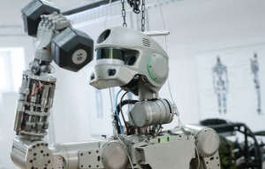
Alikhanov then turned to the Russian robotics sector, saying that “we are also expanding the lineup of industrial robots. We are already making all five main varieties: collaborative robots, which can work alongside humans, and autonomous robots, which can operate in the so-called lights-out manufacturing, or ‘dark factory’ environment. Today, we cover up to 50% of the cost of these robots through government subsidies.”
Russia’s New Materials & Chemistry Industrial Sector
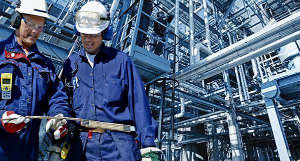
Alikhanov then moved on onto another Russian intersectoral national project – the New Materials and Chemistry sector. This aims to achieve technological sovereignty and leadership in domestic chemical production, advanced materials, and rare-earth metals. It is focused on low- and medium-tonnage chemistry, composites, and high-purity gases for microelectronics, with plans to develop domestic supply chains for over 700 small- and medium-tonnage chemical substances and 350 highly purified gases. It also involves setting up regional sectoral engineering centres (12 established as of mid-2026, with more planned) to support 23 priority product chains.
Alikhanov said that “in the past year, projects worth over ₽110 billion (US$1.3 billion) benefited from this framework. We have already established 12 sectoral engineering centres in various regions and are seeking to cover these priority product chains in their entirety. This national project includes 23 such chains. Of course, we are working on homegrown solutions for making this happen. The funds have been allocated in full. I can add that when we establish these centres in the regions, they create revenue streams for universities since these centres are mostly created within universities. In Tyumen, we already have the first one operational. This sector is extremely capital-intensive. On the other hand, it already includes several national champions like SIBUR (Russia’s largest integrated gas processing and petrochemicals company) and Tatneft, (Russia’s fifth largest oil company) as well as several other companies which have not interrupted their investment cycle despite all the challenges they face. We are supporting this cycle by engaging the tools we have at our disposal and the cluster investment platform. Overall, we continue carrying out all the plans we had.”
Summary
Western governments, politicians and their associated media have an overall tendency to immediately reject any development data issued by Russia, routinely stating that it is typically inaccurate and deliberately manufactured to appear better than it actually is. Yet on the other hand, these same sources have downsized or closed their Moscow operations (commercial consuls have been redeployed to other countries, bilateral business groups have been suspended, and news media outlets have closed) while instead often referring to the Kyiv School of Economics as a trusted source. The irony that the KSE is based in Ukraine appears lost. We commented on the KSE lack of credibility previously here.
In addition, the EU placed so much pressure on the International Monetary Fund (Russia is a full member) not to examine Moscow’s books that the normal bi-annual review of Russia’s fiscal reporting was cancelled. This means that any statements concerning Russia’s actual economic performance are based largely on political rhetoric only and cannot stand up to any realistic scrutiny – it is all hearsay.
In contrast, Anton Alikhanov, the Russian Trade and Industry minister’s report to Vladimir Putin, appeared to be both detailed and supported by real data and evidence of real actual progress. There are several events that have recently taken place that support Alikhanov’s claims:
Russia’s Increasing Internal Technical Cooperation
Alikhanov pointed out that Russia was now building its own 100% Russian-built component parts aircraft, including complex issues such as the engines. That involves hundreds of Russian suppliers supplying thousands of individual component parts. The all-Russian component parts and built Yakovlev Superjet SJ-100 made its maiden flight last year and has now entered production, with over 140 to be built by 2030. That maiden flight can be seen here.
It is a similar story with Russia’s High-Speed Rail, also known as the ‘White Gyrfalcon’. This will also feature all locally produced high-speed rolling stock and is expected to be in public service by 2018. An introduction to that can be seen here.
New Materials & Chemistry
This is a fundamental change to the old adage of ‘Russia as a gas station’. It massively diversifies Russia’s existing oil and gas sectors into developing new, hi-tech products for the future. Matching current energy assets to the chemicals and mining industries and using Russia’s universities as de facto R&D centres, it decentralises Russia’s involvement in new tech to 25 regional centres of excellence. The science is moving to where the assets are. It also means Russian self-sufficiency.
With Russia already in possession of about 5% of global oil reserves and some 22% of gas, plus 10% of rare earths, and with both Russian corporates and the state financing this development, new future tech supply chains, including for semiconductors, batteries, and the much more efficient use of energy, will project Russia as a coming powerhouse in the new tech sector.
The Return Of Russian Capital To Russia
Another impact of the West’s decision to freeze Russian assets held in Europe and the United States has been that the Russian outbound capital flows to the West have both dried up – and, where possible, are being repatriated back to Russia.
For example, prior to 2021, Russian corporates routinely listed about £1.8 billion worth of assets every year onto the London Stock Exchange. Oligarchs had invested hundreds of millions into property. Bilateral trade was worth £15.9 billion. Today that has largely vanished. It is a similar picture in the EU.
The reasons are, however, not solely limited to sanctions and overall harassment. They are also economic. With a Corporate Income Tax (CIT) rate in the UK now of 25% and an Individual Income Tax (IIT) rate at the top tier of 45%, the British market is now less appealing than it once was. In the EU, the average CIT rates come out at 21.7% and the IIT rate at 38.5%, although there are considerable regional variations.
In Russia, the CIT rate is 25%, while the highest IIT rate is 22%. This leaves a lot more money on the table for the business owners.
Coupled with this, Russian businesses still have relatively inexpensive operating costs – especially in fuel and energy bills – and lower associated operating costs such as salaries and other overheads, while the state is also providing tax incentives and other motivations in selected industry sectors. In short, it is now better business, and more profitable, for Russian investors to invest in Russia – and its associated friendly markets – than it is in Europe.
The West has become so dismissive of Russian economics that it has blinded itself to the provable realities. Yet the evidence is clearly out there and available. Remarks made by Trade & Industry Ministers would not go unnoticed in Europe. Quite why they are dismissed when it comes to Russian ministers is fast becoming a huge hindrance to the EU’s ability to understand what is really happening. Shocks and disbelief we suspect will be in store for many.