
 Русский









A Chinese delegation from Heilongjiang have travelled to Sakhalin and the Kuril Islands in the Russian Far East, including ₽81 million (US$1 million) seaweed-product exports, a proposed ₽30 billion (US$372 million) port project and new tourism partnerships. These illustrate Sakhalin’s expanding economic integration with Asian markets.
Sakhalin’s commercial engagement with China is extending beyond conventional seafood exports into marine cultivation, fish processing, hotel development, passenger transport and specialised consumer products. The mission, which took place between October 8 and 15, involved 12 entrepreneurs from Heilongjiang province, who assessed investment opportunities on Iturup Island, while a Beijing business breakfast brought together 46 Chinese tourism companies with Russian hotel, transport, travel and digital-service businesses. These activities coincide with existing export contracts, a proposed seafood-processing investment and preparations for expanded maritime logistics.
The commercial figures provide a clearer measure of the opportunities. Sakhalin’s 2026 industrial fishing quota includes 300 tonnes of tuna; a local producer, Diviya Pharm Sakhalin, has secured a US$1 million contract for laminaria powder (extracted from seaweed) destined for China; and a predominantly Chinese-invested port venture in Aleksandrovsk-Sakhalinsky. That has a projected investment cost of ₽30 billion (¥2.5 trillion) an annual cargo capacity of approximately 10 million tonnes and a construction completion target of 2031.
Separately, the Sakhalin region has secured an agreement to supply seaweed-based dietary supplements to China and contracts for therapeutic mud exports to Kazakhstan. Together, these developments point towards a commercial model that combines resource exports with processing, logistics and tourism services.
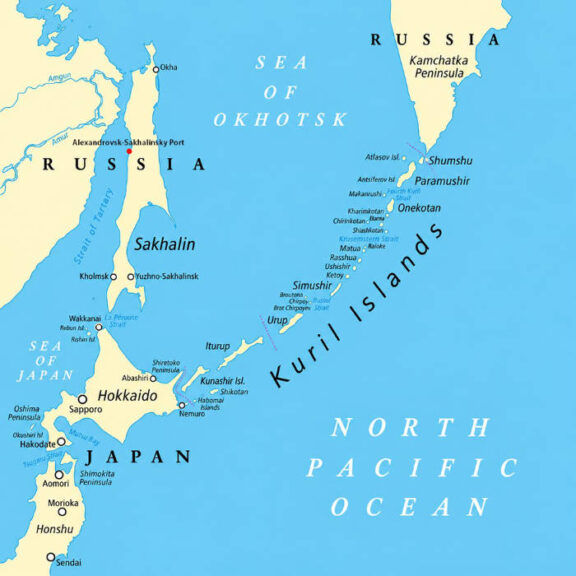
October 8-13: Chinese Businesses Examine Sakhalin and Iturup

The first stage of the latest business mission took place in Yuzhno-Sakhalinsk on October 8. Twelve representatives of Chinese companies held discussions with local enterprises on export contracts, seafood production and processing, inbound tourism, transport services and cargo handling. The Sakhalin Export Support Centre coordinated the mission, allowing visiting businesses to inspect local capabilities and meet prospective suppliers directly rather than relying exclusively on overseas marketing.
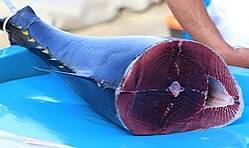
Three commercial participants illustrate the opportunities. Sakhalin’s LLC Express, which operates in coastal tuna fishing, expressed the intent to cooperate with Chinese buyers. Its potential supply base includes the region’s new 300-tonne industrial quota for bluefin tuna. To put that into context, Norway currently has an annual bluefin tuna quota of 535 tonnes.
The allocation establishes a measurable resource ceiling for commercial planning, however should not yet be interpreted as a confirmed export order or as proof that the entire quota will be harvested.
Local tour operator Omega Plus, which has 28 years of operating experience, presented programmes for Chinese visitors covering Sakhalin and the Kuril Islands. Company director Elena Semenova said the business had previously received Chinese and Taiwanese tourist groups before the pandemic and was interested in restoring those markets. Its proposed services include local excursions, regional cuisine and nature-focused itineraries. This offers a route for tourism expenditure to reach local transport operators, accommodation providers, restaurants and excursion businesses.
The export-support programme also connects overseas demand with products already entering foreign markets. Sakhalin businesses have secured contracts for therapeutic mud supplies to Kazakhstan and an agreement to supply laminaria-based dietary supplements to China. These are commercially distinct from the prospective projects discussed during the October mission: they demonstrate existing export activity, whereas cooperation with Express and Omega Plus remains dependent on future orders, bookings and commercial agreements.
On October 13, the commercial programme extended to Iturup, the largest island in the Southern Kurils. The Heilongjiang delegation included businesspeople and regional representatives. Its interests centred on marine aquaculture, seafood processing and tourism infrastructure, with particular attention to cultivating sea urchins and sea cucumbers, also known as trepang.
Yu Haiyan, general director of the Zhoayang Seafood Company, said her business already imports Russian marine products into the Chinese border city of Dongning, including live sea urchins, scallops and crabs. Following her first visit to Iturup, she expressed interest in establishing partnerships with local enterprises and potentially constructing a fish-processing plant. The delegation also inspected sites intended for tourism development, reflecting the need for additional accommodation as visitor numbers increase.
The distinction between existing trade and prospective investment is important. Dongning’s seafood imports provide an established commercial relationship on which a local processing project could build. The visit represents project development and site assessment, rather than a confirmed new industrial investment.
Sakhalin Marine Products: Moving from Raw Exports to Local Processing
The seafood sector offers the most direct connection between existing trade and prospective industrial investment. Sakhalin and the Kuril Islands already supply marine products to Chinese buyers, while the mission’s discussions explored whether more processing could take place close to the harvesting areas.
A proposed processing plant could allow local producers to capture a greater share of the value generated by cleaning, grading, packaging, chilling and preparing seafood for wholesale distribution. For Chinese importers, closer coordination with producers could improve supply planning and product traceability. For Sakhalin, the potential benefits include processing employment, local procurement and additional demand for refrigeration, packaging, storage and maritime transport.
Marine cultivation offers a second growth channel. Sea urchins and trepang were among the products discussed during the Iturup visit. Unlike wild harvesting alone, aquaculture can potentially provide a more predictable production cycle, provided that breeding conditions, environmental controls, production costs and market demand are commercially viable.
The 300-tonne tuna quota also creates a separate opportunity for export development. LLC Express can potentially use the allocation to establish supply arrangements with Chinese processors and distributors, but actual commercial performance will depend on catch volumes, quality standards, prices and transport costs. The central economic question is whether the region can expand the value earned per tonne of marine products rather than simply increase the volume of raw seafood shipped abroad.
Non-Resource Exports: China, Kazakhstan and New Asian Markets

Sakhalin’s export diversification extends beyond fisheries. On August 31, Russian Export Center chief Veronika Nikishina announced that the region had secured its first export contract for therapeutic mud supplies to China. The product is part of Russia’s wider effort to develop overseas markets for natural cosmetics and beauty-related goods. A separate supply contract for therapeutic mud destined for Kazakhstan has also been reported.
Diviya Pharm Sakhalin represents a higher-value product category based on local marine resources. The company produces products using Laminaria japonica, a brown seaweed found in the waters around Sakhalin. In October 2026, regional reporting identified a US$1 million export contract for laminaria powder destined for China. The company had previously supplied the Chinese market, including an initial shipment to Harbin in 2023 and a reported 15-tonne supply contract in 2024.
The product’s commercial appeal rests on processing and specialised applications rather than raw seaweed alone. The company markets its laminaria-based products as sources of iodine and other naturally occurring compounds. Its website describes the products as dietary supplements, not medicines. For export expansion, regulatory compliance, product registration, labelling, permitted health claims and consistency of supply will remain important considerations in the Chinese market.
Geographical diversification is progressing alongside these China-focused contracts. By the end of 2025, Sakhalin products were being exported to 22 countries. The region has subsequently identified new export destinations for fish products in Azerbaijan, Egypt, Mongolia and the Philippines. Sakhalin confectionery producer Sako has also pursued discussions with a partner in the United Arab Emirates over products made using agar-agar, a seaweed-derived ingredient.
These developments create several distinct export channels: seafood for food markets, laminaria products for specialised consumer applications, therapeutic mud for beauty-related uses and agar-based confectionery for retail and food-service customers. They also reduce reliance on any single destination or product category. These potential market expansions are in various developments stages, some represent concluded transactions, while others remain negotiations or planned first shipments.
Port Infrastructure and the Qingdao-Vladivostok-Sakhalin Route

Logistics is the infrastructure layer connecting these individual commercial opportunities. On September 1, Vladivostok Sea Fishing Port, (whose operator is Vladmorrybport), and Russia’s logistics company Mirtransline signed a memorandum of cooperation with Chinese logistics company LA.JYD Logistics to organise a regular maritime service linking Qingdao, Vladivostok and Sakhalin. Vladmorrybport was identified as the Russian operator, although the launch date and service frequency is still being decided.
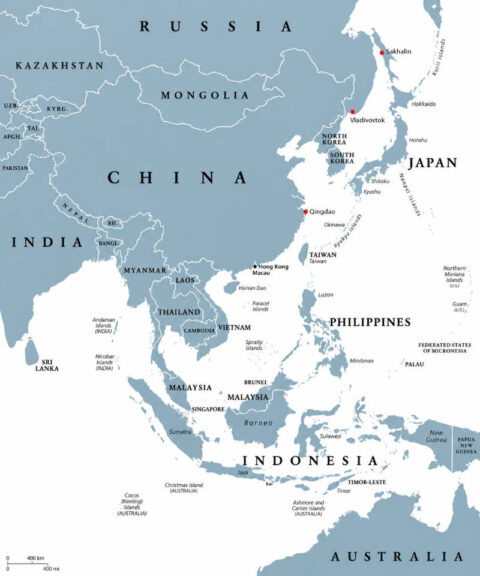
This proposed route could serve several markets simultaneously: seafood shipments travelling towards Chinese buyers, imported supplies reaching Sakhalin businesses and processed products moving through the Russian Far East. Its commercial performance will depend on vessel availability, sailing frequency, cargo consolidation, port handling charges and the balance between outbound and return freight. The memorandum establishes a cooperation framework, not proof those regular services have already begun.
The Aleksandrovsk-Sakhalinsky port development is being carried out by AG Neovo, a China-Russian transport business operated by the two countries largest logistics firms, have begun preparatory work for a marine logistics complex. That includes a cargo terminal extending approximately 600 metres, annual capacity of about 10 million tonnes and several hundred jobs. Completion is targeted for 2031. The project revives a port that had been closed for approximately 15 years. Its original economic function included servicing the Vladimir-Agnevsky coal field, and coal handling remains part of the development rationale. AG Neovo has also expressed interest in acquiring a city-centre building for a hotel, Chinese restaurant and office space.
For the regional economy, the proposed port could provide additional cargo-handling capacity and support industrial activity beyond the immediate project site.
Tourism Partnerships Reach 46 Chinese Companies

Tourism was the other major commercial component of the October programme. A business breakfast in Beijing, organised under the Discover Russia tourism brand by the Centre for Strategic Research, presented Russian destinations to 46 Chinese tourism companies ahead of the China Outbound and Inbound Travel Market exhibition.
Chinese participants included CTG Travel Services, U-tour Group, China Peace International Tourism and China Golden Bridge Tourism. Russian businesses included Cosmos Hotel Group, tour operator Alean, Federal Passenger Company, Rosa Khutor resort, airline IrAero, Yandex Travel, Visit Russia and Pay in Russia, alongside regional representatives.
The presentations covered Altai, Kamchatka, Sakhalin and Sochi’s ski resorts. Discussions addressed rail journeys, international air connections, hotel infrastructure, digital booking, payment services and Chinese-language travel information. Two promotional products were highlighted: From Russia with Taste and the Russian Tourist Atlas, which includes gastronomic routes presented in Chinese.
The market figures underline the scale of the opportunity. Chinese travellers made more than 148 million overseas trips in 2025, according to figures cited by Centre for Strategic Research director Pavel Smelov. Russian hotels recorded approximately 1.3 million placements of Chinese tourists, with the 2026 figure projected to exceed 1.5 million. The same announcement anticipated growth of more than 30% in bilateral tourist flows.
Transport links provide a practical basis for expansion. Air services between Russia and China have increased by approximately 30% over the past two years, while rail connections through Zabaykalsk and Primorye have been restored. Direct flights from Yuzhno-Sakhalinsk to Beijing, Harbin and Shanghai offer additional access to the island region.
The next step is to convert destination promotion into bookable itineraries and measurable business. That requires hotels to offer sufficient capacity, operators to agree wholesale prices, payment systems to work reliably and regional transport providers to coordinate arrivals with tours. For Sakhalin and the Kurils, tourism could complement seafood exports by creating demand for accommodation, restaurants, guides, passenger transport and local food products.
Investment Incentives and the Diplomatic Dimension

This business expansion takes place within a special preferential regime for the Kuril Islands. The framework, introduced in 2022, provides reductions and exemptions from specified taxes for eligible investors for up to 20 years. Regional officials also describe a single-window mechanism intended to help investors navigate administrative procedures. The incentives improve project economics, particularly for capital-intensive processing facilities and hotels, but eligibility, operating costs and market demand remain decisive. They are available to both Russian and foreign investors.
The October visit also had diplomatic consequences. Japan claims Iturup and three other southern islands as part of its Northern Territories, while Russia administers them as part of the Southern Kurils. On October 14, Japan’s Foreign Ministry summoned Russian Ambassador Nikolay Nozdrev and protested the Chinese delegation’s visit, linking it to the wider territorial dispute. Chinese Foreign Ministry spokesperson Mao Ning said that China maintained its position on respecting the outcome of the Second World War and declined to comment on private companies’ commercial activities.
The political dispute (dispute with Japan) does not establish that the Chinese companies have received central-government instructions to invest, nor does it demonstrate that commercial projects have been signed as part of a state-level agreement. The publicly described business objectives remain fisheries, mariculture and tourism. The distinction matters because commercial decisions will ultimately depend on financing, legal and regulatory conditions, market access and the ability to operate projects over the long term.
Summary: The Commercial Outcomes: What Is Confirmed and What Comes Next
Sakhalin’s October 2026 engagements bring together several stages of economic development. Existing seafood imports and the US$1 million laminaria contract provide evidence of commercial exchange. The 300-tonne tuna quota creates a potential supply base, while the proposed Iturup processing plant and hotel projects remain investment opportunities under discussion. The Qingdao-Vladivostok-Sakhalin memorandum establishes a logistics framework, and AG Neovo’s ₽30 billion port project represents a larger infrastructure undertaking with a target completion date of 2031.
The tourism programme adds a sizeable customer market: 46 Chinese travel companies participated in the Beijing business breakfast, while reported Chinese overseas travel exceeded 148 million trips in 2025. Chinese tourism to Russia has risen by more than 20% in H1 2026. The expected rise in Chinese accommodation placements in Russia to more than 1.5 million during 2026 provides a demand signal.
The central economic outcome is a developing connection between resource production, processing, transportation and services. If commercial negotiations produce funded investments and recurring orders, Sakhalin could capture more value locally through processing, accommodation and logistics instead of depending exclusively on exports of unprocessed resources. The immediate indicators to monitor are signed supply contracts, construction financing, actual port-service launch dates, seafood processing capacity, hotel investment commitments and realised Chinese visitor numbers. Those results, not the number of delegations or meetings, will determine the scale of the Heilongjiang-Sakhalin corridor’s contribution to East Asian trade and investment.
A Sakhalin tourism portal can be visited here and for the Kuril Islands here.
This article was written by Ms Khatun, an expert in Russia-Asian affairs. She may be reached at info@russiaspivottoasia.com
