Русский










Russia’s Rosatom have agreements with Iran on building eight nuclear power units, including a signed agreement on small nuclear power plants (NPP), according to Rosatom CEO Alexei Likhachev.
He said, “We have signed agreements on another eight NPP units. An agreement was also signed on the construction of small power units in Iran.” Likhachev did not specify whether the eight units mentioned were small or large reactors. This agreement aligns with Iran’s long-term goal of reaching 20 gigawatts of nuclear power capacity by 2041.
He said construction is continuing on the second and third units of the Bushehr NPP while 142 Rosatom specialists are currently at the site. Likhachev said that Rosatom intends to increase the number of Russian specialists at Iran’s Bushehr Nuclear Power Plant to 700, adding that “Everything depends very much on the military situation. If there are any escalations, we will slow the buildup, at a minimum. But right now, we are assuming that we will increase it.”
He added that work on the second Bushehr unit has progressed beyond 60% completion, with a target of starting operations in 2029, while construction of a third unit is also under way. The types of technology used to build these plants means that the material involved cannot be repurposed for the making of nuclear weapons.
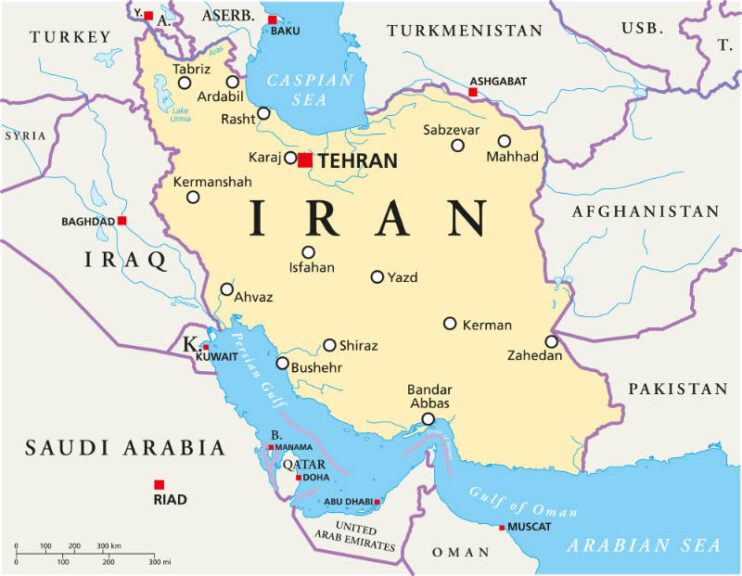
Rosatom already operates one plant in Iran, the Bushehr NPP, the first unit of which was completed in 2013. Construction of the second phase—units two and three with a combined capacity of 2,100 MW – began in 2016.
In September last year, Russia and Iran signed an agreement for the construction of a new nuclear power plant, Sirik, in Iran’s southern Hormozgan Province, near the Strait of Hormuz. Iran’s state news agency reported that the deal was worth US$25 billion and that the units would have a combined capacity of about 5 gigawatts. By comparison, the finished Bushehr complex would have a capacity of under 3 gigawatts.
Iran needs to rapidly change its energy mix, with just 6% of its electricity being generated from low-carbon sources in 2025, well below the global average of 41%. Electricity consumption is expected to increase from the current 340 TWh to over 400 TWh per capita by 2040.