
 Русский




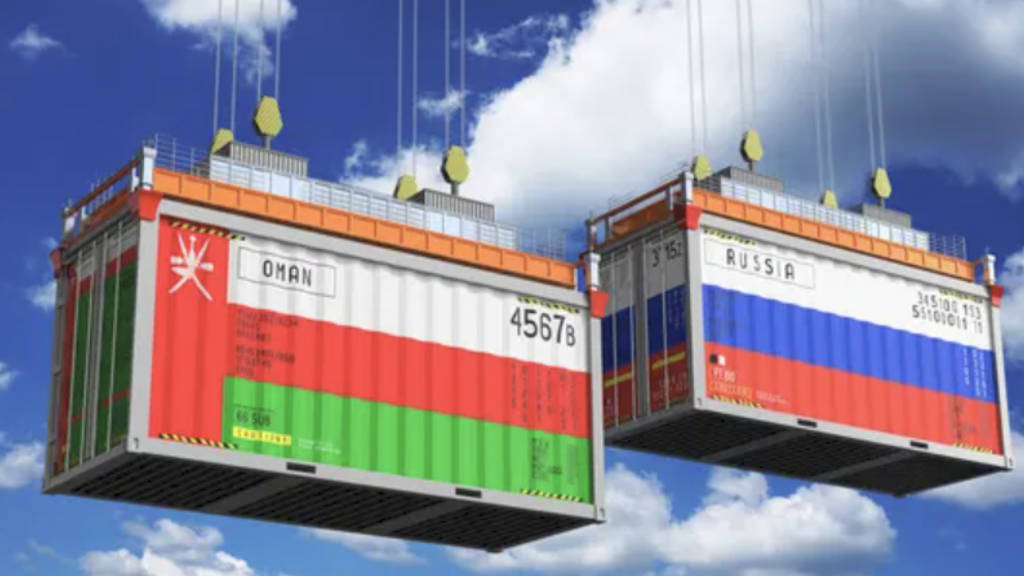

Sergei Shoigu, the Russian Security Council Secretary, has said that Russia and Oman are rapidly increasing the volume of their bilateral trade, which grew over 2000% in the first seven months of 2026.
Speaking at a meeting with Omani National Security Council Secretary General Idris Al-Kindi in Moscow on Tuesday (October 20), Shoigu said, “Over the first seven months of this year, bilateral trade has increased 22-fold to reach US$1.5 billion. This is the highest figure recorded in the last ten years. We have every opportunity to build on this positive momentum and reach new record levels in our bilateral trade.”
The two countries had previously set a trade target to reach US$1 billion by 2027.
The upward trajectory in bilateral trade began in 2020, where in the four years to 2024, trade increased by 62.3%. That trend has continued in both 2025 and this year, powered by increased Russian investment in the Omani energy security sector, logistics and food security initiatives, Oman’s growing role as a neutral, reliable trade partner, new institutional mechanisms such as the Joint Economic Commission, and expanding private-sector cooperation through OCCI, Roscongress, and the Oman-Russia Business Council.
Trade is now centred not only on hydrocarbons but also on agriculture, metals, petrochemicals, machinery, IT services, maritime logistics, and food commodities. Oman’s neutral foreign policy, robust regulatory environment, stable currency, and forward-looking economic reforms under the Oman Vision 2040 make it an ideal partner for Russian firms navigating global sanctions-era complexities. This momentum marks a major breakthrough, signalling a new phase of strategic economic partnership.
For example, Russia’s first large shipments of refrigerated meat exports to Oman began in 2025 and showcase a deeper agricultural supply chain in the making. Oman’s meat demand is rising rapidly, driven by population growth, rising incomes, and a large Muslim population, favouring poultry, with a domestic poultry consumption projected to reach 102,000 metric tonnes in 2026.
This highlights a major opportunity for Russian exporters. Russian meat and poultry shipments are already on the rise, while leading Russian producers are rolling out ambitious plans to strengthen their presence in Oman’s market.
There are additional and substantial development opportunities as well. We discuss these as follows:
Energy & Petrochemicals
Cooperation on upstream and downstream projects, LNG technologies, petrochemical supply chains and modern oil-field services and equipment. Oman’s investment in green hydrogen positions it as an ideal site for Russian expertise in ammonia, gas-to-chemicals, and energy transition technologies.
Logistics & the North–South Transport Corridor (INSTC)
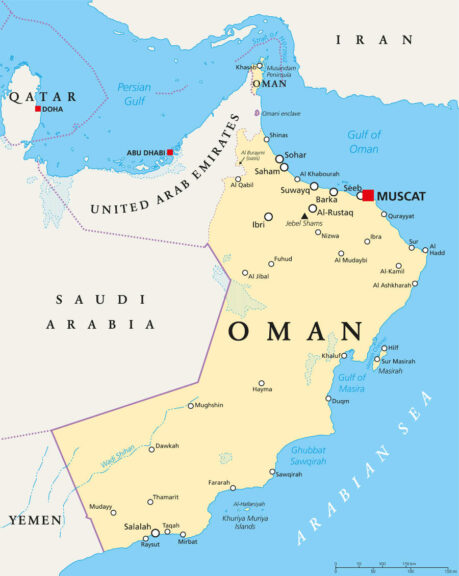
Russia views Oman as the southern gateway of a modernised transport corridor connecting Russia, Iran, Central Asia, India, the GCC & MENA and East Africa. Deputy Prime Minister Marat Khusnullin has previously underscored Oman’s “beneficial location for port development and access to key Middle Eastern and African markets.”
Industrial Equipment and Engineering
Oman’s fast-growing private sector is importing new machinery, high-tech industrial equipment, and automation systems areas where Russian firms possess competitive price-to-quality advantages. Oman’s expanding industrial equipment and engineering sector powered by Vision 2040 and major infrastructure projects creates strong demand for advanced machinery and technical expertise and Russian technology transfer. Russian companies can tap this growth by supplying industrial equipment, engineering services, and technology solutions for ports, logistics hubs, and large-scale construction.
Food Security & Agriculture
Russia, one of the world’s leading exporters of grain, poultry, and processed foods, can supply Oman’s rapidly expanding food market while developing joint agricultural investments. Oman’s agriculture market, projected to reach US$2.86 billion in value by 2030, is rapidly expanding, particularly in fruits and vegetables. Russia can leverage its expertise in grains, oilseeds, and advanced agricultural machinery to support Oman’s drive toward 70% food self-sufficiency. Precision-agriculture programmes open doors for Russian agri-tech solutions, including smart irrigation and crop management systems. Renewable-energy initiatives and solar-powered desalination create opportunities for Russian clean-tech and energy-efficient farming equipment. Together, these trends offer Russian companies a foothold in Oman’s modernising, high-growth agricultural sector.
Digitalisation & AI
From cybersecurity to e-government systems, Russian tech firms can support Oman’s digital transformation agenda. The Oman AI & Digital Future Programme presents a prime entry point for Russian tech firms to offer AI, cybersecurity, and digital infrastructure solutions. Russian companies can leverage this initiative to partner in Oman’s digital transformation—deploying software, smart‑city platforms, and data‑center services.
Tourism Cooperation
With an 87% rise in Russian visitors to Oman in 2025 and a mutual visa-free regime, tourism, hospitality management and civil aviation sectors are a rapidly expanding economic bridge. An estimated 80,000 Russian tourists visited Oman last year.
Oman as the New Dubai
A major shift is the increasing number of Russian businesses relocating or registering subsidiaries in Oman, driven by UAE banks tightening compliance on Russian clients, Oman’s neutrality and lower integration with Western financial systems, simplified corporate regulations, the opportunity to access Omani special economic zones (SEZs) and competitive infrastructure at Oman’s Salalah, Duqm, Sohar, and Muscat ports.
Over 30 ships formerly registered to Russian companies, including Sovcomflot and FESCO, have re-flagged to Oman, reflecting Muscat’s rising profile as a Russian maritime and shipping base. Tighter compliance scrutiny in Dubai is driving Russian shipping toward Muscat. Oman is seizing the moment, strengthening trade and maritime ties with Russia. Oman has also become a hotspot for ship-to-ship (STS) transfers of Russian oil, particularly off its deep-water coastline. These developments underscore Oman’s emergence as the new logistical frontier in Russia’s Pivot to Asia.
Oman As A Regional Grain Distribution Hub
Russia’s Deputy Prime Minister, Marat Khusnullin, has been extensively involved in Russia-Oman development and has previously spoken about Oman becoming an additional destination on the southern part of the International North-South Transport Corridor (INSTC). He has said that “We have a very interesting project with Oman in port infrastructure development. The connection between Russia and Omani ports is viewed by us as highly promising as regards the North-South route, which we now lead through Iran via moving across the Caspian Sea by rail to Iranian ports and further across the sea. We also consider the issue of the North-South motorway through Afghanistan to Pakistan, which is a promising market for us. In general, we believe Oman has a very beneficial location from the standpoint of logistics, and we have high prospects for cooperation.” He also noted Oman’s beneficial geographic location, making it possible to develop its ports to reach other Middle Eastern countries and provide access to Africa.
Shoigu’s meetings with Omani National Security Council Secretary General Idris Al-Kindi in Moscow would have almost certainly been to discuss the security issues relating to Russian involvement in regional maritime security. This included support for the development of Oman’s potential as a regional hub as part of the extended Middle East to Africa corridor as part of the INSTC.
