Русский





The Second Russia-India Business Forum, held in Kazan, Tatarstan from October 14-17 produced numerous fruitful business engagements, while numerous other productive economic interactions between Russia and India have further strengthened their bilateral economic cooperation. The ‘TIME’ – ‘Tatarstan Initiative, Mutual Efficiency’ business forum advanced joint manufacturing, medical technology, agricultural exports, aviation, textiles and investment, while India-Russia trade reached a record US$38 billion in H1 2026. In this article we examine the impact of the forum, the deals and agreements reached, and outline its importance in the development of Russia-India ties.
That India and Russia’s bilateral trade has been steadily strengthening is beyond doubt. Mutual trade between the two countries reached nearly US$68 billion in 2025 and has shown increases of 24.3% in H1 2026. India’s imports from Russia are dominated by crude oil, fertilizers, and coal, which accounted for the vast majority of the total trade volume. India’s exports to Russia made up a much smaller share of the volume, led primarily by pharmaceuticals and chemical products.
The wider trade figures show both the scale of the relationship and the challenge of diversifying it. This explains why both countries are seeking more trade in machinery, medicines, food, chemicals and manufactured goods: expanding those categories could broaden the relationship beyond its heavy dependence on Russian energy exports. Within H1 2026, trade reportedly reached US$38 billion, marking a significant achievement in their economic partnership. If this growth momentum continues, bilateral trade could reach US$76-80 billion by the end of 2026, putting India and Russia on the right track to achieve their target of US$100 billion in bilateral trade by 2030. To achieve this ambitious target, both countries are pursuing various business matchmaking initiatives, economic engagements, trade agreements and market diversification. The 2026 Tatarstan forum is just one example, yet an important one.
Trade between Russia’s Republic of Tatarstan and India exceeded US$1 billion in the first six months of 2026, opening a new phase in regional manufacturing, investment and business cooperation. At the Russia-India business forum, TIME (Tatarstan Initiative Mutual Efficiency) event, the two countries concluded 26 cooperation agreements, compared with 19 strategic agreements at the inaugural edition in 2025. The principal business programme took place on October 15 and 16 at Kazan’s Centre of Unique Skill, bringing together companies, industry associations, investors and regional representatives to explore commercial projects across manufacturing, agriculture, healthcare, information technology, logistics and other sectors.
The expansion was accompanied by a larger programme of business meetings, exhibitions, industrial visits and business-to-business discussions. Seventeen business sessions took place on October 15, followed on October 16 by a plenary session and more than ten thematic meetings. The event also included exhibitions and cultural activities connecting Russian, Tatarian and Indian communities. The agreements represent a substantial increase in the number of cooperation instruments concluded in one year. The most clearly identified projects nevertheless indicate a shift from general commercial contacts towards local production, market access and potential long-term industrial partnerships.
Bilateral Trade Reaches US$38 Billion In Six Months
The H1 2026 trade data places the two countries on course towards their stated target of US$100 billion in annual bilateral trade by 2030, although achieving this will require further growth in exports from India and a broader range of products moving in both directions. The composition of trade remains important. Russia supplies India with energy, fertilisers and other industrial inputs, while Indian exports include pharmaceuticals, engineering goods, machinery and agricultural products.
The imbalance between the two countries’ exports makes diversification a central commercial issue. Increasing the number of Indian companies entering Russian markets, expanding agricultural and marine exports, and developing joint manufacturing projects are therefore important alongside maintaining existing energy purchases.
The Indian Ambassador to Russia, Vinay Kumar said India was working with Russian counterparts to address product standards and non-tariff barriers, particularly those affecting agricultural and marine products. He also identified negotiations for a free trade agreement with the Eurasian Economic Union (EAEU) as a potential means of improving access to Russia and other EAEU markets. Any benefits would depend on the eventual agreement’s terms and implementation. For companies attending TIME, the commercial opportunity extended beyond the headline trade target. Regional partnerships can provide more direct access to buyers, production facilities, suppliers and distribution networks. Tatarstan offers an industrial base in which prospective Indian partners can investigate manufacturing and service-sector opportunities without relying exclusively on commercial relationships centred on Moscow.
Tatarstan-India Trade Exceeds Its Previous Annual Benchmark
Taliya Minullina, head of the Tatarstan Investment Development Agency, highlighted the speed of the regional trade expansion during the forum. Turnover between Tatarstan and India exceeded US$1 billion in the first half of 2026, compared with approximately US$300 million in the previous full year. Minullina described the increase as tripling, while other comparisons indicate that first-half turnover was more than nine times the corresponding period of the previous year. The precise growth rate depends on which baseline and period are used. The increase also strengthens the case for direct business-to-business engagement between Indian states and Russian regions.
Minullina argued that companies needed more information about one another’s markets, more direct contacts and greater familiarity with commercial opportunities. Her agency has promoted partnerships between Tatarstan and Indian regions through investment meetings, industrial visits and cultural exchanges. For example, the TIME forum was organised by the Consulate General of India in Kazan and the Tatarstan Investment Development Agency. Jeysundhar Deviprasadh, India’s Consul General in Kazan, said the purpose was to help Indian businesses understand opportunities in Russia’s regions and enable Russian companies to identify potential partners in India. The participation of industry associations and business representatives provided a structure for pursuing those objectives through commercial discussions.
Twenty-Six Agreements And A Shift Towards Implementation
Minullina confirmed on October 16 that 26 cooperation agreements had been signed during the forum. The final figure, reported publicly on October 16-17, exceeded the 19 strategic agreements concluded at the first-TIME forum in 2025, an increase of approximately 36.8%. The programme also expanded considerably. The inaugural forum lasted two days, whereas the 2026 edition doubled the timeframe extending across the four-day period. The main business programme concentrated on October 15-16. Minullina emphasised that the significance lay not simply in the higher agreement count but in the wider range of activities and the actual quality of commercial engagements.
One agreement reached was the local production of angiographic X-ray systems in Tatarstan. This is among the clearest examples of a proposed industrial outcome because it points towards manufacturing rather than the exchange of goods alone. Local production can create opportunities for equipment supply, technical servicing, specialist training and relationships with healthcare providers.
An Indian Ayurvedic Centre In Tatarstan

A second project is a pilot Ayurvedic centre in Tatarstan’s Zelenodolsk district. The agreement involves the Accurately Group, India’s SriSri Tattva and the Tatarstan Investment Development Agency. Minullina described the centre as a small pilot intended to test local demand for traditional Indian medicine. Its commercial importance extents to the services offered, the operating model, customer uptake and whether the pilot leads to further facilities.
These two examples illustrate the breadth of the forum’s outcomes: one concerns medical equipment manufacturing, while the other combines traditional healthcare, services and cultural familiarity. They should not, however, be taken as a complete breakdown of the 26 signed agreements. Public reporting available immediately after the forum did not provide a verified company-by-company inventory or the financial value of the entire package.
Exhibition, Business Sessions And Company Participation
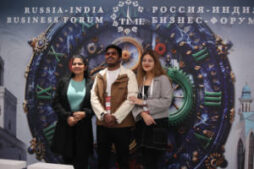
The forum’s commercial programme combined plenary discussions, thematic sessions, an international exhibition, business-to-business meetings, industrial excursions and master classes. The exhibition brought together 97 companies across 65 stands. Of these, 29 stands were attributed to Indian participants and 68 to Russian participants. Twelve thematic zones covered areas including finance, personnel, medicine, education, agriculture and other business activities, with a dedicated space for B2B networking. The exhibition gave companies a venue to present products and services, meet prospective customers and assess opportunities for partnerships.
The programme also involved the Confederation of Indian Industry (CII) and MICCIA, whose representatives met Russian counterparts. Manish Mohan, Senior Director for International Relations at CII, observed that Indian company interest was expanding across aviation, technology, the rural economy, tourism and related sectors. Vladislav Dmitriev, honorary representative of the Russian Chamber of Commerce and Industry in India and Nepal, stressed the importance of strengthening interregional cooperation. His argument reflected the forum’s operating model: sustained trade growth requires connections between the regions and states where factories, agricultural producers, distributors and service providers operate. The participation of 97 companies offers a measurable indication of the platform’s reach. the signing of 26 agreements’ commercial value will become clearer as the parties announce project budgets, implementation schedules, production targets and orders.
Agriculture And Food Exports: India Becomes A Larger Market
Agriculture was one of the forum’s most data-rich areas. India is interested in Russia’s experience in organic agriculture. A round-table discussion on October 16 examined prospects for Russian-Indian cooperation in the agro-industrial complex. Rustem Gaynullov, Deputy Minister of Agriculture and Food of Tatarstan, said the republic’s agro-industrial exports reached US$410.1 million as of October 4, 2026, an increase of 34.2% compared with the corresponding period in 2025.
Oil and fat products formed the foundation of these shipments, while exports of cereals, dairy products, and food and processing-industry products were also growing. Within this total, agricultural exports from Tatarstan to India reached US$61 million during the comparable reporting period, 2.3 times the previous year’s level. India accounted for approximately 15% of the republic’s total agricultural exports, and shipments to the Indian market had already exceeded the previous full-year result by early October. These figures identify India as an increasingly important destination for Tatarstan’s agricultural producers. They also point to opportunities beyond bulk commodities, including processed foods, dairy products and products requiring distribution partnerships and market-specific packaging.
Participants discussed how Russian exporters could reach Indian buyers through product promotion, tastings, presentations, negotiations and retail distribution. Svetlana Bobrova, head of the Russian Export Center’s representative office in Tatarstan, described support mechanisms that include market-entry consultations, product displays and catalogues, buyer introductions and opportunities to enter retail outlets under the “Made in Russia” label.
Valentin Spichkov, head of the Kazan branch of CTS Exchange, described the platform’s trading and clearing functions and its role in reducing transaction risks. The exchange’s licensed infrastructure could be relevant to businesses seeking more structured arrangements for trade and settlement, although actual transaction volumes between participating Russian and Indian firms were not disclosed.
Ranis Kamartdinov, head of the Buinsky municipal district, presented the district’s agricultural capacity. Gross agricultural output there grew by 21% in 2025 to reach 10.5 billion rubles. The district’s production base could support further exploration of food processing, agricultural technology and supply-chain partnerships.
Akbar Sheikh, founder of Akbar & Associates, discussed the scale of India’s agricultural economy and Russia’s position as a major exporter to the Indian market. Lidia Filatova, director of the international personnel agency Synergy, identified crop production, animal husbandry, biotechnology and technical support as areas where Indian workers could contribute to the agricultural sector. Together, the figures and discussions show how export growth, market access, labour availability and distribution infrastructure are connected. Increasing shipments will require not only competitive products but also reliable buyers, appropriate standards, logistics and repeat orders.
Defense, Aviation, Aerospace, And Space Technology
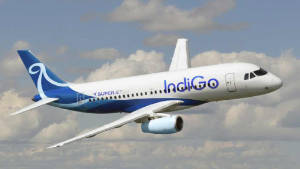
Aircraft manufacturing was another priority for commercial cooperation. Discussions covered the planned production in India of the Ilyushin Il-114-300 turboprop and Sukhoi Superjet 100 aircraft, including engagement involving Hindustan Aeronautics Limited (HAL) and Russian representatives on an existing manufacturing memorandum of understanding. The regional industrial context is relevant. Kazan hosts helicopter manufacturing facilities operating under Russian Helicopters, and Tatarstan has aerospace and engineering capabilities connected with aircraft and helicopter production. The Mi-8 and Mi-17 helicopters used by India’s armed forces have manufacturing links to the region.
India is also seeking to replace more than 1,700 obsolete t-72 tanks under its next generation main battle tank (ngmbt) programme, with Russia offering to adapt the t-14 Armata with electronic drone-suppression and physical interception systems, enhanced ammunition capacity for shells over one meter long, and potential integration of India’s datran-1500hp engine, which uralvagonzavod agreed to jointly develop and integrate in July 2025, according to IDRW’s report published on October 15.
The forum also provided a platform for discussing the commercial potential of space technology. On October 16, Subham Sarkar, director of the Chamber of Cooperation of India and Russia in the field of technology, described space as a promising area for bilateral investment. He pointed to the growing role of private Indian companies in satellite and launch-vehicle development and the investment opportunities arising as the sector opens to private participation. These discussions should be distinguished from confirmed aircraft orders or new space-sector contracts. The available forum reporting identifies opportunities and ongoing discussions, but it does not establish that the proposed aircraft manufacturing arrangements or new space investments were among the 26 signed agreements.
Russia and India commenced the maritime phase of their joint military exercise, Indra-2026, in the Sea of Japan on October 16-17, 2026, involving Indian frigate Sahyadri and Russian corvette Aldar Tsydenzhapov. The naval drills include practical firing exercises, tactical manoeuvres, counter-drone operations, and the simulated liberation of a vessel seized by terrorists. The broader exercise also involves Russian and Indian ground forces, alongside Russian aviation assets, with land-based activities scheduled in Russia’s Chelyabinsk region, reflecting continued defence cooperation between the two countries.
Textiles, Medical Technology And Pharmaceuticals

Textile cooperation emerged as another potential growth area. Discussions centred on increasing Indian textile products’ presence in the Russian market, including raw materials, yarns and fabrics, alongside possible joint production and specialist training. One stated ambition was to raise India’s share of the Russian textile market from below 1% to 10%, equivalent to an estimated US$4 billion-US$5 billion in market value, within three to five years. This is a target rather than an achieved result. Reaching it would require sustained market access, competitive pricing, dependable logistics and relationships with Russian wholesalers, manufacturers and retailers. Local production could also provide a route to serving Russian customers while adapting products to local requirements.
Medical technology offers a more specific manufacturing opportunity through the proposed local production of angiographic X-ray systems. Pharmaceuticals and biotechnology were also among the sectors identified for further cooperation. India’s established pharmaceutical manufacturing base and Russia’s demand for medicines and medical equipment provide a basis for examining joint production, distribution and technology partnerships. The precise companies, product ranges and financial commitments for most of these potential projects were not fully identified in the immediate public reporting.
India Can Explore Medicine Supplies to Russia via Murmansk Through the Northern Sea Route
Indian manufacturers are also exploring the possibility of supplying medicines to Russia through Murmansk via the Northern Sea Route (NSR), with Murmansk potentially serving as a key logistics hub, according to Divesh Kumar, Chairman of the Council for the Promotion of the Export of Pharmaceutical Products of India in the Russian Federation; meanwhile, India is also considering specialized maritime insurance policies for such shipments, with Indian companies already developing transport insurance solutions, alongside broader discussions about India’s potential role in building icebreakers for the NSR.
Russia and India Plan to Build First Joint Vessels by 2030
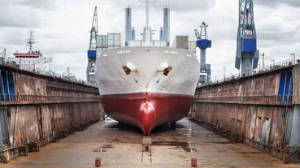
Russia and India aim to build their first jointly developed vessels by 2030 under a bilateral cooperation programme, according to Vladislav Dmitriev, Honorary Representative of the Russian Chamber of Commerce and Industry in India. Speaking on the sidelines of the Second Russia-India Business Forum in Kazan, he highlighted growing cooperation between Indian companies and Russian shipbuilding and industrial enterprises, including plans to discuss river-sea vessels and chemical tankers. He also identified ice-class shipbuilding as a promising area, noting that an Indian state-owned shipyard has begun designing an ice-class vessel that has attracted interest from two major Russian oil and gas companies. Both countries have also discussed expanding Arctic cooperation and deploying new vessels along the Northern Sea Route.
Russia And India Explore A Joint Digital Media Platform To Strengthen Bilateral Ties
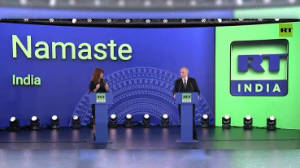
At the TIME event, journalists and media representatives discussed creating a shared digital media platform to strengthen communication, mutual understanding, and cultural exchanges between the two countries. The proposal, put forward by The India Abroad correspondent Shiha Salari, aims to provide a trusted platform for governments and citizens to access information about each other. Participants emphasized that stronger media cooperation, including Hindi-language broadcasting and closer engagement among journalists, could help address misunderstandings, promote cultural awareness, and build greater trust to support bilateral business and investment ties.
Kazan Proposes 90-Day Programme To Boost Tourism Between Tatarstan And India

At the TIME forum, Manish Singal, founder and Chairman of the Board of Directors of Dimaz Group, proposed a 90-day programme to develop tourism cooperation between Tatarstan and India. The initiative aims to identify 10-15 potential partners from each side within the first 30 days, develop 3-5 joint tourism packages by day 60, and assess initial enquiries and bookings by day 90. The programme seeks to position Kazan as a Russian-Indian tourism and business hub, focusing on industrial tourism, winter travel, and customised experiences for Indian visitors. The initiative builds on growing cooperation in trade, industry, education, and tourism, while discussions on direct flights between Kazan and India could further improve connectivity and support tourism growth.
Urban Technology, Electric Buses And Digital Infrastructure
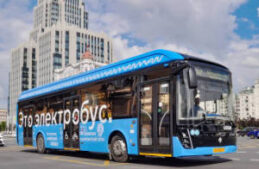
Urban infrastructure was another area of interest. Harish Khurana, a Delhi legislator and spokesperson for the Delhi government, said on October 17 that discussions with Tatarstan representatives had examined possible Russian investment and technology cooperation in electric buses, EV charging stations, pollution control, intelligent traffic management, water conservation and waste management. Khurana said he had held discussions with Rustam Minnikhanov, head of the Republic of Tatarstan, and the regional legislature’s speaker. He encouraged Russian companies to consider manufacturing facilities in India rather than limiting cooperation to equipment supply. He also referred to Delhi’s interest in electric buses and associated charging infrastructure, although the discussions did not amount to a publicly confirmed procurement contract. Businesses also identified KAMAZ electric buses as a possible area of interest for Delhi. Digital cooperation also appeared on the agenda, including artificial intelligence, cybersecurity and data-centre development. These sectors could connect Tatarstan’s engineering and industrial base with Indian technology and services companies. India’s Bharath Cloud becomes the first indian technology company to enter russia’s digital services market, planning to invest amid russian digital service disruptions, as announced by india-russia technology cooperation chamber director subham sarkar at the forum, featuring business sessions, an indian film festival, cultural masterclasses, a chess tournament, and a friendship cricket cup.
Traditional Medicine, Education And Cultural Business Links
The Ayurveda centre planned for Zelenodolsk provides a concrete example of cooperation extending into services. The agreement between the Group of Companies “Accurately,” SriSri Tattva and the Tatarstan Investment Development Agency is intended as a pilot. Its performance could help establish whether demand supports expansion into a larger network of traditional-medicine services.
Education and workforce development also form part of the relationship. The number of Indian students in Tatarstan has increased by 1.7 times over five years, while more than a thousand Indian citizens have received higher medical education in the republic, according to figures circulated in connection with the forum. These links can support recruitment, professional training and the development of business relationships across language and cultural boundaries.
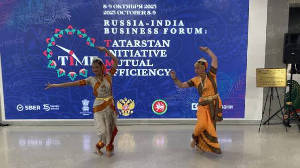
The event programme included an Indian cinema festival, cricket and chess activities, and cultural presentations. A collection of Musa Jalil’s poetry in Hindi was presented at the National Library of Tatarstan on October 14, while the broader programme featured Russian, Tatar and Indian traditions. Minullina said nearly 50 related events had been organised around the wider programme of economic and cultural engagement, including film screenings, sporting events, conferences, business sessions and industrial visits. These activities are not substitutes for commercial agreements, but they can help build the familiarity and networks needed to sustain trade. The business case is particularly relevant for smaller companies that may need local partners to navigate distribution, recruitment and market-entry requirements.
Workforce Mobility And Market Access

Workforce availability is becoming a practical component of regional economic cooperation. Ambassador Vinay Kumar said on October 15 that Indians accounted for around 25% of the quota allocated to foreign workers in Tatarstan. He also described a sharp increase in Indian employment in the region over the preceding two years. The expansion reflects demand from a growing regional economy and the need for personnel in manufacturing, agriculture and related industries. The forum’s discussions included the recruitment and adaptation of Indian specialists, particularly in crop production, animal husbandry, biotechnology and technical support.
Russia and India have also advanced a bilateral temporary-employment framework. The agreement was signed in December 2025, and the State Duma adopted the relevant legislation on October 1, 2026; President Putin has subsequently ratified it. The framework provides a wider institutional context for labour mobility, although its practical effects will depend on implementation and the requirements governing individual workers and employers. For businesses, the availability of appropriately trained workers can influence the feasibility of expanding production, maintaining equipment and operating joint ventures. Labour mobility therefore complements investment and trade rather than functioning as a separate issue.
From Regional Agreements To Measurable Industrial Results

The second TIME forum’s significance lies in the combination of trade growth, a larger commercial programme and a higher number of cooperation agreements. The 26 agreements exceeded the previous year’s 19, while Tatarstan-India turnover surpassed US$1 billion in the first half of 2026 and bilateral India-Russia trade reached US$38 billion during the same six-month period.
The most concrete identified outcomes include the planned local production of angiographic X-ray systems and the pilot Ayurveda centre involving “Accurately,” SriSri Tattva and the Tatarstan Investment Development Agency. Agriculture also offers measurable opportunities, with US$61 million in Tatarstan agricultural exports to India and a 2.3-fold year-on-year increase during the reported period. Aviation, textiles, pharmaceuticals, space technology, digital infrastructure and urban transport represent additional areas of prospective cooperation. The next stage will depend on converting announcements into funded projects, manufacturing schedules, purchase orders and sustained trade flows. A complete public breakdown of all 26 agreements, including the companies involved, investment values and implementation deadlines, remains necessary to measure their combined economic impact.
For Tatarstan, the forum offers a route to diversify export markets and attract industrial partners. For Indian companies, it provides access to a Russian regional economy with manufacturing, agricultural, medical and engineering capabilities. For the wider bilateral relationship, the commercial test is whether these regional connections can broaden Indian exports, deepen local production and reduce dependence on a trade structure dominated by energy and other bulk commodities. TIME’s expansion from 19 agreements in 2025 to 26 in 2026 is a measurable institutional result. The longer-term outcome will be determined by how many of those agreements lead to operating facilities, recurring orders, technology cooperation and investment that can be measured in subsequent trade and production figures.
Trump’s Sanctions Waiver And Wider Russia-India Engagement
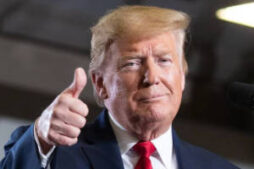
A major external development affecting Russia-India commercial relations came on October 16, 2026, when US President Donald Trump waived key provisions of legislation threatening additional sanctions and tariffs against countries purchasing Russian energy. The measures under the Lindsey O. Graham Sanctioning Russia and Iran Act of 2026 had raised the prospect of tariffs of up to 100% on imports from countries buying Russian oil and gas. India, one of Russia’s largest energy customers, faced particular exposure to the proposed penalties.
The decision offered New Delhi immediate relief from the threatened measures, but it has not amounted to a permanent lifting of US sanctions. Secretary of State Marco Rubio said the administration would use a period of up to 60 days to assess the economic consequences, providing some short-term relief for Indian refiners, energy traders, and companies managing long-term supply contracts. The implications extend beyond oil purchases to the wider commercial relationship between Moscow and New Delhi.
With Russia and India continuing to pursue a target of US$100 billion in annual trade by 2030, energy remains central to that expansion, but both sides are also seeking greater cooperation in manufacturing, pharmaceuticals, engineering, agriculture, technology and transport connectivity. At their September 11 meeting on the sidelines of the BRICS Summit in New Delhi, Prime Minister Narendra Modi and President Vladimir Putin reviewed progress in economic, defense, energy, space and skills cooperation and visited the INNOPROM India industrial exhibition, held in India for the first time on September 9-11. Their meeting followed talks in Bishkek on August 31, while the 27th India-Russia Inter-Governmental Commission session in Moscow on August 24 addressed the broader trade and economic agenda.
Other engagements outside the Kazan forum underline the breadth of the relationship. On October 8, a working-group meeting under the India-Russia Inter-Governmental Commission on Military-Technical Cooperation focused on expanding defense-industrial cooperation, including joint production and technology development. On October 14, officials held the seventh round of the India-Russia Special Mechanism on Pakistan and Afghanistan in New Delhi, demonstrating that security consultations continue alongside commercial negotiations. These parallel tracks matter for businesses because the bilateral relationship involves not only trade and investment but also defense manufacturing, regional security, workforce mobility and the reliability of transport and energy links. The Kazan forum’s 26 cooperation agreements should therefore be understood as part of a much wider engagement, not as the sole driver of Russia-India economic cooperation.
India Seeks Long-Term Russian LNG Contracts, Prioritizing Affordable Prices And Supplier Diversification
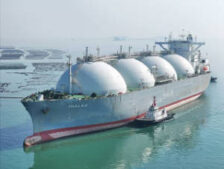
India has confirmed its willingness to increase Russian liquefied natural gas (LNG) purchases, with traders negotiating supply agreements, including long-term contracts, subject to prices acceptable to domestic consumers; Oil and Gas Regulatory Council member Anjani Kumar Tiwari described Russia as a reliable energy partner, while emphasizing supplier diversification, including the United States, managing price fluctuations and quality concerns, and addressing sanctions-related challenges through India’s own strategy, as Russian Foreign Ministry official Alexei Pavlovsky stated that Russian energy accounts for more than half of India’s energy balance. Russia is ready to supply India with additional oil if requested, Russian Foreign Ministry Director Alexei Pavlovsky said in an interview with TASS at the Forum, while OPEC+ countries agreed to maintain current oil production quotas for November.
Russia-India Trade, Industrial Deals And Investment Projects
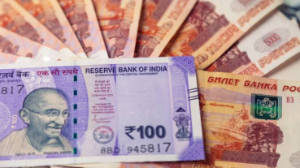
India-Russia commercial cooperation has been moving through several channels beyond the TIME forum in Tatarstan. At INNOPROM India 2026, held in New Delhi from September 9-11, Russian industrial companies presented equipment and technologies to potential Indian partners. A Russian Export Center business mission brought around two dozen companies from 10 Russian regions. Participants included SDM, which showcased excavators, bulldozers, loaders and mobile cranes; Sinara-Transport Machines, which presented electric-train technologies; UMEK, with high-voltage insulators; CITO, with medical devices and endoprostheses; RD Group, with tyre-pressure monitoring systems; Armtel, with industrial communications and alert systems; and Stilobit, with road-construction technologies. The event was designed to connect Russian manufacturers with Indian buyers and industrial partners, although the public reporting does not provide a complete company-by-company list of signed contracts or their financial values.
Pharmaceutical Production And Two-Way Investment

Pharmaceutical manufacturing is one of the clearest examples of cooperation extending beyond trade in finished goods. During INNOPROM India, Russian Industry and Trade Minister Anton Alikhanov said that the first medicines from a joint production project involving Indian partners at Dubna in the Moscow Region were expected in 2027. A separate project to manufacture active pharmaceutical ingredients in the Kaluga Region was planned for 2029. Alikhanov also referred to existing Russian–Indian production of anti-tuberculosis and anti-HIV medicines in Belgorod and anti-cancer drugs in the Yaroslavl Region. These projects offer a more concrete industrial picture than general declarations of pharmaceutical cooperation, although the public announcement did not disclose the full investment amounts, production capacities or all participating companies.
The investment pipeline is broader than pharmaceuticals. At INNOPROM on September 10, Indian Commerce and Industry Minister Piyush Goyal said the bilateral priority-investment mechanism was tracking 40 active projects in advanced manufacturing, energy, mining, railways and emerging technologies. The two countries were also working towards a goal of US$50 billion in two-way investment by 2030, alongside the US$100 billion annual trade target. Goyal identified pharmaceuticals, information technology, artificial intelligence, engineering and railways as areas where Indian investment in Russia could expand, while encouraging Russian manufacturers to establish production in India. The stated 40 projects represent a pipeline under consideration or implementation, not 40 newly completed investments or signed contracts at INNOPROM.
Banking, Payments And Digital Trade Infrastructure
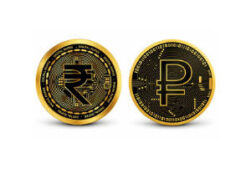
Financial settlement has become another important part of the commercial relationship. On September 2, Ivan Nosov, head of Sberbank in India, said the rupee-rouble payment infrastructure was supporting 96% of bilateral trade. According to the figures he cited, 22 Russian banks and 17 Indian banks were servicing transactions, with 90% of payments processed within 10 minutes and more than half completed in under one minute. This infrastructure is commercially significant because it helps exporters and importers settle invoices despite restrictions affecting some international payment channels. However, faster settlement does not eliminate the underlying trade imbalance: Russian exports to India remain much larger than Indian exports to Russia. The two sides have also been exploring digital-currency settlement mechanisms. Reporting in September indicated that the central banks of Russia and India were working on a mechanism involving digital currencies, with the aim of making cross-border payments more efficient. This remains a development under exploration rather than evidence that a fully operational bilateral digital-currency payment system has been launched. For businesses, the larger issue is whether payment arrangements can remain reliable, compliant and affordable as trade expands, particularly for smaller exporters that may have fewer banking options.
Summary: Market Access, Export Diversification and Transport Corridors
Market access is central to the effort to broaden Indian exports to Russia. During INNOPROM 2026 in India, Goyal identified pharmaceuticals, auto components, tractors, chemicals, textiles, food products, marine products and engineering goods as categories with room for growth. India and the Eurasian Economic Union have also been negotiating a free-trade agreement intended to improve access to the Russian market and other participating economies. In parallel, both sides have been addressing standards-related issues and non-tariff barriers, particularly for agricultural and marine products.
The negotiations and consultations could reduce obstacles for exporters, but the potential gains depend on the final terms, product coverage and implementation arrangements. Transport infrastructure forms another part of the commercial agenda. India and Russia have identified the International North-South Transport Corridor (INSTC) and the Chennai-Vladivostok maritime corridor as routes for improving cargo connectivity. The wider agenda also includes the Northern Sea Route. These routes are intended to provide additional options for moving goods, connect industrial regions with ports and improve logistics links. Their commercial impact will depend on shipping frequency, transit times, freight rates, customs procedures and the availability of dependable cargo services, not simply on the existence of corridor agreements.
The second Russia-India Business Forum in Kazan showed that the trade momentum is there – doubling in size in just 12 months. As and when the India-EAEU FTA is delivered, that can be expected to accelerate still further.
This report was written by Ms. Begum, a reporter on Russia-South Asia affairs for Russia’s Pivot To Asia. She may be reached at info@russiaspviottoasia.com